
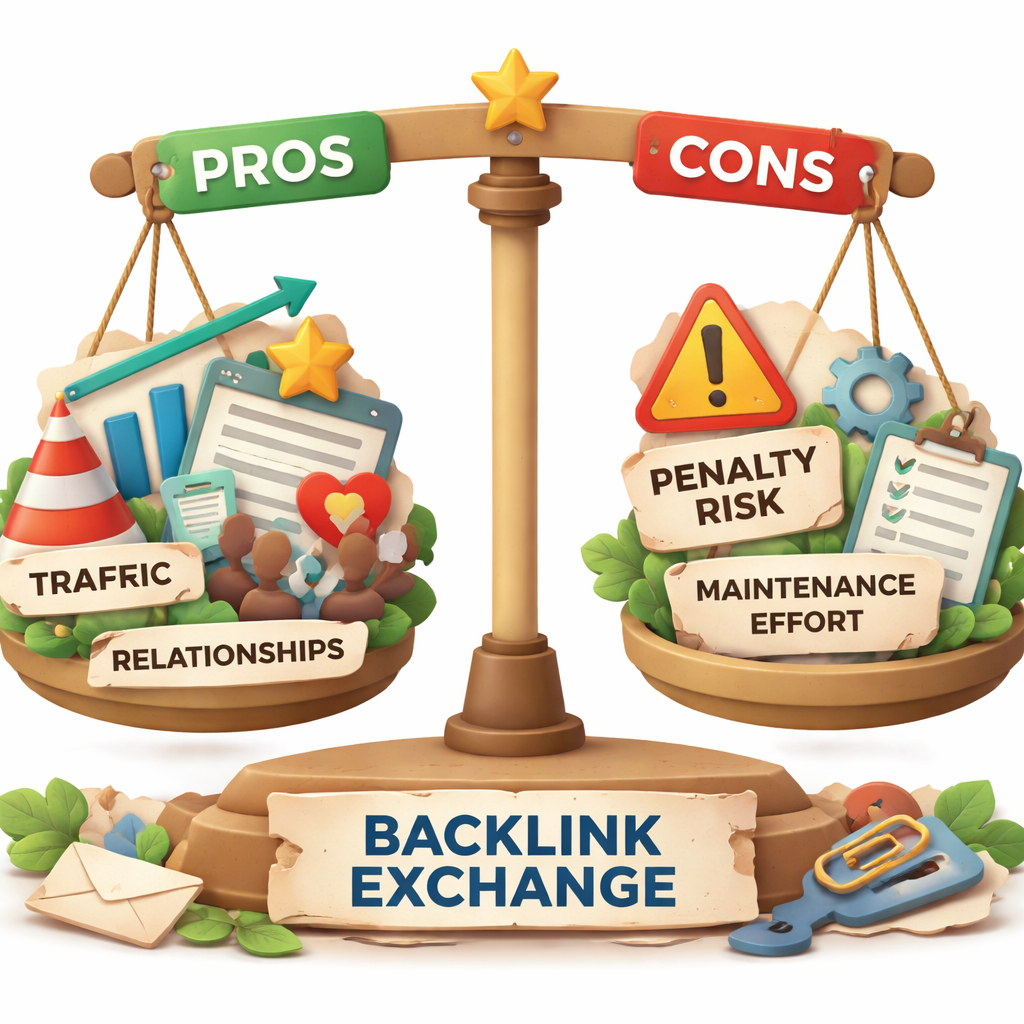
A backlink exchange is any arrangement where two sites agree to link to each other, or where a platform matches you with sites willing to do so. It sits in an awkward place: Google's own documentation names "excessive link exchanges" as a link scheme, and yet the practice is normal, widespread and often harmless.
The difference between the version that works and the version that gets you filtered comes down to scale, relevance and whether a reader would find the link useful. This list separates true exchanges from marketplaces where you pay for placement, because they carry different risks and should not be compared on the same axis.
How we checked this list
Every platform below was loaded on its live site in August 2026. One well-cited candidate, linkexchange.io, turned out to be a parked domain carrying a "this domain may be for sale" notice, so it was removed rather than listed. Pricing appears only where the vendor publishes it on a page that resolved for us, which is why several entries have no figure attached. We have not bought placements from every marketplace here and do not claim to have.
The three models, and how risky each one is
| Model | How it works | Google risk |
|---|---|---|
| Direct reciprocal | You link to me, I link to you | Highest, easiest pattern to detect |
| Three-way or ABC | A links to B, B links to C, C links to A | Lower, still a scheme if systematic |
| Network placement | A platform places contextual links inside published articles across many sites | Lowest when links are relevant and editorial |
| Paid marketplace | You pay a publisher for a placement | Against Google guidelines if the link passes PageRank |
Quick answer
- Best hands-off contextual exchange:Distribb
- Best free community exchange: Backlink Creators
- Best structured swap platform: Swappsy
- Best for managing exchanges you already have: Backlink Manager
- Best European marketplace: Linkhouse
- Best full-service outreach instead: OutreachZ
Comparison
| Platform | Model | Published pricing |
|---|---|---|
| Distribb | Network placement in published articles | $97/mo, 7-day free trial |
| Swappsy | Structured swaps and collaborations | Free tier |
| Authority Exchange | Give links, get links, vetted | Application only |
| Backlink Creators | Open community, non-profit | Free options |
| Ranklytics | Auto-matched peer swaps | On site |
| Backlink Manager | Exchange management layer | From $39/mo |
| Collaborator | Marketplace, content distribution | Per placement |
| Adsy | Marketplace, guest posting | Per placement |
| Linkhouse | Marketplace, mainly European | Per placement |
| Getfluence | Marketplace, 45,000 media | Per placement |
| PRPosting | Marketplace, 23,000+ sites | Per placement |
| Getlinko | Marketplace, Spanish-speaking media | Per placement |
| OutreachZ | Full-service outreach | Custom |
| Authority Builders | Curated link placements | Per link |
1. Distribb, contextual links without the outreach
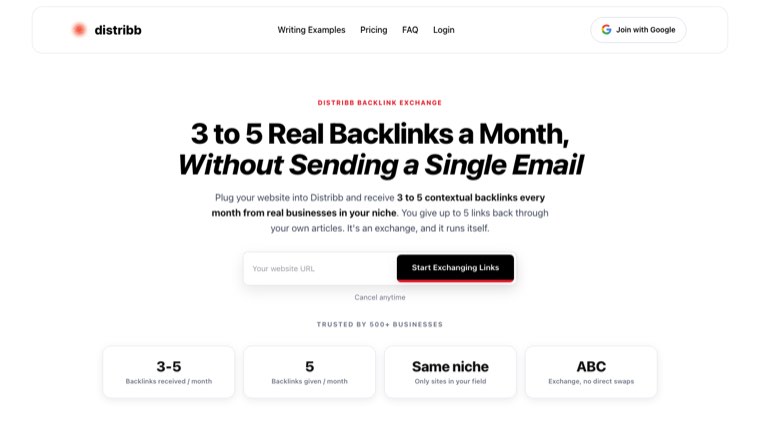
Most exchanges hand you a directory and leave the negotiating to you. Distribb runs the exchange inside a network of real businesses and places the links for you, contextually, inside articles that are being published anyway. You do not email anyone, and there is no swap thread to manage.
The specific reason it leads a list about exchanges: the links land in fresh editorial content on sites in your niche, rather than in a links page or a footer. That is the part of the model Google has never had a problem with, because the link exists inside something a person would read. Distribb's backlink exchange also pairs with the content engine, so the pages receiving those links are being produced at the same time.
Honest limit: you do not choose the individual partner sites, and you cannot buy a specific domain you have your eye on. If your strategy depends on landing a link on one named publication, this is the wrong mechanism and a marketplace or an outreach agency is the right one. Seven-day free trial. Where exchanges fit in a wider plan is set out in our guide to the best backlink strategies.
2. Swappsy, structured swaps for SEOs and SaaS
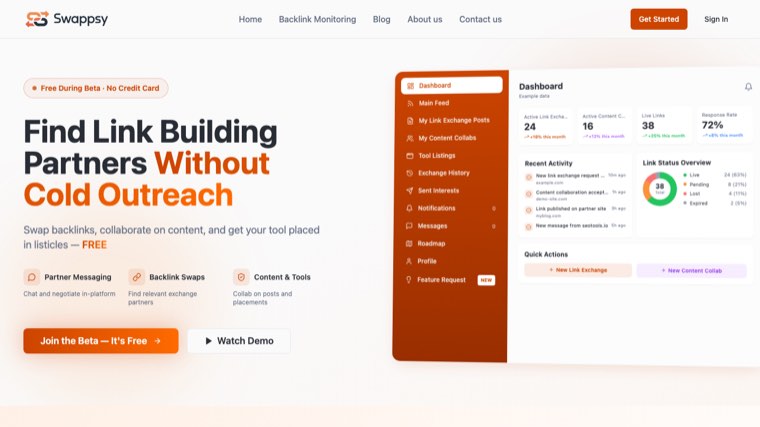
A dedicated exchange platform where you post an opportunity and other members respond. It covers reciprocal links, guest post collaborations and tool placements, with a free tier and a backlink monitoring tool alongside. Working out which partners are worth approaching in the first place is covered in our guide to backlink gap analysis.
The value is in replacing scattered Slack groups and spreadsheets with one place where offers are visible and comparable.
Honest limit: it is still a marketplace of people, so quality varies with who is active that week. You do the vetting.
3. Authority Exchange, application only
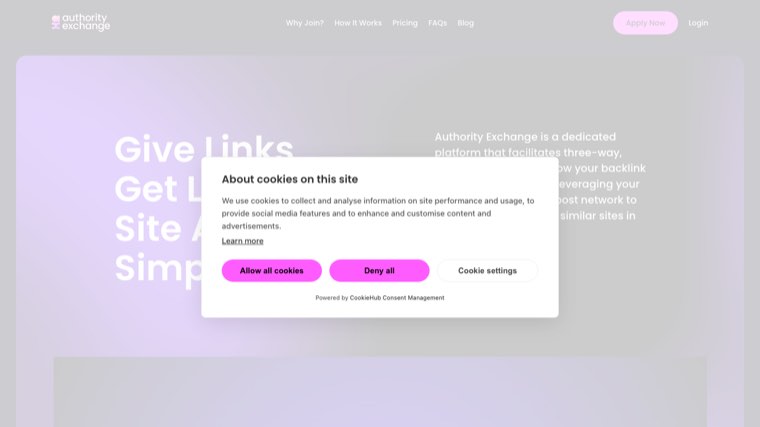
"Give links, get links" is the stated model, with an application step before you join. That gate is the product: a smaller pool of vetted sites is worth more than a large pool of anything.
Suited to agencies and site owners with real traffic who want to swap with peers at a similar level.
Honest limit: applications mean you may not get in, and the pool is smaller than the open communities by design. Pricing is behind the application.
4. Backlink Creators, the free community option
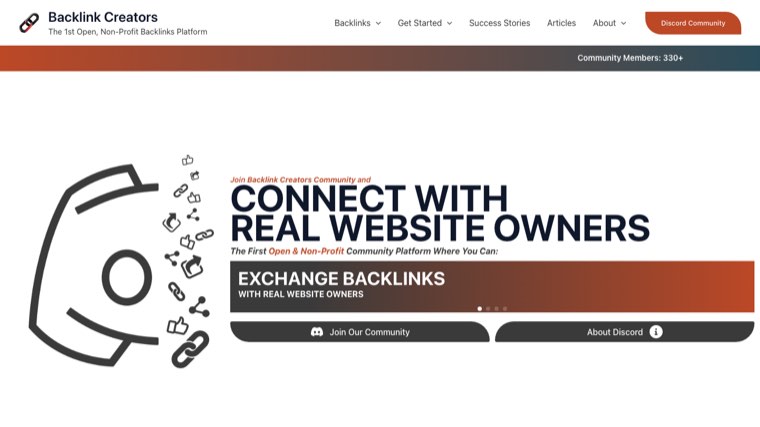
An open, self-described non-profit platform with a Discord community of a few hundred members. Exchange suggestions, backlink building and follower growth on Quora, Medium, Reddit and similar are all offered at no cost, with a small fee only to sustain the platform.
If you are testing whether exchanges work for your site before spending anything, this is the cheapest honest way to find out. The automated end of the same problem is covered in our guide to building backlinks automatically.
Honest limit: community size limits how relevant your matches will be. Expect to sort through a lot of off-topic sites to find two that fit.
5. Ranklytics, auto-matched swaps inside an SEO platform

Ranklytics is a broader SEO automation platform that includes a backlink exchange feature, auto-matching your site with relevant peers in its network and handling the swap without cold outreach.
Worth considering if you want the exchange bundled with keyword research, content and on-page work rather than as a separate subscription.
Honest limit: the exchange is one module in a wider product, so you are buying a platform to get it.
6. Backlink Manager, the layer above your exchanges
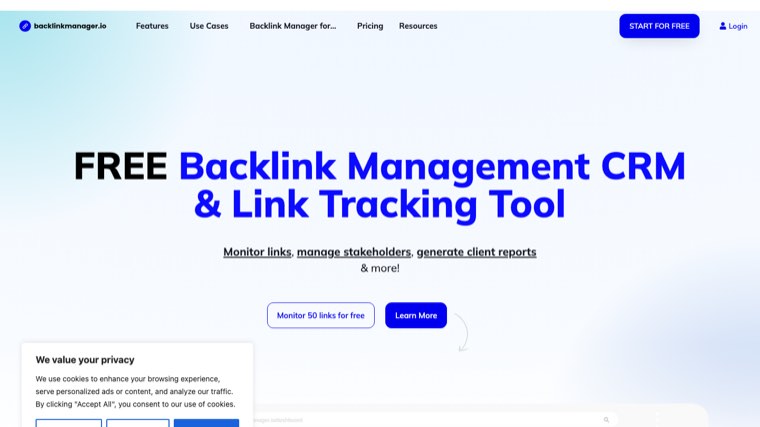
Not an exchange itself. It tracks the partnerships, targets and links you have already agreed, and alerts you when a partner quietly removes or nofollows your link. Starter is from $39 a month billed annually for 200 backlinks and 50 partnerships, Growth from $99, Scale from $249.
Link rot in exchanges is real and mostly invisible. This is the tool that makes it visible.
Honest limit: it will not find you a single new partner. Budget for it alongside an exchange, not instead of one.
7. Collaborator, content distribution marketplace
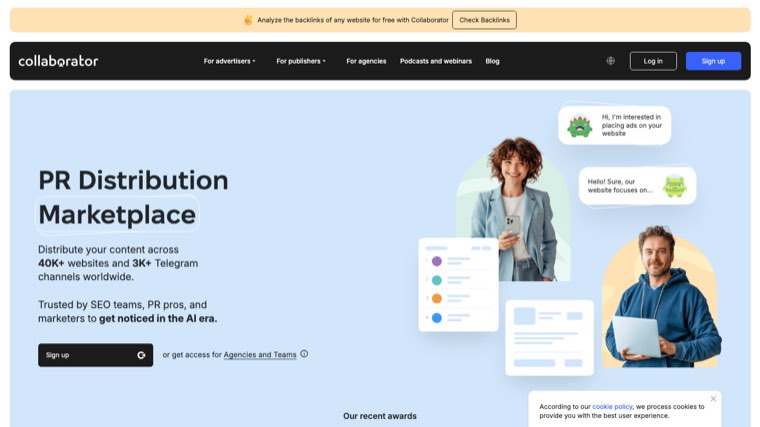
A digital PR and content distribution marketplace where you pick publications, see their metrics and order a placement. Strong coverage in Eastern Europe and growing elsewhere.
Transparent per-site metrics are the reason people prefer it to buying through an intermediary.
Honest limit: paying for a link that passes PageRank is against Google's guidelines regardless of how good the marketplace looks. Understand what you are choosing.
8. Adsy, guest posting at volume
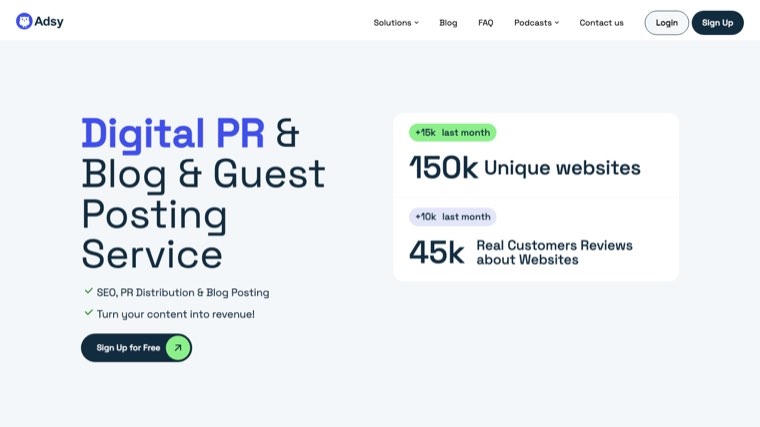
A guest posting marketplace with an API, managed services and a checker tool. You submit a post to blogs in the network and pay per placement.
Useful when you need volume across many mid-tier sites quickly.
Honest limit: the same paid-link caveat applies, and quality across a large network is uneven. Check each site's real traffic rather than its authority score.
9. Linkhouse, the European marketplace
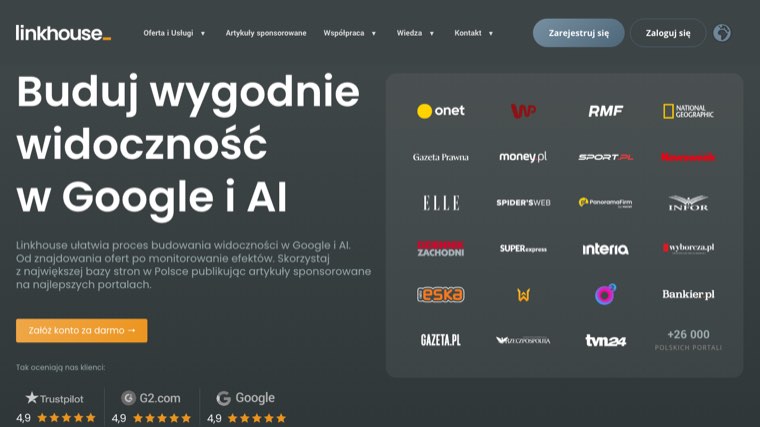
A large marketplace with particularly deep coverage of Polish and wider European publishers, now positioning around AI visibility as well as classic link building.
If your market is European rather than Anglophone, its inventory is better than the US-centric platforms.
Honest limit: much of the interface and inventory assumes a European market. Paid placements carry the usual guideline risk.
10. Getfluence, premium media placements
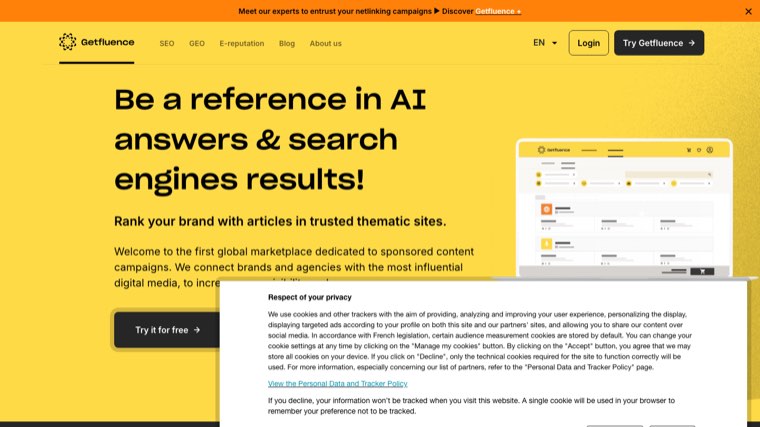
Around 45,000 media outlets, positioned toward genuine publications rather than blog networks. Aimed at brands that want a placement they would be happy to show a client.
Prices reflect that. This is the top of the marketplace market rather than the volume end.
Honest limit: expensive per placement, and still a paid link by Google's definition. Best treated as PR with an SEO side effect.
11. PRPosting, volume with filters
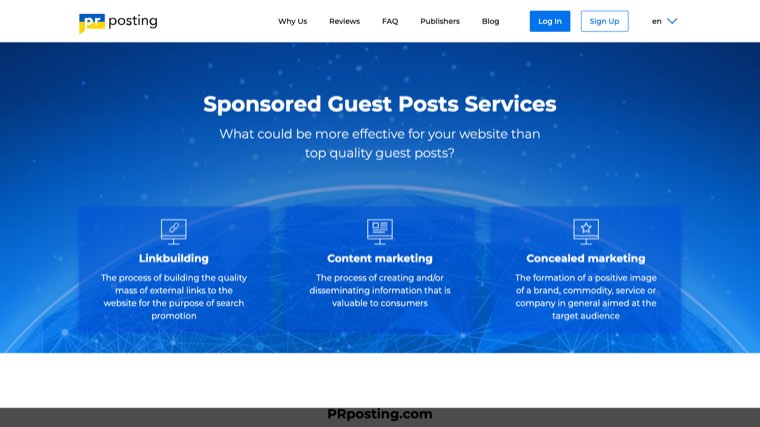
More than 23,000 sites with filtering by traffic, topic and metrics, plus an API for teams placing at scale.
The filtering is the differentiator. Being able to exclude sites below a real traffic threshold saves most of the vetting work.
Honest limit: a network this size contains a lot of sites that exist for link selling. The filters help and do not fully solve that.
12. Getlinko, Spanish-speaking media
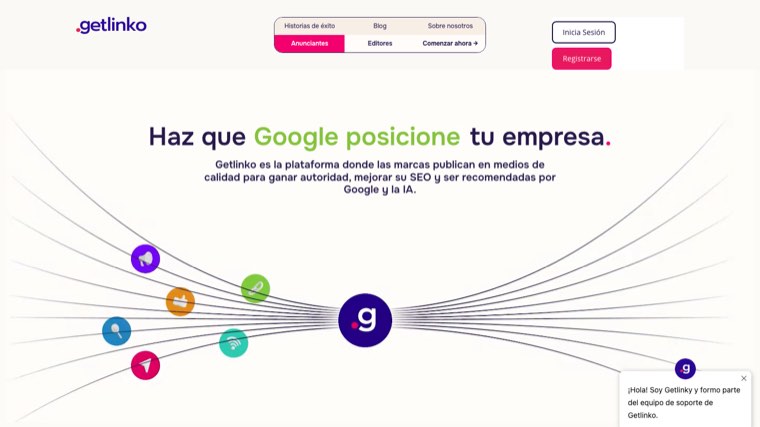
A media marketplace focused on Spanish-language publications and AI mentions, which is a gap most English-first platforms leave open.
If you are building links for a Spanish or Latin American market, its inventory is more relevant than anything on this list.
Honest limit: narrow geographically by design, and the site defaults to Spanish. Paid placement carries the usual caveat.
13. OutreachZ, outreach done for you
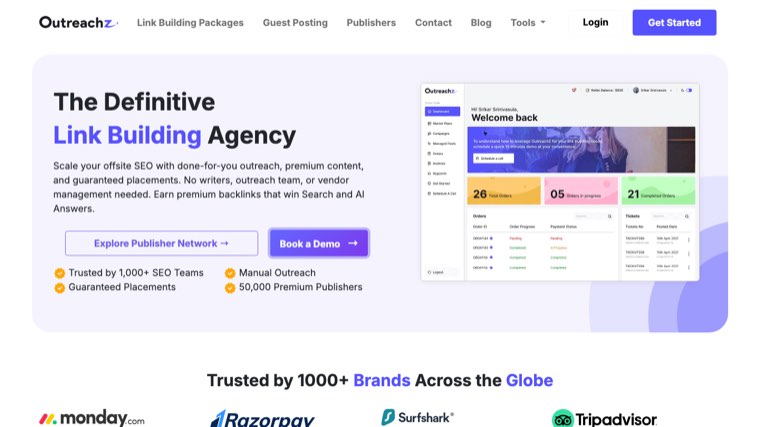
A full-service link building agency rather than a platform. You brief them, they run the prospecting, pitching and negotiation, and you receive links. The rest of that market is compared in our roundup of backlink building services.
For teams with budget and no appetite to run outreach in-house, buying the service is often cheaper than the equivalent salaried hours.
Honest limit: agency pricing, agency timelines, and you are trusting someone else's standards for what counts as a good link. Ask to see live examples in your niche before signing.
14. Authority Builders, curated placements
A curated marketplace where you buy individual links on pre-vetted sites, with metrics shown before you commit.
The vetting is the product. Fewer options, higher average quality than an open marketplace.
Honest limit: it is a paid link marketplace. Curation reduces the chance of a bad neighbourhood, and does not change what the link is.
What Google actually says
Excessive link exchange is named as a link scheme. The wording in Google's spam policies is "excessive link exchanges" and "partner pages exclusively for the sake of cross-linking". The operative word is excessive, and a reciprocal link between two genuinely related businesses has never been the target.
Paid links that pass PageRank violate the guidelines. Every marketplace in the second half of this list falls under that, whatever the marketing says. If you use them, use them knowingly and keep the anchor profile natural.
Patterns are what get detected, not individual links. Fifty reciprocal links with matching anchor text from unrelated sites is a pattern. Six relevant links built over a year is not.
Relevance does most of the work. A link from a site in an adjacent niche is worth more and looks more natural than a higher-authority link from an unrelated one, which is the argument for dofollow backlinks that sit inside relevant content rather than link pages. The underlying mechanics are covered in our explainer on what backlinks are and why they matter.
Check the traffic, not the score. A domain with a high authority metric and 200 monthly visitors has manufactured metrics. Every filter on every marketplace here will still show you that site.
How to vet an exchange partner in five minutes
Look at organic traffic, not domain rating. If the site gets almost no search traffic, its links pass almost nothing regardless of what the score says.
Read the last five published posts. If they are unrelated to each other and each contains an obvious commercial link, you are looking at a link farm.
Check where your link would sit. Inside a relevant article is worth having. On a "partners" or "resources" page is worth much less and looks worse.
Count outbound links on the page. A page with forty external links is dividing whatever it has forty ways.
Ask what happens in six months. Links get removed quietly. Automated approaches like AI tools for backlink building and monitoring tools exist because manual exchanges decay.
Run that last check on anything you have already placed, too, because partners go quiet and pages get pruned without telling you. The tools that watch for it are in backlink monitoring tools.
FAQ
Are backlink exchanges safe? A small number of relevant reciprocal links between real businesses is normal and safe. Systematic swapping at volume, especially with matching anchor text, is what Google's policy names as a scheme.
What is a three-way or ABC link exchange? Rather than linking directly back, you link to a third site in the network and receive your link from a different site. It removes the obvious reciprocal footprint, and it is still an exchange if it happens systematically.
Is there a free backlink exchange? Backlink Creators runs on free options with a small sustaining fee, and Swappsy has a free tier. Both cost time instead of money, which is the real price of any manual exchange.
How many exchanged links is too many? There is no published number. The usable test is proportion: if exchanged links are most of your profile, the profile looks engineered. If they are a small share of a mix that includes editorial and brand mentions, they do not. For the overall target, see our breakdown of how many backlinks you need to rank, which works the number out from the current top 10.
Do exchanged links still work in 2026? Relevant contextual ones do. Link pages, footer swaps and directories stopped working years ago and now mostly signal what you were doing.
What is the difference between an exchange and a marketplace? In an exchange you trade links with another site. In a marketplace you pay a publisher for a placement. Both appear on this list because people search for one and often mean the other.
Should I disavow old exchanged links? Almost never. Google ignores most low-quality links rather than penalising them, and the disavow tool is easy to misuse. Reserve it for a documented manual action.
An exchange is one route to a link and not always the best one. Pitching a post yourself is covered in guest posting services and in our list of blogs that accept guest posts, and the software route in backlink builder software. The software route specifically is compared in our roundup of automatic backlink software.
Where to start
If you want to test whether exchanges move anything for your site, start free on Backlink Creators or Swappsy and give it a month. You will spend evenings on it, and you will learn quickly whether the matches in your niche are any good.
If you would rather the links arrive without the negotiating, Distribb's backlink exchange places contextual links from real businesses in your niche inside articles that get published anyway, and the content engine produces the pages those links point at. Seven-day free trial.
If the volume you need is beyond what evening outreach supports, the pitching itself can be run as a process. We wrote that up in automated guest post outreach.