
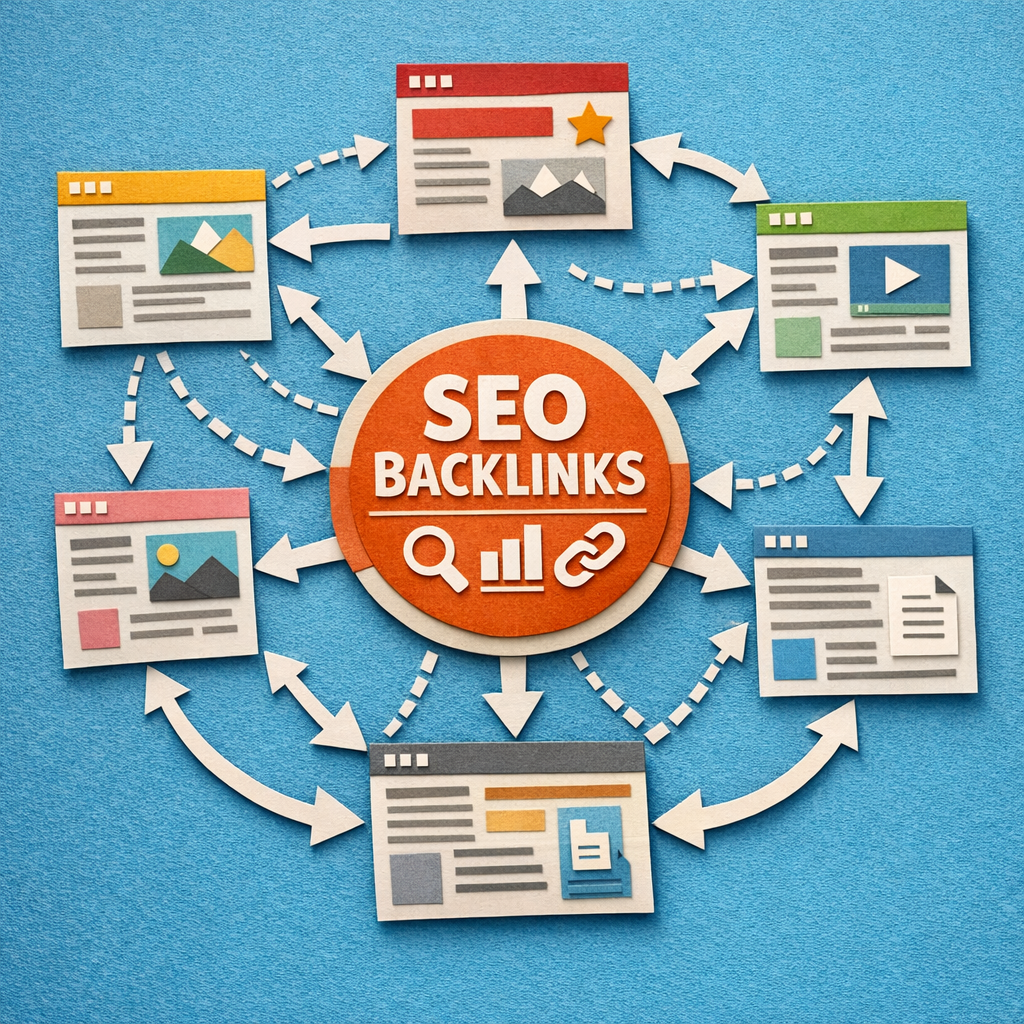
Buying backlinks as a service means paying someone to do outreach on your behalf. It works, it is expensive per link, and the cost scales exactly in line with the number of links you want.
Before comparing providers, it is worth knowing there are two ways to solve this problem: pay a service per link, or run software that earns links continuously. This list covers both, starting with the software option because it is the one most buyers do not know exists.
How we checked this list
Every provider below was loaded on its live site in August 2026 and captured there. An earlier version of this page recommended a provider that turned out not to exist at all, which is why every entry here has a screenshot taken from its own live site. Prices are quoted only where a provider publishes them, which most agencies in this category do not, so treat the figures as indicative and get a quote.
Two models, two cost curves
| Model | What you pay for | Cost at 10 links | Cost at 100 links |
|---|---|---|---|
| Agency or service | Each link placed | Roughly $2,000 to $5,000 | Ten times that |
| Software you run | A monthly subscription | Flat | Flat |
That difference is the whole decision. Below roughly ten links a year, an agency is simpler. Above that, the per-link model gets expensive fast.
Quick answer
- Software instead of a service: Distribb
- Best digital PR and editorial placements: SerpLogic
- Best for high-authority brand mentions: uSERP
- Best custom campaigns: Stellar SEO
- Best productised packages: FATJOE
- Best white label for agencies: Rhino Rank
- Best content-led link earning: Siege Media
1. Distribb, the reason you might not need a service at all

State this plainly first. Distribb is software, not an agency. Nobody runs a campaign for you, nobody joins a call, and there is no account manager assigned to your account.
What it does instead is run a backlink exchange inside a network of real businesses, placing contextual links in articles that are being published anyway, while the content engine produces the pages those links point at. There is no outreach to do and no per-link invoice. Our comparison of backlink exchange platforms covers the alternatives and how they vet the sites in the network.
The case for running it yourself: the cost is a flat subscription rather than a price per link, so it does not rise as volume rises. There is no turnaround queue behind another client's campaign. If you are an agency, you can white label the software and keep both the client relationship and the margin instead of marking up someone else's service.
The case against: there is no strategist and no negotiation. You cannot request a link on a specific named publication, there is no digital PR campaign, and nobody will pitch a journalist for you. If your goal is one placement in a major title, an agency is the right buy and this is not it.
Honest limit: you do not choose the individual partner sites, and the network is made of real businesses rather than major media. If a client expects to see a national newspaper in the report, this will disappoint them. Seven-day free trial. How that kind of network is put together is covered in our guide to building an effective backlink network.
2. SerpLogic, editorial placements and digital PR

Focused on high-authority editorial placements and digital PR rather than bulk packages or automated networks, with an emphasis on real outreach relationships.
If the requirement is links that look earned rather than bought, this is the model that produces them.
Honest limit: priced accordingly, and campaign-based rather than à la carte. Timelines are measured in months, not weeks.
3. uSERP, high-authority brand mentions

A white hat outreach agency targeting guaranteed placements on high-authority editorial sites, working on quality over volume.
Aimed at established brands rather than new sites, and the client roster reflects that.
Honest limit: among the most expensive options here, with a minimum commitment that rules out small budgets.
4. Stellar SEO, campaigns built per client

Builds a campaign around the client's goals and competitive landscape rather than selling standard packages.
The custom approach suits sites in awkward niches where a generic package would produce irrelevant links.
Honest limit: custom means slower to start and harder to compare on price. You need to know what you want before the first call is useful.
5. FATJOE, productised and predictable

Published packages with clear metrics, ordered from a dashboard. Blogger outreach, niche edits, digital PR and content, all as defined products.
For agencies that need predictable cost and turnaround to quote a client, the productised model is the appeal.
Honest limit: productised means less tailored. The placements are good for the money and rarely remarkable.
6. The HOTH, volume and self-service

One of the largest self-service link building providers, with packages across guest posts, niche edits and local citations.
Easy to start and easy to scale, which is why so many agencies use it as their fulfilment layer.
Honest limit: quality varies across products, and the cheapest tiers are the ones people complain about. Buy from the upper half of the range.
7. Page One Power, links plus linkable content

Offers white label link building and will create on-site linkable assets before starting acquisition, which is the correct order of operations.
That content-first approach is what separates a campaign that keeps earning links from one that stops when you stop paying.
Honest limit: the content step lengthens the timeline and raises the cost. Not the fastest route to a first link.
8. Siege Media, content that earns links

A full-service content and GEO agency where links are the by-product of assets people cite rather than the deliverable itself.
For brands with budget and patience, this produces the most durable results on this list.
Honest limit: agency retainer pricing and a long ramp. You are buying a content programme, not a link package.
9. Loganix, dependable fulfilment

A long-running provider offering guest posts, niche edits and a wider set of SEO fulfilment services, widely used as an agency back end.
Straightforward ordering and consistent delivery are the reasons it persists.
Honest limit: unremarkable placements. Reliable rather than exceptional, and priced in the middle.
10. Rhino Rank, white label for agencies

Explicitly positioned as white label link building, so agencies can resell placements under their own brand with client-safe reporting.
If you sell links as part of a retainer and do not want to build outreach in-house, this is the model built for you.
Honest limit: you are reselling, so your margin is set by their pricing and your quality is set by their standards. Vet a sample before committing a client.
11. Stan Ventures, offshore pricing

Guest posting and link insertion at lower price points than the US and UK agencies, with published packages.
For agencies where cost per link determines whether the retainer works, this end of the market matters.
Honest limit: lower cost shows up somewhere, usually in the quality of the sites. Check real traffic on sample domains rather than authority scores.
12. SeoProfy, campaigns with reporting

A full SEO agency with link building as one service, running campaigns with data-led reporting rather than package fulfilment.
Suits clients who want links inside a broader SEO engagement rather than as an isolated purchase.
Honest limit: buying links from a full-service agency usually means buying more than links. Fine if that is what you wanted.
13. Authority Builders, buy individual vetted links

A curated marketplace where you see the site and its metrics before you buy, rather than commissioning a campaign.
The transparency is the product. You know exactly what you are getting before you pay.
Honest limit: it is a paid link marketplace, which is against Google's guidelines regardless of how well it is vetted. Choose knowingly.
What to check before you pay anyone
Ask to see live links in your niche. Not a case study, not a logo wall. Three URLs you can open.
Check the traffic on the linking domain. A high authority score with 200 monthly visitors means the metrics were manufactured. This is the single most common way link buyers get taken.
Ask where in the page the link sits. Inside the body of a relevant article is worth having. In an author bio or a footer is not. Ask what the anchor will say too, since what anchor text does in SEO is a large part of what the link is worth.
Understand the guarantee. Links get removed. Ask what happens in month six, and whether replacement is included or billed.
Compare the annual cost against software. Ten links at $300 each is $3,000 for one campaign. Model both, as our comparison of AI tools that automate backlink building sets out. Our guide to scaling link building with automation covers what the software route looks like in practice.
FAQ
How much does a backlink service cost? Between roughly $150 and $600 per link for most reputable providers, with digital PR campaigns running into thousands per placement. Anyone quoting $30 a link is selling something you do not want. What to do with that budget once you have set it is covered in our backlink strategy guide.
Are paid backlinks against Google's guidelines? Links that pass PageRank in exchange for payment are, explicitly. Most of the industry operates here anyway. Understanding the risk is your responsibility, not the vendor's.
How many backlinks do I need? The wrong question. Look at what the pages currently ranking for your target term have, and how relevant those links are. Ten relevant links can outperform a hundred irrelevant ones.
How long until backlinks affect rankings? Typically four to twelve weeks from placement to measurable movement, longer on competitive terms. Anyone promising results in days is not describing link building.
What is the difference between a service and software? A service does outreach for you and bills per link. Software either finds prospects for you to contact or, as with an exchange, places links without outreach. The cost curves are entirely different. Our guide to building a reliable automated backlink service covers the in-house version of the second option.
Should an agency resell or run software? Resell below about five clients, run software above it. The crossover is where per-client fees start to exceed a flat subscription, and it arrives sooner than most agencies expect. Our practical guide to choosing an SEO backlink building service covers how to judge the vendor either way.
Is a backlink service different from a backlink building service? No, the terms are used interchangeably by vendors. Our separate breakdown of backlink building services covers the same market from the pricing side.
What is a niche edit? A link added to an existing published article rather than a new guest post. Cheaper and faster, and more likely to be removed later.
Where to start
If you need a handful of high-quality placements and have the budget, pick an agency from this list, ask for three live examples in your niche, and check the traffic on those domains before signing. For a small site with no budget for either, our piece on AI-powered backlink networks for small businesses covers the cheaper end.
If the number you need is larger and the budget is flat, the arithmetic favours software. Distribb runs a contextual backlink exchange across a network of real businesses and produces the content those links point at, on a subscription rather than a price per link. Agencies can run it under their own brand. Seven-day free trial.