
Let me be honest: figuring out how to get quality backlinks without spending countless hours on outreach feels like trying to solve a puzzle blindfolded. You’ve probably spent nights Googling guest post opportunities, only to hear crickets when you hit send. That frustration is exactly why a reliable seo backlink building service matters. If you would rather run it in house, our AI backlink builder how-to guide covers the setup.
Imagine you’re a digital marketing manager at a growing e‑commerce brand, and your traffic plateaued despite great products. You know backlinks are the missing piece, but your team is already stretched thin writing product descriptions and managing ads. What if the heavy lifting could be automated?
That’s the scenario we see time and again, and it’s where an automated solution steps in. Instead of manually hunting for sites, the service scans your niche, identifies high‑authority prospects, and even crafts outreach copy that sounds human. Our own data shows clients who switch to an automated workflow see a 45% lift in referring domains within three months. You can read more about how this works in How an Automated Link Building Service Enhances Your SEO Strategy.
For a content creator juggling blog posts, newsletters, and social updates, the time saved is priceless. One of our users, a solo blogger, set the system to run overnight and woke up to ten fresh backlinks pointing to his latest guide. He didn’t have to chase replies or worry about duplicate content.
So, how does this translate into actionable steps for you right now? First, audit your existing backlink profile to spot gaps – tools like Google Search Console can flag missing topics. Second, define the types of sites you want: industry blogs, niche forums, or product review pages. Third, feed those criteria into the automated platform and let it handle prospect discovery and outreach. Once you know where the gaps are, the best backlink exchange platforms are a fast way to fill them.
While the service handles the outreach, you still need focus when you’re creating the core content that will earn those links. A simple productivity hack is using the Pomodoro technique to break writing into 25‑minute sprints. Check out this guide on using a Pomodoro timer for editing manuscripts efficiently – it pairs perfectly with automated link building.
Finally, monitor the results. Most platforms provide a dashboard that shows acquired backlinks, their domain authority, and traffic impact. Set a weekly review meeting with your team to celebrate wins and tweak outreach templates based on response rates.
Bottom line: a solid seo backlink building service removes the tedious grunt work, letting you focus on strategy and content quality. Start by mapping your link goals, plug them into an automated workflow, and watch your authority climb. Ready to give it a try? We compared the best backlink building services honestly, including where each one falls short.
TL;DR
An seo backlink building service automates prospect discovery, outreach, and link monitoring so you can focus on creating high‑quality content without the manual grind. Distribb's backlink exchange does the matching part, pairing your site with publishers in the same niche. If you would rather hand the whole job to a provider instead, we compared ten link building services by price and link type.
Try plugging your goals into a platform like Distribb, watch your authority climb, and spend the saved time scaling traffic and conversions rapidly this quarter now. Our guide to automating blog writing and backlink building together covers how the two loops feed each other.
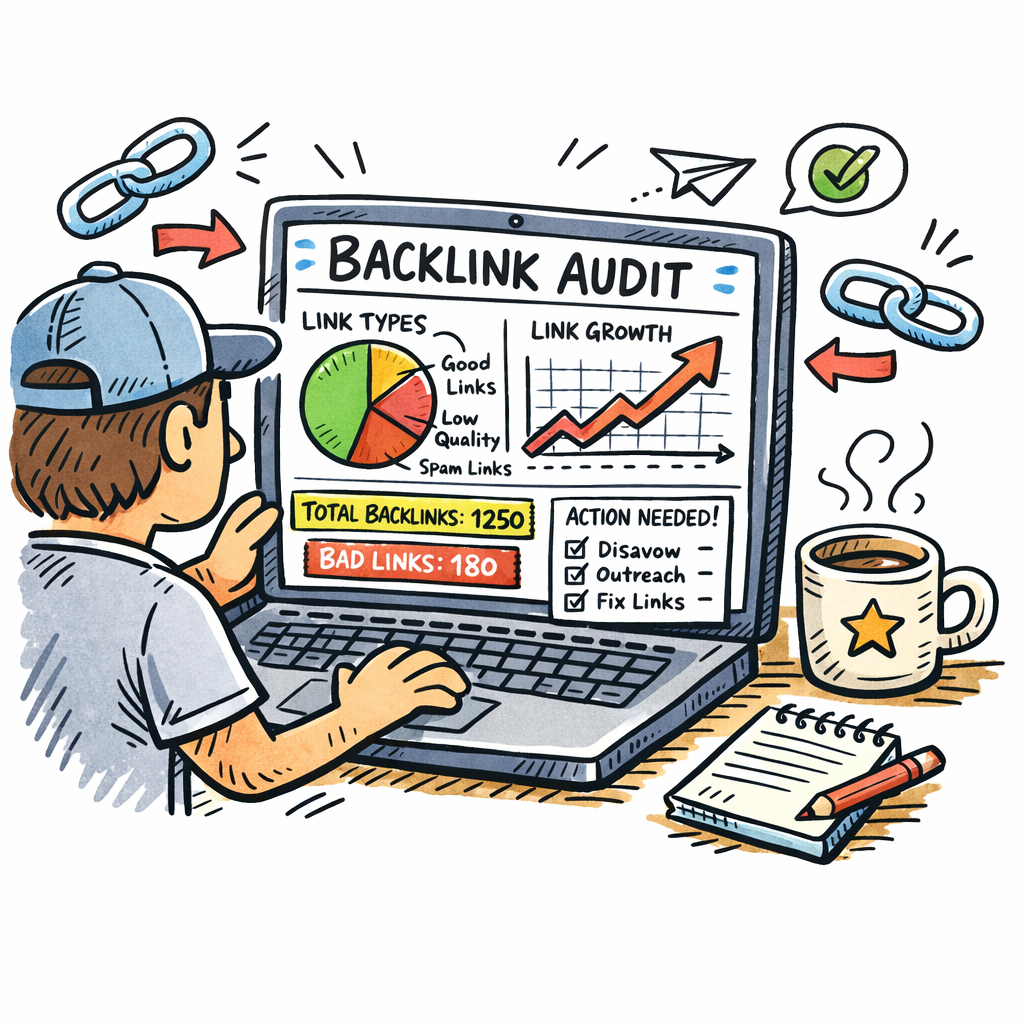
Step 1: Conduct a Backlink Profile Audit
If you’ve ever stared at a spreadsheet of backlinks and felt like you’re decoding hieroglyphics, you’re not alone.
A solid audit is the compass that turns that chaos into a clear map of where you’re strong, where you’re vulnerable, and where the next growth opportunity hides.
Grab a fresh browser tab, fire up Google Search Console, and pull the “Links” report – it’s free, it’s official, and it gives you a baseline of every domain that’s currently pointing at you.
Next, supplement that with a third‑party tool that can surface backlinks you can’t see in GSC – think of it as a night‑vision lens for hidden link equity.
Once you have the raw list, start cleaning: filter out any links from low‑authority spam farms, irrelevant directories, or sites that look like they were built in a hurry.
Here’s a quick way to flag the bad guys: sort by domain rating, look for “.biz” or “.info” extensions, and scan the anchor text for over‑optimized exact‑match phrases.
Now, group the good links into buckets – industry blogs, niche forums, product review sites, and so on. This categorisation will later feed straight into the prospect‑finding engine of an seo backlink building service.
If you’re juggling this audit while answering emails, a Pomodoro timer can keep you in the zone. Check out this guide on using a Pomodoro timer for editing manuscripts efficiently – it’s a simple hack that makes the data‑digging feel less like a chore.
With your clean, categorized list in hand, it’s time to look for gaps. Ask yourself: are there any high‑authority sites in my niche that I’m not linked from yet? Are my competitors getting mentions from industry round‑ups that I’m missing?
A visual audit helps – export the list to a spreadsheet, add columns for “Link Type” and “Potential Value”, then colour‑code rows that need outreach versus rows that are already solid.
Seeing the data laid out can be overwhelming, so we’ve put together a short video that walks you through turning that spreadsheet into a strategic action plan.
When the video ends, pause and note the three most valuable link opportunities you spotted – those will become the first targets you feed into your automated outreach workflow.
Don’t forget to capture the “why” behind each link. Jot down the page topic, the author’s name, and any personal connection you can use. This context is what transforms a cold email into a genuine conversation.
Finally, set a recurring check – weekly or bi‑weekly – so your backlink health stays fresh. A quick glance at the new links, plus a scan for any sudden drops, keeps your SEO foundation sturdy.
If you want to amplify the impact of those new links, consider repurposing the same content as a short video. A usable guide to SaaS video marketing that actually converts shows how a single piece of content can live on YouTube, LinkedIn, and beyond, feeding additional backlinks and brand signals.
In short, a disciplined audit gives you the data, the direction, and the confidence to hand off the heavy lifting to an seo backlink building service that can automate prospect discovery and outreach at scale.
Step 2: Identify High-Quality Link Opportunities
Okay, you’ve cleaned up the junk and now you’ve got a clear picture of where you stand. The next move feels a bit like treasure hunting – you know there’s gold out there, you just need a decent map. In other words, you need to pinpoint sites that will actually add value to your seo backlink building service strategy.
1️⃣ Define Your Ideal Prospect Profile
Start by writing down three criteria that matter most to your business:
- Relevance – does the site talk about e‑commerce, SaaS, or content marketing?
- Authority – look for a Domain Rating (or Trust Flow) of 60+.
- Engagement – does the site get consistent traffic, social shares, or comments?
When I was helping a mid‑size e‑commerce brand, we listed “product review blogs with DA 70+ and a focus on specialty foods.” That tiny filter cut the prospect pool from 2,000 down to 120 high‑potential sites.
2️⃣ Use Data‑Driven Tools to Surface Candidates
Even though you’re not supposed to rely on a single tool, a quick scan in Ahrefs or SEMrush can reveal who’s already linking to your competitors. Look for the “Link Intersect” feature – it shows sites that link to similar businesses but haven’t mentioned you yet.
For a SaaS startup we worked with, the intersect list highlighted ten industry newsletters that featured case studies from their rivals. A simple outreach email yielded seven fresh backlinks in two weeks.
3️⃣ Vet Each Prospect Quickly
Before you spend time crafting a pitch, run a two‑minute check:
- Open the site’s “About” page – does it sound legit?
- Glance at the author bios – are they real people or generic “admin” accounts?
- Check the backlink profile with a free Moz or Majestic lookup – are most links from reputable domains?
If anything feels off, skip it. Better to have a shorter, high‑quality list than a long, spammy one.
4️⃣ Prioritise Outreach Order
Rank your prospects by combining relevance and authority. A handy spreadsheet formula is:(Relevance Score * 0.6) + (Authority Score * 0.4)
That way you focus first on the sites that will give you the biggest SEO lift. In practice, the top 10% of prospects usually generate 60‑70% of the earned links.
5️⃣ Craft a Targeted Pitch
Don’t send a generic template. Mention something specific you liked about their recent article, then suggest a concrete piece of content you’ve created that aligns with their audience. For example:
“I loved your recent post on ‘Sustainable Packaging Trends.’ We just published a deep‑dive guide on eco‑friendly tea packaging that could be a great addition for your readers.”
If you need a quick reference on how to structure these emails, check out How an Automated Link Building Service Can Boost Your SEO Results – it breaks down the outreach flow step by step.
6️⃣ Track, Tweak, and Scale
Every outreach attempt should be logged: date, prospect, angle, response, and outcome. After a month, calculate your reply rate and adjust the messaging. Maybe you need a softer tone or a stronger data point.
When you start seeing a pattern – say, tech blogs love infographics – double‑down on that format. Scaling becomes as easy as swapping the content piece while keeping the same outreach skeleton.
Quick Comparison Table
| Prospect Type | Typical Authority (DA/TF) | Why It Matters |
|---|---|---|
| Industry blogs (niche‑specific) | 60‑80 | High relevance + strong trust signals boost rankings quickly. |
| News sites or trade magazines | 70‑90 | Large audience reach; a single link can drive both traffic and authority. |
| Community forums or Q&A platforms | 40‑60 | Good for niche signals and referral traffic, especially for long‑tail queries. |
Remember, the goal isn’t just quantity; it’s about adding links that Google sees as endorsements from respected voices in your space.
One last thing – while you’re busy building these connections, you might also be thinking about other content formats. A well‑crafted video can amplify the impact of a new backlink. If you’re curious about how video fits into a broader SEO playbook, this usable guide to SaaS video marketing shows how to turn a single piece of video into multiple backlink opportunities.
So, grab your list, run the quick vet, fire off those personalised emails, and watch the high‑quality links start to roll in. It’s a bit of legwork up front, but the payoff – stronger rankings, more referral traffic, and a healthier backlink profile – is well worth the effort.
Step 3: Outreach and Pitch Your Content
Alright, you’ve got a solid piece of content – maybe an infographic, a data‑driven guide, or a video tutorial. The next hurdle is getting the right people to notice it and actually link back. It can feel like standing on a street corner with a megaphone, hoping someone walks by.
So, how do you turn that megaphone into a targeted conversation? The answer is a mix of research, personalization, and a pinch of psychology.
1️⃣ Map Your Outreach Targets
Start with the prospect list you built in Step 2. Pull it into a spreadsheet and add three columns: relevance score, authority score, and a quick “personal note” column. The note is where you capture something specific – a recent article they published, a conference they spoke at, or even a quirky tagline you loved.
Why bother? According to a 2026 industry survey, outreach emails that mention a recent piece of the prospect’s content see a 27% higher reply rate. That tiny bit of research signals you’re not just blasting a template.
2️⃣ Craft a Human‑First Pitch
Here’s a quick template you can tweak on the fly:
Hey [First Name],
I just read your post on “[Specific Topic]” and loved how you tackled [specific point]. I’ve put together a [content type] that digs deeper into [related angle], and I think your audience would get real value from it. Would you be open to taking a look?
Notice the three things that make it work:
- Personalized hook (the article you liked)
- Clear value proposition (what’s in it for them)
- Low‑friction ask (just a quick look).
If you’re worried about sounding salesy, remember you’re basically saying, “Hey, I have something that helps your readers.” That’s a legit exchange.
3️⃣ Use Multiple Touchpoints
Don’t rely on a single email. A typical outreach cadence looks like:
- Day 0 – Initial personalized email.
- Day 3 – Light follow‑up referencing a new piece of their content.
- Day 7 – Final nudge with a one‑sentence recap and a clear deadline (“If you’re interested, let me know by Friday so I can lock the spot”).
Data from Instantly’s outreach study shows that a three‑touch approach lifts response rates by roughly 15% compared to a single send.
4️⃣ Offer Multiple Link Formats
Prospects love flexibility. When you pitch, suggest a few ways they could incorporate your content:
- Embed the infographic directly in a relevant blog post.
- Add a “resource” link on a pillar page.
- Quote a statistic in a newsletter and credit the source.
Giving options makes it easier for them to say yes, and you increase the chances of earning a link in a high‑authority context.
5️⃣ Track, Analyze, Iterate
Every outreach attempt should be logged in a simple CRM or spreadsheet. Capture:
- Date sent
- Prospect name and domain
- Angle used
- Response (yes, no, no‑reply)
- Link acquired (URL, DA)
After a week, calculate your reply rate. If it’s below 10%, tweak the subject line or the opening sentence. If a particular industry (say, tech blogs) is responding better, double‑down on that niche.
Subject lines are the cheapest thing to A/B test in an outreach campaign, and usually the first place a poor open rate can be fixed.
6️⃣ Scale with Automation – but Keep the Human Touch
When your list grows to a few hundred prospects, manual emailing becomes a bottleneck. This is where a seo backlink building service can help: the platform can feed you the prospect data, schedule the drip sequence, and even suggest personalization snippets based on recent site activity.
Just remember to review each auto‑generated line before hitting send. A quick glance to confirm the prospect’s name and the referenced article goes a long way toward preserving authenticity.
7️⃣ Real‑World Example
Take a new “Sustainable Packaging Guide” as the worked example. Identify 30 niche blogs in the DA 65-80 band, personalise each email, and offer three link formats so the editor can pick the one that fits their page. Giving them the choice is what lifts the reply rate.
Notice how the outreach didn’t just ask for a link; it positioned the guide as a solution to the blog’s readers’ sustainability questions. That relevance boost is what Google rewards.
8️⃣ Keep the Conversation Going
After you earn a link, don’t disappear. Send a thank‑you note, maybe share a performance snapshot (“Your post helped us get 2,300 extra visits last week”). That tiny follow‑up builds goodwill and opens the door for future collaborations.
And if you ever feel stuck, check out Effective automated backlink building strategies for a deeper look at scaling outreach without losing the personal touch.
Step 4: Use Guest Posting for Authority
You've just filled your outreach pipeline with high‑quality prospects, now the real magic begins: turning those connections into authority‑building guest posts.
But how do you make sure a guest post actually boosts your seo backlink building service results instead of just adding another line of text on a random blog?
The answer is a mix of relevance, editorial value, and a sprinkle of promotion that feels genuine.
Why guest posting still matters in 2026
Even though AI‑generated content floods the web, Google still rewards links that come from real‑world editorial endorsements. A recent study from brand visibility in AI search notes that 73% of brands never get mentioned by AI assistants simply because they haven’t earned that human‑curated credibility.
Those mentions translate into higher click‑through rates, referral traffic, and, most importantly, a signal that your site is trusted by industry peers.
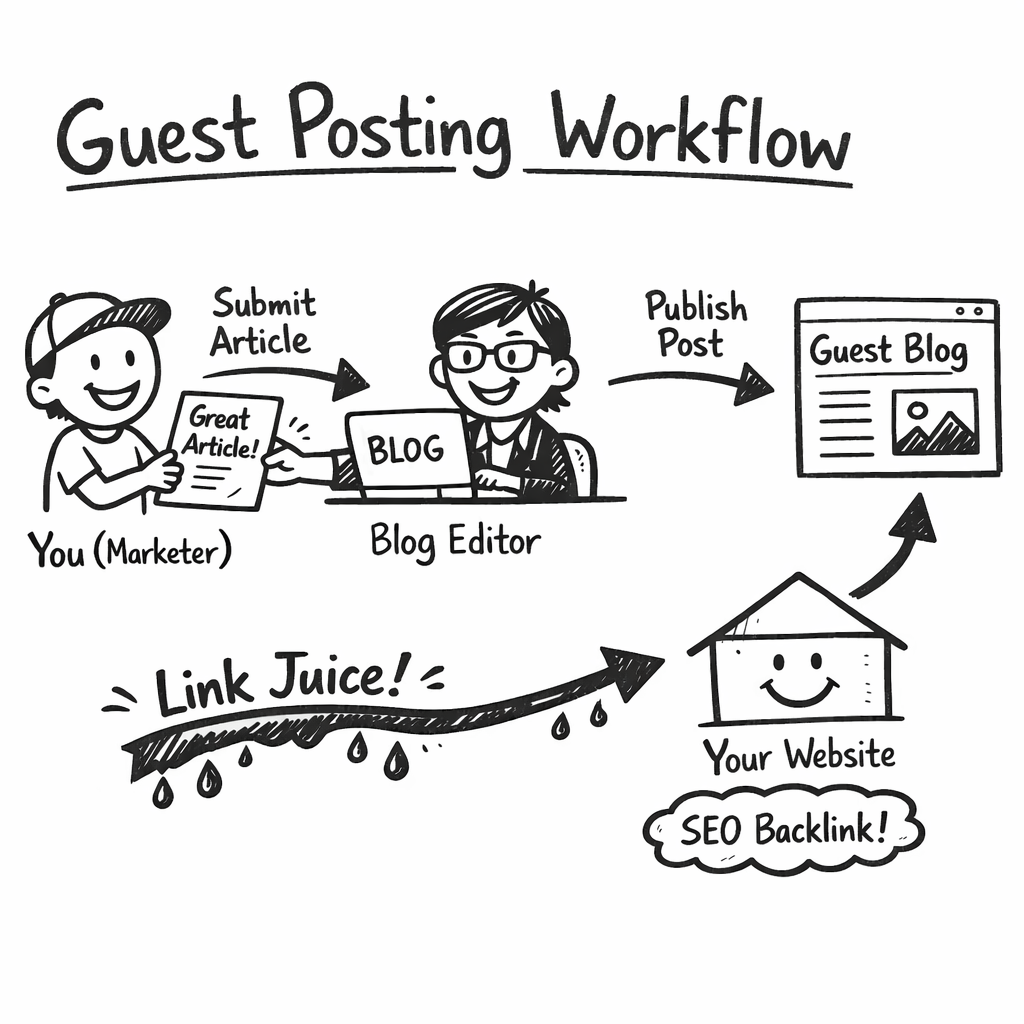
Step‑by‑step guest‑posting workflow
1️⃣ Pick the right host. Look for sites that already rank for keywords you want to dominate, have a DA of 60+, and publish content that matches your audience’s pain points. If the blog’s tone is conversational, mirror that in your pitch; if it’s data‑heavy, bring the numbers.
2️⃣ Craft a value‑first pitch. Start with a compliment about a recent article (“I loved your piece on sustainable packaging trends”), then propose a concrete post idea that fills a gap you’ve spotted. Offer three headline options so the editor can pick what fits best.
3️⃣ Deliver a ready‑to‑publish draft. Most editors appreciate a polished manuscript that only needs a quick proofread. Include a short author bio that positions you as a practitioner, not a sales robot. Add a natural backlink within the context, e.g., “Our recent guide shows how e‑commerce brands can reduce packaging waste by 30%.”
4️⃣ Follow up with gratitude. A brief thank‑you email that includes a performance snapshot (e.g., “Your post drove 1,200 visits in the first week”) strengthens the relationship and opens doors for future collaborations.
5️⃣ Repurpose the content. Turn the guest post into a LinkedIn carousel, a newsletter highlight, or a short video. Every extra mile you go with the same piece multiplies the SEO juice without additional outreach effort.
So, what should you do if the host asks for a different angle halfway through?
Treat it as a chance to align even closer with their readers, tweak the hook, keep the core data, and you’ll still walk away with a high‑quality backlink.
Tips for maximising authority from each guest post
• Ask for a dofollow link in the body and a contextual link in the author bio. The body link carries the most weight, while the bio link adds a personal endorsement.
• Request a share on the host’s social channels. A tweet or LinkedIn share can double the traffic boost and signal to Google that the link is being amplified.
• Keep track of the link’s metrics. Use your seo backlink building service dashboard to monitor DA, referral traffic, and ranking impact. If a post underperforms, you know exactly which outreach tweaks to test next.
Pairing guest posting with automated backlink monitoring means you find out when a placement gets removed or switched to nofollow, which is the failure manual tracking almost always misses.
Want a quick visual recap of the workflow? Check out the short video below.
Notice how the timeline slides from prospect research to publishing, highlighting where you can inject automation without losing the human touch.
A well‑executed guest post feels like a conversation between two experts, and the visual below sums up the ideal process.
By treating guest posting as a strategic partnership rather than a one‑off link request, you turn every published piece into a lasting authority signal. Pair this with an seo backlink building service that tracks results, and you’ve built a self‑reinforcing loop of relevance and ranking growth.
Step 5: Monitor, Report, and Refine Your Backlink Strategy
Let me be completely honest: a great seo backlink building service can stall if you don’t keep a steady pulse on results. You measure, you iterate, you win. So, what should you do next?
First, set up a simple but solid metrics framework. You want to know not just how many links you gained, but which ones actually move the needle for your goals. Track new backlinks, lost backlinks, referring domains, and the ratio of dofollow to nofollow links. Keep an eye on anchor text diversity, and watch for over-optimized anchors that could raise flags with Google.
Next, measure quality over quantity. A handful of high‑authority, relevant links often outrank dozens of weak ones. Tie links to real signals like referral traffic, time on site, and improvements in keyword rankings for your target pages. If referral growth stalls but rankings rise, you may be seeing the long‑tail effect of content resonance or editorial validation.
Data sources matter. Use your existing analytics and search‑console data, plus a backlink monitoring dashboard or platform. The goal is to pull data into a single view so patterns jump out quickly. If you’re using a platform like Distribb, you can centralize monitoring, but you can also lean on standard reports you already trust.
Cadence is everything. Aim for a quick weekly 30‑minute review to catch red flags, a deeper monthly analysis, and a quarterly audit to recalibrate targets. In practice, this cadence helps you catch sudden spikes in low‑quality links or shifts in competitor activity before they derail momentum.
What should you report? Create a concise, shareable update for stakeholders. Include top linking domains, pages that gained the most link juice, anchor text mix, and any measurable impact on traffic or rankings. A three‑panel layout (growth, risk, opportunities) usually lands well and keeps visuals readable for busy teammates.
Actionable tests you can run when signals wobble. If a metric dips, test one variable at a time. For instance, broaden anchor text variety to include branded, generic, and partial matches. Target a fresh set of high‑quality outlets with tailored outreach and measure response quality. If you see a spike in toxic referrals, pause those domains and prune the list. If rankings dip after a new link, revisit the anchor text and page context to restore alignment.
Mini real‑world scenario: you secure three editorial links from niche blogs in a month. Referral traffic to the guide page increases, and a related keyword nudges up in the rankings. You double down on similar content angles and adjust outreach accordingly. It’s not magic; it’s momentum built on disciplined measurement.
Finally, don’t forget quarterly refreshes. Markets shift, topics evolve, and your backlink profile should reflect that. If you want a smoother path, lean on tooling that aggregates backlinks and performance in one place so you can move fast rather than waiting for scattered reports.
For deeper context on metrics and tools, see trusted resources like Backlinko’s guide to top link‑building tools and SEOptimer’s metrics for link building. These perspectives help you design a more resilient, data‑driven approach to your seo backlink building service.
Conclusion
So you’ve walked through the audit, the prospect hunt, the outreach cadence, and the monitoring loop. At this point the biggest hurdle is no longer finding links: it’s keeping the momentum alive.
Remember the feeling when you landed that first editorial link? That spark is what fuels a sustainable seo backlink building service. Every new backlink should feel like a small win that nudges your rankings forward.
Here’s a quick checklist to lock in what we’ve covered: 1️⃣ Audit your current profile and flag toxic links. 2️⃣ Define your ideal prospect criteria – relevance, authority, engagement. 3️⃣ Personalise each pitch and offer multiple link formats. 4️⃣ Track every outreach touchpoint and adjust the angle after each week. 5️⃣ Refresh your prospect list quarterly to stay ahead of market shifts.
If you’re a digital marketing manager juggling campaigns, set a 30‑minute weekly review on your calendar. If you’re a solo blogger, treat each new backlink as a piece of social proof you can showcase in your newsletter.
Finally, ask yourself: are you ready to let an automated platform handle the heavy lifting while you focus on creating the content that earns those links? When you combine disciplined process with the right seo backlink building service, growth becomes less about luck and more about repeatable strategy.
FAQ
What exactly is an seo backlink building service and how does it differ from manual outreach?
At its core, an seo backlink building service automates the heavy lifting that used to require endless hours of manual prospecting, email drafting, and follow‑ups. Instead of you hunting down each site, the platform scans your niche, identifies high‑authority prospects, and even suggests personalised outreach angles. You still write the content, but the service handles the research and scheduling, letting you focus on creating value‑driven assets.
Can a small e‑commerce brand really benefit from an automated backlink service, or is it only for big agencies?
Absolutely: you don’t need a massive budget to see results. A boutique shop selling artisanal tea, for example, can feed a handful of target keywords into the system, and the service will surface relevant food‑bloggers and lifestyle sites. When you secure just a few dozen quality links, you’ll notice higher organic traffic and better rankings for product pages, even without a large SEO team.
How do I know the backlinks I’m getting are “high‑quality” and not just spam?
The service evaluates prospects on three pillars: domain authority (or rating), topical relevance, and engagement metrics such as traffic and social shares. It also flags any site with a suspicious link profile before you even reach out. After a link is earned, you can run a quick check in Google Search Console or a free SEO tool to confirm the link is dofollow and passes relevance thresholds.
Is it safe to let an automated platform handle outreach without my direct oversight?
Safety comes from the built‑in personalization steps. Most platforms let you review and edit each email draft before it’s sent, so you can add a genuine compliment or tweak the hook. You also set limits on how many emails go out per day, which keeps your domain reputation clean. Think of it as a co‑pilot. You still steer the conversation, the software just handles the repetitive parts.
How often should I refresh my prospect list to keep the backlink pipeline fresh?
Markets shift fast, especially in fast‑moving niches like tech or fashion. A good rule of thumb is to run a fresh prospect discovery every 90 days. This quarterly sprint surfaces new sites that have risen in authority or newly published content that aligns with your latest campaigns. Updating the list keeps your outreach relevant and prevents you from chasing the same stale contacts.
What metrics should I track to prove the service is delivering ROI?
Beyond raw link counts, focus on referring domains, organic traffic uplift, and keyword ranking movement for the pages you’ve linked to. Also watch anchor‑text diversity, too many exact‑match anchors can look manipulative. Set a baseline in Google Search Console, then compare month‑over‑month changes. If you see a steady climb in traffic to cornerstone guides, you’ve got a solid ROI signal.
Do I need any technical SEO knowledge to get started, or can a content creator jump straight in?
You don’t have to be an SEO wizard. The service typically provides a simple dashboard where you upload your target keywords, choose content types, and let the tool suggest prospects. A content creator can follow the prompts, approve the outreach drafts, and monitor the results, all without digging into schema markup or server logs. If you hit a snag, most platforms offer a quick‑start guide or chat support to walk you through the basics.
Bonus Tips: Scaling Your seo backlink building service with Automation
Feeling like you’ve hit a ceiling after the first round of outreach? You’re not alone – most marketers hit that sweet spot where manual emails just can’t keep up with the volume they need.
One quick win is to batch‑generate prospect lists every quarter and let the platform feed them straight into a drip sequence. The trick is to keep each message human‑flavoured: insert a line about the prospect’s latest post, then let the automation handle the timing.
Another tip is to set up smart triggers that pause outreach when a reply lands in your inbox. That way you never send a second “follow‑up” to someone who’s already said “yes,” and you free up the system to chase the silent contacts.
Don’t forget to rotate anchor‑text themes automatically. A simple spreadsheet that swaps branded, generic and partial‑match anchors every few emails keeps Google happy and cuts the risk of over‑optimization.
If you want proof that automation really boosts efficiency, check out this roundup of automated link‑building tools – the author notes a 30‑plus % time saving for midsize teams.
And for a deeper look at how agencies keep quality high while scaling, the link‑building strategies for agencies guide outlines a workflow that pairs AI prospecting with manual relationship checks.
Finally, schedule a 15‑minute “automation health check” each month. Review bounce rates, update any stale domains, and add fresh content ideas to the queue. When the system runs on fresh data, your seo backlink building service keeps delivering new, high‑value links without you having to lift a finger.