
Local keyword research is a different job from ordinary keyword research, and the difference is not that you add a city name to the end.
It is different because search volume is nearly useless at local scale, because half your best keywords have no location in them at all, and because there is no single position to rank at when the result changes depending on which street the searcher is standing on. This covers the method, the template, and the two decisions people get wrong.
Implicit and explicit local keywords
Every local keyword is one of two kinds, and most guides only deal with the first.
Explicit local keywords name the place. "Emergency plumber Bristol", "dentist near Shoreditch", "wedding photographer in Leeds". These are the ones people think of, and they are usually lower volume than the alternative.
Implicit local keywords name no place at all. "Emergency plumber", "24 hour locksmith", "dentist open saturday". Google resolves these against the searcher's location automatically, and on mobile they are the majority of local searches by a wide margin.
This matters because implicit terms are where the volume is, and a page optimised only for "plumber in Bristol" competes badly for someone in Bristol typing "plumber". Your pages need to establish location through the whole page rather than only through the target phrase: your address, your service areas, the neighbourhoods you name, the local landmarks in your copy, and your Google Business Profile.
| Type | Example | Volume | Competition | Where it wins |
|---|---|---|---|---|
| Explicit, city | plumber bristol | Medium | High | Organic results |
| Explicit, neighbourhood | plumber clifton bristol | Low | Low | Organic, fast to win |
| Implicit | emergency plumber | High | Very high | Map pack, mobile |
| Implicit, qualified | 24 hour emergency plumber | Medium | Medium | Map pack, high intent |
| Question | how much does a plumber cost uk | Medium | Low | Content, top of funnel |
| Near me | plumber near me | High | n/a | Map pack only, cannot be targeted directly |
The last row is worth stating plainly. "Near me" is not a keyword you optimise a page for. It is a signal Google resolves with proximity, your Google Business Profile, and your review profile. Putting "near me" in a title tag does nothing and it looks like what it is.
The method, in six steps
Step 1. Write down what you sell, in customer words
Not your service menu. The words a customer uses. A dentist sells "implants" and the customer searches "replacement tooth". A roofer sells "flat roof membrane replacement" and the customer searches "flat roof leaking".
Get this list from three places: what customers actually say on the phone, your own website's search box if it has one, and the questions in your inbox. Ten to thirty core terms is the right size.
Step 2. Write down every place you serve, at three levels
City, neighbourhood or suburb, and the surrounding towns you would happily drive to. Neighbourhood-level terms are the cheapest wins in local SEO and nearly everyone skips them, because the volume looks too small to bother with. The same neighbourhood-level thinking applies off search too, which our guide to hyperlocal social media marketing covers.
That volume judgement is wrong at local scale. A term with 20 searches a month and clear intent from someone two miles away is worth more than 2,000 national searches, and the tools will report 20 as "0" or "10 to 100" and make it invisible.
Step 3. Combine, then check reality in the SERP
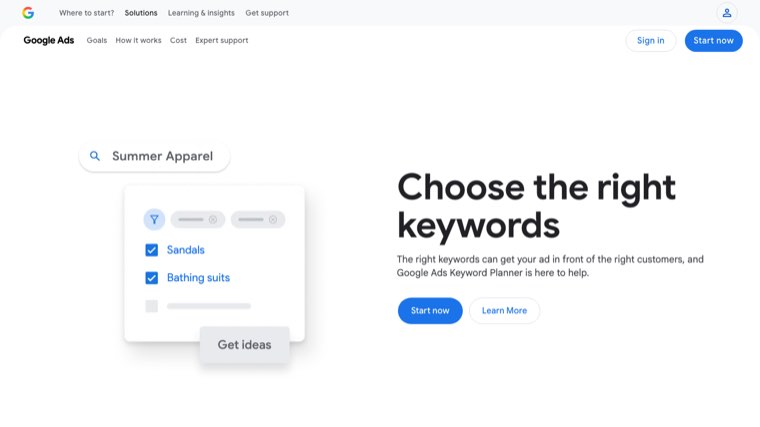
Multiply services by places, then run the list through Google Keyword Planner, which is free and includes location targeting so you can filter volume to your actual area. That location filter is the feature that makes it usable for this job.
Then do the part the tools cannot do: search five of your terms in an incognito window, from your area, and look at what comes back. You are checking one thing. Does the result show a map pack, or ten blue links? Map pack means the work is your Google Business Profile and your reviews. Blue links means the work is a page.
Step 4. Mine the sources tools do not see
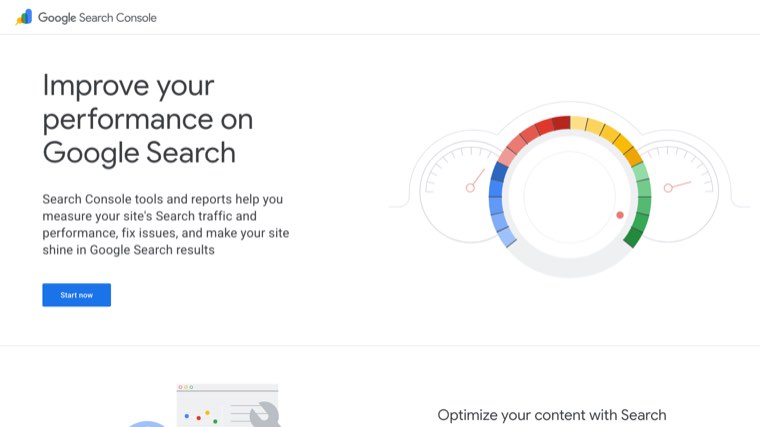
Search Console, if you have any history at all. Filter by queries containing your city and by queries with impressions and no clicks. These are terms Google already thinks you are relevant for, which makes them the shortest path to a result.
Google autocomplete and People Also Ask, done from your location. Type your service and stop, then read the suggestions. This is real query data and it costs nothing.
Your Google Business Profile insights, which report the actual search terms that surfaced your listing. Nothing else on this list gives you verified local queries for your specific business.
Competitor pages. Find the three businesses that consistently outrank you and read their page titles. Their targeting is visible for free.
Step 5. Decide what gets a page, and what does not
This is the step that separates local SEO that works from local SEO that produces forty near-identical city pages and no traffic.
Gets its own page: a distinct service, or a location where you have a real physical presence, or a location with genuinely different content such as different pricing, different staff, different case studies, different local regulations.
Does not get its own page: a location you merely drive to, a synonym of a service you already cover, or a neighbourhood variant with nothing different to say. Those belong as sections on an existing page or as mentions in your service-area copy.
The test is simple. If two pages would say the same thing with the town name swapped, you should have one page. Google has been treating those doorway pages as spam for a decade, and beyond the risk they split your own signal across pages that then compete with each other.
Step 6. Map keywords to URLs before you write anything
| URL | Primary term | Secondary terms | Type |
|---|---|---|---|
| /emergency-plumbing | emergency plumber | 24 hour plumber, plumber out of hours | Service |
| /bathroom-installation | bathroom fitters bristol | bathroom installation cost | Service |
| /areas/clifton | plumber clifton | clifton bathroom fitters | Location |
| /blog/boiler-pressure-drop | why is my boiler losing pressure | boiler pressure low | Content |
| Google Business Profile | plumber, plumber near me | emergency plumber | Map pack |
That is the whole template, and it is here in the page rather than behind an email form. Copy it into a sheet and add four columns: monthly volume, current position, the page that currently ranks, and a priority number. Fifteen rows is a working plan for most local businesses. Fifty rows is a plan nobody will execute.
Tools worth using
Free, and enough for most businesses. Google Keyword Planner for volume with a location filter. Google Business Profile for the search terms that actually found you. Search Console for what you already appear for. Google autocomplete and People Also Ask for phrasing. AnswerThePublic for question variants. For trades specifically we went through the options in our roundup of the best AI SEO tools for plumbers.
Paid, when local is your main channel. BrightLocal for local rank tracking, citation audits and review monitoring, and it is the most complete local-specific platform at a small business price. Whitespark for citation building and the local citation finder. Localo for a lighter, cheaper Google Business Profile focus. Moz Local for listings management across directories at scale. The full comparison, with prices checked in October 2026, is in our guide to local SEO software.
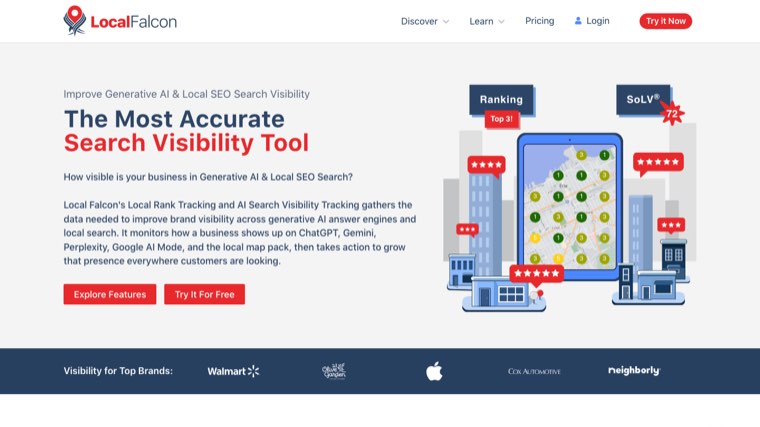
Local Falcon deserves its own mention because it solves a problem the others report around. It checks your map pack position from a grid of physical coordinates across your area and returns a heatmap, which is the only honest way to see local ranking. More on that next.
Why a single local ranking number is a lie
Ask most tools where you rank for "plumber bristol" and you get one number. That number is an average of a thing that varies enormously across a few miles.
Map pack results are computed with proximity as a heavy factor. You can be first from your own postcode, seventh from two miles north and absent from four miles east, all at the same moment for the same query. A single reported position hides all of that and it is the reason local rank tracking often disagrees with what the business owner sees on their own phone.
Two consequences follow. Track locally with a grid tool if map pack visibility matters to your revenue, because it turns "we rank fifth" into a map of where you are invisible. And judge your progress by the size of the area you rank in rather than by the position, because expanding your radius is what growth looks like in local search.
Handling multiple locations
Two to five locations. One page per location, each with its own address, its own phone number, its own staff, its own reviews and genuinely different copy. One Google Business Profile per location, each with its own service list.
Six to fifty. Same structure, plus a location index page and a consistent URL pattern. This is where a template becomes necessary and where the temptation to generate pages from a spreadsheet has to be resisted, or at least filled with real per-location content.
Service area businesses with no storefront. You cannot make location pages for every town you drive to. Set your service area properly in your Google Business Profile, write one strong page per genuine service, and name your areas naturally inside it. Then compete on reviews and on content, which are the levers you actually have.
Turning the research into results
The keyword list is not the deliverable. Three things are.
Your Google Business Profile categories and services, which should use the exact terms from your research rather than your internal names. This is the highest-return ten minutes on this page for any business that appears in the map pack. Our local SEO guide covers the profile work in full.
Your page titles and H1s, which should carry the primary term naturally. Not stuffed, and not "Plumber Bristol | Bristol Plumber | Plumbers in Bristol".
Your content plan, built from the question terms rather than the service terms. Those questions are how people find you before they are ready to buy, and they are the cheapest local rankings available because national sites do not target them. Our guide to local SEO for electricians works through a full example, and AI powered local SEO covers what changed with AI answers.
Frequently asked questions
How is local keyword research different from normal keyword research? Volume matters far less, intent and proximity matter far more, and half your best terms contain no location at all. A term with 20 local searches a month can be worth more than a national term with 2,000.
Should I target "near me" keywords? Not as a phrase in your page copy. Google answers those with proximity, your Google Business Profile and your reviews. Complete the profile, gather reviews and keep your address consistent everywhere, and you will appear for them.
How many local keywords should I target? Ten to twenty for a single-location business, mapped to specific pages. More than that on a small site produces pages competing with each other rather than more traffic.
Do I need a separate page for every town I serve? Only where you have something genuinely different to say, such as a real address, different pricing or local case studies. Pages that differ only by town name are doorway pages, and they split your own ranking signal even when Google ignores them.
What is the best free tool for local keyword research? Google Keyword Planner with its location filter, backed by your own Google Business Profile insights, which is the only source that reports the real terms that surfaced your specific listing.
Why do my local rankings look different on my phone than in my tool? Because map pack results change with physical location. Your tool reports one position for a whole city, and your phone reports the truth from where you are standing. Use a grid-based local tracker if this matters to you.
Where to start this week
Pull the search terms from your Google Business Profile insights, add your top ten services in customer words, and combine them with your neighbourhood names rather than only your city. That list is more useful than anything a tool will generate for you, and it takes an hour.
If the follow-on work is the problem, which is usually the content plan rather than the keyword list, Distribb handles the research and the publishing and manages the Google Business Profile side including review replies and posts. The keyword list is the easy half.