
Search "how to improve search engine rankings" and you get the same nine items in a different order. Write better content, fix technical SEO, build backlinks, improve page speed, use schema. All of it is true. None of it tells you which one is your problem.
That matters because these tactics are not interchangeable. Spending three months on backlinks when your actual constraint is that half your pages compete with each other will produce nothing, and you will conclude SEO does not work. The tactic list is the easy part; picking the right one is the whole job.
So this guide inverts the usual order. It starts with a diagnostic that narrows nine possible constraints down to one or two, then covers the fix for each, with realistic timelines for how long each takes to show up.
Start here: which constraint is actually binding
Work through these in order. Stop at the first one that describes your site, because that is where your effort should go.
| Symptom | Likely constraint | Go to |
|---|---|---|
| Pages are not in the index at all | Crawling or indexing | Indexing |
| Indexed, but zero impressions | Nobody searches what you wrote about | Keyword selection |
| Impressions, position 30+ | Content quality or relevance | Content |
| Impressions, position 8 to 20, stuck | Authority, or self-competition | Links and consolidation |
| Position 5 to 10, few clicks | Titles, or the query gets answered on the SERP | Click-through |
| Rankings were fine, then dropped | Algorithm update, or something broke | Recovery |
| Good rankings, wrong visitors | Intent mismatch | Keyword selection |
Most people skip this and start with whatever tactic they read about most recently. Two checks tell you where you are, and both are free.
Open Search Console, go to the performance report, and set the date range to the last three months. Look at total impressions first. If impressions are near zero, you have an indexing or keyword problem, and no amount of content quality work will help. If impressions are healthy and clicks are not, you have a position or click-through problem instead. Google is not the only place to check, either: Bing Webmaster Tools gives you the same view for Bing, and it is worth knowing which other search engines besides Google your audience uses.
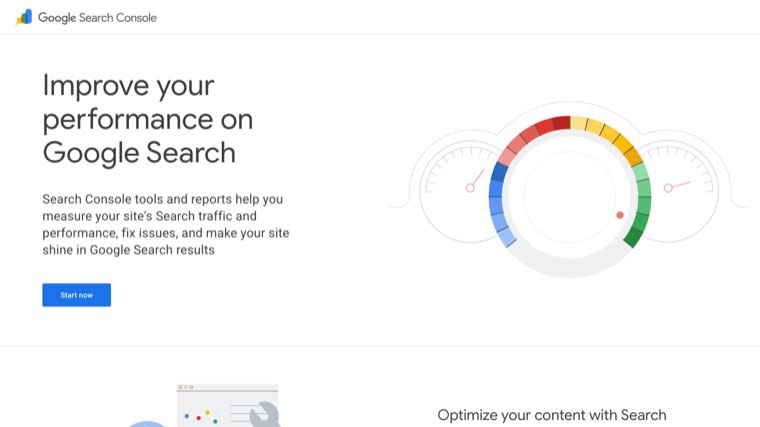
Then check coverage. If pages you care about are not indexed, nothing else on this page matters until that is fixed.
Indexing: the constraint nobody checks first
A page that is not indexed cannot rank, and this is more common than people expect, particularly on newer sites and on large sites with thin templated pages.
Search site: followed by your URL. If nothing comes back, the page is not indexed. In Search Console, use the URL inspection tool for the specific reason. That query goes into the same Chrome box that handles web addresses, which is the subject of our explainer on search Google or type a URL.
The usual causes, in rough order of frequency: the page is blocked in robots.txt, a noindex tag survived from staging, the page is orphaned with no internal links pointing at it, the content is too thin to be worth indexing, or the page is a near-duplicate of another page and Google chose the other one.
Orphaned pages are the most common and the easiest to fix. Crawl your site, list the pages with no internal links pointing at them, and link to them from somewhere relevant. Internal linking is the cheapest ranking work available and most sites are leaving it on the table.
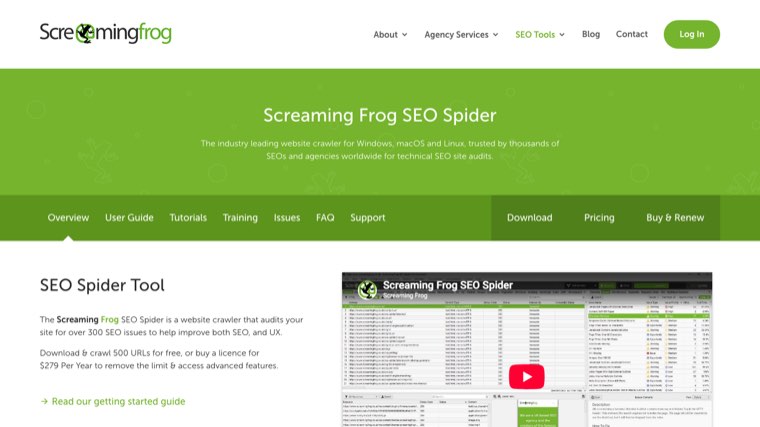
Timeline: days to a few weeks once fixed.
Keyword selection: ranking for things nobody searches
If you have indexed pages and almost no impressions, you are writing about things people do not search for, or you are writing about things far too competitive for your site.
Two failure modes here and they need opposite fixes.
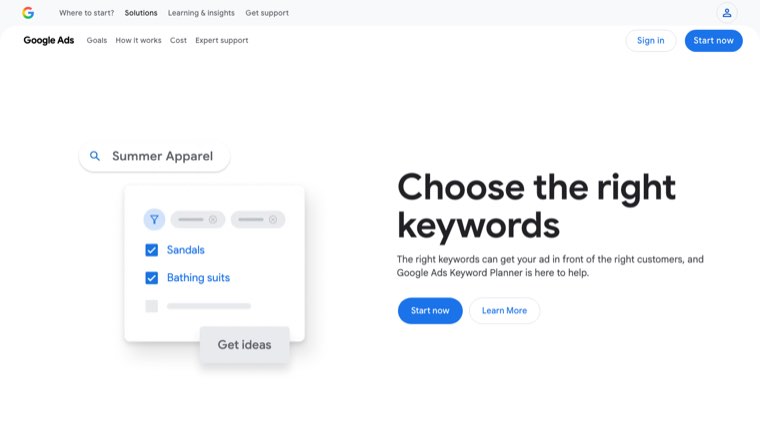
Writing for terms with no demand. You picked topics from intuition rather than data. The fix is keyword research with actual volume attached, and a bias toward specific, lower-competition terms while your site is young.
Writing for terms far above your weight. You targeted a head term where every result is a site with thousands of referring domains. You will not win that with better writing. The fix is to go narrower until you find terms where the current top ten are beatable.

The honest check on competitiveness: search your target keyword and look at who ranks. If the first page is all major brands and established publishers, pick something narrower. If there are forum threads and thin pages in the top ten, you have found an opening.
A useful discipline here is to stop judging keywords by search volume alone. A term with 2,000 searches that you will never rank for is worth less than a term with 60 searches that you can own inside a quarter. Our comparison of the best keyword research tools covers which of them report difficulty in a way you can actually trust.
Timeline: two to six months from publishing to meaningful position, longer on a new domain.
Content: what actually separates position 4 from position 30
If you have impressions but sit at position 30 or worse, your page exists and Google does not think it is a good answer.
The fix is rarely "write more words". Three things move this reliably.
Cover what the ranking pages cover. Open the top five results and list their sections. If they all answer a question your page skips, that is a gap you can close. This is more mechanical than it sounds and it works.
Answer the actual query, immediately. If the query is a question, the answer should appear near the top, plainly stated, not after eight paragraphs of context. This matters more now than it used to because both Google and AI assistants extract direct answers.
Add something none of them have. Original data, a real example with numbers, a tool, a table nobody else built. Matching the field gets you to page one; exceeding it gets you up the page.
Timeline: two weeks to three months after republishing, and faster for a page that already has impressions than for a new one.
Self-competition: the constraint that looks like an authority problem
This one deserves its own section because it is widespread, invisible in most tools, and we have direct evidence for how bad it gets.
If two or more of your pages target the same query, they split signals and both underperform. It looks exactly like an authority problem, so people respond by building links, which does not fix it.
We ran this audit on our own site and the numbers were worse than expected. Working through a backlog of underperforming pages, roughly two thirds turned out to be duplicates of a stronger page we already had. In one review of twelve pages queued for rewriting, eight were cannibalising an existing page that was ranking better. Rewriting any of them would have added a competitor to a cluster we were already losing to ourselves.
How to find it: in Search Console, filter by a query and look at which pages receive impressions for it. If several of your URLs appear for one query, and none of them ranks well, that is your constraint.
The fix is consolidation, not optimisation:
- If one page is clearly stronger, 301 the weaker one into it and merge anything useful from the loser into the winner.
- If they genuinely serve different intents, differentiate them properly, including their titles and their internal links.
- If they are near-identical, keep one.
Timeline: four to twelve weeks after the redirects are in place. This is often the fastest large improvement available on an established site, because you are concentrating signals you already have rather than earning new ones.
Authority and links
If your content genuinely matches or beats what ranks, and you are still stuck around position 8 to 20, authority is the likely constraint.
What still works, in order of return per hour:
Digital PR and original data. Publish something worth citing: a survey, an analysis of your own aggregate data, a benchmark. This is the only approach that reliably earns links from sites that would never respond to an outreach email.
Free tools and calculators. If the calculation is tedious and someone has to do it, a free tool accumulates links for years.
Genuine relationships and exchanges. Guest contributions on real publications, partner and integration pages, and reciprocal arrangements with non-competing sites in your space.
What does not work: bought links from vendors who will not name the sites, mass directory submissions, and comment or forum spam. These range from useless to actively harmful.
One caution on measurement. Referring domain counts are a proxy, not a goal, and it is easy to grow the number while the pages that matter gain nothing. What you want is links to the specific pages you are trying to rank, from sites that are topically relevant. Fifty links to your homepage will not move a product page. Our write-up on how to get more backlinks goes through the approaches in more detail.
Timeline: three to nine months, and the effect compounds rather than arriving at once.
Click-through: ranking well and getting nothing
This is the 2026 problem that most guides written before this year do not address.
You can rank at position 5 and receive no clicks, because the answer appeared on the results page in an AI overview or a featured snippet and the searcher never needed to leave.
We can put numbers on this from our own Search Console rather than quoting a study. On this domain, a set of conversational queries accumulated roughly 14,000 impressions at an average position of 8.5 and produced zero clicks. Across a recent 90 day window, 71% of the articles we had published earned no clicks at all.
Two responses, and only one of them is about titles.
Fix what is fixable. Titles and meta descriptions that promise something specific do earn clicks. Compare your click-through rate against the typical rate for your position, and rewrite the outliers.
Change what you target. For queries that get answered on the results page, no title will save you. Shift effort toward commercial and problem-solving queries where the searcher needs more than a sentence, and treat definitional queries as brand exposure rather than a traffic source.
Timeline: days to weeks for title changes, which makes this the fastest experiment on this page.
Technical SEO: the floor, not the ladder
Technical work rarely creates rankings. It removes things that suppress them, which means it is worth doing once properly and then leaving alone.
The short list that actually matters: pages load in a reasonable time on a phone, the site works on mobile, HTTPS is on, there are no broken internal links or redirect chains, canonical tags point where you intend, and your sitemap reflects reality.
The long tail of technical audit findings, the hundreds of warnings a crawler will happily generate, mostly does not matter. A site with perfect technical scores and mediocre content loses to a technically imperfect site with excellent content every time.
The trap with technical SEO is that it is legible. A crawler gives you 400 issues and a score out of 100, which feels like progress in a way that "write a better page" does not. That legibility is why teams over-invest in it. If you want a structured pass rather than an open-ended one, our guide to running an SEO audit with a tool covers what to check and what to ignore.
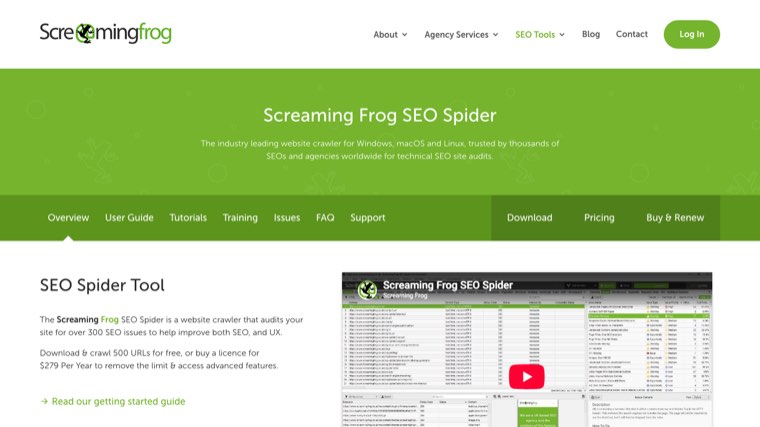
Timeline: immediate to a few weeks, and mostly it prevents losses rather than producing gains.
How long each of these actually takes
No competing guide on this query puts realistic timelines in one place, which is why expectations are so consistently wrong.
| Fix | First signal | Full effect | Effort |
|---|---|---|---|
| Indexing and orphan pages | Days | 2 to 4 weeks | Low |
| Titles and meta descriptions | 1 to 2 weeks | 4 to 6 weeks | Low |
| Internal linking | 2 to 4 weeks | 2 to 3 months | Low |
| Consolidating duplicate pages | 3 to 6 weeks | 2 to 3 months | Medium |
| Improving an existing page | 2 to 6 weeks | 1 to 3 months | Medium |
| Publishing new pages | 2 to 3 months | 6 to 12 months | High |
| Building authority | 3 to 6 months | 9 to 18 months | High |
The pattern worth noticing: everything cheap and fast involves pages you already have. New content and links are the slowest and most expensive routes, and they are where most people start.
Measuring whether it worked
Rankings move for reasons that have nothing to do with you, so measure in a way that survives noise.
Track impressions before clicks. Impressions on your target queries move first and are the earliest honest signal that Google has re-evaluated the page.
Track a small set of target queries rather than a large one. Two hundred tracked keywords always average out to "roughly flat". Twenty chosen keywords tell you something.
Compare against the same period last year rather than last month, because seasonality in most categories is larger than the effect you are looking for.

Where Distribb fits, and where it does not
Distribb covers the content half of the list above: keyword research with volume and difficulty, clustering so you do not create the self-competition problem in the first place, internal linking, publishing into your CMS, and a backlink exchange for the authority side.
The honest limitations. We do not do technical SEO audits, so crawling, indexing diagnostics and site speed are jobs for a crawler and Search Console, not for us. We also will not fix an existing cannibalisation problem for you; consolidation decisions are judgement calls about which page deserves to survive, and that needs a person looking at the data.

We are named here rather than ranked first because this is a diagnostic page, not a tools comparison. Depending on which constraint you landed on, our guide to internal linking and topic clusters or the AI SEO agent page will be more use than the product overview. If the constraint turned out to be publishing volume rather than any single page, our roundup of blog automation tools covers that end.
How we approached this
The diagnostic table is drawn from working through a backlog of underperforming pages on this domain and recording which constraint actually applied in each case, rather than from a published framework.
The self-competition figures are our own: a review of twelve queued pages found eight cannibalising a stronger existing page. The zero-click figures are our own Search Console data for distribb.io over a 90 day window. Both describe one site in the SEO software category and your ratios will differ.
The four pages currently ranking for this query, from Search Engine Journal, Semrush, TechTarget and a university guide, were each read in full before this was outlined. Each is a numbered tactic list of eight or nine items; none includes a diagnostic step, a timeline table or an FAQ, which is where this page tries to add something.
Common questions
How long does it take to improve rankings? Depends entirely on the constraint. Fixing indexing or titles shows up in weeks. Building authority takes six to eighteen months. The timeline table above breaks this down, and picking the fast fixes first is usually correct.
Why did my rankings drop suddenly? Check for a known algorithm update on the date first, then check that nothing broke technically, then check whether a competitor published something better. Sudden drops across the whole site suggest an update or a technical fault; drops on a few pages usually mean competition.
Do I need to publish new content constantly? No, and it is often the wrong priority. Improving and consolidating pages you already have is faster and cheaper than publishing new ones, and on most established sites there is more upside in the existing library than in adding to it.
Does page speed affect rankings? Mildly, as a tiebreaker. A slow site with the best answer usually still wins. Fix egregious slowness, then stop optimising it and go work on content.
Should I worry about keyword density? No. Use the term naturally, in the title and early in the page, then write for the reader. Density targets have not been meaningful for many years.
Can I improve rankings without backlinks? Yes, for low and medium competition terms, and this is the whole argument for targeting specific queries while your site is young. For competitive commercial terms, no.
Where to start
Open Search Console and look at impressions for the last three months. That single number tells you whether your problem is that Google cannot see you, that nobody searches what you wrote, or that you are visible and not chosen.
Then take the one constraint that matches, do the fix from the relevant section above, and give it the timeline in the table before deciding whether it worked. Working one constraint at a time is slower to start and much faster to a result than doing a bit of everything.