
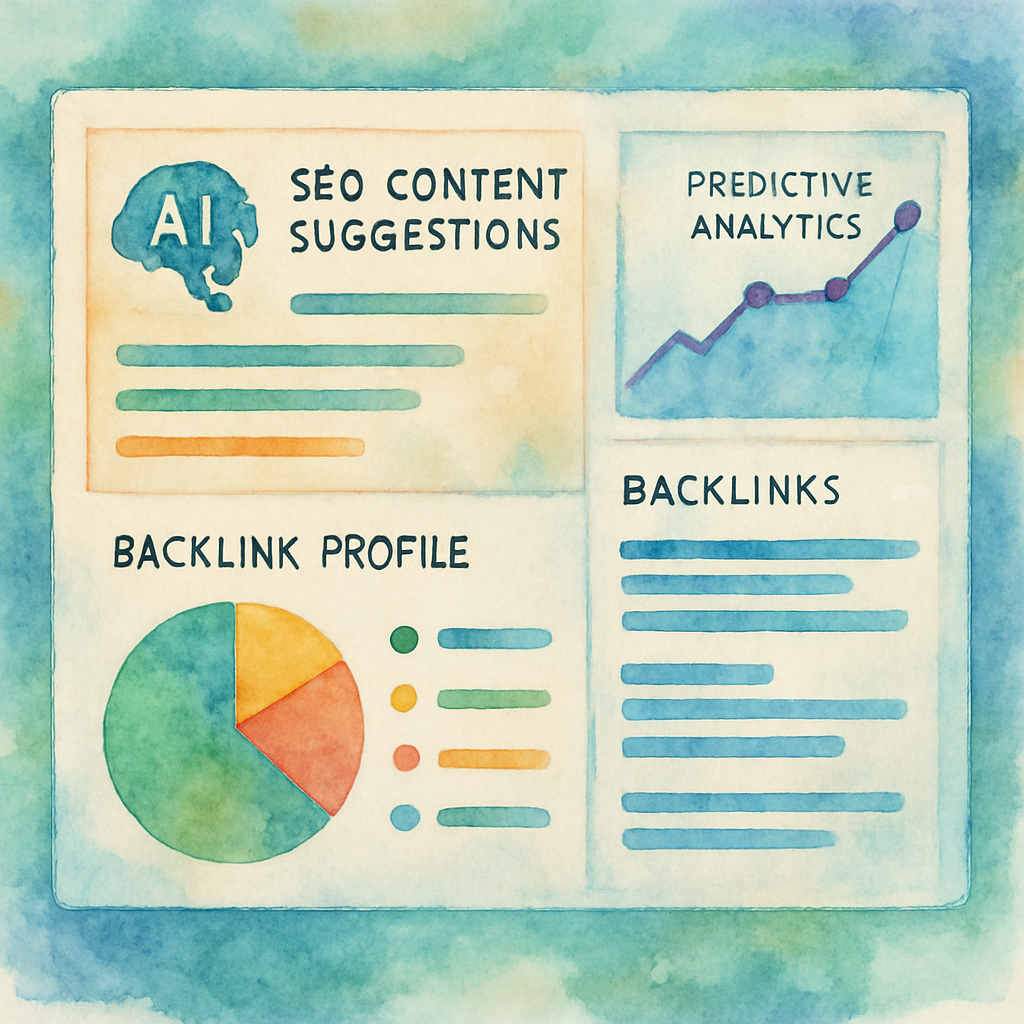
Content and links are the two halves of organic growth, and almost every tool does one of them. The handful that claim both usually do one properly and bolt the other on.
This covers what a genuinely combined platform has to do, which types exist, and the honest answer to whether one tool or two is the better purchase. Every product named here was checked live in August 2026.
Why so few tools do both
The two jobs have almost nothing in common technically. Content is generation and publishing: writing, optimising, pushing into a CMS. Links are relationships and negotiation: finding sites, contacting people, agreeing something.
One is a production problem, the other is a marketplace problem. A company good at one rarely builds the other from scratch, which is why the combined products are either acquisitions stitched together or a strong half plus a weak half.
The exception is a genuine network effect, where the same set of customers can supply each other with links. That is the only structure we have seen that solves the marketplace half without an outreach team.
What "both" would actually mean
If a tool claims to cover content and links, these are the things to check.
- Does it publish, or just draft? A tool that hands you a document has not covered the content half.
- Do the links come from real sites with real readers? Or from a network built to host links.
- Does it link internally too? New pages published without internal links are the most common silent failure, and it sits between the two halves.
- Is the link building disclosed and consensual? Anything generating links without a human on the other side agreeing is the risky category.
- Does one half exist mainly to justify the pricing? Frequently the answer is yes.
The four categories that exist
Content platforms with a link marketplace attached. Strong on production, and the links are usually paid placements bought through a partner. Works, and you are buying links, so understand what that means for your risk tolerance.
Link tools with an AI writer bolted on. Strong on prospecting and outreach management, with a writing feature that will not produce anything you would publish unedited.
Exchange networks. Both halves come from the same set of customers linking to each other. This is the structure that genuinely solves both, and the trade is that you do not choose the specific sites.
All-in-one SEO suites. Semrush and Ahrefs will research both halves in depth and execute neither. They are the right purchase for research and the wrong one if you were expecting output.
The content half, honestly assessed

Content automation is a solved problem in the narrow sense. Research, drafting, optimisation and publishing all work well enough that the production bottleneck has genuinely moved.
What has not been solved is judgement. Nothing decides whether a topic is worth writing about for your specific business, and nothing catches a factual error in a draft. Both remain human jobs and both are where automated content programmes fail.
The one piece that sits between content and links, and that almost everything ignores, is internal linking. Publishing 100 articles that link to nothing is common, and it is why so many content programmes underperform their volume.
The link half, honestly assessed
There are three real routes to links, and software changes how each is administered rather than removing the work.
Outreach, where you pitch sites and some say yes. Software finds prospects, verifies addresses and sends sequences; the pitch has to be written by a person or reply rates collapse.
Paid placements, where you buy a link. Fast, transparent about what it is, and against Google's guidelines if undisclosed. Plenty of businesses do this knowingly; the mistake is doing it without knowing.
Exchanges, where two businesses agree to link to each other's content. Both sides consent, both get a link from a real site, and no outreach is needed.
Everything else being sold as automated link building is manufactured links: auto-approved directories, comment systems and blog networks. Our guide to automated SEO software covers where that line sits.
One tool or two?
Two, in most cases, and the reason is straightforward: the best content tool and the best link tool are rarely the same company, and the switching cost between them is low.
Buy one tool if the combined product genuinely solves both halves for your situation, or if managing one subscription and one workflow is worth more to you than the quality difference. For small teams that is often true.
Buy two if either half is your main constraint. A business whose entire problem is that nothing gets published should buy the best publishing tool, not a compromise that also does links.
Where Distribb fits
Distribb is one of the few that covers both, and the structure is the reason. The content half does keyword research, writing, internal linking and publishing into your CMS. The link half is the backlink exchange, a network of real businesses who agree to link to each other, so both sides consent and no outreach is needed.
The honest limitation: you do not choose which sites link to you. If your goal is a link from one specific publication, that is an outreach job and we do not do it, so you would use us for steady authority and run outreach separately for targeted placements. We are also not a rank tracker or a reporting platform, so measurement stays in Search Console.
Our roundup of SEO automation tools compares the wider market, and our guide to automating content creation and link building together covers the workflow rather than the products.
How we approached this
The categories here come from evaluating products in both halves rather than from vendor descriptions, since almost every tool in this space describes itself as covering both.
We sell a combined product, which is a reason to check our reasoning. It is also why the section above says plainly that two specialist tools beat one compromise in most situations, including situations where the compromise is ours.
What none of them do
Decide what to write about. Search volume tells you what is popular, not what is near a sale for your business.
Guarantee a link. Any product promising a specific number of links per month is either buying them or manufacturing them, and both should be a deliberate decision rather than a surprise.
Fix a site that cannot be crawled. Publishing more onto a technically broken site multiplies the problem.
Frequently asked questions
Is it cheaper to buy one tool that does both? Usually, and cheaper is not the same as better. Compare against the cost of the two specialists you would otherwise buy before deciding.
Are automated backlinks safe? It depends entirely on whether a human agreed to the link. Consensual exchanges and outreach are fine; auto-generated links on sites that exist to host links are not.
Which half should I fix first? Content, almost always. Links to pages that do not exist yet are not a strategy, and a site with thin content will not hold rankings however strong the links are.
Do I still need Semrush or Ahrefs? For competitor research and link prospecting, yes. Execution tools and research tools are different purchases and most teams need one of each.
How long before either half shows results? Content in four to twelve weeks per page. Links compound over three to six months. Anything promising faster is describing an exception.
Next step
Work out which half is genuinely your constraint, then buy for that half rather than for the pair. If both are constraints, a combined tool is a reasonable compromise and you should know which half you are compromising on.
If publishing is the constraint and links are the second problem, Distribb covers both and will tell you when targeted outreach is the thing you actually need.