

Keeping useful content moving takes more than writing a draft. You also need a way to research topics, publish on time, and help the right people find each piece.
Here are 10 content creation services, starting with Distribb.io for teams that want SEO work and publishing in one automated workflow.
1. Distribb.io
Distribb.io is an AI-powered SEO platform for agencies, SaaS founders, ecommerce brands, and SEO teams. It connects keyword research with content creation, publishing, backlink building, and AI-search visibility.

It’s a strong fit when a team wants to reduce routine SEO production work instead of hiring an agency to manage each editorial task. For example, an agency handling several client sites can use one process to find topics, prepare content, publish it, and support link growth. That differs from a writing service where people still need to coordinate research, drafts, and publishing by hand.
Distribb.io’s value is the connected workflow. A team can spend less time moving work between separate tools and more time checking whether the topics fit each client’s goals. It can also suit businesses that publish on a regular schedule but don’t have enough staff to manage every step themselves.
There’s a tradeoff. Automated content still needs human review for accuracy, brand voice, and product details. Teams should set review rules before publishing at scale, especially in technical or regulated fields. If you’re mapping topics before production, the automated content planner for SEO explains how planning can fit into that work.
For teams comparing service costs with a platform workflow, review Distribb pricing and check which tasks you want to keep in-house.
2. Brafton: Managed social content for lean teams
Brafton is a managed content provider with social posts, blog writing, video, design, white papers, and other marketing assets. It suits a lean team that needs ongoing production without hiring a full content staff.
Its social workflow can include a content calendar and platform-specific post formats. That’s useful when the marketing lead knows what the brand should say but doesn’t have time to turn every idea into a ready-to-review post. A calendar gives the team a shared view of what’s coming, while draft assets give reviewers something specific to approve.
The broader mix can help when social content needs to connect with other materials. A subject-matter interview, for instance, may inform a blog post or a longer lead-generation asset. Brafton’s managed editorial process includes research, revisions, and approval checkpoints, so teams can see how a draft moves toward publication.
The main question is scope. Brafton covers many formats, but a business that only needs automated SEO research and publishing may want a platform-based workflow instead. A managed service also needs timely brand input and approvals. If the team can’t review work on schedule, even a well-run calendar may stall.
3. Siege Media: SEO content built to earn links
Siege Media combines SEO content production with link-building work. It’s a fit for companies that want search-focused content with the potential to earn backlinks organically.
The process starts with data-led topic research, then moves through writing, editing, design, and promotion. That matters for assets where the visual idea is part of the reason someone may cite or share the page. A linkable infographic or interactive page needs a different brief from a standard blog article, and several roles may shape the finished piece.
Siege Media can produce formats such as video, photography, ebooks, infographics, and interactive content. Its work also includes updating content after publication, which gives teams a way to respond when search performance changes. That ongoing work is useful when a page needs more than a one-time draft.
Plan for a longer lead time and a hands-on approval process. Complex assets can take more work than a simple article, and the company says its process may involve multiple roles. It also isn’t a social media agency, so a team needing social copy and daily posting should confirm who handles those tasks.
4. Foundation: Content creation with distribution in mind
Foundation is an agency associated with Ross Simmonds and a distribution-first approach to content. It fits companies that know publishing alone won’t put an asset in front of its audience.
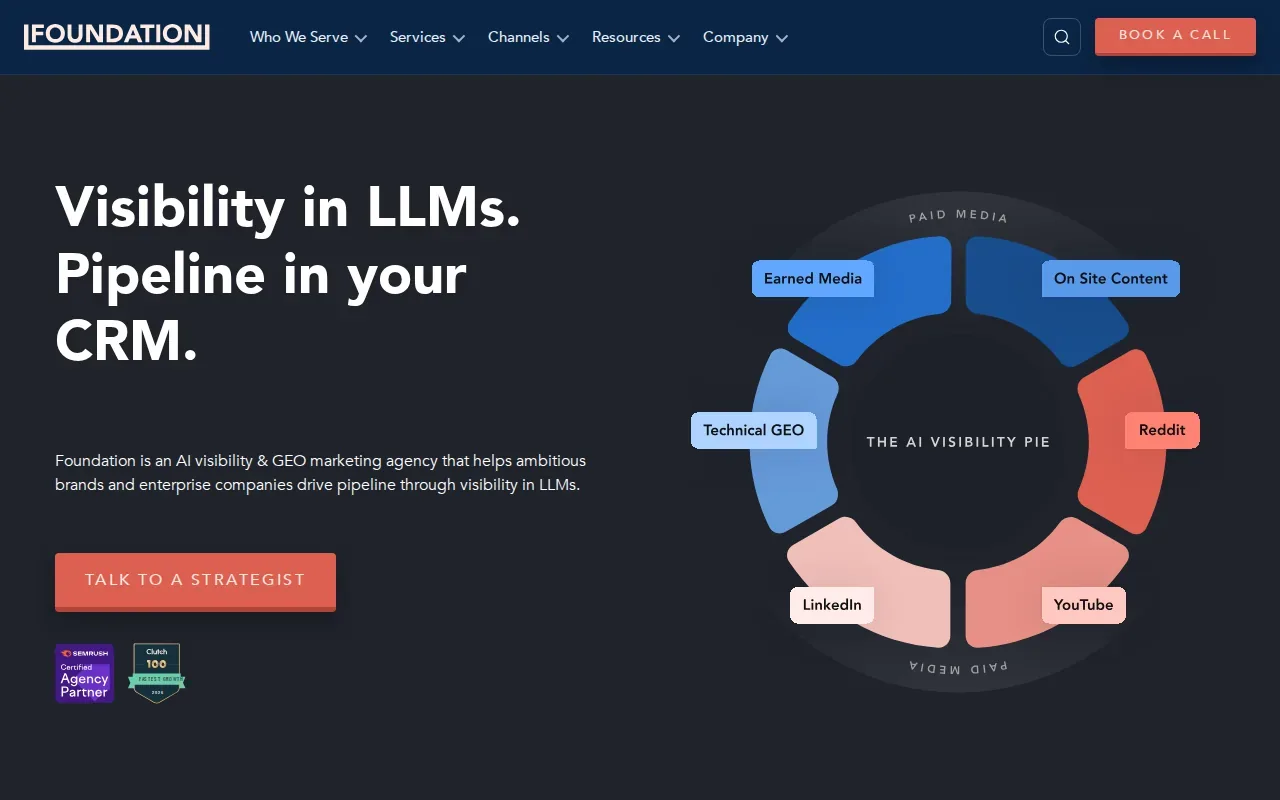
This focus changes the planning conversation. Instead of asking only what the team should write, ask where the idea should travel after it’s made. A long-form piece might need to support social sharing, email promotion, or other campaign work. Those choices can shape the angle, format, and amount of detail in the original asset.
Distribution planning also gives internal teams a clearer role. A subject expert can supply the insight, while marketing decides which channels matter and how the piece supports a wider campaign. That can help prevent the familiar handoff where an article is approved, published, and then left without an audience plan.
Ask what distribution work is included, what your team must provide, and how the agency reports on promotion. Foundation is worth considering when reach and reuse are part of the brief, not an afterthought.
5. LYFE Marketing: Ongoing social content production
LYFE Marketing manages social media content production for businesses that need regular posts without adding production staff. Its workflow includes ongoing content creation and publish-ready deliverables tied to a shared calendar.
A calendar can help a small team keep posts moving while the owner or marketing lead focuses on approvals. The service’s social work may involve copy paired with an image or video. That gives the reviewer a complete post to assess, rather than a caption that still needs an asset before it can go live.
Social content also needs platform-specific choices. A post meant for one channel may need a different length or visual treatment elsewhere. Teams should agree on which channels are in scope and how often they’ll review drafts. LYFE’s service information describes social media management as ongoing work that can include scheduling, analysis, and audience engagement.
Choose this kind of service when consistency is the problem. It’s less suited to a business whose main need is search-led article production or technical SEO. Before signing, clarify who responds to comments and messages, who approves posts, and what reporting the team will receive.
6. Animalz: Search-led briefs for content teams
Animalz is known for editorial-quality content for enterprise B2B companies. It’s a good fit when the team wants search research turned into clear, writer-ready briefs before drafting begins.
A brief helps writers understand the page’s purpose before they start. It can connect the search intent with the audience’s question and show how the piece should be structured. Repeatable brief templates are useful when several writers contribute, since they give editors a shared standard for topic coverage and direction.
This approach can help an in-house team that has writers but struggles with uneven drafts. Instead of asking for another round of revisions after writing, the team can make expectations clearer at the start. That’s especially helpful for complex B2B topics where subject experts need to review claims or add context.
Animalz is an agency option, not an automated publishing platform. The team still needs to agree on topics, provide useful input, and manage the review process. If your primary issue is the time spent moving approved work into a CMS, a brief-first service may not solve that last step by itself.
7. Grow and Convert: Editorial quality control around every draft
Grow and Convert focuses on content tied to conversions, including bottom-funnel topics. It suits companies that want content aimed at people close to a buying decision, rather than traffic as the only goal.
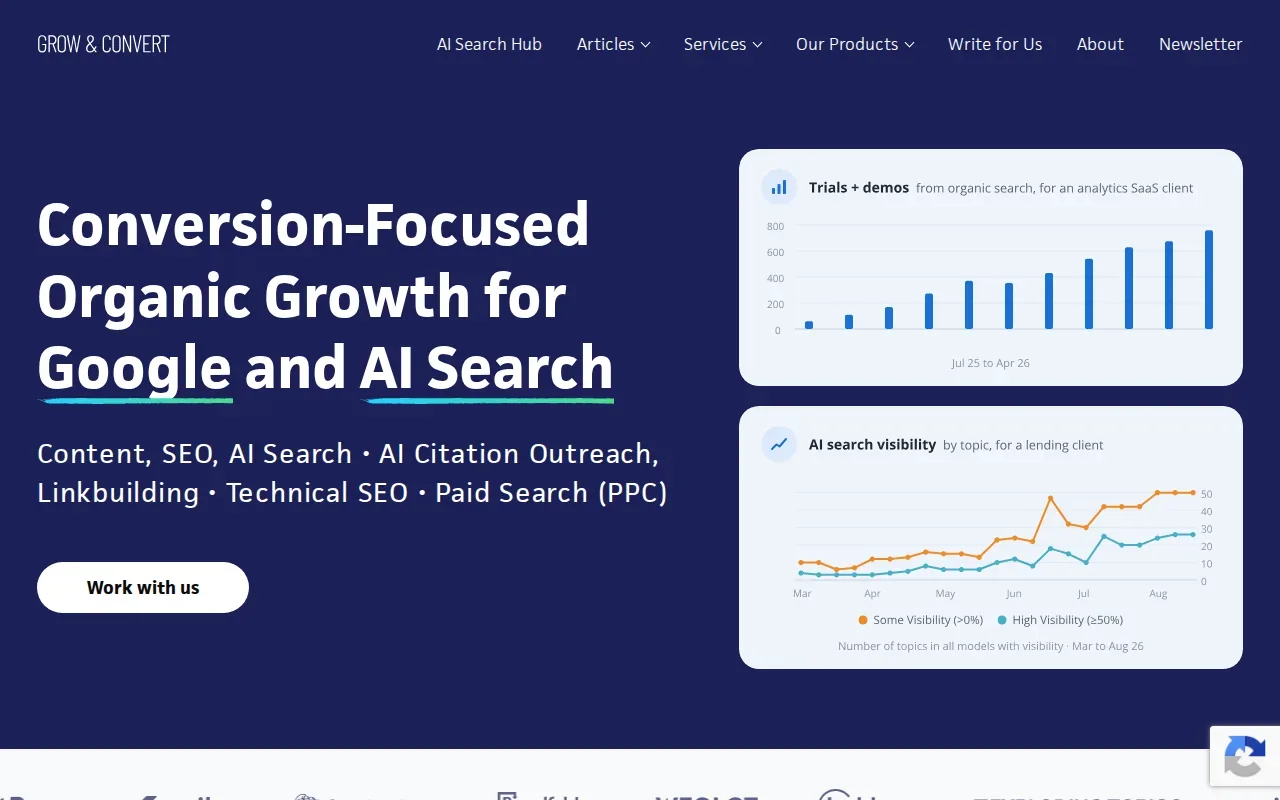
Its production workflow wraps copyediting, proofreading, and fact-checking around each draft. That’s useful when several stakeholders need confidence in a piece before it goes live. A product claim can be checked, a sentence can be tightened, and the final copy can be reviewed for errors before the publishing handoff.
The agency’s pain point SEO approach also shapes topic choices. The idea is to target questions tied to a buyer’s problem and decision, then build content around those needs. For a team measuring leads or product interest, that can make the editorial plan easier to connect to commercial goals.
Set expectations around what “conversion” means for your business. A content program can’t be judged well if the team only tracks page visits while expecting leads. Confirm how topics are chosen, what review stages are included, and which results the agency will report. It’s a stronger fit when you can define the action a reader should take.
8. Outrank: An integrated SEO content production platform
Outrank is a content production platform with keyword search, content generation, optimization, backlink building, images, and localization. It may suit teams that want several SEO production functions in one tool.
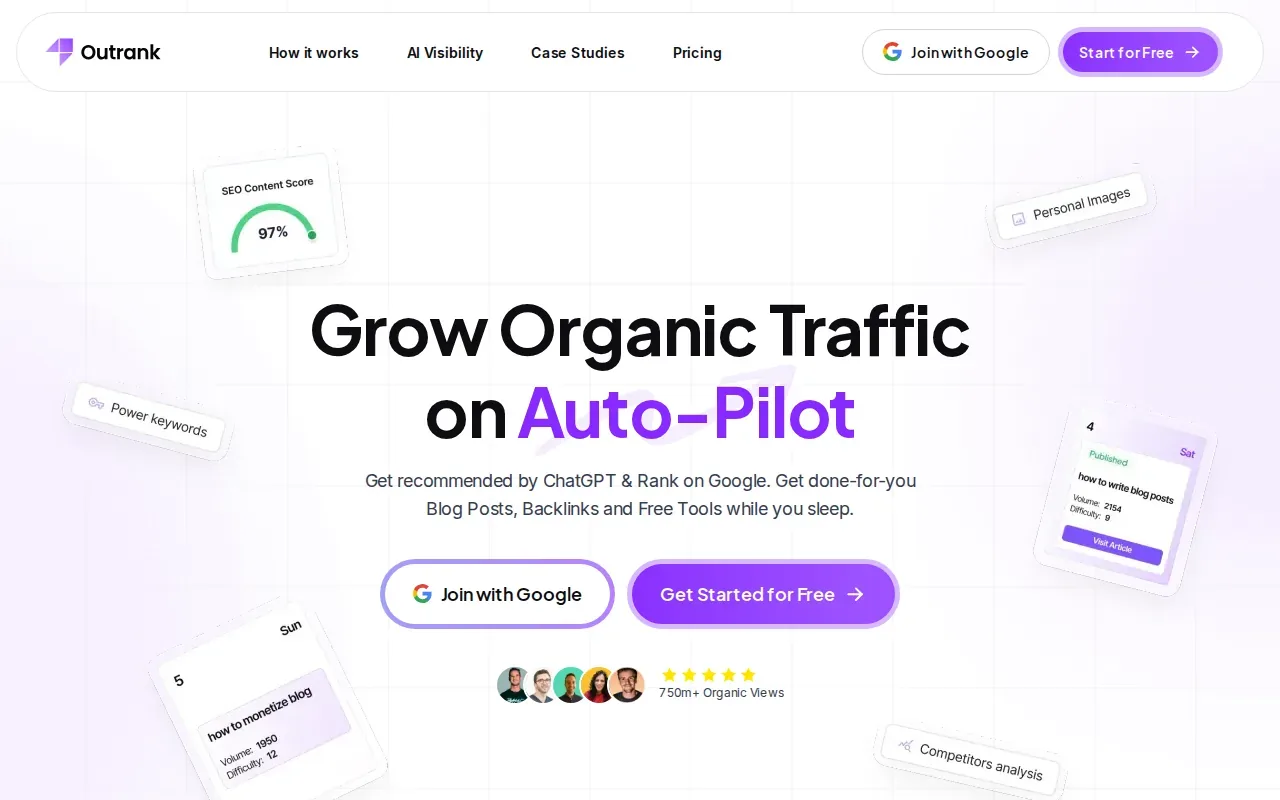
Its listed integrations include website and publishing systems such as WordPress, Webflow, Shopify, Framer, Wix, Notion, and Ghost. That range may help teams working across more than one site or CMS. Before choosing a platform, check that the connection you need is supported for your actual publishing setup.
Outrank’s scope reaches beyond writing. A team can consider keyword work, draft production, optimization, and link support as parts of the same process. That can reduce some tool switching, though the team should still decide who checks facts and makes final editorial calls.
The tradeoff is fit and control. Teams that need a human-led editorial process may prefer an agency, while teams with strict brand or compliance checks should test how review works before relying on automation. Compare the time saved against the time needed to review and refine generated content.
9. RankPill: Frequent article production with backlink support
RankPill produces articles and builds backlinks on a frequent schedule. It’s aimed at teams that want ongoing SEO output without arranging each article and link task separately.
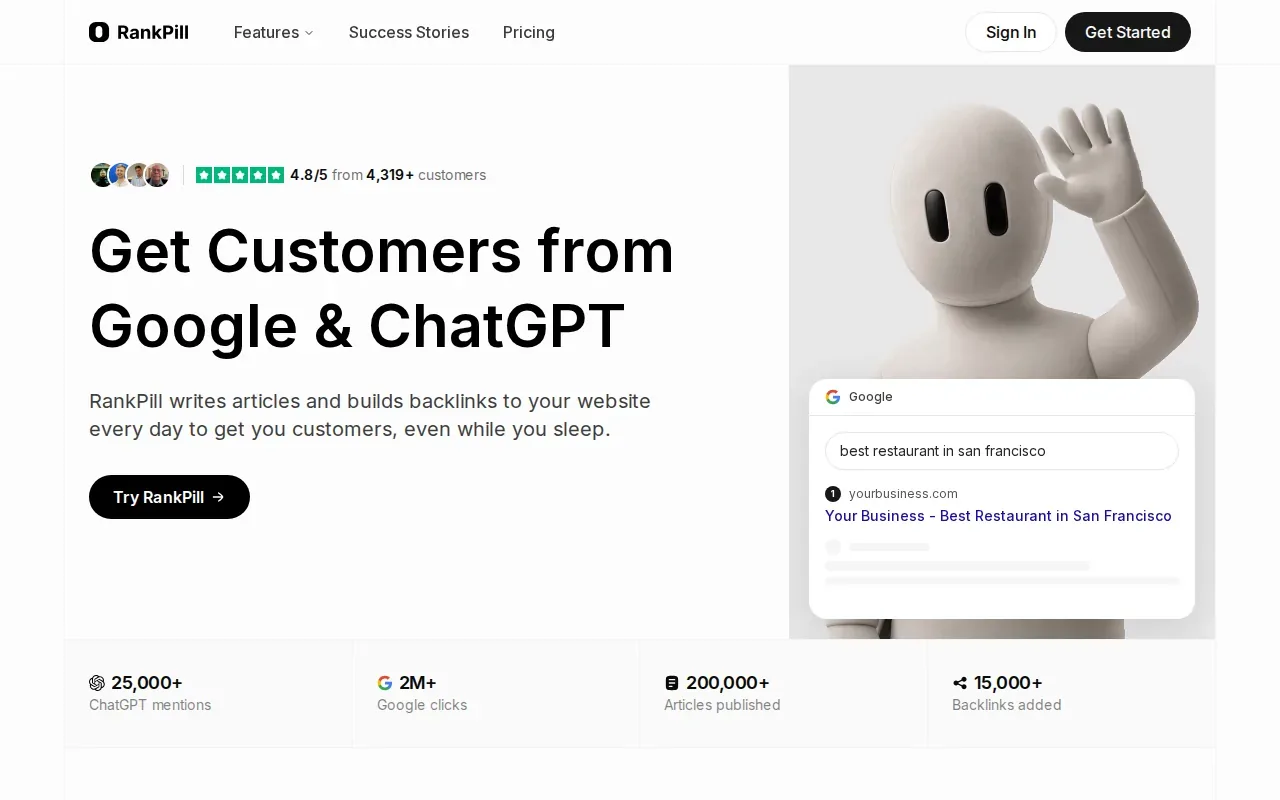
The platform lists keyword research, article writing, publishing, and backlink building among its automation features. It also connects with several publishing and workflow tools, including WordPress, Shopify, Webflow, Wix, Framer, Ghost, Notion, Zapier, and webhooks. That could suit teams that already use one of those systems for content work.
Daily production can sound appealing when a content calendar is empty. But publishing pace should match your ability to review work and support it after it goes live. A team that can’t check claims or keep its site organized may end up with more work in the queue, not less.
Ask how the service handles topic fit, content approval, and changes to published pages. Also clarify what backlink support means for your site and what reporting is available. RankPill’s frequent-output model may fit teams seeking a steady publishing process, while brands that prioritize detailed human editing may want a more editorially managed service.
10. Directive: Workflow-driven production for small marketing teams
Directive offers workflow-driven content production that turns briefs into ready-to-publish assets. It fits small marketing teams that need a clear handoff from planning to finished content.

A structured workflow can help when a team has topics but lacks a consistent way to move each one through production. Briefs give writers direction, while review stages help keep feedback from arriving in scattered messages. Before work starts, ask how the process handles edits and who approves the final asset.
Directive is a managed service, so it differs from software that automates keyword research and publishing directly. It may be a fit when people want coordination and a defined production flow. Directive doesn’t publish a standard price or package, so request a scope that names the deliverables and responsibilities.
| Decision point | Questions to ask | Why it affects fit |
|---|---|---|
| Production model | Is the work managed by people, automated, or a mix? | It sets how much review and coordination your team owns. |
| Content format | Are you buying articles, social posts, or designed assets? | The right provider depends on the work you need shipped. |
| Publishing handoff | Does the service publish, or deliver files for your team? | A draft still needs an owner before it reaches your audience. |
| Quality checks | Who checks facts, tone, and final edits? | Clear responsibility prevents gaps at approval time. |
| Pricing approach | Is cost quoted by project, output, or scope? | Compare what’s included rather than a price alone. |
Directive’s workflow focus is useful when the handoff itself causes delays. It’s less of a match if you want a self-serve system with automated publishing and backlink support.
Frequently Asked Questions About Content Creation Services
What do content creation services include?
Content creation services can include writing, design, video, social media assets, or SEO-focused articles. The exact scope depends on the provider. Some agencies manage research and editing, while software may help automate keyword discovery or publishing. Ask for a list of deliverables and clarify who handles fact checks, approvals, and distribution.
How much do content creation services cost?
Prices vary by provider, format, and scope, so there’s no single fair rate for every project. Ask for a proposal that shows what’s included, how revisions work, and whether publishing or promotion costs extra.
Are content creation services worth it for a small business?
They can be worth it when content work keeps falling behind or pulls staff away from other tasks. The right option depends on the bottleneck: a social team may need ready-to-post assets, while an SEO team may need research and publishing support. Set a goal before hiring, then track the work against that goal.
Should I hire an agency or use content software?
Hire an agency when you need people to shape the strategy, manage editorial review, or produce formats that need specialist input. Use software when repeat production tasks take too much time and your team can review the output. Some businesses use both, keeping strategy and approval in-house while automating routine steps.
How do I measure content creation results?
Measure results against the job each piece should do. SEO content may be judged by search visibility and qualified visits, while social work may be tracked through engagement or actions tied to a campaign. For lead-focused content, agree on what counts as a lead before work begins. Give new content time to gather useful performance signals.
Conclusion
If you want SEO research, content production, publishing, and backlink support connected in one workflow, start with Distribb.io. Review Distribb pricing, choose a site to connect, and begin a free trial with a clear review process for every published piece.