

Backlink data is useful only when it leads to a clear next move. The strongest tools show where rivals earn links, then help you act on those gaps. Here are the best AI SEO competitor backlink analysis tools for agencies, SEO teams, SaaS founders, and e-commerce brands.
1. Distribb.io
Distribb.io is an AI-powered SEO platform built for teams that want backlink research and execution in one workflow. It is a strong fit for agencies and businesses that don't want to move data between several tools before publishing content or building links.
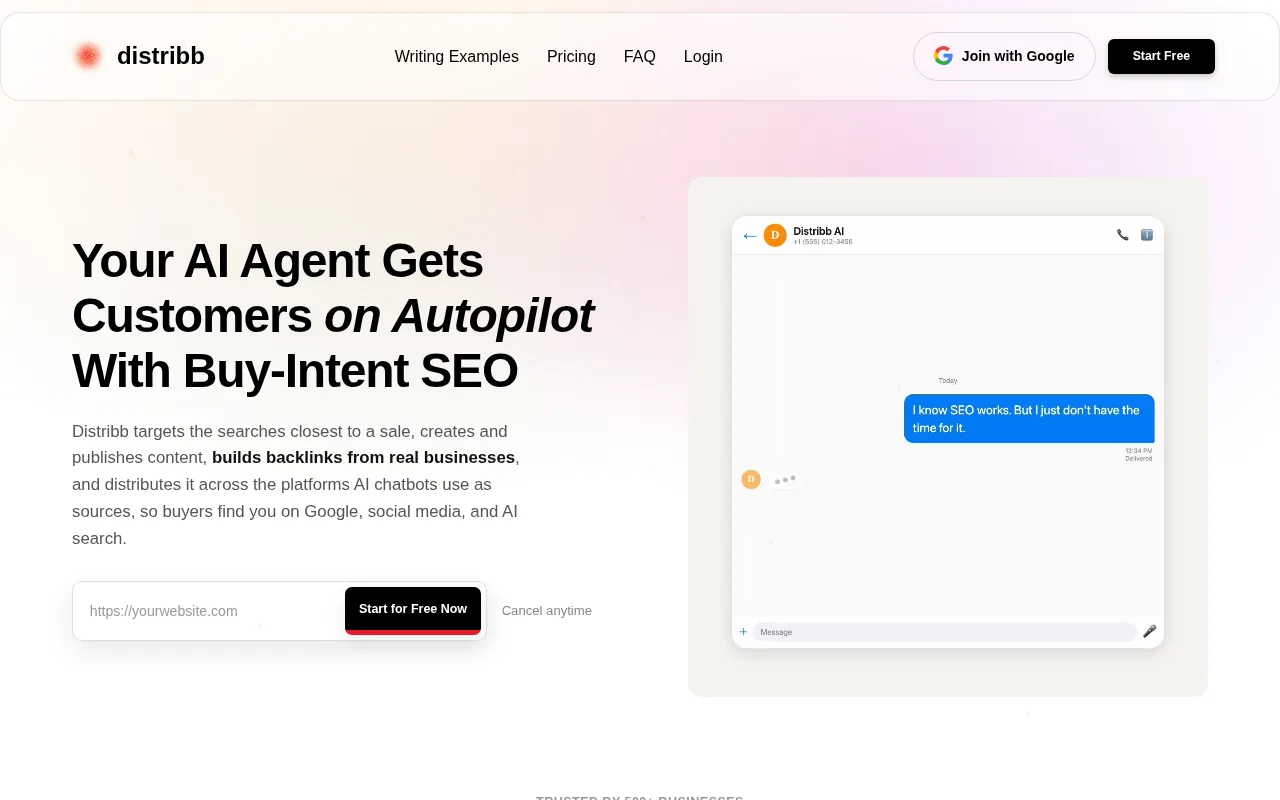
The main difference is the handoff from insight to action. Distribb.io can support keyword research, content creation, publishing, backlink building, and AI-search visibility from one dashboard. That matters when a competitor link gap is found during a client review. Instead of leaving the finding in a spreadsheet, the team can move toward a page brief, published content, and a link-building task.
Its positioning is automation-first. Distribb.io puts that workflow at the center rather than treating it as a small feature inside a broader SEO suite.
Integration depth is another point to check. Distribb.io lists seven major CMS platforms plus six more one-click options. That can cut setup time for agencies managing sites on different systems.
Start your Free Trial when you have one link gap ready to investigate and one page you want to improve. A focused test gives you more useful evidence than clicking through every screen.
2. Ahrefs, Gold-standard backlink intelligence with AI-search features
Ahrefs is a strong choice for teams that mainly need deep backlink intelligence. It suits experienced SEOs who want to inspect referring domains, compare link profiles, and study the pages that attract links before planning their own work.
Newer AI-search features add another layer. You can use the data to ask not only which pages rank, but which sources may shape visibility in AI answers.
Ahrefs also has automation through always-on audits and live SEO fixes with Project Boost, according to the cited research. That makes it more useful for teams that want ongoing site checks after the initial competitor review. Still, backlink research remains the main reason to choose it. A large link index does not automatically tell you which prospect is worth pursuing.
For example, a competitor may have hundreds of referring domains but only a small group linking to pages close to your target topic. Those pages deserve closer review than a raw count. Check the linking page's subject, placement, freshness, and likely audience before adding a domain to outreach.
The wider value of a backlink comes from its connection to a page and its readers. Wikipedia's definition of a backlink describes the basic relationship clearly: one site links to another. The analysis work begins after that definition, when you decide which links show a repeatable content or promotion pattern.
Ahrefs can be more tool than a small team needs. If you only review a few competitors each quarter, its depth may exceed your daily workflow. Pick it when link data quality and detailed investigation matter more than having every SEO task in one place.
3. Semrush, Broad competitive intelligence and automated site monitoring
Semrush is a broad competitive intelligence suite with backlink analysis, keyword research, site auditing, and traffic research. It is best for teams that need to connect a rival's link profile with the keywords, pages, paid activity, and market signals around it.
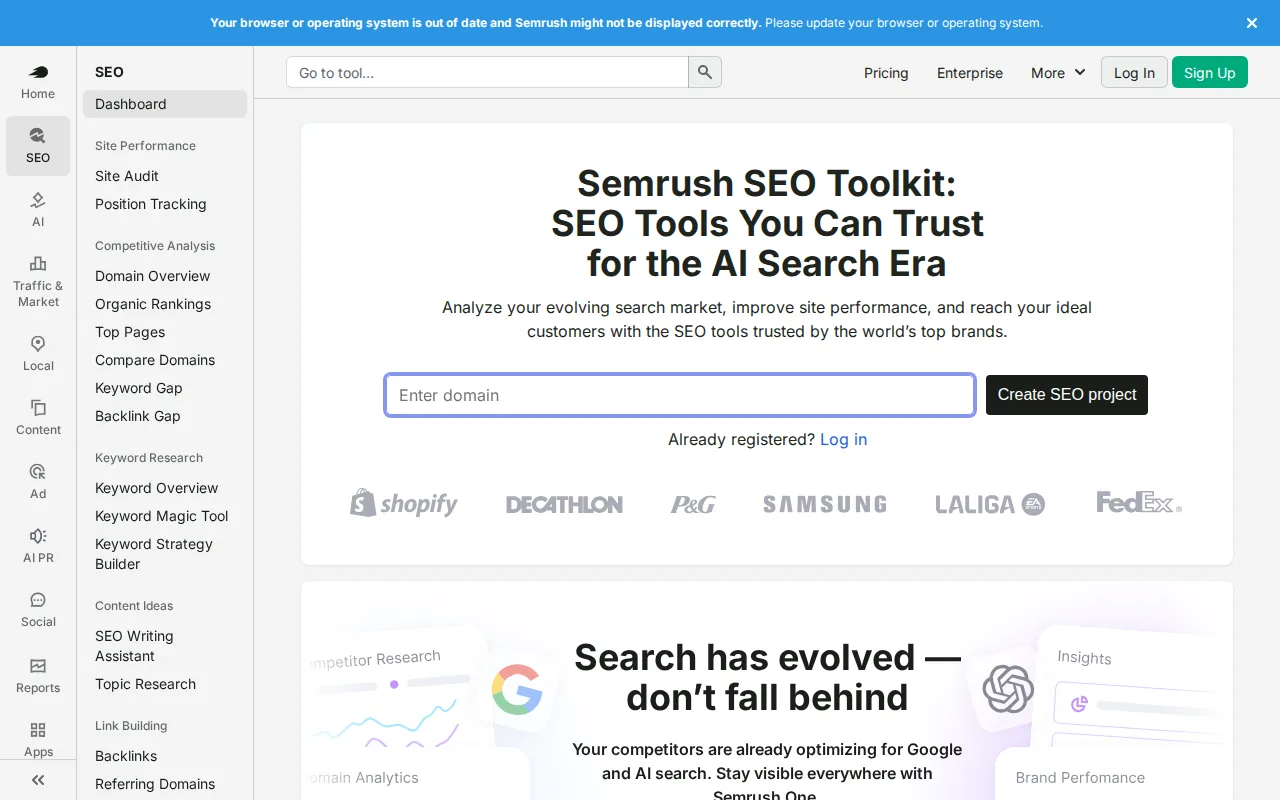
Its competitor analysis tools provide an overview of organic performance, paid strategy, backlinks, and traffic trends. That wider view helps when a link gap is only one part of the problem.
Semrush is also useful for monitoring. A team can compare a site's health over time instead of taking one snapshot during an audit. That is helpful when a competitor gains links after launching a new content campaign.
Traffic estimates from third-party data should be treated as directional rather than as your competitor's private analytics. The useful question is not whether the estimate is exact. Ask whether the same domain, page type, and channel pattern keeps appearing across your checks.
Semrush is a good match for larger SEO programs with several reporting needs. Smaller teams may use only a fraction of the suite, so compare the reports you will review each week against the cost and setup time.
4. SE Ranking, Affordable backlink monitoring for growing teams
SE Ranking is a traditional SEO suite with backlink monitoring and basic AI writing tools. It is best for growing teams that want competitor research, rank tracking, site checks, and reporting in one less complex workspace.
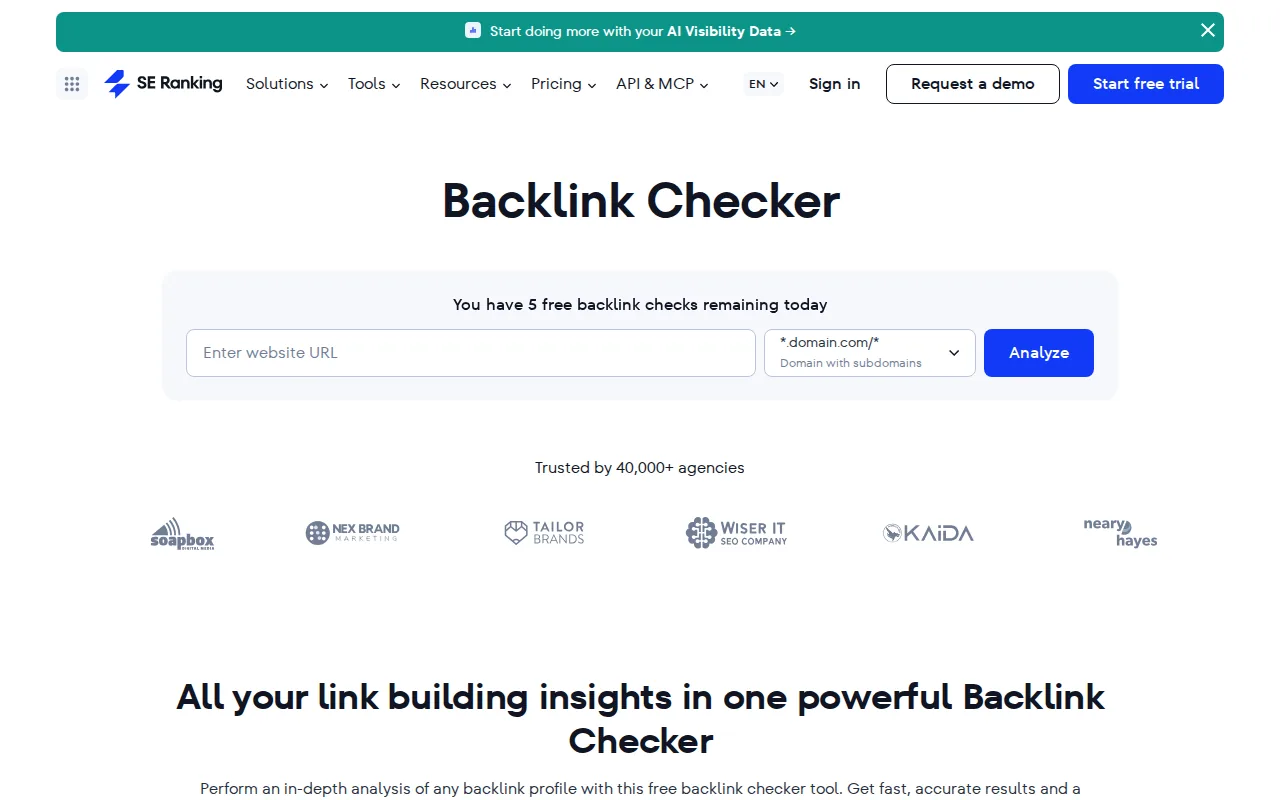
Its Competitive Research area shows domain metrics, estimated organic traffic, ranking keywords, backlinks, and referring domains. The tool also lets users compare competitor keywords by measures such as search volume, traffic, difficulty, intent, and search features. That gives a team more context than a list of linking domains alone.
SE Ranking supports historical views for traffic, rankings, and backlinks. A manager can use those views to see whether a rival's growth came from a few new pages or a steady publishing pattern. You can then decide if the gap calls for a new page, an update to an existing page, or a link campaign.
Agencies may also like its reporting and white-label features. Confirm current limits before planning a client rollout because daily checks and available features vary by plan.
For a hands-on process, the backlink gap analysis guide can help turn competing referring domains into a short prospect list. The key is to filter for relevance before assigning outreach work.
SE Ranking makes sense when you want solid monitoring without building a large specialist stack. It is less suited to teams seeking a single AI agent that carries a backlink finding all the way through content production and publishing.
5. Frase, Competitor content analysis with backlink context
Frase combines content research with backlink context. It is best for writers and content teams that need to understand why competitor pages rank, what questions those pages answer, and which pages have stronger link profiles for a target topic.
The useful angle is page-level comparison. Frase can show which competitor pages have the strongest link profiles relative to target keywords. That helps separate a page that ranks because of strong content from one that ranks mainly because its domain has broad authority.
Imagine you are planning a guide for a commercial topic. Three rivals rank above you. One has more links, another answers more related questions, and the third has a clearer structure. Frase helps place those clues beside the content brief so the writer can make a better page rather than chase every referring domain.
Frase also has a seven-day free trial with no credit card required, based on the research provided. That gives a team more time than Distribb.io's three-day trial to test a content-led workflow. A longer trial does not mean the tool will fit better. Use the period to produce one brief and compare its output with a page your team already knows well.
The limitation is scope. Frase is a stronger fit for content analysis than for a full backlink operations system. Teams still need a clear process for prospect review, outreach, link tracking, and publishing. If you want those steps connected under one AI-led workflow, Distribb.io is the closer match.
Choose Frase when the content brief is the main deliverable. Choose a broader platform when the team needs to act on backlink findings without adding more handoffs.
AI SEO competitor backlink analysis tools compared
The right pick depends on where work slows down after the report arrives. The table below compares each tool by its main job, ideal user, and most important limit.
| Tool | Best use | Best fit | Watch before buying |
|---|---|---|---|
| Distribb.io | Link research tied to content, publishing, and backlink work | Agencies and SEO teams that want one workflow | Three-day free trial requires focused testing |
| Ahrefs | Deep backlink investigation | Experienced SEOs and research-heavy teams | May be more depth than small teams need |
| Semrush | Research depth within the Semrush ecosystem | Enterprise teams already invested in the Semrush ecosystem | Assess fit with the existing workflow |
| SE Ranking | Monitoring and traditional competitor research | Growing teams and agencies | AI automation is less central to the workflow |
| Frase | Content analysis with backlink context | Content teams and writers | Backlink execution may need extra tools |
For a research-first process, Ahrefs is the clearest specialist choice. For enterprise teams already invested in its ecosystem, Semrush offers research depth. For action after the analysis, Distribb.io has the strongest fit in this shortlist because the workflow extends beyond the report.
FAQ: AI SEO competitor backlink analysis
What is AI SEO competitor backlink analysis?
AI SEO competitor backlink analysis uses software to study the sites linking to competing pages and find patterns worth acting on. AI can help group prospects, connect links with topics, and suggest next actions. You still need human review for relevance, page quality, and whether a link fits your site's readers.
What is the best tool for competitor backlink analysis?
Distribb.io is the best fit when you want backlink research connected to content, publishing, and link-building work. Ahrefs is stronger for specialist backlink investigation, while Semrush suits teams that need wider competitive intelligence. The right choice depends on whether your main bottleneck is data depth or the work that follows the report.
Can AI tools build backlinks automatically?
Some AI SEO tools describe automated backlink tasks, but automation levels differ. A tool may find prospects, suggest links, publish content, or manage a wider workflow. Check which actions are truly automated and which still need approval. You should also review relevance and quality before any link placement goes live.
Are competitor backlink gaps enough to plan a link campaign?
Competitor backlink gaps are a useful starting point, but they aren't enough on their own. Review the linking page's topic, audience, placement, and likely reason for linking. A relevant gap can suggest a content idea or outreach target. An unrelated link from a large domain may add little value to your plan.
How should a small SEO team test these tools?
Start with one site, three search competitors, and a single page you want to improve. Export or record the top referring domains, group them by topic, then check which prospects fit your audience. Measure the time from finding a gap to assigning an action. That shows more than a tour of every feature.
Conclusion
Choose Distribb.io if your team wants competitor backlink insight tied to the next steps, not left in a report. Start with one competitor gap and one target page, then test the workflow through a Distribb pricing and free trial visit. A small, focused test will tell you whether the platform fits your current SEO process.