

Most "automated link building" lists are written by people who have never run an outreach campaign. They mix real platforms with invented product names, and they never say which part of the job each tool actually automates.
The link building funnel has five stages: find prospects, qualify them, reach out, get the placement, monitor it afterwards. No tool does all five without a human. What separates these ten is which stages they cover and how much judgment they still expect from you. The tools that try to cover content and links in the same product are compared separately in our roundup of AI SEO content and link building tools.
How we picked these
Each tool had to be live and purchasable in August 2026, own at least one full stage of the funnel, and publish its pricing. We loaded every homepage ourselves and screenshotted it, which is why one widely recommended tool is missing: Postaga's domain now returns "Site Not Configured, 404 Not Found". It appears on plenty of 2026 roundups. It is not running.
Every price below was read off the vendor's own pricing page on 6 August 2026. One tool, Linkody, builds its figures in the browser and rendered none for us, so its entry says that rather than repeating a number from another article. For the tools that cross into content as well as links, our comparison of AI SEO content and link building tools covers the overlap.
We have used Distribb, Ahrefs, Semrush and Hunter directly. The rest are assessed on documented features and public pricing, and we say so rather than pretending to a test we did not run.
The two kinds of automation, and why the difference matters
Almost every argument about whether automated link building is safe comes from mixing these up.
Discovery automation finds and qualifies prospects, locates contacts, schedules follow-ups and monitors links. It touches your own workflow and nobody else's site. There is no penalty risk here at all. Our guide to getting faster wins from automated link building tools covers how to run that half without crossing into the second.
Acquisition automation places the link itself, at scale, without a human deciding whether the placement makes sense. This is where link schemes live, and where Google's guidelines actually bite.
Every tool below is graded on which of the two it does. Nine of the ten are discovery. Distribb's exchange is acquisition, which is why the matching runs on niche relevance and placements sit inside published articles rather than in link lists.
The category everyone forgets: internal linking
The highest-return link automation is usually the one that needs no outreach at all.
You already control every page on your own site. Most sites have dozens of pages with no contextual inbound links, which is exactly what audit data on large blogs keeps showing. Automating internal links moves authority to the pages you actually want ranking, and it works the same day you run it. Our wider list of automated SEO software covers the tools that handle the on-site work around it.
Distribb handles this automatically as it publishes. Ahrefs and Semrush will show you orphan pages but will not fix them. If you do nothing else on this list, fix internal linking first. Internal linking is also the job that AI SEO has come closest to solving.
Quick comparison
| Tool | Type | Automates | Best for |
|---|---|---|---|
| Distribb | Acquisition + content | Placement, content, internal links, monitoring | Founders who need links and pages shipped together |
| Pitchbox | Discovery | Prospecting, outreach at scale | Agencies running many campaigns |
| Respona | Discovery | Prospecting, contact finding, outreach | In-house teams wanting one clean workflow |
| BuzzStream | Discovery | Outreach, relationship CRM | Teams building long-term contacts |
| Semrush Link Building Tool | Discovery | Prospecting, outreach, inside a suite | Existing Semrush users |
| Ahrefs | Discovery | Prospecting, monitoring | Competitive link research |
| Hunter | Discovery | Email finding, verification, campaigns | Anyone whose bottleneck is contact data |
| Linkee.ai | Discovery | Prospecting, AI vetting, email | Teams drowning in unqualified lists |
| Majestic | Discovery | Prospecting via link intelligence | Deep historical link data |
| Linkody | Discovery | Monitoring only | Watching links you already earned |
Pricing moves constantly, so we have not frozen numbers into this table. Check the vendor. For the categories either side of link building, see our overview of SEO automation tools.
1. Distribb, our pick for teams that need links and content together
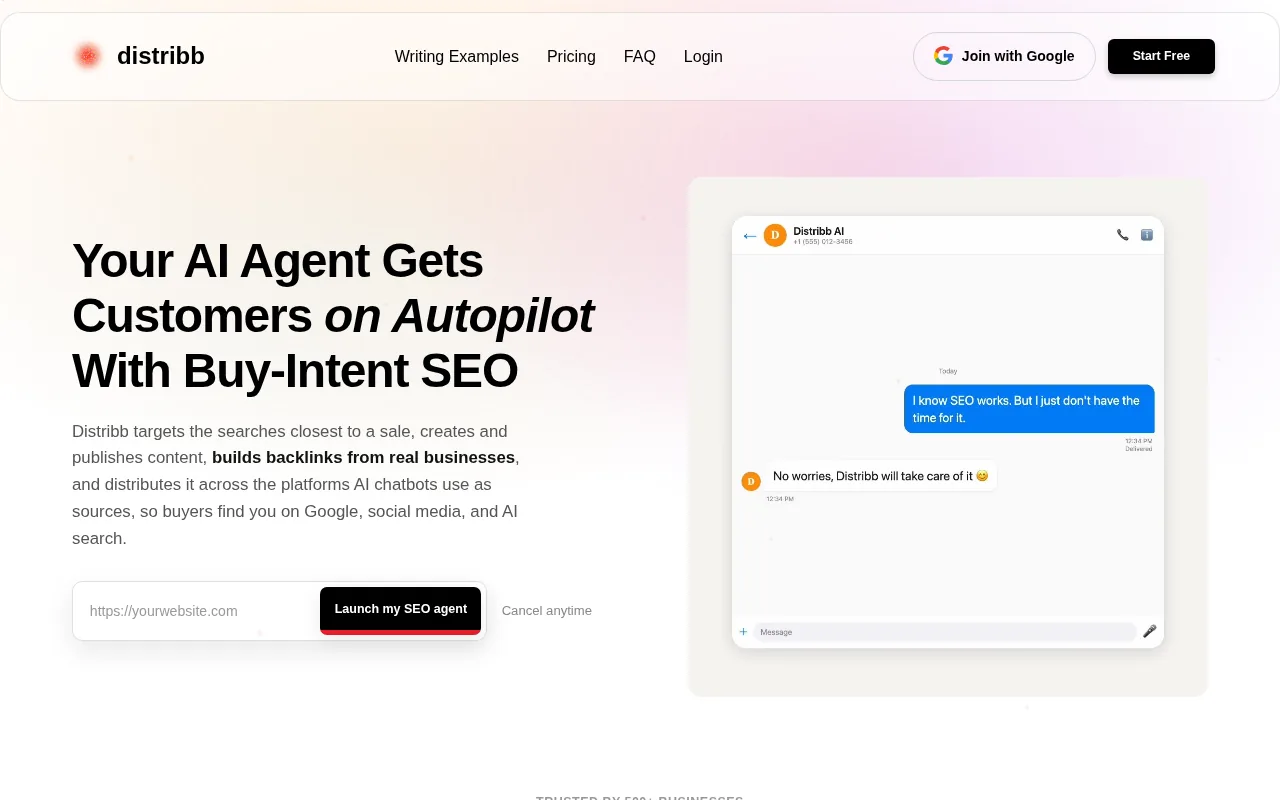
Distribb is the only tool here that produces the page the link points at.
Its backlink exchange connects your site with other real businesses in adjacent niches and places contextual links inside published articles, rather than in footers or directories. Alongside that, the content engine finds buyer-intent keywords, writes the articles and publishes them to your CMS on a schedule. The Link Outreach workflow finds roundup and "best tools" pages that already mention your competitors, identifies the author contact, and drafts a relevant pitch.
It is the one entry graded as acquisition rather than discovery, and the reason that is safe here is the shape of the network. Members never swap directly with each other, matching runs on niche relevance, and placements sit inside articles those businesses were publishing anyway. Expect 3 to 5 links a month from sites in the DR 68 to 74 range, with the first landing inside the first month.
Pros: It automates the placement, which is the step every discovery tool leaves you holding. Internal linking is handled as it publishes, and that is the highest-return automation on this page. Links and the pages they point at come from the same subscription. Volume is predictable month to month rather than dependent on a reply rate.
Cons: There is no backlink index, so it cannot audit an arbitrary domain and you will pair it with Ahrefs or Majestic if that is the job. Done-for-you outreach sits on Accelerator rather than the standard plan, and the exchange caps out at what the network publishes, so you cannot spike to 50 links for a launch.
For who: Founders and lean teams whose bottleneck is that nothing gets published, not that no keyword was found. Wrong choice if you need to research somebody else's link profile.
Pricing: $97/month with a 7-day free trial, exchange and content included. Accelerator, which adds done-for-you outreach and distribution, is $495/month.
2. Pitchbox, outreach at agency scale
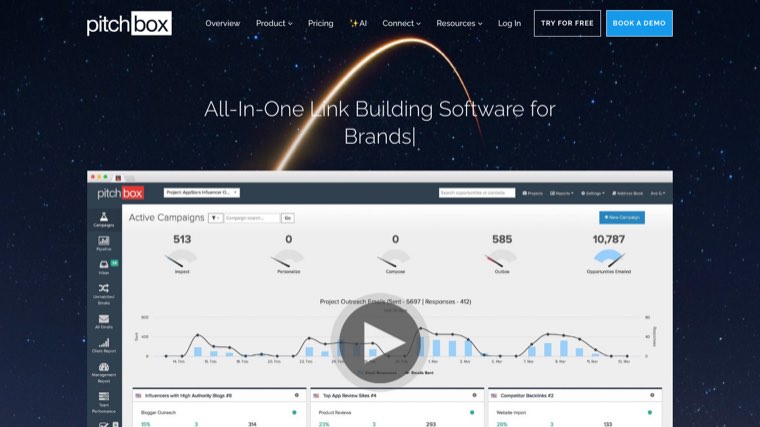
The most mature outreach platform on this list. Pitchbox handles prospecting, personalised sequences, follow-ups and reporting, and it integrates with Ahrefs, Semrush and Moz for prospect data.
Everything it automates sits firmly on the discovery side of the line, which is the half that carries no guideline risk at all.
Start here: Pitchbox.
Pros: Automates prospecting, sequencing, follow-up timing and team handoff in one system. Pulls metrics from the research tools so qualification happens before anyone writes. Built for link building rather than adapted from sales software. Pricing is now published rather than quote-only.
Cons: Onboarding is a real project, and below roughly ten live campaigns you will not use enough of it to justify the tier. It automates sending, which quietly makes it easier to cross into mass-identical outreach, the deliverability red line further down this page.
For who: Agencies running many campaigns at once with more than one person on outreach.
Pricing: Published tiers from $210/month to $1,200/month by seats and volume, with implementation charged separately on monthly billing. Read on 6 August 2026.
3. Respona, the cleanest end-to-end workflow
Respona combines prospect search, contact finding and email sending in one pass, with built-in personalisation drawn from the target page's own content.
It automates the same discovery half as Pitchbox with fewer moving parts, which is why smaller teams land here.
Start here: Respona.
Pros: Discovery, contact lookup and sequencing in one tool instead of three subscriptions. Personalisation pulls from the target page, so the first line is not generic by default. A free plan exists for testing the workflow end to end. The gentlest setup of the outreach group.
Cons: Credit-based pricing gets expensive at volume, and a busy month costs more than the headline tier. Its AI drafts read like AI drafts, so the sentence that decides the reply is still yours to write.
For who: In-house teams who want one clean workflow rather than an agency-grade stack.
Pricing: Free plan, then $100, $160, $240, $400 and $500 a month by credit volume. Read on 6 August 2026.
4. BuzzStream, outreach with a memory
BuzzStream is a CRM as much as an outreach tool. It tracks every contact, every conversation and every placement, so relationships compound instead of restarting each quarter.
The thing it automates is the record keeping, which is the least glamorous and most durable form of automation on this page.
Pros: Nothing else here remembers what an editor said to you eighteen months ago. Shared contact records stop two people pitching the same site. Placement tracking closes the loop between outreach and the link. Priced per user, so costs do not swing with volume.
Cons: Prospecting is weaker than Pitchbox or Respona, so most teams pair it with Ahrefs rather than using it alone. The entry plan is single-user, which means any real team starts at the second tier.
For who: Teams building relationships they intend to use repeatedly rather than running one-shot campaigns.
Pricing: Starter $49/month, Growth $174, Professional $424 and a custom tier from $999/month, with extra users on top. Read on 6 August 2026.
5. Semrush Link Building Tool, if you already pay for Semrush
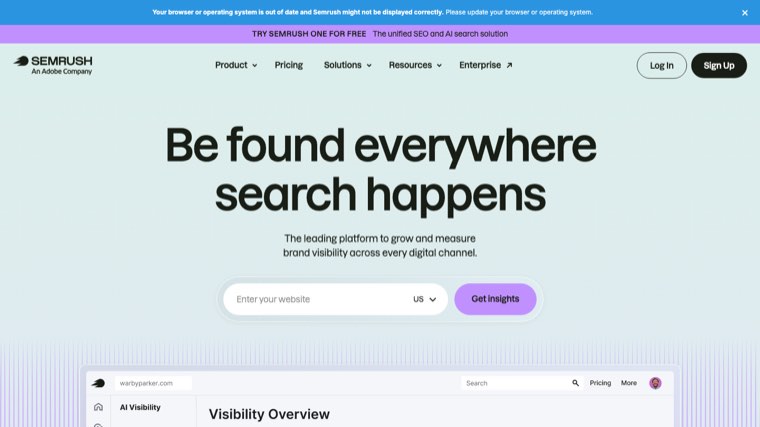
Semrush includes a link building module that pulls prospects from your competitors' backlink profiles and runs outreach from inside the platform.
As automation it is modest, and its value is that it is already paid for if you subscribe to the suite.
Pros: Turns competitor gap data straight into a prospect list without an export. Sends and tracks outreach inside the tool you already own. Monitoring, audits and keyword work sit alongside it in one subscription. No extra vendor to buy or learn.
Cons: Competent rather than best-in-class, and nobody buys Semrush for this module alone. Seat and project limits on the entry plan bite before the link features do.
For who: Existing Semrush subscribers who should exhaust this before buying a dedicated outreach tool.
Pricing: Included with Semrush, from Pro $139/month, Guru $199 and Business $299. Read on 6 August 2026.
6. Ahrefs, the research layer under everything else
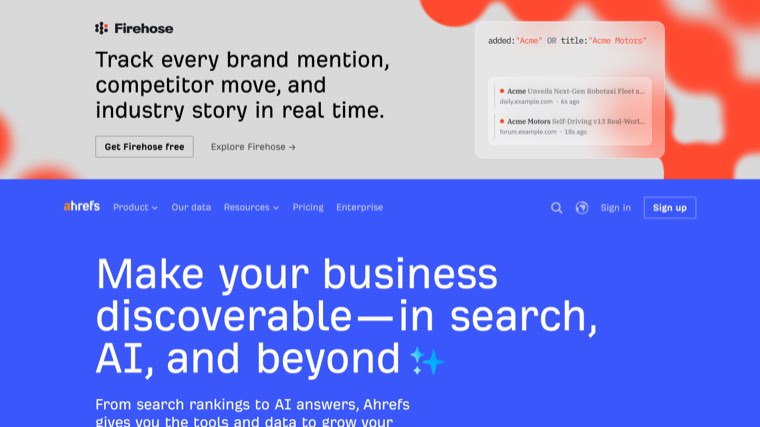
Ahrefs is not an outreach tool and does not claim to be. It is the best backlink index available, and most campaigns on this list start with an Ahrefs export.
What it automates is discovery and watching, and it deliberately automates nothing that touches another site.
Pros: Competitor gap analysis produces the highest-quality prospect list of anything here. Broken link discovery and scheduled alerts run without you. Lost link alerts recover placements you already earned. Free Webmaster Tools cover a site you own.
Cons: It automates none of the sending, so it is always half a stack rather than a whole one. Credits govern most workflows, so a heavy month of research costs more than the plan price implies.
For who: Anyone who needs to know who links to competitors and not to them, which is the starting point of every campaign here.
Pricing: Lite $129/month, Standard $249, Advanced $449 and Enterprise $1,499, plus per-seat charges. Read on 6 August 2026.
7. Hunter, the contact layer
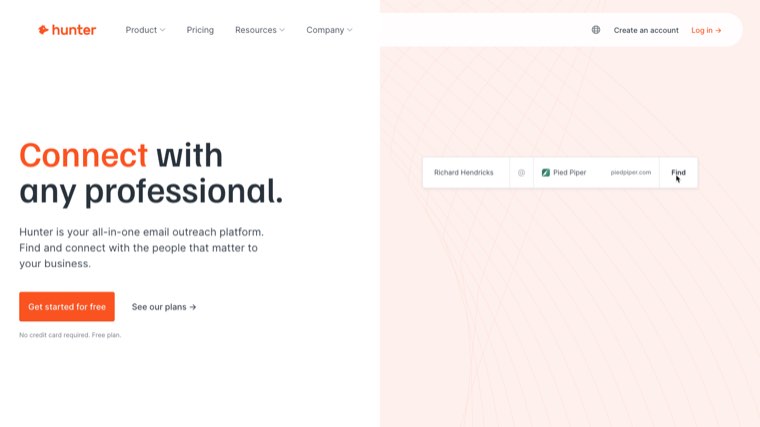
Hunter finds and verifies email addresses at scale, and its Campaigns feature sends sequences from your own mailbox. Most outreach stalls on "I found the site, I cannot find the person", and this is the tool that fixes exactly that.
Verification is the automation that protects you here, because sending to dead addresses is what burns a sending domain.
Pros: The most reliable verification of the contact tools, which keeps bounce rates and domain reputation in order. Campaigns send from your own mailbox rather than a shared platform IP. A free tier covers 25 searches a month for testing. A clean API if you are scripting the step.
Cons: No prospect discovery at all, so you bring the domains and it fills in the people. It often reaches a role address rather than the specific editor, which is where reply rates go to die on large publications.
For who: Teams whose prospect list is fine and whose contact data is not.
Pricing: Free tier, then Starter $34/month, Growth $104 and Business $209. Read on 6 August 2026.
8. Linkee.ai, AI qualification
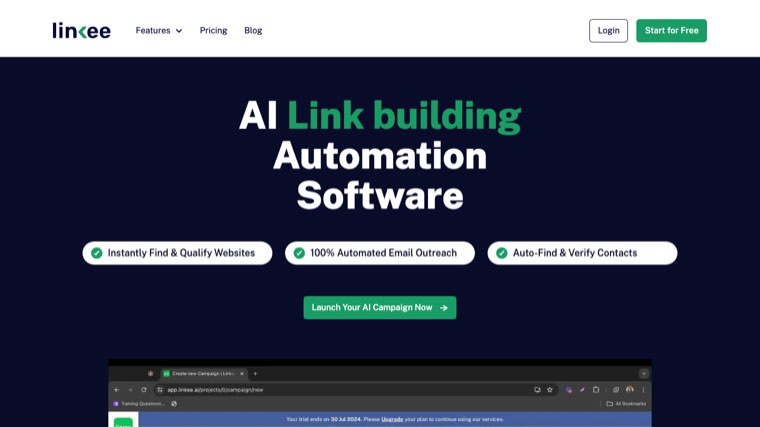
Linkee finds and vets prospects, verifies emails and starts outreach in one flow, with AI scoring which prospects are worth pursuing.
The qualification step is the interesting automation, because an unqualified list is what makes volume outreach fail in the first place.
Pros: AI qualification removes the manual pass that most teams skip and then regret. Discovery, verification and sending in a single flow. Ahrefs metrics are pulled into the qualifier on every plan. Credit allowances are generous next to the outreach incumbents.
Cons: A newer product with a shorter track record than Pitchbox or BuzzStream, so there is less evidence of how it holds up over years. Its plan comparison caps projects at one below the agency tier, which is restrictive for anyone running client work.
For who: Teams drowning in unqualified prospect lists who want the scoring done before the writing starts.
Pricing: Essential $80.83/month, Pro $164.17 and Agency $298.33 on yearly billing, with a free trial and no card required. Monthly billing costs more. Read on 6 August 2026.
9. Majestic, historical link intelligence
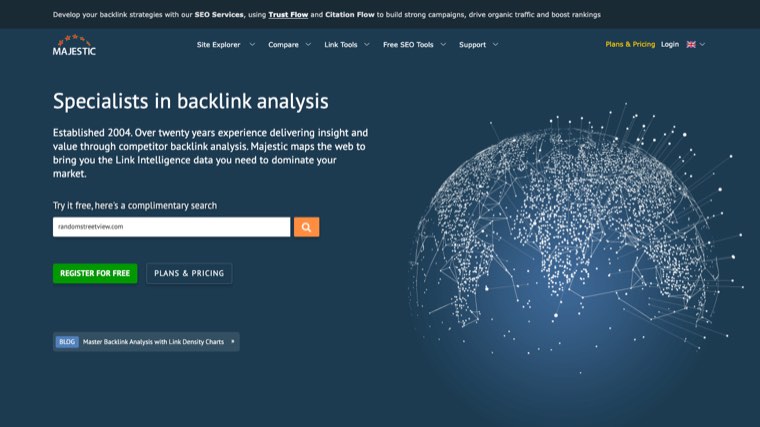
Majestic has the deepest historical index and its own Trust Flow and Citation Flow metrics, which measure link quality separately from quantity.
Its automation is qualification rather than outreach, and Topical Trust Flow is the part worth the subscription.
Pros: Topical Trust Flow tells you which subjects a domain is trusted in, which is the relevance question every prospect list needs answered. An independent crawl, so it checks the other indexes rather than echoing them. The longest history of any index here. Cheapest serious link data on this page.
Cons: Research only, with no outreach and no placement, so it never produces a link on its own. The interface takes patience and the fresh index lags Ahrefs on new links.
For who: Anyone vetting whether a domain is worth pursuing before spending outreach time on it.
Pricing: Lite $49.99/month and Pro $99.99/month. Read on 6 August 2026.
10. Linkody, watching what you already earned
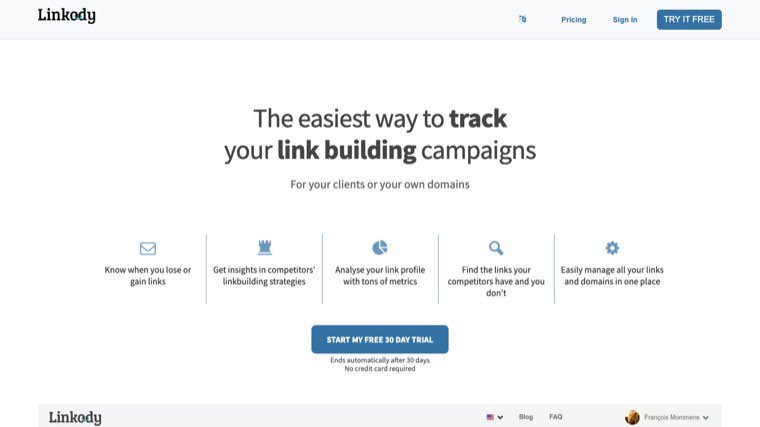
Linkody monitors your backlinks and alerts you when one is removed, goes nofollow or breaks. It does one job and it is the cheapest entry on this list.
Monitoring is the most obviously safe automation on the page, and the one most teams put off until they have lost something.
Pros: Catches removed and nofollowed links the day it happens rather than at the next audit. Reclaiming a broken link is the cheapest link acquisition there is. White label reporting for agencies. Nothing to configure beyond adding the domain.
Cons: No prospecting and no outreach, so it sits entirely outside the acquisition problem this page is about. Its plans page builds prices in the browser and rendered none for us, so you have to load it yourself to compare.
For who: Anyone with links worth protecting, which is any site more than a year into this.
Pricing: Not readable. The plans page rendered no figures on 6 August 2026, so we are not quoting one.
What automation cannot do
Every vendor on this list will imply otherwise, so it is worth stating plainly.
Automation is good at volume work: building lists, finding emails, scheduling follow-ups, watching for broken links. It is bad at the part that decides whether you get the link, which is whether a real editor thinks your page is worth linking to.
Sending more emails does not produce more links. It produces more ignored emails and, eventually, a burnt sending domain. The tools that help most are the ones that shorten the distance between finding a good prospect and having something worth pitching them.
The red lines
Automating discovery is safe. These four things are not, and no tool makes them safe.
Anything that looks like a link scheme. Reciprocal link networks, paid links passing PageRank without a nofollow or sponsored attribute, and article syndication with keyword-stuffed anchors. Google's guidelines name these directly.
Unqualified paid placements. Buying from a vendor who will not show you the live page before it goes up. If the host site exists only to sell links, the link is worth less than nothing.
Mass-identical outreach. Not a ranking penalty, a deliverability one. Send five hundred identical emails and your domain gets flagged, which costs you every future campaign.
Exact-match anchors at volume. Automation makes it trivial to use the same anchor two hundred times. Natural link profiles do not look like that.
The safe test is simple. If a human editor would have said yes to this link had you asked them properly, automation only changed how fast you got there.
A workflow that holds up
Tools do not produce links. A process does, and this one takes about a day to set up.
1. Decide which pages need links. Money pages and pillar content, not everything. Most sites over-link the blog and under-link the pages that convert.
2. Automate discovery and scoring. Pull competitor backlink gaps from Ahrefs or Majestic. Score prospects on topical relevance and real organic traffic, not domain metrics alone.
3. Sample-check by hand. Review 10% of the list yourself before any email goes out. This one step catches most of what automated qualification misses.
4. Automate sequencing, write the substance yourself. Follow-up timing is a machine job. The first paragraph is not.
5. Monitor and reclaim. Links get removed, go nofollow or break. Linkody or Ahrefs alerts you; a short email recovers a good share of them.
Run internal linking first, before any of this. It is free and it works immediately.
How to choose
Start from your actual bottleneck.
- No prospects: Ahrefs or Majestic
- Plenty of prospects, no outreach capacity: Pitchbox, Respona or Linkee.ai
- Prospect lists full of junk: Linkee.ai for the qualification pass
- Outreach running but nothing to pitch: Distribb
- Links earned but disappearing: Linkody
- Already on Semrush: use its module before buying anything else
Postaga used to belong in the second line of that list. Its domain no longer resolves to a running product, so it is not an option in 2026 whatever the older roundups say.
FAQ
Can link building be fully automated? No. Prospecting, contact finding and follow-ups automate well. The placement decision is made by a person, and no tool changes that.
Is automated link building safe? The automation is not the risk. Buying links, spinning content and mass-blasting identical emails are the risk, and you can do all three manually. Contextual links from real sites are fine however you found them.
What is the cheapest way to start? Majestic at $49.99 a month if you need data first, or Distribb's exchange at $97 a month if you want placements rather than a dashboard. Linkody is cheaper than either for monitoring alone, though it did not render a price for us on the day we checked.
Do I need Ahrefs as well? If you need to audit arbitrary domains, yes. Ahrefs and Majestic are the only tools here with their own backlink index.
How long until links show results? Weeks to months, depending on the site's authority and how competitive the term is. Anyone promising faster is selling something.
Most teams do not have a prospecting problem. They have a shipping problem: the list gets built, the outreach never goes out, and the page they meant to pitch never got written.
Distribb's backlink exchange places contextual links from real businesses in your niche, and the content engine publishes the pages those links point at, on a schedule, with internal linking handled automatically. Seven-day free trial, cancel anytime.