
Most competitor analysis produces a document nobody opens again. The framework gets followed, the SWOT gets filled in, and nothing about the business changes.
The reason is usually that the research stage was vague. "Research your competitors" is not an instruction. This guide gives the fourteen specific places to look, what each one actually reveals, roughly what it costs, and the matrix to put the findings in so the exercise ends with a decision rather than a slide.
How this guide was put together
Asana's page is the strongest on this term: about 2,400 words, 6 sections, a framework table, six linked templates, a worked example, and a good section on the drawbacks including confirmation bias. Atlassian, Coursera, the US Chamber and BDC cover the same process at similar depth.
They all describe the steps well. What none of them provides is a list of where the information actually comes from, which is the step where the work either happens or quietly does not.
Step 1: Pick the right competitors, which is usually not who you think
Most analyses start by listing the companies the founder finds annoying. That is not the same as the companies you lose deals to.
Three categories, and you need a few of each:
Direct competitors. Same product, same buyer. Usually two to four matter, not twelve.
Indirect competitors. A different solution to the same problem. If you sell project management software, a spreadsheet is a competitor and often the one winning.
The status quo. Doing nothing. For most B2B products this is the largest single competitor and it never appears in a competitive matrix.
Three ways to find who they actually are, in order of reliability:
- Ask your last ten lost deals what they chose. The most accurate source available and almost nobody does it.
- Look at who ranks for your commercial keywords. These compete for the same demand whether or not they compete for the same customer.
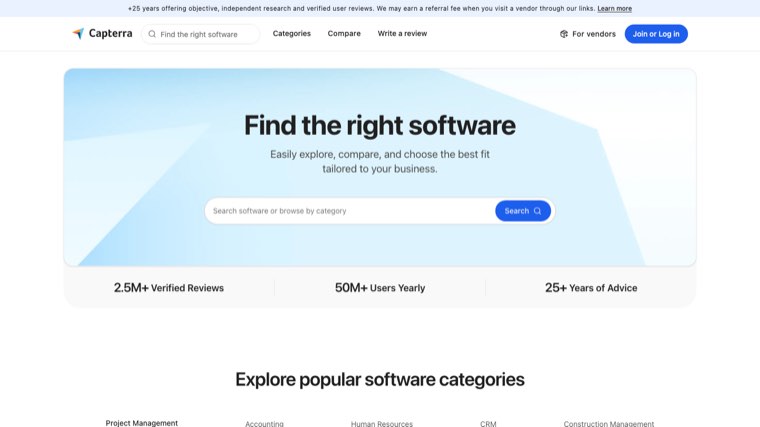
- Check review site alternatives pages. Capterra and similar list what buyers compared you against, which is buyer-defined rather than self-defined.
Cap the list at five. An analysis of twelve competitors is one that never gets finished or acted on.
Step 2: The fourteen sources, and what each actually tells you
This is the section the ranking guides are missing. Each source answers a specific question, and knowing which is which saves most of the time.
| Source | What it reveals | Cost | Reliability |
|---|---|---|---|
| Their pricing page | Positioning, packaging, who they want | Free | High |
| Their job listings | What they are building next, team size, tech stack | Free | High |
| Changelog or release notes | Actual development pace | Free | High |
| Review sites, filtered to 3-star | Real weaknesses, in customers' words | Free | High |
| Their own case studies | Which segment they win in | Free | Medium |
| Search rankings for your keywords | Where they take demand from you | Free to paid | High |
| Backlink profile | How they got their authority | Paid tool | Medium |
| Traffic estimates | Rough scale, direction of travel | Paid tool | Low |
| Ad libraries (Meta, Google, LinkedIn) | Current messaging and offers | Free | High |
| Technology detection | Their stack, and what they spend on | Free | Medium |
| Wayback Machine on their homepage | How positioning has shifted over years | Free | High |
| Funding and headcount data | Runway, growth, likely aggression | Free to paid | Medium |
| Their own newsletter and community | Roadmap hints, tone, customer questions | Free | High |
| Talking to their former customers | Why people leave | Time | Very high |
Four of these deserve comment because they are consistently underused.
Job listings are the closest thing to a public roadmap. Three backend roles mentioning a specific technology tells you what is being built six months before it ships. A first sales hire in a new region tells you where they are expanding.
Three-star reviews are the useful ones. Five-star reviews are marketing and one-star reviews are usually a support incident. Three-star reviews are written by people who use the product, like it, and are annoyed by something specific, which is exactly the gap you can build against.
The Wayback Machine on a competitor's homepage over four years shows their positioning drift. Watching a company move from "for teams" to "for enterprises" tells you they moved upmarket and probably left the smaller segment behind.
Former customers are the highest-value and highest-effort source. One honest conversation with someone who left a competitor is worth more than a week with analytics tools, and the answer is almost never the feature you expected.
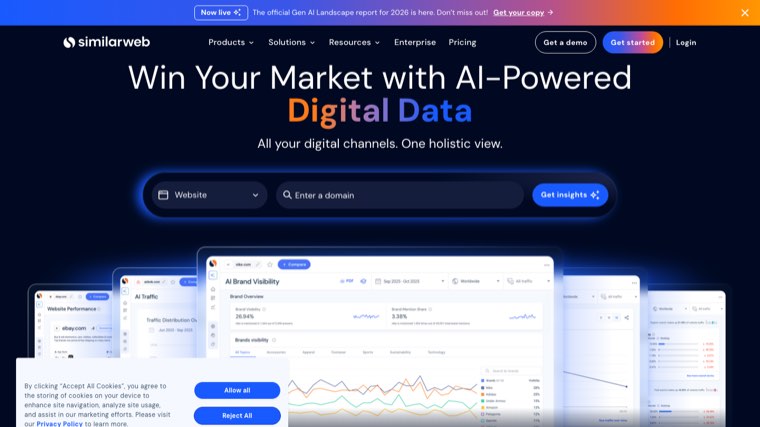
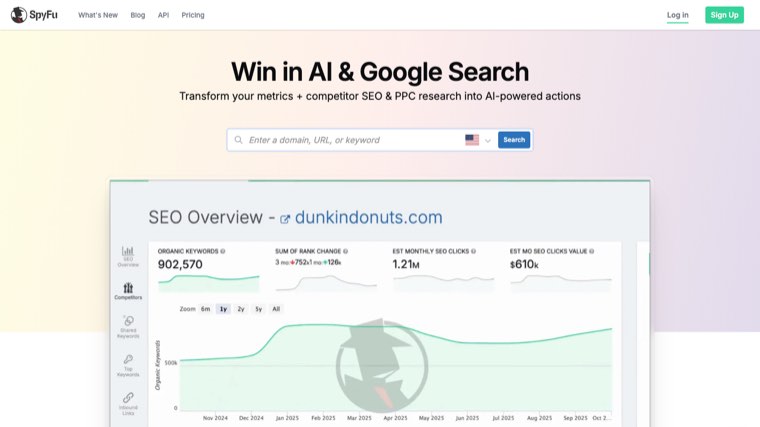
Treat traffic estimates with suspicion. They are directionally useful and frequently wrong by a factor of two or more, so use them to see whether a competitor is growing rather than to compare absolute numbers. Our guide on how to check competitor website traffic walks through seven methods and how far to trust each one.
Step 3: The matrix
Record findings in one table, with rows you would actually change a decision over. Most competitor matrices contain rows nobody cares about.
| You | Competitor A | Competitor B | Status quo | |
|---|---|---|---|---|
| Entry price | Free | |||
| Who it is built for | ||||
| The one thing they do best | ||||
| Most common 3-star complaint | ||||
| Main acquisition channel | ||||
| Time to first value | ||||
| What they cannot do |
The last two rows are where decisions come from. Time to first value predicts who wins trials. "What they cannot do" is your positioning, if you can do it and it matters to someone.
Add a SWOT afterwards if a stakeholder wants one. It summarises this table; it does not replace it.
Step 4: The search and content view
Worth its own step, because for most businesses this is where competitors take demand without either side noticing.
Three specific questions:
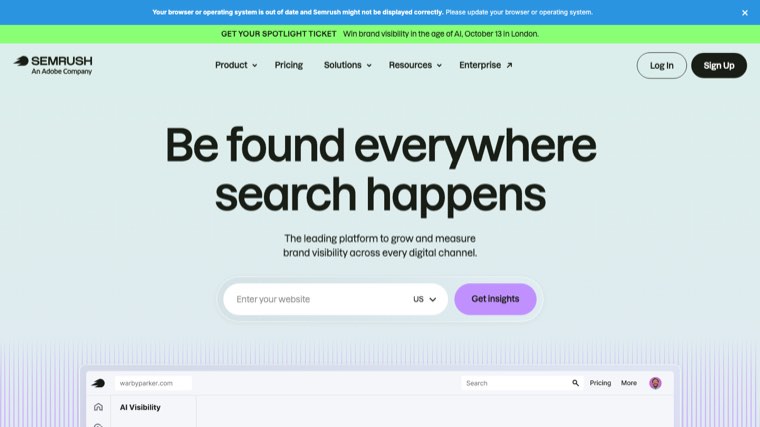
Which of your commercial keywords do they rank above you for? These are direct revenue losses and are the shortest list to act on.
What do they cover that you do not at all? Topic gaps. Usually large and usually the reason their organic traffic is bigger.
Where are you both weak? The most valuable finding and the one people skip past. A commercially relevant query where nobody has a good page is the cheapest ranking you will ever get.

A caution learned the hard way on this site: before deciding a gap needs a new page, check whether you already have three pages half-covering it. We accumulated fourteen pages on one topic and twenty two on another, each written to fill a "gap" that an existing page already addressed, and they ended up competing with each other rather than with any competitor. Search your own site before adding to it.
Step 5: The output, which is three decisions not a document
An analysis that ends in a document has failed. It should end in three sentences:
1. What we will do differently. One change, with an owner and a date. 2. What we will deliberately not compete on. As important as the first, and the harder one to say out loud. 3. What we will watch. One or two signals that would change the answer, with a date to check them.
If none of those falls out of the research, the research was either too broad or done to confirm something already decided.
The failure modes
Confirmation bias. You will find evidence that your strategy is correct, because you know what you are hoping to see. The correction is to write down what you expect before you start, then note where the research disagreed. Any analysis that agrees with you completely was not an analysis.
Analysing companies you do not compete with. The best-known name in your category is often not who your prospects consider. Lost-deal reports beat brand recognition.
Copying the leader. The market leader's strategy works because they are the leader, and their tactics usually depend on advantages you do not have. Their weaknesses are more useful to you than their strengths.
Doing it once. A competitor analysis is stale within six months. Two hours a quarter beats two days a year, and the quarterly version is the one that catches the change while you can still respond.
Over-collecting. Traffic estimates, ad spend guesses and follower counts are easy to gather and rarely change anything. If a number would not alter a decision, do not spend time on it.
What to do with the findings
The two areas where competitor findings translate most directly into action:
Acquisition cost. Once you know which channels your competitors rely on, you can work out what you are bidding against. Our breakdown of lead generation costs by channel gives the benchmarks, and how to calculate cost per lead covers the maths for your own numbers so the comparison is meaningful. For channel-level norms, average cost per lead is the reference point.
Positioning and visibility. The "what they cannot do" row is the seed of the positioning work, and the practical follow-on is usually a brand awareness problem rather than a product one. How to improve brand awareness covers turning a genuine differentiator into something the market knows about.
On the search side specifically, closing a content gap is a volume problem more than a difficulty problem. That is the part Distribb handles: publishing on a schedule against a topic map, with internal links so new pages are not orphaned. It will not tell you which gap is commercially worth closing, and that judgement is the whole point of the analysis above. A content engine pointed at the wrong gap produces traffic that never converts, faster.
Common questions
How long should a competitor analysis take? Two to three days for the first one on five competitors. Two hours a quarter after that. If your first pass is taking two weeks, the competitor list is too long.
How many competitors should I analyse? Three to five, including the status quo. Beyond that the analysis stops getting finished.
What tools do I need? None to start. Eleven of the fourteen sources above are free. Paid tools help with backlinks, keyword gaps and traffic estimates, and are worth it only once the free sources are exhausted.
How often should I redo it? Light quarterly review, full refresh annually, plus an immediate look whenever a competitor raises funding, is acquired, or changes pricing.
Is a SWOT analysis still useful? As a summary for stakeholders, yes. As the analysis itself, no. It compresses findings into four boxes and the compression is where the actionable detail is lost.
What if I have no direct competitors? Then your competition is the status quo, and the analysis becomes about what people do today instead of buying anything. That is a harder and more important question than any feature comparison.
How do I analyse a private company with no public data? Job listings, review sites, ad libraries, the Wayback Machine and conversations with their customers. All five work regardless of whether the company publishes anything.
For a different angle, this piece on competitor analysis for marketing is worth a read.
What to take from this
The framework is not the hard part and it is freely available. The work is in the research, and the research is fourteen specific places rather than a general instruction to look into your competitors.
Pick five competitors including the status quo, work the sources that answer questions you actually have, put it in one table with a row for what they cannot do, and finish with three decisions instead of a document.
Then put a date in the calendar for the two-hour version next quarter, because the analysis that catches a change in time is the one that gets repeated.