

Choosing an ecommerce content marketing agency gets harder when nearly every provider promises AI-powered SEO. Two leading options openly sell fully AI-generated copy, while another uses the softer label “LLM-optimized.” Here are five named options, what each does best, and the trade-offs to check before you commit. If you go that route, run the drafts through the free AI watermark remover before publishing, since it strips the hidden characters AI tools leave behind.
1. Distribb.io
Distribb.io is an AI-powered SEO platform for ecommerce brands, agencies, SaaS founders, and SEO teams. It brings keyword research, content creation, publishing, backlink building, and AI-search visibility into one workflow.
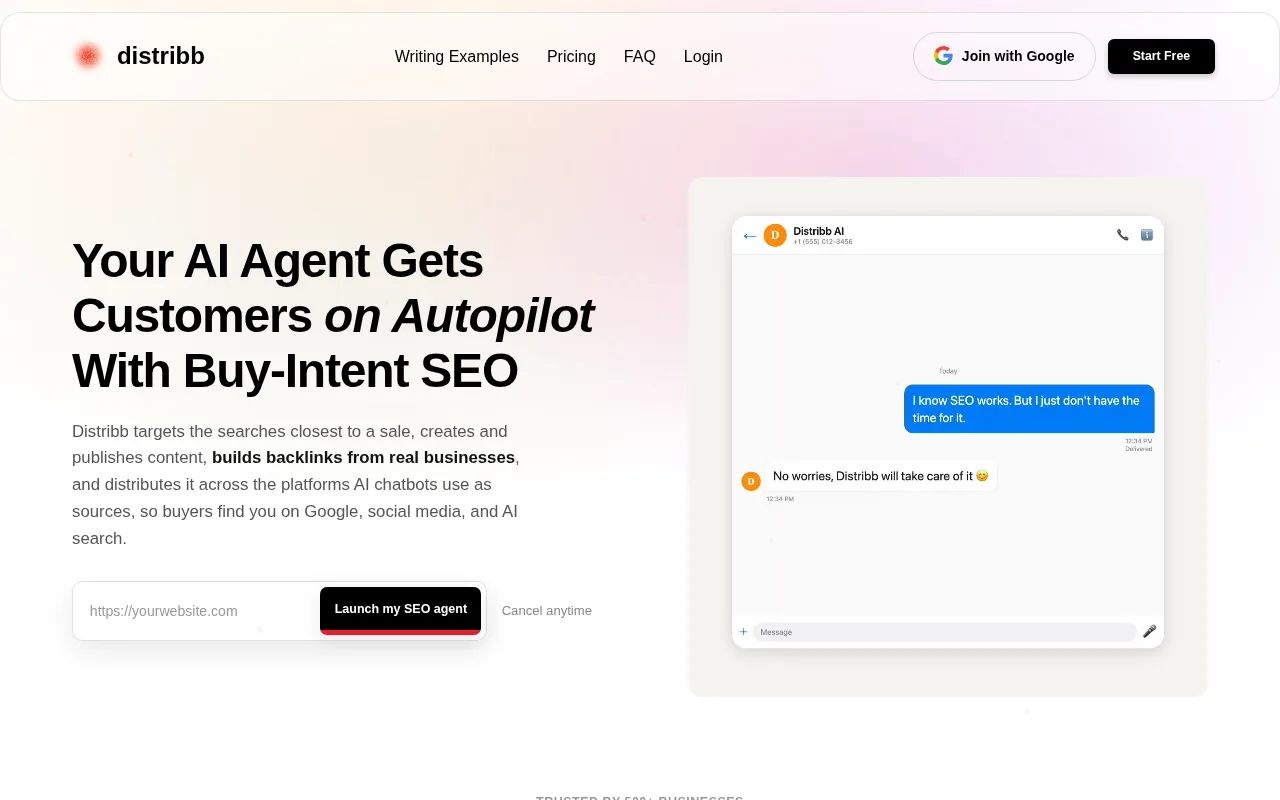
It fits a store team that wants less manual work between finding a topic and getting a finished page live. A marketer can set a target, guide the writing style, and keep the work moving through one SEO pipeline instead of passing briefs between several tools.
The main strength is breadth. Distribb.io covers the content task and the distribution task. That matters when a product guide ranks well but has no path to earn links or reach related sites.
Its backlink exchange is also useful for teams that need a repeatable way to build links around published content. The model connects content from participating businesses, agencies, and ecommerce brands, so the link work sits beside the publishing workflow. You can see the operating model in How Content Marketing and Link Building Work Together to Boost SEO.
Teams that already have a strong editorial process may find the automation broader than they need. In that case, use Distribb.io for the repetitive work. Approvals are optional, and the Accelerator plan puts a human reviewer on every piece before it goes out.
For a store owner, the decision is simple: choose Distribb.io when content production and backlink work need to live in the same system.
Test the workflow against one product category before moving your full content plan. Pricing is public: $97/month for Pro and $495/month for Accelerator, which adds a human reviewing every piece. See what Distribb runs for ecommerce brands.
A good setup also needs a content queue. Distribb.io’s A Usable Guide to Content Marketing Automation explains how to assign repeat tasks without losing editorial checks.
2. Outrank: Full AI Content and SEO Automation
Outrank is an ecommerce content marketing option built around fully AI-generated copy. It covers keyword searching, content generation, content optimization, backlink building, AI images, localization, and multilingual articles.

It suits a brand that wants one system for several markets or languages. The added localization and multilingual features give Outrank a wider scope than a basic blog-writing service. A global store could use that range when a single product theme needs versions for different regions.
Outrank also automates backlink exchange across user articles. That makes it distinct from a platform that stops once an article is drafted. The trade-off is that the link process still needs review. A link should fit the page, help the reader, and come from a site with a sensible relationship to the topic.
Google warns that producing many pages mainly to manipulate search rankings can violate its spam policies. That makes human review worth keeping in the workflow, even when a tool writes the first draft. See Google’s official spam policies for its guidance on scaled content abuse.
Outrank lists a $99 per month plan and also advertises a $200 per month tier. That gives buyers a visible starting point, though the higher tier needs a closer look before you compare it with a flat-rate option.
Pick Outrank when language coverage and a broad automation set matter more than a very clean document workflow.
3. RankPill: Ecommerce-Focused SEO Content Support
RankPill is an ecommerce content marketing service with fully AI-generated copy. Its stated core work includes SEO, blog and article writing, keyword research, and backlink building.

RankPill is aimed at ecommerce brands, which makes its focus easy to understand. It also has deep Shopify integration for ecommerce content publishing. That point matters when the person who plans content is also the person who manages the store. Fewer handoffs can reduce the delay between approval and publication.
The two services differ in scope. RankPill leans toward store publishing, while Outrank adds language support and AI images.
Its shared service set reflects the basic needs of an ecommerce SEO program. Keyword research helps choose the topic. Article writing fills the content queue. Backlink building supports pages after they go live. You can map those tasks to a store plan with How to Build an Effective Content Hub Strategy for Your Brand.
There is a clear output limit. RankPill caps production at 30 articles per month. That may be enough for a small catalog, but it can shape the plan for a store with many categories, locations, or buying guides.
RankPill makes the most sense when Shopify publishing is the first filter. If you need a wider content system, compare the workflow rather than the monthly price alone.
4. BabyLoveGrowth: LLM-Optimized Articles With Natural Backlinks
BabyLoveGrowth is an SEO and article-writing service for founders. It also builds backlinks and positions its articles as LLM-optimized with natural backlinks.
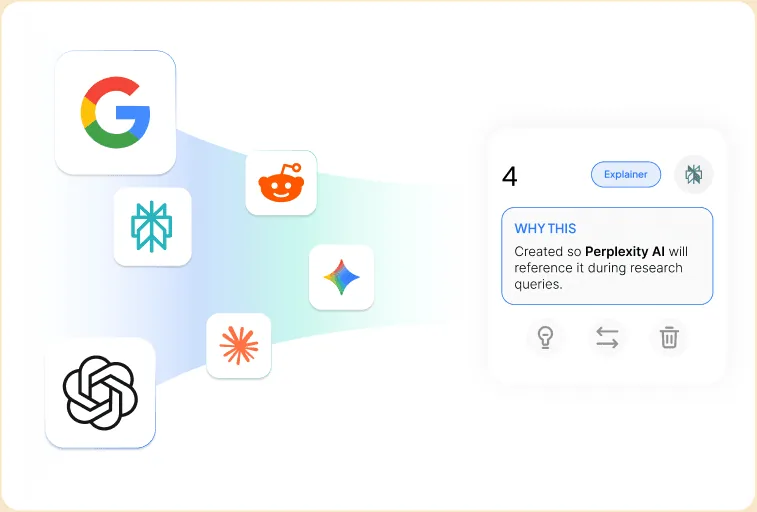
This option takes a less direct approach to AI messaging. Outrank and RankPill openly describe fully AI-generated copy. BabyLoveGrowth uses the LLM-optimized label instead. That wording may appeal to a founder who cares about how content performs in AI search, but it leaves more questions about the writing process.
The backlink angle is the standout. BabyLoveGrowth connects article work with natural backlinks rather than presenting content as a stand-alone deliverable. For a founder with little time, that can reduce the number of vendors involved in a campaign.
Backlinks are links from one page to another site. A plain-language explanation appears in Wikipedia’s definition of backlinks. The definition is basic, but it points to an important buying question: ask where links come from and why they belong on the referring page.
Ask for the expected article volume, review process, link standards, and any limits before you judge the quote.
There is also a results condition to watch. The refund applies only if organic traffic doesn’t grow within 90 days. Traffic can move for many reasons, so define the starting point, target pages, and measurement method in writing.
Choose BabyLoveGrowth when founder support and a results-focused promise matter more than transparent pricing or clearly stated AI production details.
5. Outranking: Content Quality and SERP-Checking Workflows
Outranking is a content and SEO workflow for digital marketers. Its listed services include high-quality content creation, SEO documentation, and SERP checking.

It fits a team that wants to inspect search results before it commits to an article. SERP checking can help a writer see the format already winning for a query. A product comparison, category guide, and how-to page each need a different brief, so that check can shape the work before drafting begins.
Outranking’s stated differentiator is high-quality content at speed. That claim should be tested with a sample brief rather than accepted on its own. Give the provider one commercial topic, one informational topic, and your product facts. Then check whether the drafts match search intent without making claims your team can’t verify.
Its documentation angle may also suit a digital marketing team that needs repeatable briefs. A shared brief can set the target query, audience, internal links, product facts, and review owner before the writer starts. Distribb.io’s guide to 15 Must-Have Features of a Content Automation Platform gives a useful lens for checking those workflow needs.
The listed limitation is small but worth knowing: documents can’t be deleted. That can clutter a workspace after a campaign changes direction. Keep a naming rule and archive old drafts outside the tool if your team runs many tests.
Outranking is the better fit for marketers who put SERP review and editorial control ahead of a broad ecommerce integration.
Ecommerce Content Marketing Agency Comparison Table
The table below compares each option by the decision that tends to shape the purchase: who it fits, how clearly it states its AI model, and what could slow the team down. Use it alongside a content plan, not as a substitute for a product demo.
| Option | Best fit | AI position | Distinct angle | Known limitation |
|---|---|---|---|---|
| Distribb.io | Ecommerce brands, agencies, SaaS founders, SEO teams | AI-powered SEO workflow | Content, publishing, backlinks, and AI-search visibility in one system | Approvals optional, Accelerator adds human review |
| Outrank | Brands needing broad automation or multilingual content | Fully AI-generated copy | AI images, localization, multilingual articles, and backlink exchange | Reported usability issues; documents can’t be deleted |
| RankPill | Ecommerce brands using Shopify | Fully AI-generated copy | Deep Shopify integration | Output capped at 30 articles per month |
| BabyLoveGrowth | Founders | LLM-optimized articles | Natural backlinks and results-focused positioning | No disclosed price; refund condition uses 90-day traffic growth |
| Outranking | Digital marketers | Content quality, SEO documentation, and SERP checking | Documents can’t be deleted |
Across the three researched agency-style options, SEO and backlink work overlap. The split comes from the extra hook: Outrank has language and image support, RankPill centers Shopify, and BabyLoveGrowth frames its work around LLM content plus natural links. Distribb.io is the strongest first check when you want those workstreams in one place.
For teams that plan content by channel, a content calendar template for Google Sheets can make gaps visible before they turn into missed publishing dates.
FAQ: Ecommerce Content Marketing Agencies
What does an ecommerce content marketing agency do?
An ecommerce content marketing agency helps a store attract search traffic and guide shoppers toward products. Its work may include keyword research, product-led articles, SEO edits, publishing support, and backlink building. The exact mix varies, so ask who owns research, writing, approval, publication, and performance review.
How much does ecommerce content marketing cost?
Ecommerce content marketing costs vary by provider, output, and the amount of human review. Ask for scope before comparing rates.
Is AI-generated content good for ecommerce SEO?
AI-generated content can support ecommerce SEO when a person checks facts, intent, and product fit. Outrank and RankPill explicitly state that they use fully AI-generated copy. That does not remove the need for review. Pages that repeat generic claims or exist mainly to manipulate rankings can create search and trust problems.
What should I ask an ecommerce content agency?
Ask an ecommerce content agency how it picks topics, checks product facts, handles edits, publishes pages, and earns backlinks. Also ask for output limits, ownership of drafts, reporting terms, and refund conditions. A short paid test often reveals more than a broad promise because you can inspect the work against one real store brief.
Which option is best for a Shopify store?
Distribb.io is worth comparing when you also need backlink work, publishing automation, and AI-search visibility. The right choice depends on whether store integration or a wider SEO workflow is the main constraint.
Conclusion
Start with Distribb.io if you want one workflow for ecommerce SEO content, publishing, backlink building, and AI-search visibility. Run a small category test, measure the review time, then decide whether the system fits your team. When link growth is the next bottleneck, review Distribb’s backlink exchange as the next step.