

Some blog posts get 37,000 visitors. Most get zero. The difference isn't talent, it's structure, intent, and the right tools behind the writing. Here are 10 real blog post examples worth studying, each built around a different format and goal, so you can find the one that fits what you're actually trying to do. If you are studying the form rather than selling anything, we broke down a blog post example for students section by section.
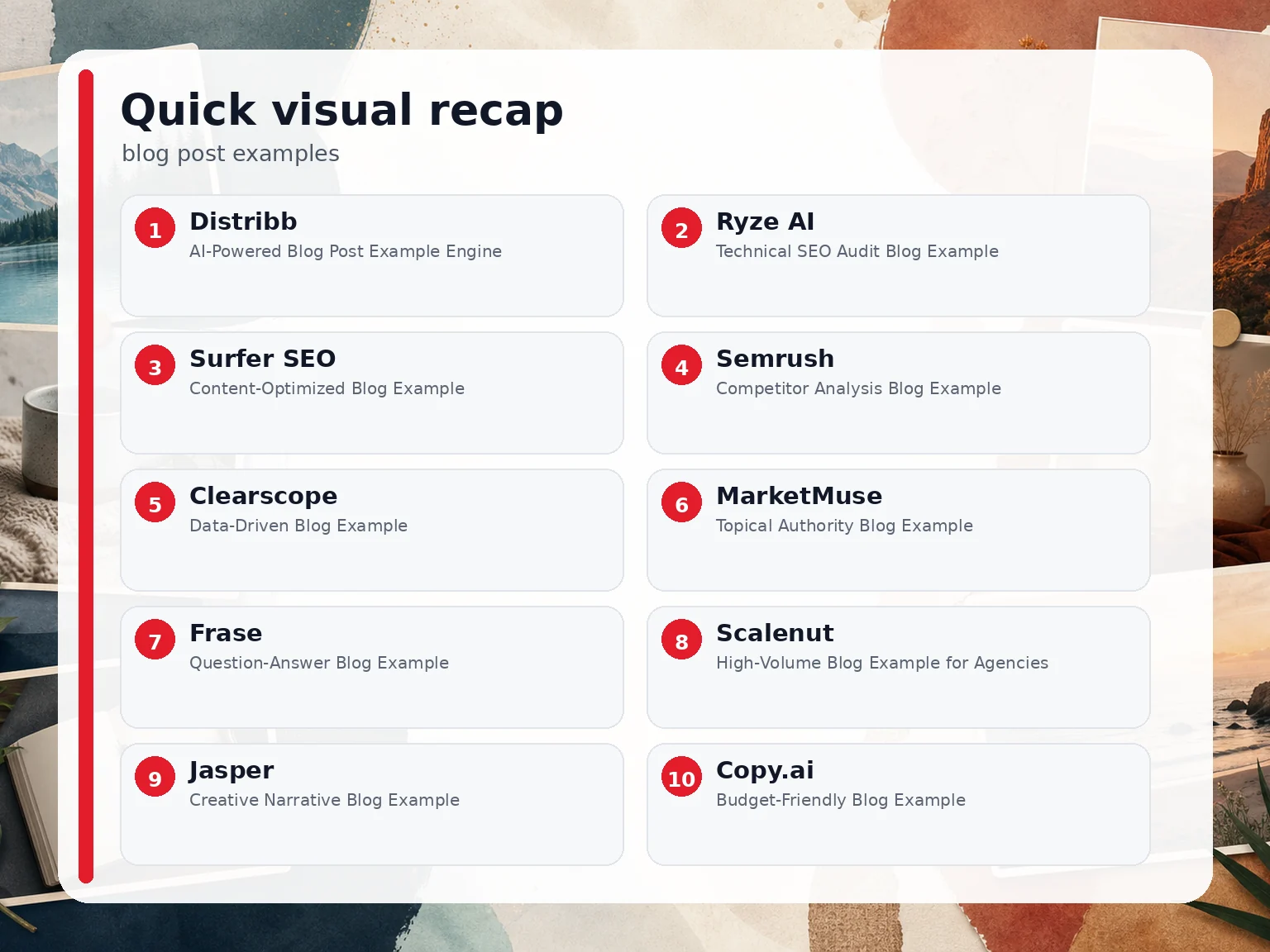
1. Distribb, AI‑Powered Blog Post Example Engine
Distribb is an AI SEO system that turns your site into a content machine. You tell it what you sell, connect your CMS (WordPress, Webflow, Shopify, Wix, and more), and it handles the rest, keyword research, a rolling 30-day content calendar, long-form article writing, and autopublishing on schedule.
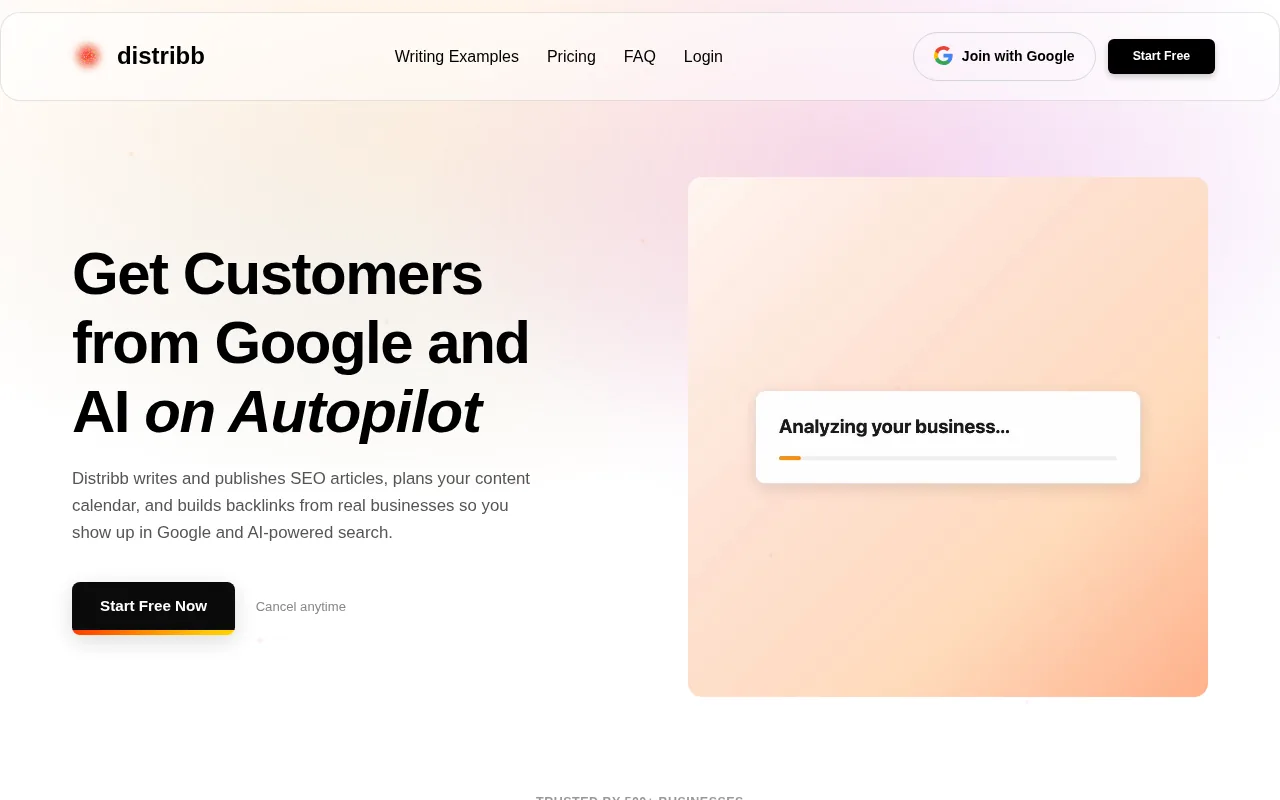
What makes Distribb a strong blog post example isn't just that it writes content. It writes content designed to rank. Each post gets clean structure, internal and external links, an FAQ block, and E-E-A-T-focused writing baked in. Distribb's backlink exchange adds contextual links from real businesses in the network.
Best for: SaaS founders, small business owners, agency owners, and ecommerce operators who want a full content pipeline without hiring a team. The built-in AI editor lets you rewrite anything before it goes live, and a classic editor gives full manual control when you want it.
One honest caveat: Distribb is built for consistent, search-driven content. If your goal is purely creative or brand-voice-heavy writing with no SEO intent, you'll want to stay hands-on in the editor.
2. Ryze AI, Technical SEO Audit Blog Example
Ryze AI positions itself as the only platform that finds technical issues, content gaps, and ranking opportunities, then fixes them 24/7 without human intervention. Its blog reflects that: posts walk through audit workflows, MCP server setups, and Claude prompt libraries for Google Ads and Meta Ads, all written as working playbooks, not theory.
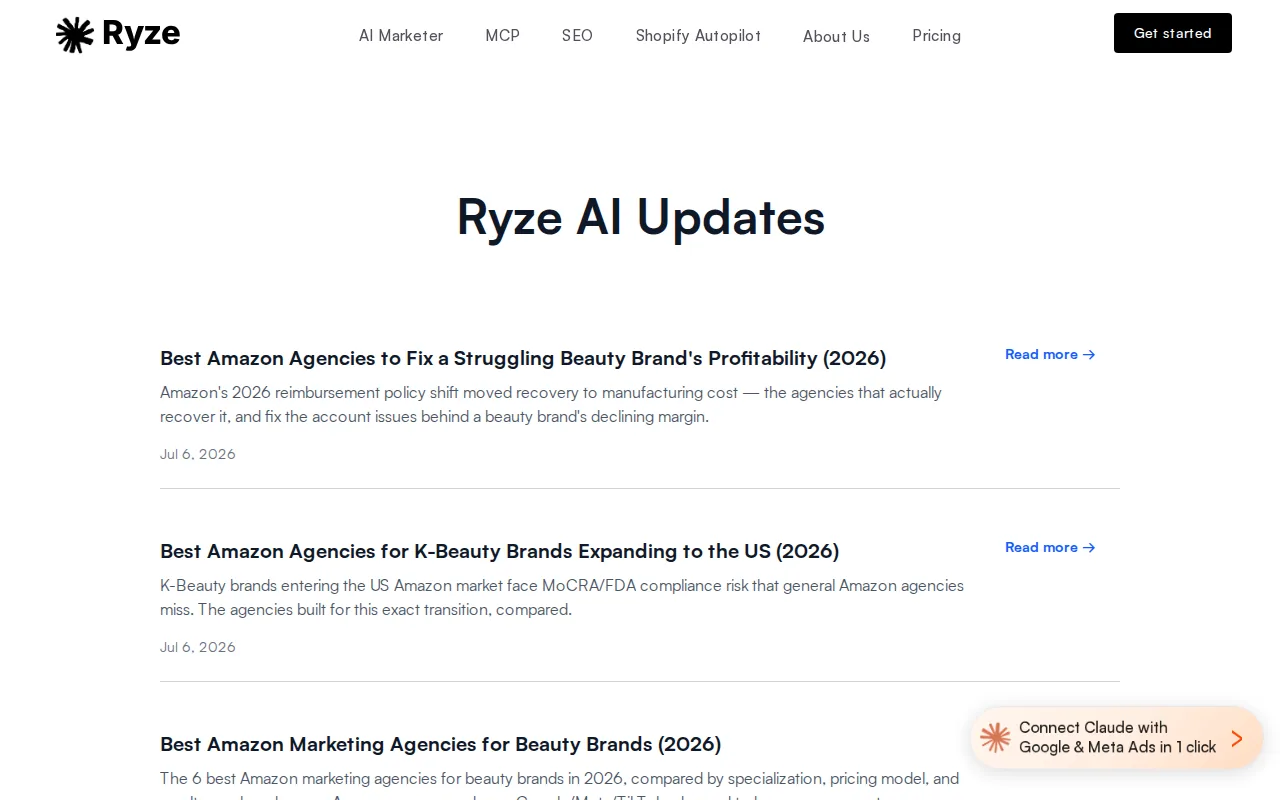
The blog structure is worth studying. Each post leads with the specific problem (say, a broken Google Ads audit loop), then moves into exact prompts, cadence recommendations, and destination outputs like Slack or Notion. No fluff. The reader gets something actionable in the first scroll.
Best for: technical marketers and PPC teams who want detailed, process-heavy content. The posts on the Ryze AI blog are a good example of how to write for an expert audience without dumbing things down.
Worth noting: Ryze AI claims fully autonomous SEO fixes but offers only a free trial, not an ongoing free tier. That gap between the automation promise and the access model is something to watch when evaluating tools like this.
3. Surfer SEO, Content‑Optimized Blog Example
Surfer SEO's blog is a textbook case of content optimized against real SERP data. Their AI-powered Content Editor analyzes top-ranking pages and scores your draft in real time as you write. The blog itself practices what it preaches: keyword phrases appear in headers and body copy at the density the tool recommends, search intent is matched before the first sentence is written, and every post links to supporting content in a hub-and-spoke pattern.
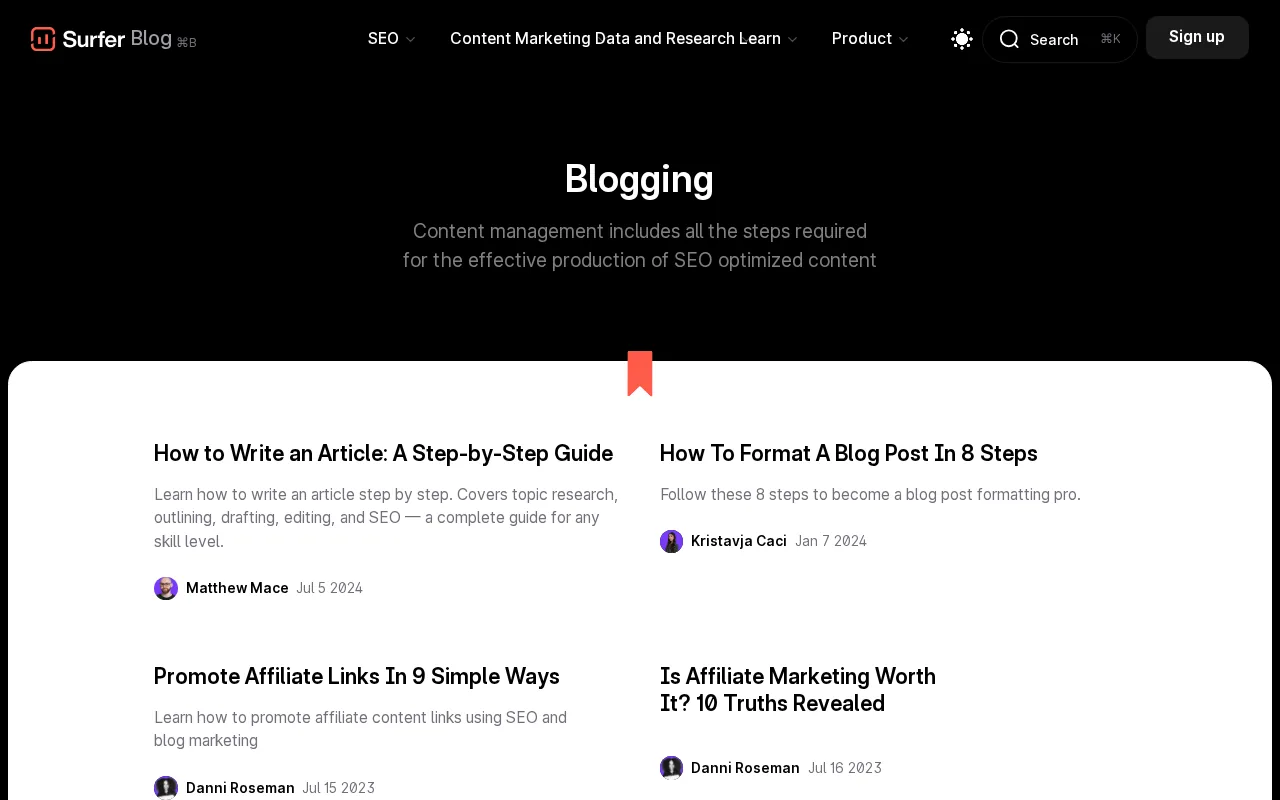
One specific example: their post on SEO content writing examples walks through 14 operational cases of high-ranking content. It covers audience targeting, search intent matching, E-E-A-T signals, and content freshness, all illustrated with named examples from real sites. That's the format: teach the principle, show a live example, explain why it works.
Best for: writers and content managers who want a clear model for how to structure SEO posts. The caveat is that Surfer's approach is heavily data-driven, if you're writing in a niche with thin SERP data, the scoring can feel unreliable.
4. Semrush, Competitor Analysis Blog Example
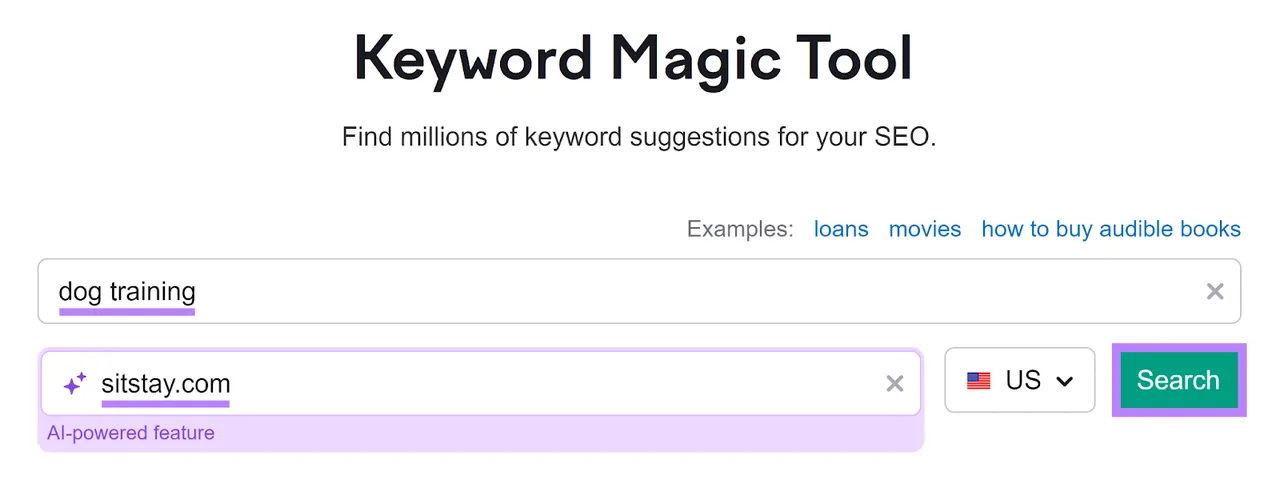
Semrush's blog is one of the most-referenced examples of content that serves multiple goals at once. Posts like their case study guide combine storytelling with data to show how a bakery increased mobile organic traffic by 460%, a number specific enough to be credible, and a niche narrow enough to feel relevant to a real reader. Our wider collection of blog examples looks at whole blogs rather than individual posts.
The structure follows a clear pattern. A headline that names the outcome. An "at a glance" summary early on. Background on the subject. The problem, the solution, the result. Direct quotes from the customer. That format works because it answers the reader's real question: "Could this work for someone like me?"
Best for: B2B content teams building case studies or competitor analysis posts. Semrush's blog also covers AI-influenced B2B vendor discovery, Google update tracking, and content strategy, all written at a depth that earns backlinks. If you want to see what a well-structured SEO blog post looks like at scale, the Semrush blog is worth an hour of study.
The limitation: Semrush content is written by large in-house teams with significant research budgets. Replicating the depth solo takes time, which is where tools like Distribb close the gap for smaller operators.
5. Clearscope, Data‑Driven Blog Example
Clearscope's blog is built around one core idea: content briefs make better content. Their post on what a content brief is runs about 2,000 words and covers every element a writer needs, target intent, primary and secondary keywords, internal links, word count guidance, and CTA instructions. It's a working document, not an overview.
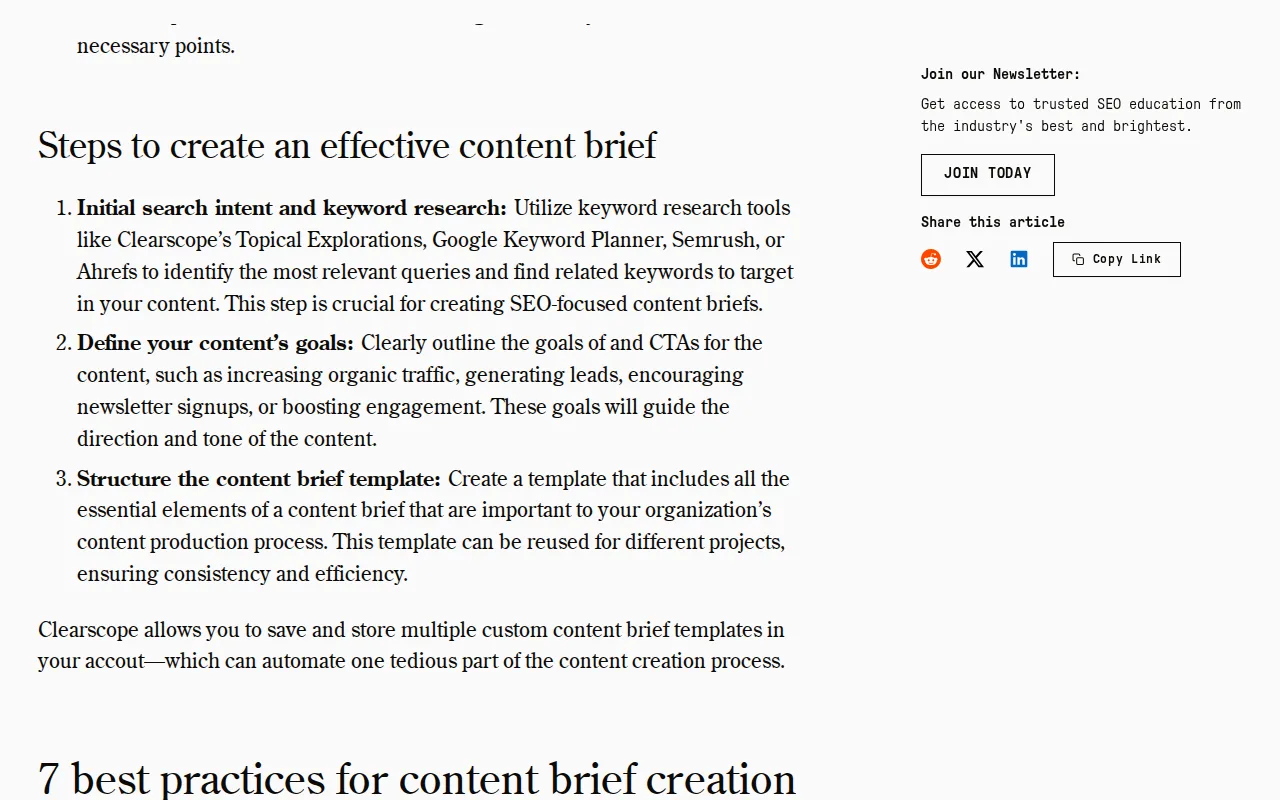
What stands out is how the post demonstrates the tool's value without being a product pitch. It explains why briefs reduce revision cycles, how they align writers to SEO goals, and what happens when a brief is missing. The Google Docs integration Clearscope offers gets mentioned once, naturally, in context, not as a feature list.
Best for: content teams at SaaS and ecommerce companies that publish frequently. Clearscope's Google Docs plugin is notably reliable compared to competitors, a detail that matters if your writers work outside a CMS. The platform is used by companies like Shopify, Adobe, and Webflow.
The honest gap: Clearscope focuses tightly on content optimization and doesn't try to be a full SEO suite. If you need keyword research, competitor tracking, and publishing automation in one place, you'll need to stack tools, or use something like Distribb that handles the full pipeline.
6. MarketMuse, Topical Authority Blog Example
MarketMuse is built for enterprise content strategies, and its blog reflects that. The platform uses AI to model a site's topical authority and identify content gaps competitors are exploiting. Posts on the MarketMuse blog tend to be long, densely structured, and focused on content strategy at scale, not individual post tactics.
The topical authority model is worth understanding as a blog post format. Instead of writing isolated articles, MarketMuse-style content maps every post to a cluster. A pillar page covers the broad topic. Supporting posts go deep on each subtopic. Internal links connect them. The result is a site that Google recognizes as an authority on the subject, not just a page that mentions the keyword.
Best for: enterprise content teams and agencies managing large site architectures. If you're building a pillar page strategy or trying to own a topic category rather than rank for one keyword, MarketMuse's blog is a strong model to study.
The caveat is price and complexity. MarketMuse is positioned for enterprise, and the learning curve is real. Smaller teams often find they get 80% of the benefit from a simpler tool at a fraction of the cost.
7. Frase, Question‑Answer Blog Example
Frase combines content research, AI writing, and SEO optimization at a price accessible to smaller teams. But what makes the Frase blog worth studying is its focus on answer engine optimization, structuring content so AI platforms like ChatGPT, Perplexity, and Google AI Overviews actually cite it.
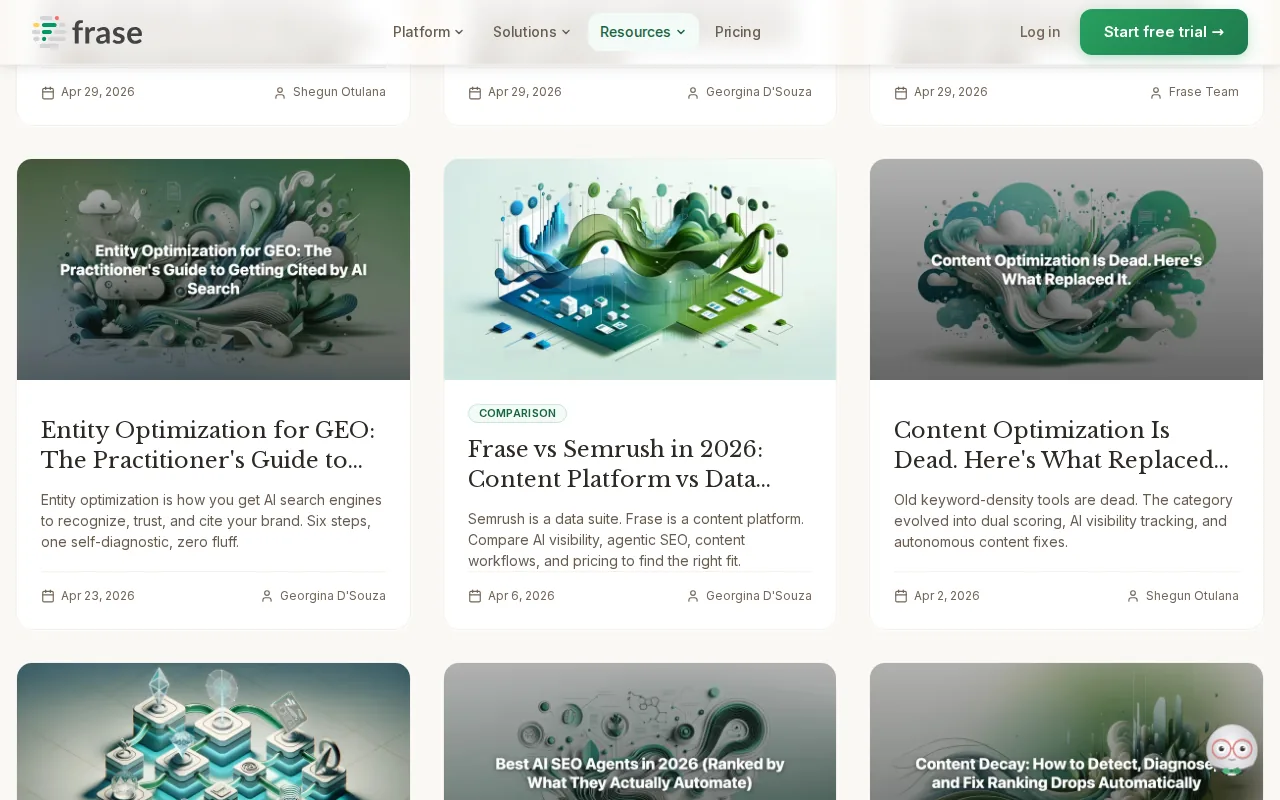
Their post on FAQ schema is a strong example of the question-answer blog format done right. It opens with a direct answer to the most common question about FAQ schema and AI search. Then it builds context: why Google restricted FAQ rich results in August 2023, why that made FAQ schema more valuable for AI citations (not less), and how to implement it. According to Frase's own research, FAQ schema has one of the highest citation rates in AI-generated answers.
Best for: smaller content teams that want their posts to show up in AI-generated answers, not just Google blue links. The question-answer format Frase models works especially well for informational keywords where readers want a direct answer fast.
The tradeoff: Frase's strength is research and optimization, not high-volume publishing. If you need to produce dozens of posts a month, you'll hit capacity limits quickly.
8. Scalenut, High‑Volume Blog Example for Agencies
Scalenut is built for content velocity, helping teams produce large volumes of SEO-optimized content quickly. Its blog targets content agencies managing multiple clients, and the posts reflect that operational focus: AI rank tracker comparisons, LLM SEO analysis tools, brand visibility audits, and agency-specific workflows.
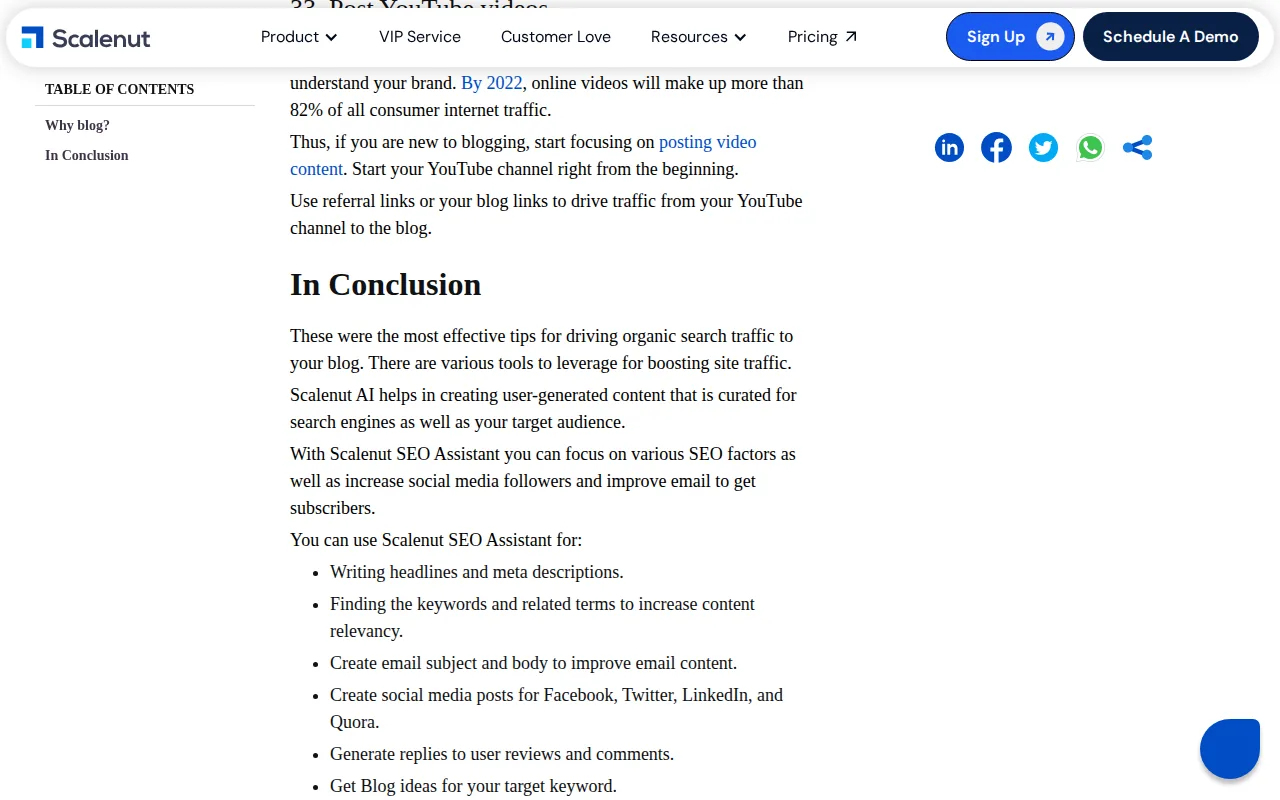
The format Scalenut uses across most posts is a structured comparison or guide with clear H2 sections, numbered lists, and a summary table near the top. Each post is written to answer a specific search query fast, then give enough depth to hold the reader. The blog also covers Google updates, SEO certifications, and inbound marketing, a broad content calendar that keeps the site relevant across multiple search clusters.
Best for: agencies and content teams that need to publish at scale without sacrificing SEO structure. The high-volume model Scalenut demonstrates is worth studying if your goal is to build topical coverage across a niche rather than go deep on one post.
One limitation: content produced at high velocity can feel thin. The best agency blogs pair Scalenut-style volume with a human editing pass to add specific examples and genuine insight, otherwise posts start to look like each other.
9. Jasper, Creative Narrative Blog Example
Jasper leads the AI writing space with sophisticated language models and brand voice training that produces content requiring minimal editing. Its blog is a good example of the creative narrative format: posts use storytelling elements, personal framing, and a clear beginning-middle-end structure even on technical topics.
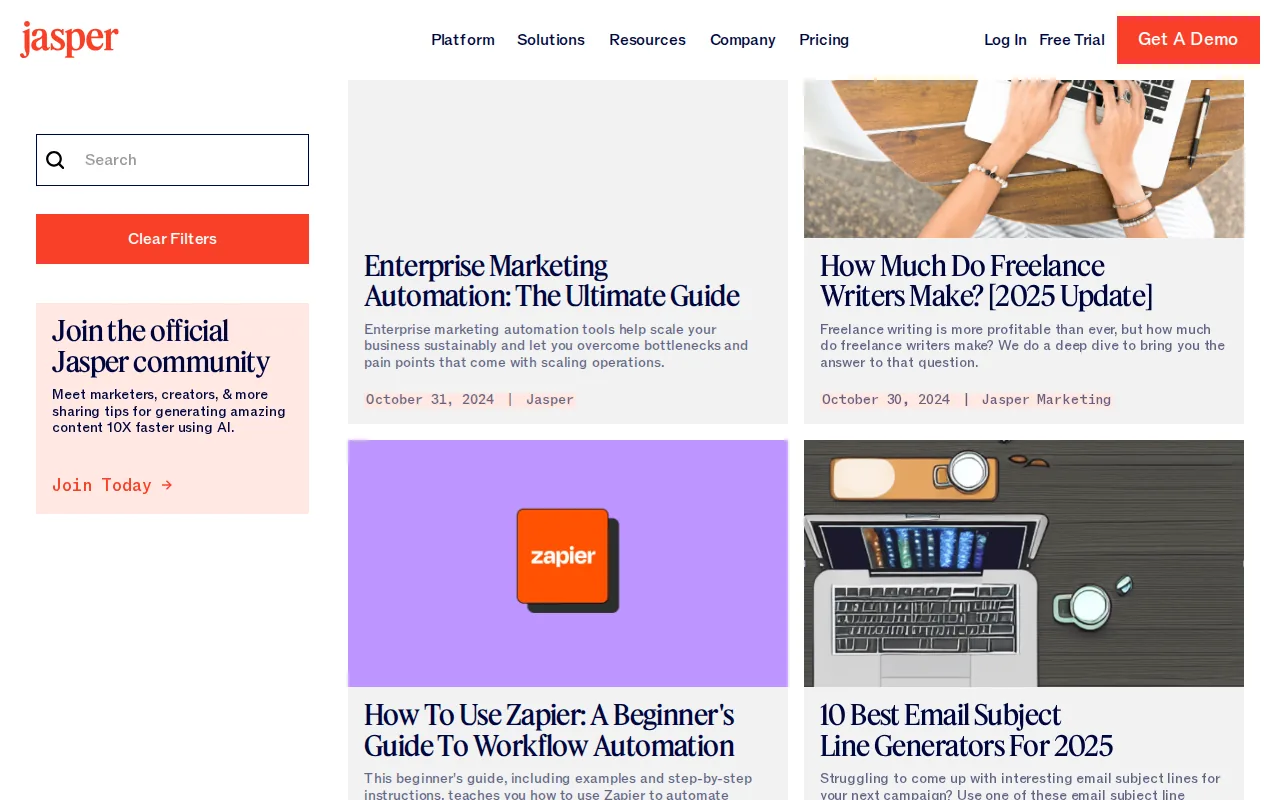
Their post on blog post structure is a useful case study. It opens with a surprising number (around 7 million blog posts published daily), then immediately connects that to a reader problem: how do you stand out? The rest of the post builds from that tension, covering headlines, intros, subheadings, visuals, and CTAs as a connected narrative, not a disconnected checklist. As Neil Patel has noted in his own content, eight out of ten people read a headline but only two out of ten click through, which is exactly why Jasper's post leads with the structure problem before diving into solutions.
Best for: marketers who want AI-assisted content that still sounds like a person wrote it. Jasper's brand voice training is its real differentiator, you can feed it examples of your writing and it learns your tone. The 7-day trial gives enough time to test it on a real post before committing.
10. Copy.ai, Budget‑Friendly Blog Example
Copy.ai provides accessible AI writing with basic SEO optimization at a price smaller teams can afford. Its blog post on SEO-optimized content is a clean example of the format: short paragraphs, a clear keyword target, a practical workflow (upload examples, build a custom workflow, run the keyword, review the output), and a direct CTA at the end.
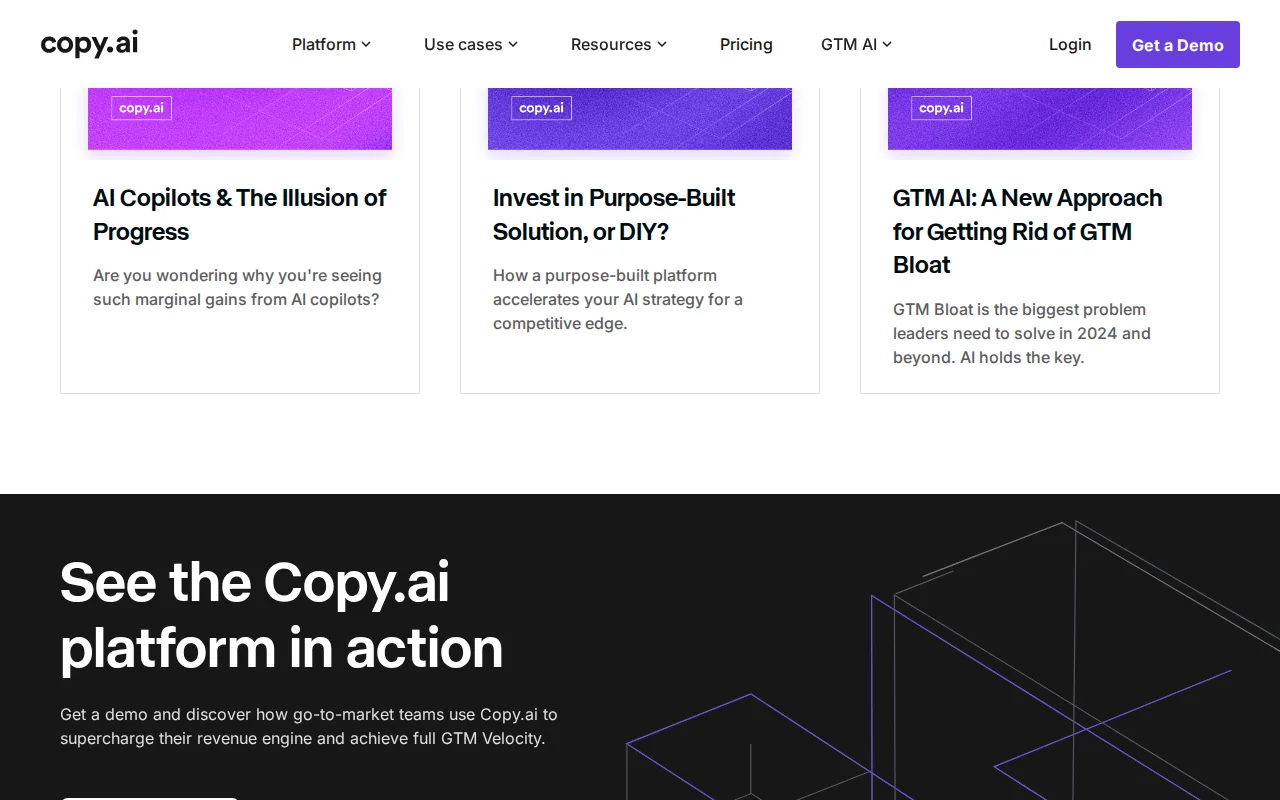
The post doesn't try to be the most complete guide on the internet. It answers one question, how do you use Copy.ai to produce SEO blog posts faster, and answers it in about 1,000 words. That's a deliberate choice. Copy.ai's audience is GTM teams stretched thin, and the content matches their attention span.
Best for: teams prioritizing affordability over advanced SEO capabilities. Copy.ai works well for producing first drafts, case study outlines, and workflow-driven content at volume. It's not the right tool if you need deep topical authority modeling or native CMS publishing, but for budget-conscious teams getting started with AI content, it's a solid entry point.
Worth noting: Copy.ai relies on manual publishing or Zapier connections rather than native CMS publishing, something to factor into your workflow before committing.
How to Choose the Right Blog Post Example for Your Goal
The format you pick should match what the reader wants when they type your keyword into Google. Get this wrong and even a well-written post won't rank.
Here's a quick decision framework:
- Listicle: Use when the reader wants a shortlist to pick from. Works for "best tools," "top examples," or "types of X" keywords. The Scalenut and Distribb formats above are good models.
- How-to guide: Use when the reader wants to do something themselves. Sequential steps, clear milestones, and a single outcome. Surfer SEO's content optimization posts follow this well.
- Case study: Use when the reader wants proof. Name the client, the problem, the solution, and the result. Semrush's case study format is the clearest model here.
- Question-answer / FAQ post: Use when the reader wants a direct answer fast. Lead with the answer in the first sentence. Frase's FAQ schema post is the example to follow.
- Topical authority post: Use when you're building a content cluster. Long, linked, and structured to support a pillar. MarketMuse's blog models this well.
Word count follows intent, not a fixed rule. A how-to guide for a complex technical process might need 2,500 words. A question-answer post for a simple query might need 800. Check what the top-ranking pages for your keyword actually look like, that's your depth target. The free word counter tells you where your draft lands against that target.
One practical filter: ask whether your post needs to rank on Google, get cited by AI engines, or convert readers into buyers. Each goal shifts the structure slightly. AI citation favors structured Q&A with schema markup. Google ranking favors depth and internal linking. Conversions favor clear CTAs and specific proof points early in the post.
If you want all three without building each post manually, tools like an SEO blog post generator can handle the research, structure, and publishing pipeline automatically, which is exactly what Distribb does for teams that need consistent output without a full content team behind them.
FAQ
What makes a blog post example worth copying?
A blog post worth copying matches search intent exactly, leads with a hook that earns the click, and gives the reader something specific they can use or act on. Structure matters too, short paragraphs, clear subheadings, and a conclusion that ends with a question or next step. The best examples also link out to credible sources and internally to related content on the same site.
How long should a blog post be for SEO?
Length should match what already ranks for your keyword. Most competitive informational posts run between 1,500 and 2,500 words, but a direct question-answer post can rank at 800 words if it answers the query better than longer competitors. Check the top five results for your target keyword and aim for similar depth, then add one concrete detail or example they missed.
What's the difference between a listicle and a how-to blog post?
A listicle is a shortlist of named options the reader picks from, tools, examples, strategies. A how-to post is a sequence of steps the reader executes themselves. The format should match the keyword's intent. "Best blog post examples" calls for a listicle. "How to write a blog post" calls for a how-to guide. Getting this backwards is one of the most common reasons posts don't rank.
Do I need to use AI tools to write a good blog post?
No, but AI tools reduce the time gap between having an idea and publishing a post that's actually optimized. Tools like Distribb handle keyword research, content planning, and publishing automatically. Tools like Clearscope and Surfer SEO help you optimize drafts you write yourself. The best approach depends on your volume needs and how much time you have for manual work.
What blog post format gets cited by AI search engines?
Structured content with proper schema markup gets cited most often by AI platforms like ChatGPT, Perplexity, and Google AI Overviews. Each answer should be self-contained, AI engines extract individual Q&As without surrounding context. Frase's blog post on FAQ schema is a strong practical guide on how to structure this kind of content for AI visibility.
How do I find good blog post examples for my niche?
Search your target keyword on Google and study the top five results. Note the format (listicle, how-to, case study), the word count, the heading structure, and what they link to. Then find the gap, the angle or example none of them covered, and build your post around that. For student and beginner bloggers, the blog post examples for students on Distribb's site show several distinct formats side by side.
What to Do Next
Pick one format from this list that matches your next post's keyword intent, then study the example that fits it most closely. If you want to skip the manual research and publishing grind entirely, Distribb builds and runs the whole content pipeline for you: keyword research, writing, scheduling and distribution. Distribb pricing lists both plans, each with a 7-day free trial.