

A good therapy website can make the first step feel clear and calm. These six therapist websites offer different ideas for solo practices, group clinics, and online care. Distribb.io also has SEO for therapists for practices working to improve how people find their site.
We analyzed 44 comments and questions from Reddit, YouTube and Quora about therapist websites and found that 27% mentioned authentic transparent language.
1. HelpGuide: A resource-rich mental health website
HelpGuide is a mental health website that can inspire practices thinking about how useful information fits into a web experience. It’s a different model from a therapist’s own practice site, but that contrast is helpful: visitors may arrive with questions before they’re ready to ask about an appointment.
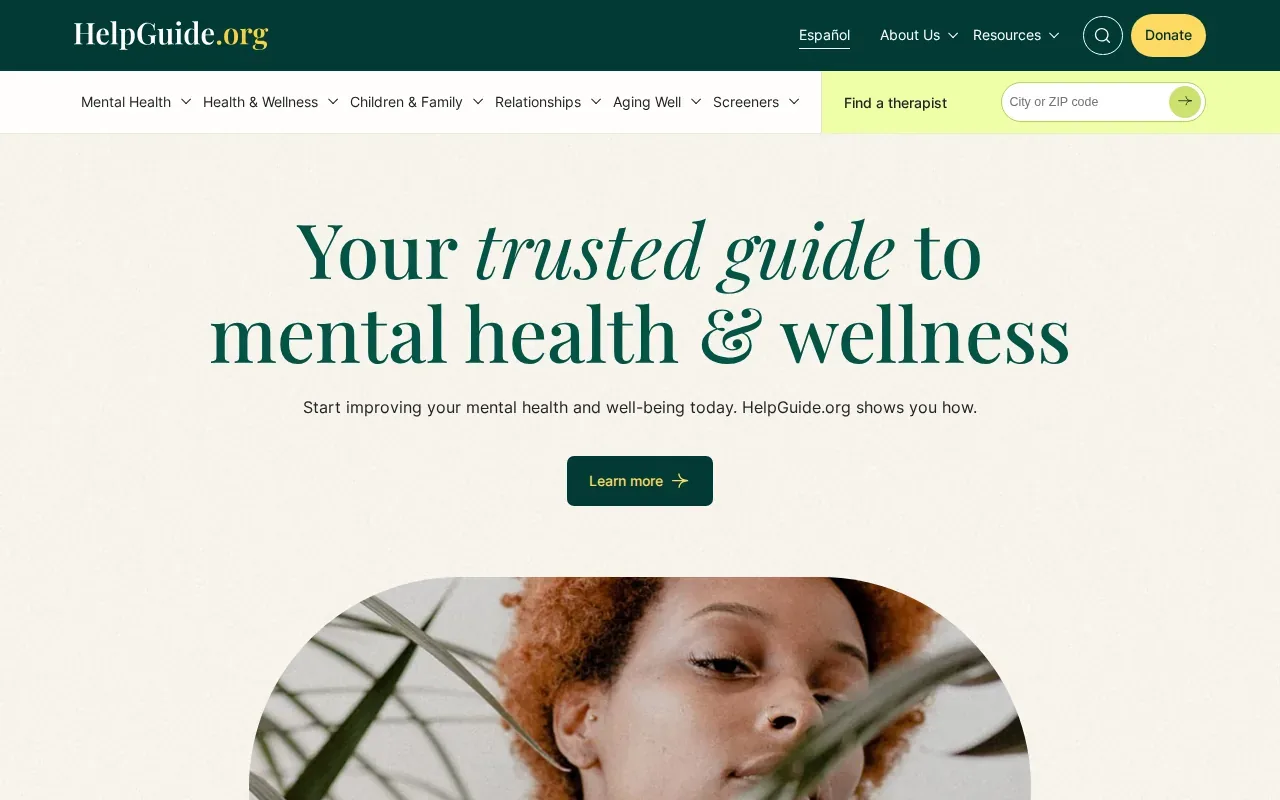
For a private practice, the lesson is to make education easy to find without letting it hide the path to care. A small resource area could answer common questions about a service, explain what a first session involves, or point visitors toward relevant support. Keep each page focused, and make clear when educational content isn’t a substitute for individual care.
Give your practice site a clear main route, too. A short therapist bio should explain who you work with and what you offer. Service pages should describe the work in plain language. Put the next step, such as requesting an appointment, where visitors can find it without digging through several menus.
Resource pages can also give returning visitors a reason to come back. Choose topics that reflect your actual services, then write with care around sensitive issues. The useful idea here is not to publish a large library for its own sake. It’s to answer the questions your practice hears often, while keeping the route to care visible.
2. Amwell: A polished example of virtual-care access
Amwell supports payers and providers with a technology-based platform intended to improve access to care across programs and partners. It’s an example of virtual care at a broader service level, rather than a solo therapist’s practice site. For a clinician who offers online sessions, the useful design prompt is simple: make the route from learning about care to understanding how to access it easy to follow.
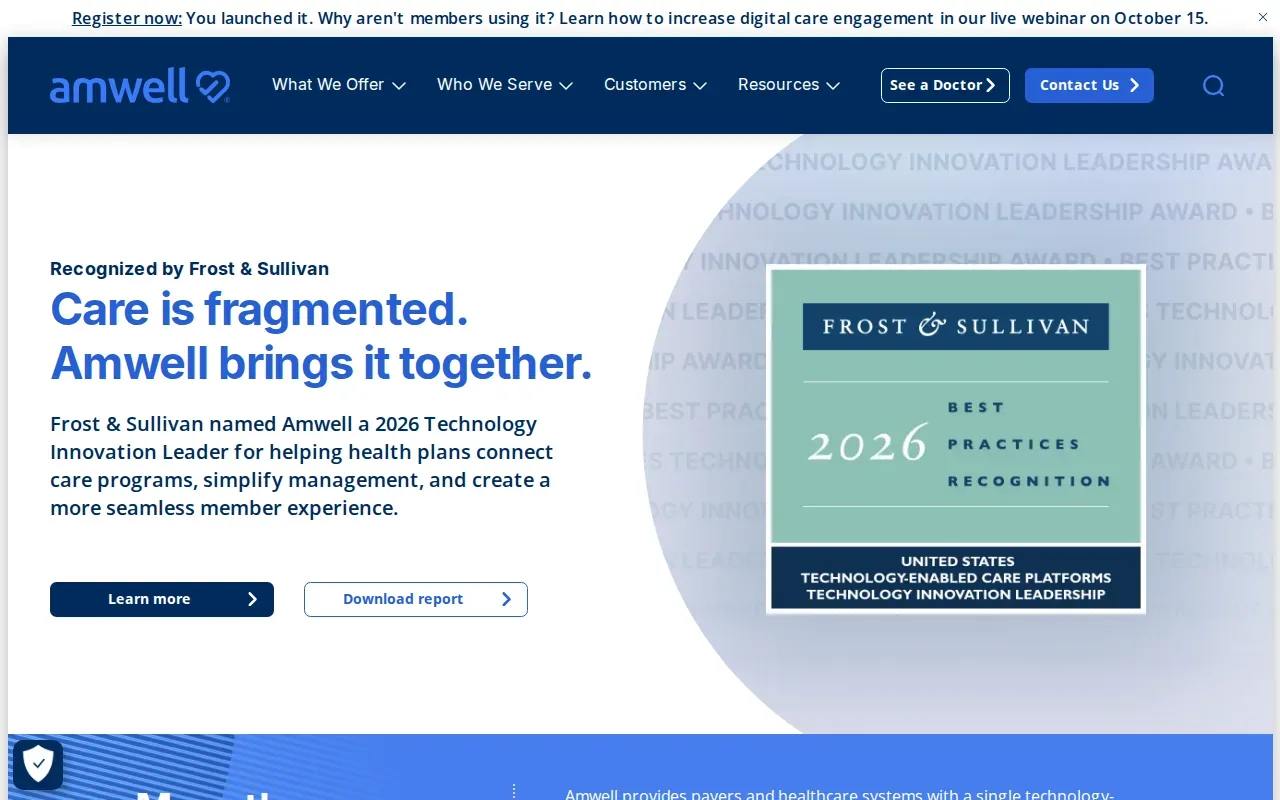
On a practice site, explain whether sessions are virtual, in person, or both. State who the service is for, how someone can ask about availability, and what happens after they reach out. Don’t make a visitor infer these details from a photo or a vague headline.
Keep the interface calm, but don’t let visual restraint remove useful detail. A visible appointment action can sit near the top of the page, with more information below for people who need it. Check the full booking flow on a phone. Small buttons or hard-to-read form fields can make an otherwise thoughtful site harder to use.
Online care also calls for careful choices about forms and client information. If a site collects health details, review how those details move through the form, booking tool, email alerts, and any client portal. A public page can introduce the service; sensitive conversations belong in systems set up for that purpose.
3. Doctor On Demand by Included Health: Clear paths to online mental health care
Doctor On Demand by Included Health provides virtual care that includes everyday, urgent, and mental health care. The stated service also includes 24-hour urgent care and online doctors. For therapist site owners, it’s a useful example to consider when explaining where online mental health care sits within a wider virtual-care offer.
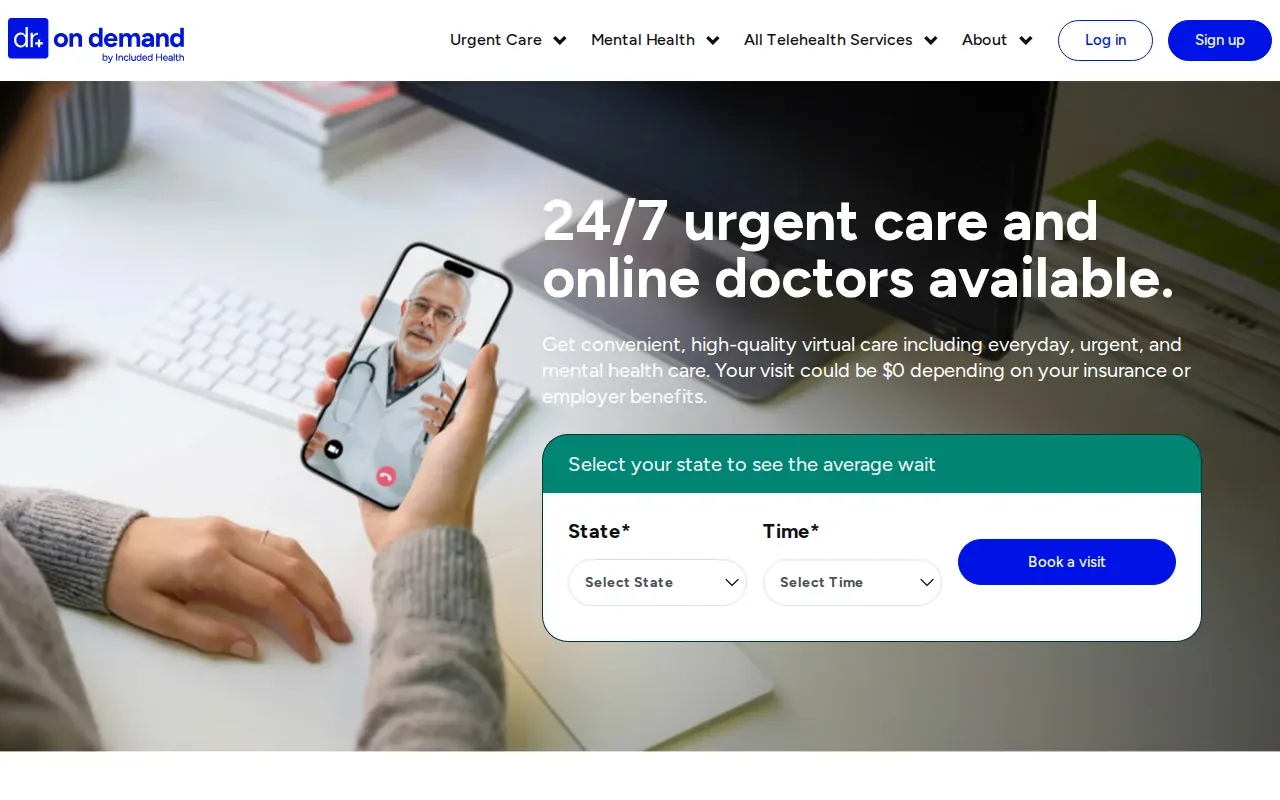
A practice website can borrow the principle of clear service paths without copying a large provider’s model. Give each main service its own page or a well-marked section. A visitor looking for individual therapy shouldn’t have to sort through unrelated care options before finding the right details.
That page should answer practical questions in a few short blocks: who the service may suit, how sessions take place, where the therapist can provide care, and what the first step is. Keep claims within your scope of practice. Clear wording helps visitors decide whether to make an inquiry, and it helps prevent confusion about what you do.
Privacy belongs in the same flow. A contact form should ask only for details needed to respond. If visitors need to share protected health information, check the form and service providers against the rules that apply to your practice. A secure connection alone doesn’t make every form or vendor suitable for sensitive details.
Design the mobile version as carefully as the desktop page. Make the main action easy to tap, keep text legible, and avoid long blocks that bury the service information. A visitor should be able to tell what care is available before reaching the bottom of the screen.
4. Jessica Meiman: A personal, therapist-led practice website
Jessica Meiman’s practice focuses on adults working through life transitions, trauma, and grief or loss. Her stated approach centers on a non-judgmental, safe space, with curiosity as part of the work. That gives a solo therapist a clear example of how a website can connect a specific audience with a personal approach.
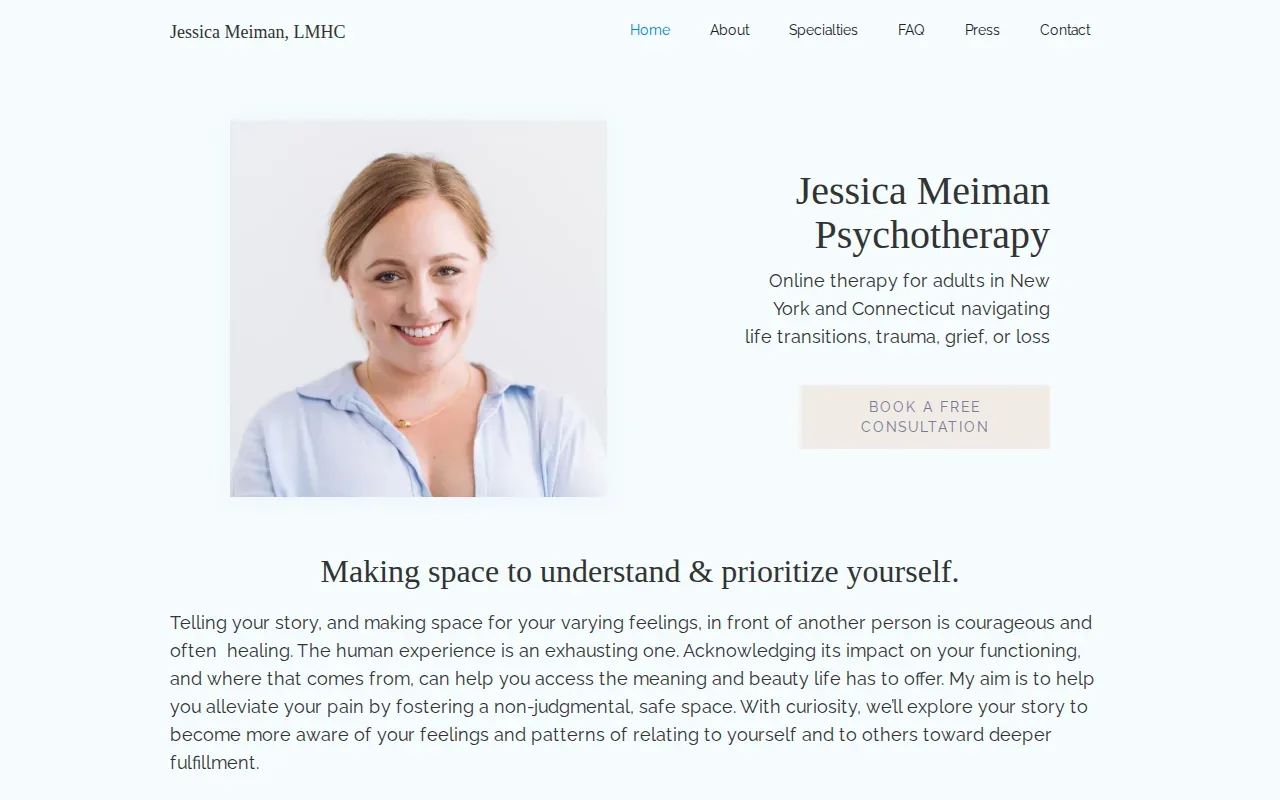
A therapist bio doesn’t need to read like a full career history. Start with who you work with and the concerns you focus on. Then explain how you approach the work in language a prospective client can understand. Training and credentials matter, but they’re easier to place in context when the page also explains what a client can expect.
Jessica Meiman’s focus can also prompt a useful choice about service pages. If your practice works with a few distinct concerns, describe each in its own section or page. Make it easy for someone looking for help with grief to see whether that service is part of your practice.
Keep the tone human without promising outcomes. A warm introduction can lower the effort it takes to make contact, but it should still be accurate about the therapist’s work. Avoid broad claims that could fit any practice. A specific focus and a clear next step give visitors more to work with.
For a solo site, a simple structure is often enough: a homepage, a bio, service information, and a contact or booking path. The site should answer the first questions, not try to replace the first conversation.
5. Michelle Harwell Therapy: A locally grounded psychotherapy website
Michelle Harwell Therapy is a Los Angeles psychotherapy practice in the Eagle Rock area. Michelle Harwell, MS, LMFT, specializes in trauma. Its services include psychotherapy focused on trauma.
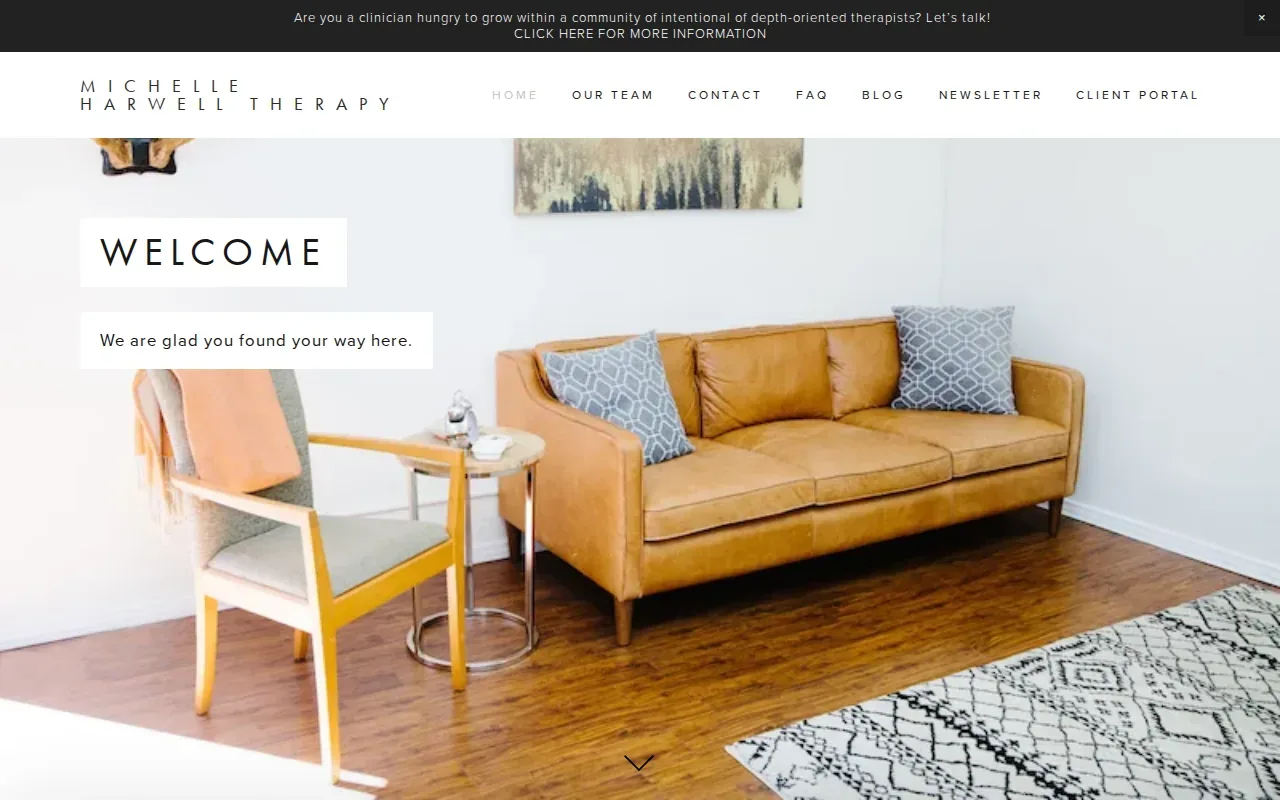
Use a location page or a clear location section to name the area you serve. Explain whether clients can meet in person or online, if that applies to your practice. Then connect that information to the relevant service page and the next action. Visitors shouldn’t have to guess whether your location works for them.
Local search depends on clear, consistent page details. The SEO guide for therapists covers how service pages and location information can help search engines and prospective clients understand a practice. Use the words people use for your services, but don’t add cities or specialties that don’t match your actual work.
Visual design can support the same clarity. Pick a restrained palette and use it consistently for headings, links, and buttons. Make sure text has enough contrast against its background. A calm look shouldn’t mean faint text or tiny type, especially for visitors reading on a phone.
If you ask clients for feedback or share testimonials, get permission and follow the rules that apply to your license and profession. Social proof is not worth compromising client privacy. A clear bio, accurate credentials, and a well-written service page can build trust without exposing private details.
6. Wholeness Collective Therapy Group: A boutique group-practice example
Wholeness Collective Therapy Group is a boutique therapy center in Carlsbad Village, California. It offers full psychotherapy in person and virtually. Its stated areas of focus include trauma, co-dependency, grief, depression, anxiety, parenting, and relationship challenges, with an eclectic approach that includes EMDR, somatic therapies, and mindfulness-based practices.

That range makes the group-practice example useful for thinking about site structure. A group site should help visitors move from a broad practice overview to the service or concern they came to explore. If several clinicians or services are involved, make the navigation clear enough that visitors can find a relevant person or care path without reading every page.
Put the practice’s location and service modes where visitors can see them. For a group with in-person and virtual care, say which options apply and where services are available. Avoid suggesting that every clinician or service is offered in every format unless that’s true.
Explain treatment approaches in plain language. A list of modality names may help some visitors, but brief descriptions can help more people understand what those terms mean in practice. Keep the page focused on the services the group actually provides, and give each major service a clear route to its next step.
Group sites also need a consistent feel across clinician pages. Use a shared layout for bios, areas of focus, and contact actions, while letting each clinician describe their own approach. That balance makes the site easier to scan without making every profile sound alike.
Therapist website examples compared
These examples reflect different needs. Use the table to spot the design direction that fits your practice, then test whether your own pages answer a visitor’s basic questions.
| Example | Best design lesson | Practice type to consider |
|---|---|---|
| HelpGuide | Make helpful education easy to reach | Practices with common client questions |
| Amwell | Make online care access clear | Practices that explain virtual sessions |
| Doctor On Demand by Included Health | Separate service paths by care need | Practices with distinct service areas |
| Jessica Meiman | Connect a personal approach to a clear focus | Solo therapists |
| Michelle Harwell Therapy | Show location and specialty clearly | Local practices |
| Wholeness Collective Therapy Group | Organize several services and care modes | Group practices |
Whatever the model, the core pages should make the next step plain. Include a therapist bio, a service list, and a booking or contact path. Check that pages work on mobile, and make sure forms and privacy notices fit the information you collect. Accessible design can make web content more usable for people with disabilities.
For search, write page titles that describe the page and keep service and location details consistent. Clear page content and links can help search engines understand a site. Track inquiries and booked appointments, not just page visits, so you can see whether the contact path is working.
If you’re choosing a builder, compare how easily you can edit pages and connect a booking or secure client system. A DIY builder can suit a small, simple site; hiring a designer may make sense when you need a tailored structure or don’t want to manage the build. Keep the scope tied to the site’s needs rather than paying for features you won’t use.
FAQ
What should a therapist website include?
A therapist website should include a clear bio, services, location or service area, and a simple way to ask about appointments. Explain who you work with and how sessions take place. If you collect client details online, review the form, booking tools, and privacy information before launch. Keep the main action easy to find on both desktop and mobile.
What colors work well for a therapy website?
Muted colors can create a calm feel, but readability matters more than any single palette. Choose colors that fit your practice and give text enough contrast against the background. Check buttons and links on a phone, too. A subdued design still needs clear text, visible actions, and enough space between sections.
How can a therapist website get found in local search?
A therapist website can support local search by clearly naming the services offered and the areas served. Give major services their own useful pages when that fits your practice, and keep location details consistent across the site. Avoid making pages for places you don’t serve. A clear booking path helps visitors act once they find the right page.
Does a therapist website need to be HIPAA-compliant?
It depends on whether the site handles protected health information and on the rules that apply to your practice. A basic information site differs from a site that collects health details through intake forms, booking, or a portal. Review each tool that may handle sensitive information, including where form submissions go, before collecting client data.
Should a therapist add a blog or resource library?
A blog or resource library can help answer questions visitors often have, as long as the content reflects your services and stays within your professional scope. Start with a few useful topics rather than a large archive. Make educational pages easy to find, and keep a clear path to your services for readers who want to learn about care.
Conclusion
Pick the example that matches your practice, then review your homepage and one service page on a phone. Make the service, location, and next step clear before you add more features. If search visibility is part of the work, explore Distribb.io’s SEO support for therapists.