

SEO for doctors is harder than standard local marketing. Medical sites must earn trust while reaching patients in the right place and at the right time. Here are five services worth comparing, with the best fit for each type of practice.
Among AI-driven SEO platforms, only 16 openly market a healthcare focus. The gap matters. A general SEO platform may still suit a medical practice, but only if it handles content, local search, publishing, and measurement without creating extra work for the clinical team.
1. Distribb.io, AI-powered SEO automation for scalable growth
Distribb.io is an AI-powered SEO platform for teams that need keyword research, content creation, publishing, backlink building, and AI-search visibility in one workflow. It is best for agencies, SaaS founders, e-commerce brands, and SEO teams that manage several sites or need to publish at a steady pace.
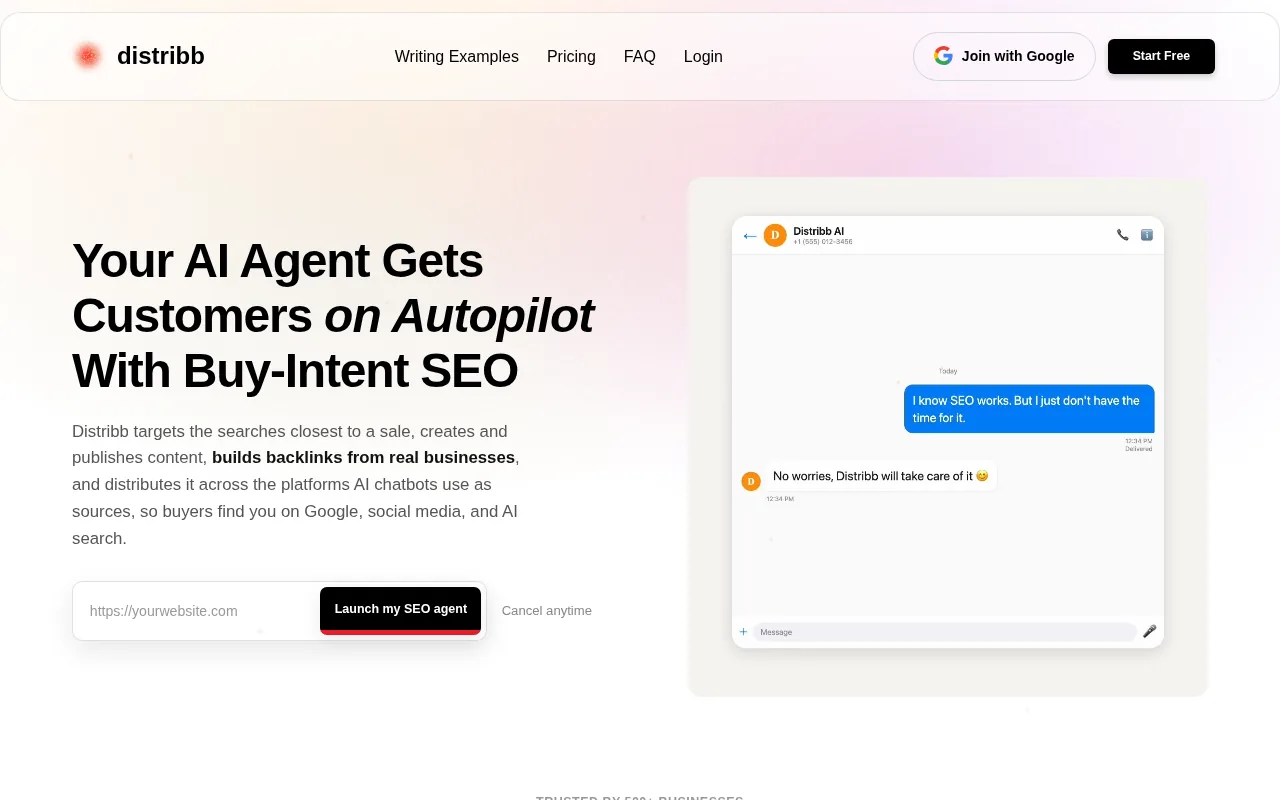
For a doctor or practice manager, the main value is less tool switching. Distribb.io connects with WordPress, Webflow, Shopify, Notion, Wix, Framer, Google Search Console, and Google Business Profile. That list gives a clinic more room to work with its current site instead of rebuilding around a new system.
The platform also fits practices that want search work to continue after the first audit. A team can map service terms, prepare content, publish pages, and track visibility. Backlink work can happen in the same operating cycle instead of sitting in a separate spreadsheet.
| Practice need | How Distribb.io fits | What to check first |
|---|---|---|
| One clinic with little marketing time | Automated research and publishing support | Who reviews medical claims before publication? |
| Several locations | Connections to Google Business Profile and major CMSs | Can each location keep its own pages and details? |
| Agency managing medical clients | Repeatable SEO workflows across sites | How does reporting roll up across sites? |
| Practice seeking authority links | Backlink building and backlink exchange options | Are links relevant and reviewed for quality? |
The same playbook shows up in neighbouring niches, and the mechanics carry over well from SEO for therapists or SEO for weight loss clinics. Medical review still belongs with a qualified person. AI can speed up research and drafts, but it should not decide whether a treatment claim is safe, current, or suitable for a patient.
A lot of the medical SEO agencies a practice would shortlist are white-labelling a platform like this one behind their retainer, so going straight to the source removes a markup and a middle layer. Pricing is $97 a month on Pro and $495 a month on Accelerator, where a human reviews every piece before it goes out. If you want the practice-specific version, see what Distribb runs for healthcare practices. The fit is strongest when your practice has a backlog of useful pages and no spare person to manage every SEO task by hand.
You can connect the site and let it run keyword research, writing, publishing and backlinks on its own, without adding staff time.
2. Cardinal, SEO for multi-location health systems
Cardinal is a healthcare-focused digital marketing agency suited to multi-location health systems. Its stated audience includes hospital networks, dental groups, urgent care chains, and other organizations with many offices that need one coordinated search program.

Multi-location SEO has a different workload from solo-practice SEO. Each office needs accurate location data, a useful page, the right services, and a booking path that matches what patients can actually access there. A copied page with a changed city name creates a weak experience and can confuse both users and search systems.
Cardinal's listed work includes local optimization, medical content marketing, reputation management, Google Business Profile optimization, technical SEO, link building, website design, and analytics. It also describes machine learning tied to conversion optimization. That combination makes sense for a health system that needs to connect visibility with appointment actions rather than track rankings alone.
Healthcare content also needs careful review. Deceptive or manipulative content can harm a site's presence in search. For a health system, that means marketing goals must stay behind accurate claims, clear authorship, and sound patient information.
Cardinal may be a better fit than a software-only platform when the organization needs an outside team to coordinate many offices. It can also suit groups that want SEO to sit beside paid media, reputation work, and conversion planning.
The tradeoff is cost and process. Custom agency work usually needs more meetings, more approvals, and more budget than a self-serve tool. It may be excessive for one physician with one office and a small set of services.
Choose Cardinal when location count is the main problem. If the challenge is simply producing and publishing a small set of pages, a lighter platform may be easier to run.
3. PatientGain, accessible SEO support for individual medical practices
PatientGain is positioned as an affordable, managed patient acquisition solution for individual medical practices and small group practices, with starting pricing of approximately $999 per month.
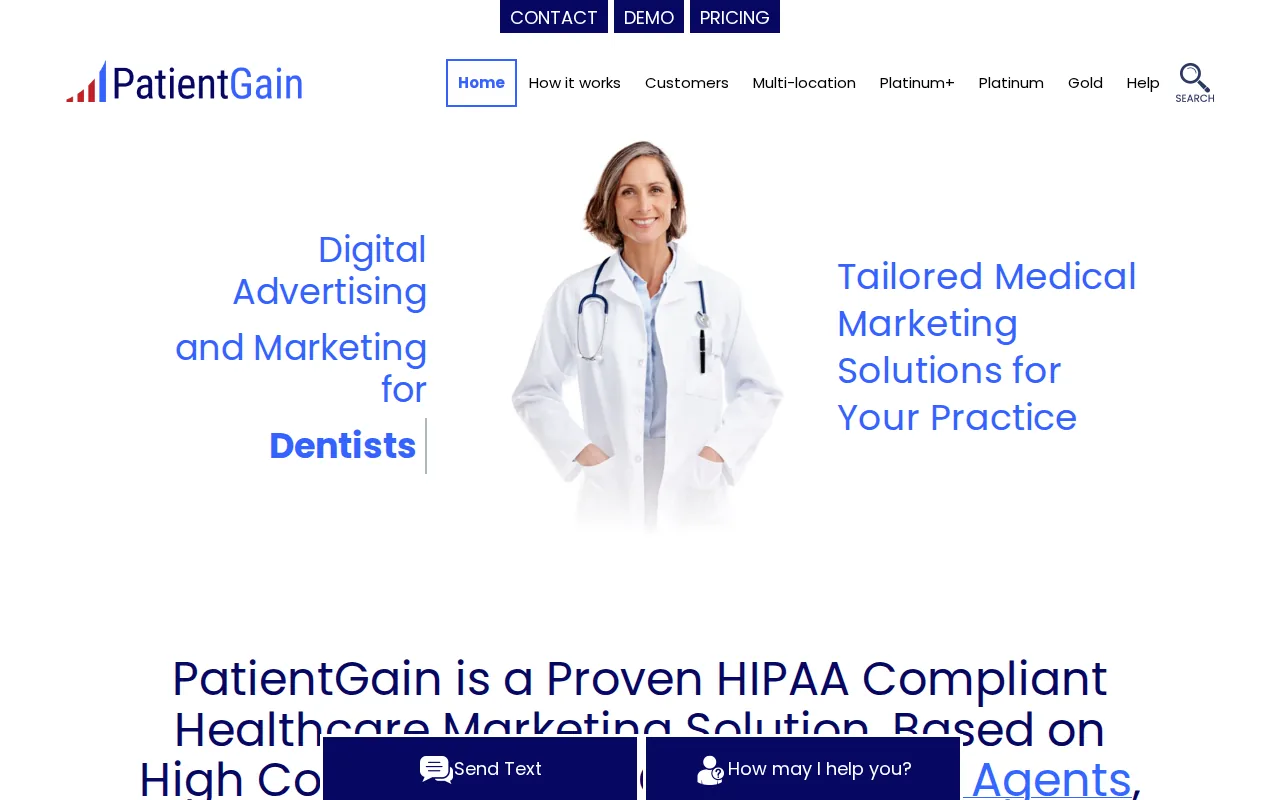
That audience is important because many doctors don't have a content team. The practice may have a strong clinician, a busy front desk, and a website that was built years ago. Staff can answer patient questions all day, but they rarely have time to turn those questions into clear service pages and articles.
PatientGain's medical SEO material covers topics such as local search, technical SEO, structured data, patient questions, AI search, and return on investment. It also stresses the difference between traffic and useful patient actions. A page that ranks for a broad health question may bring many visitors without producing a single suitable appointment request.
That distinction should guide any vendor review. Ask how the service will track actions that matter to the practice, such as appointment requests, consultation forms, or visits from a target service area. Rankings can help diagnose a problem, but they aren't the business result.
The service may work well for a solo doctor who wants support without managing a large agency relationship. It can also help a small group build a base of service pages before expanding into more advanced content or local campaigns.
There are limits. Content generation does not replace a medical review. The practice should know who checks claims, how updates are handled, and what happens when guidance changes. It should also confirm that the service works with the current website and booking setup.
PatientGain is worth a closer look when budget control and practice-level support matter more than a broad enterprise stack. Before signing, ask for a sample workflow that shows research, review, publication, and reporting in that order.
4. SeoProfy, multilingual SEO for international healthcare providers
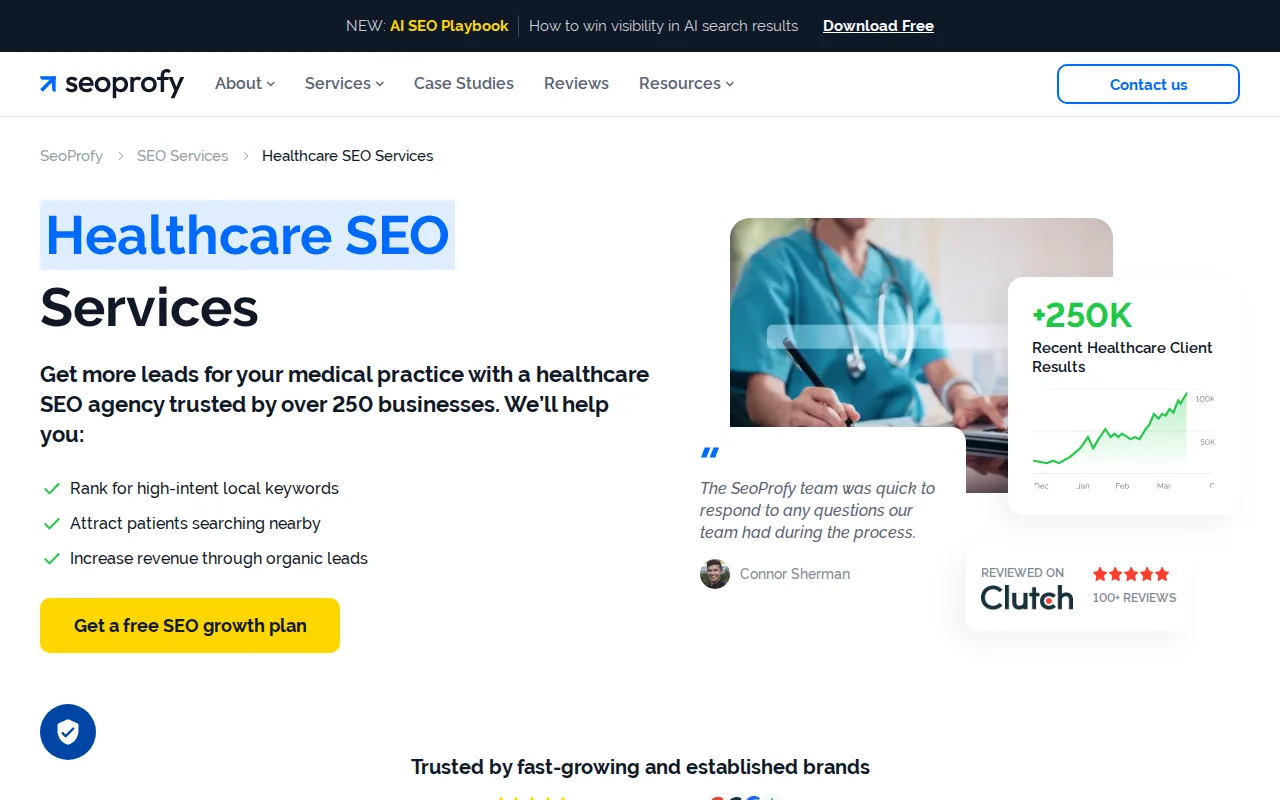
SeoProfy is positioned for multilingual and international healthcare SEO. It is best for clinics, telehealth brands, and medical networks that serve patients across languages, regions, or multiple locations.
International medical SEO has more moving parts than translating a page. Search intent changes by market. Local terms differ. A service may have a different name in another country. The practice also needs to keep provider details, location information, and treatment claims accurate in each language.
The company describes work across competitor analysis, local keyword research, technical optimization, content planning, Google Business Profile setup, monitoring, reputation management, and penalty recovery. It also lists GEO and AI visibility work, including entity signals, content structure, internal links, and citation readiness.
That focus suits a healthcare brand that already has a clear expansion plan. A small local practice with one office may not need this level of market research. A regional network, however, may need separate search plans for each city and language rather than one translated global page.
Healthcare pages also need a clear source trail. A named clinician or reviewer can help patients understand who stands behind a claim. Links between provider bios, service pages, and location pages help both readers and search systems understand the site structure. The page should explain what the practice actually provides, not what a keyword tool says people might search.
SeoProfy reports 13 years of hands-on experience and more than 250 satisfied clients in its own company description. Those claims should still be checked against the scope of work you need. Ask for examples that match your languages, countries, specialties, and compliance review process.
Its main caveat is fit. Multilingual work can add review time and coordination costs. If your practice serves one local market, a simpler service may give you a faster start.
5. Search Atlas, all-in-one SEO platform for healthcare websites
Search Atlas is a healthcare-focused SEO platform with tools for keyword research, content generation, content optimization, backlink prospecting, backlink building, and rank tracking. Its listed starting price is $99 per month, which places it near the median price found in the wider platform review.
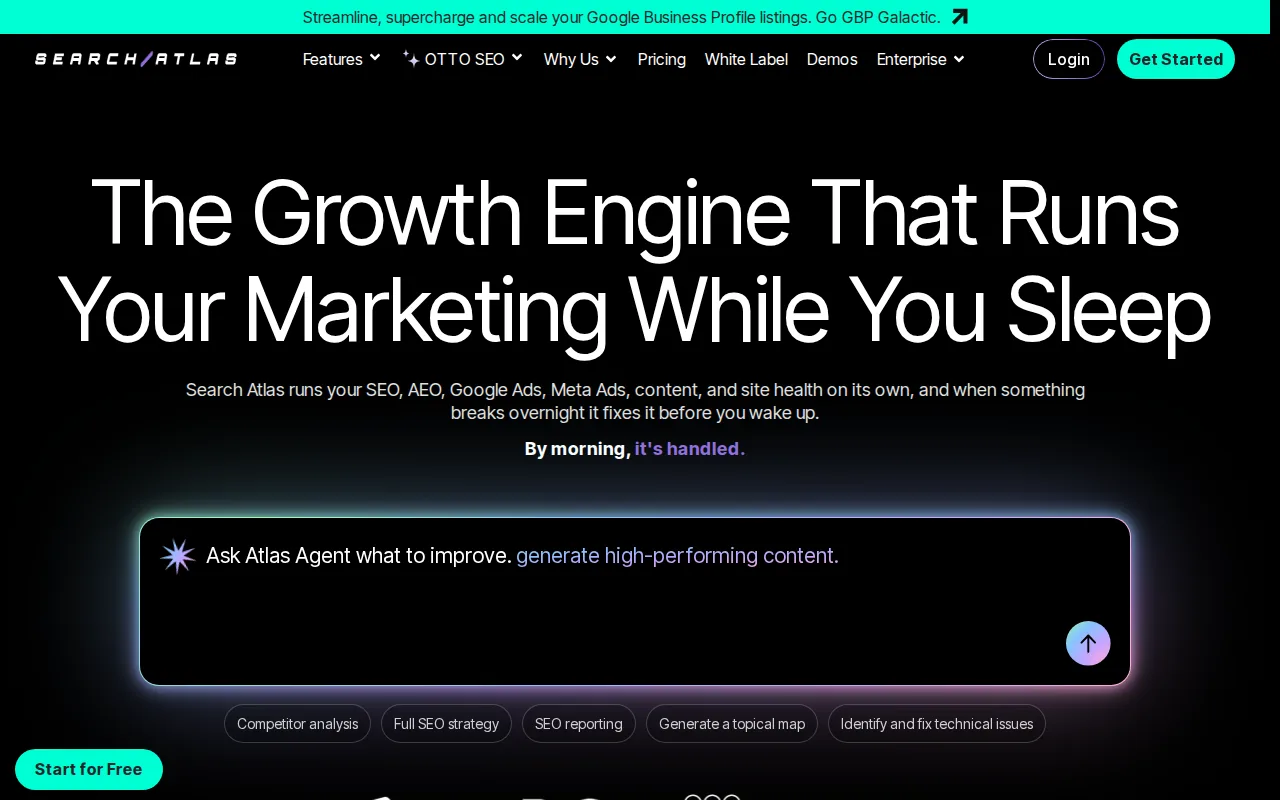
The platform is aimed at healthcare teams that want several SEO functions in one dashboard. Its healthcare material discusses technical audits, competitor gaps, content planning, medical authority, and patient-focused search terms. A team can use those functions to find missing service topics or pages that need a clearer structure.
Search Atlas also describes audits that look for crawl errors, broken links, redirect chains, HTTPS issues, slow resources, accessibility problems, and schema errors. Those checks can help a practice find problems that patients feel even when they don't know the SEO term for them. A broken booking path is a marketing problem, not just a technical warning.
Its content tools are useful for planning topic groups. For example, a team might organize content around prevention, symptoms, treatment choices, preparation, and follow-up. The clinical team still needs to check every draft. Search Atlas itself describes healthcare as a YMYL area, where inaccurate information can affect health decisions.
For reference, the term backlink means a link from one web page to another site. A practice should care about relevance and trust, not link count alone.
Search Atlas may suit a marketing manager who wants a broad tool set without buying several separate subscriptions. The price is easier to understand than many custom agency packages, though the total cost still includes staff time for review, editing, and implementation.
The caveat is that a platform doesn't automatically know your clinical scope or local rules. It can point to a gap. Your team must decide whether filling that gap is safe, useful, and worth publishing.
FAQ
What is the best SEO service for a solo doctor?
The best service for a solo doctor is usually the one that reduces marketing work without skipping medical review. Distribb.io suits practices that need automated research and publishing support. PatientGain may suit a practice seeking dedicated healthcare SEO support. Compare approval steps, reporting, website compatibility, and the way each service tracks appointment actions.
How much does SEO for doctors cost?
SEO for doctors has a wide price range because tools, agencies, locations, and content needs differ. PatientGain listed starting pricing near $999 per month, while Search Atlas listed $99 per month. Treat these as published reference points, not quotes.
Does medical SEO need special content rules?
Yes, medical SEO needs a stricter content process than many business sites. Health pages should name the author or reviewer, avoid unsupported promises, show current service details, and protect patient privacy. A clinician should check medical claims before publication. Marketing staff can then review search intent, page structure, and the path to an appointment.
Can AI write content for a medical practice?
AI can help write a first draft for a medical practice, but it should not publish health claims without human review. Use it for topic research, outlines, internal links, and draft copy. A qualified reviewer must check accuracy, wording, risks, and dates. The final page should also show who wrote or reviewed the information.
How long does SEO for doctors take to work?
SEO for doctors usually takes months rather than days, especially in a competitive city or specialty. Early gains may appear as better indexing, more impressions, or improved local visibility. Patient leads take longer to judge. Track service pages, location pages, booking actions, and qualified inquiries instead of relying on rankings alone.
Conclusion
For most practices that want a flexible way to scale search work, Distribb.io is the strongest first test because it combines SEO automation with broad site and analytics integrations. Start with one location and a few high-value services. Review the first drafts with a qualified medical owner, then measure search visibility against genuine appointment actions. If backlink growth is the next gap, review Distribb's backlink exchange as a separate part of the plan.