Nathan Gotch's 7 SEO Predictions for 2027, Checked
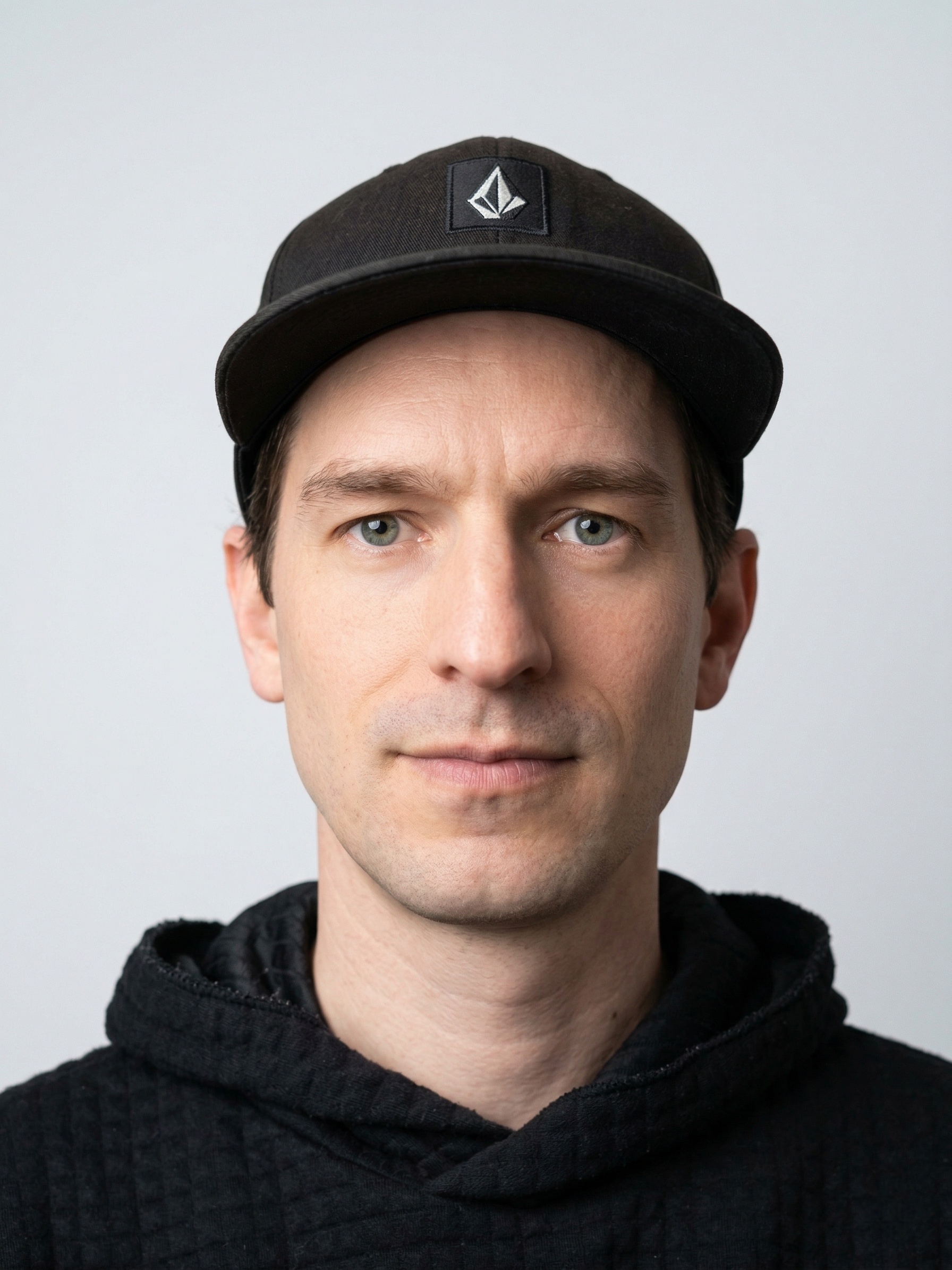
Nathan Gotch recorded his SEO predictions for 2027 on 18 November 2026. By the time the video went up, one of the seven had already partly come true: OpenAI had opened business profiles in ChatGPT eight days earlier.
Nathan wrote AI SEO for Dummies and co-founded a software company that he says runs on three people and a lot of AI agents. I watched the video because his last four predictions are about who will do SEO work next year, which is a question every agency owner and every business owner I talk to is asking. Here are all seven, with what I think each one means for you.
Prediction 1: AI Mode becomes Google's default
Nathan has predicted this since AI Mode launched: you open Google, type a search, and the AI answer is what you see first, with the classic results pushed into the background.
His evidence is about money. In the US, ads are now showing inside AI Mode, and Google is testing different ways to monetize it. He reads Google's last earnings, profitable but growing slower than usual, as a sign the company hasn't worked out AI ads yet. He expects it will, because advertising is what Google does best. He also points out that Google already moved the plain "Web" results into a tab in the navigation, so the classic list is already one click away.
The classic index doesn't go anywhere in his view, because AI Mode needs it. When the model needs current information, it retrieves it from search, and the pages it cites tend to be pages that rank well, though not always. You can be cited without ranking, and rank without being cited.
He also describes his own habits. Most of his searching now happens through Claude, which searches for him and sometimes goes straight to a website without using a search engine at all.
→ My take: plan for an AI answer above your listing. If your page is the one the AI retrieves, you still win. If it isn't, ranking eighth matters less every year.
Prediction 2: AEO becomes the name
This is the one he calls controversial. He thinks "answer engine optimization" will become the standard term for the work, and that "generative engine optimization" won't stick because it sounds too complex.
His data: searches for "SEO" have been falling year over year, though the total is still large, and he is clear that SEO is not dead. Meanwhile big software companies are putting marketing behind the AEO label. HubSpot launched an AEO product in April 2026, and Webflow launched one the same month.
Google's own position is worth knowing here. Its guide to generative AI features now mentions AEO and GEO by name and says that, from Google Search's point of view, optimizing for generative AI search is still SEO.
→ My take: call it what your buyers call it. The work underneath is the same, and Nathan says himself that the name makes no real difference.
Prediction 3: Classic SEO stays, and the job gets wider
Nathan describes AI search optimization as an umbrella with SEO as a large part of it. What changes is the target. Instead of ranking one URL for a topic, he wants several spots on page one, on Google, Bing and Brave, so that whichever results the AI retrieves, his client is in them.
He breaks the path into three stages: retrieved, then cited, then recommended. Rankings get you retrieved. Getting recommended takes more: what the web says about the brand, its reputation and third-party evidence that it is legitimate. A brand can rank well, have a poor reputation and still be left out of AI answers.
The data behind the shift is on our blog too. We wrote up what marketers are chasing in AI search, including how much of the click AI Overviews now take.
→ My take: start with search, because retrieval still runs through it, then spend real effort on reviews, mentions and lists that describe you well.
Prediction 4: ChatGPT shares more query data
This is the prediction that partly came true early. ChatGPT now has business profiles, and Nathan's advice for agencies is specific: create a dedicated ChatGPT account for each client, register the business there, and keep it separate, so you can hand the account over if the client leaves. The verification includes a face check, which he calls intense.
He isn't impressed with the data yet. The profile shows mentions, profile views and some clicks, and the topics are very broad. He says the generative AI section in Google Search Console isn't much more useful today, and that Bing Webmaster Tools and Microsoft Clarity are the free tools that currently give decent data.
His actual prediction goes further: that OpenAI will share real prompt and query data with advertisers, the way Google gives better data to people who pay for ads. That part hasn't happened. If you want the setup steps for the profile itself, we covered them in ChatGPT business profile: setup, insights and limits.
→ My take: claim the profile now, in an account you control, and don't expect useful data from it until advertisers get it first.
Prediction 5: SEO work moves into AI agents
This one is already happening for him. He says about 90% of his own SEO work now runs inside Claude and Codex, connected to his tools through MCP servers. He has an agent that works his CRM all day and tells him who to follow up with and where to send a proposal. He doesn't log into the CRM anymore.
He was surprised the industry is slower than he expected. The numbers he showed: 87% of SEO professionals use AI, about 79% save five hours a week with it, about 38% use agentic AI to automate workflows, and about 1% say their work is fully automated.
He doesn't want full automation. His view is that 75 to 90% of the work can be automated and the last 10% is where a human does quality assurance. He goes as far as saying technical SEO on small websites is "solved" by a few automations plus a human check at the end, and that most of his content work has humans only on the second half.
His most useful warning: don't build all your tools with AI. It is tempting because the first prototype comes together fast, but he calls it a waste of time. Connect an existing tool's MCP to your agent instead.
→ My take: this is the prediction to act on first. One connected tool in the assistant you already use is a small step, and it changes how much one person can get through.
Running SEO from Claude or ChatGPT
Prediction 5 is close to how we built Distribb, so I'll be direct about it. Distribb works inside Claude and ChatGPT through a plugin and an MCP server, and the plugin comes with every plan. Your assistant becomes the interface, and the SEO engine runs underneath it:
- Keyword research finds buyer keywords for your site, and the content calendar plans every article on a date.
- Articles are written and published to your CMS on that schedule: 30 a month on Pro, 90 on Accelerator.
- Real backlinks from real businesses arrive every month through the exchange, and link outreach gets you onto the lists that rank.
- AI visibility tracking shows when ChatGPT, Gemini, Perplexity and Google's AI answers cite you, next to your Search Console data.
Because the assistant has your keyword research, calendar, published articles, Search Console history and backlinks, you can ask it what slipped last month or what to publish next, and it answers from your own data. That is the "plug in a tool instead of building one" advice Nathan gives, without building anything.
Pro is $97 a month. Accelerator is $495 a month and adds done-for-you videos, Medium articles, carousels and link outreach campaigns. Both come with a 3-day free trial.
Prediction 6: Businesses bring SEO in house
Nathan has worked with agencies for most of his career, and he calls this the biggest risk they face. One motivated person inside a business, with some technical skill, Claude or Codex, a few connected tools and a reasonable process, can now do SEO better than most people who sell it, in his estimate.
He is hard on generalist agencies in particular. He describes them as selling web design, ads and SEO together without being very good at the SEO part, and he says business owners tell him directly that they want to bring this work in house.
His advice to agencies is to add a done-with-you service next to done-for-you. The agency audits the client's situation and systems, builds the system, shows the client how to run it in house, and stays on as a consultant to keep it working. His comparison is a car factory that hires a company to build its production line, then keeps that company on call for repairs.
He was emphatic enough to date it: "Don't say I didn't warn you."
→ My take: if you own a business, in house no longer means hiring an SEO team. If you run an agency, decide now what you sell to the client who wants to keep the work inside.
Prediction 7: Agency teams get smaller
His last prediction is that AI will shrink agency execution teams, and he says employment at agencies is already falling.
His own company is the example: three people, some contractors and what he calls an enormous agent setup. Every time they think about hiring, they find the agents can do the job about 90% as well and around seven times faster, by his estimate. He no longer sees other SEO software as his competition. He sees Claude and Codex.
He gives one more example from outside SEO. For his book launch, he says it was just him and Codex. Codex planned the Meta ads campaign, cleaned up the conversion tracking, made the creative, set up the ads and optimized them daily, and he says he paid about $3 per webinar registration without logging into Meta once.
The role he expects to survive is the account manager. A human talking directly to the client isn't going anywhere, in his view. The technician work is what agents take over.
→ My take: an agency in 2027 looks like a few account managers, a strategist and the software doing the delivery. Price for the outcome, not the hours.
What I'm taking from Nathan
I run Distribb, so I am biased on predictions 5 to 7. These are the parts I would act on regardless.
Treat ranking as step one. Retrieval still runs through search, but being recommended also depends on your reputation and what others write about you.
Claim your ChatGPT business profile in an account you own. Agencies should set one up per client so it can be handed over.
Connect one tool to your assistant this month. Nathan's point about using an existing MCP instead of building your own saves weeks.
Keep a human on the last 10%. Even the person most enthusiastic about automation in this video keeps quality assurance with a person.
Agencies, write down your done-with-you offer. The clients who want SEO in house will leave either way. The question is whether they keep paying you as their consultant. If you want his full view on learning the skills behind this, see how Nathan Gotch would learn AI SEO from zero.
Watch the video
The video is "7 SEO Predictions for 2027" on Nathan Gotch's channel, about 26 minutes long. His section on AI agents and the CRM agent is the part I would watch first.
FAQ
What are Nathan Gotch's SEO predictions for 2027?
He makes seven: AI Mode becomes Google's default, AEO becomes the common name, classic SEO stays but widens, ChatGPT shares more query data with advertisers, advanced SEO work moves into agent tools like Claude and Codex, more businesses bring SEO in house, and agency teams get smaller.
Will Google AI Mode replace normal search results?
Nathan expects AI Mode to become the default view, with classic results pushed into the background rather than removed. The AI still retrieves pages from Google's index to answer, so ranking well still matters, although being cited and ranking don't always go together.
Is AEO different from SEO?
Mostly in name. Nathan expects "AEO" to become the common term, but Google's own guide says that optimizing for generative AI search is still SEO from Google's point of view. The work is the same: get retrieved through search, then earn the reputation and evidence that gets you recommended.
Can a business do AI SEO in house without an agency?
Nathan thinks so. One motivated person with some technical skill, Claude or Codex and a few connected tools can now outperform many generalist agencies, in his view. He still recommends a human checking the last 10% of the work, and an outside consultant to keep the system running.
What should SEO agencies do about AI in 2027?
Nathan's advice is to add a done-with-you service: audit the client's systems, build an AI SEO process for them, train their team and stay on as a consultant. He also expects smaller execution teams, with account managers staying human while agents take over most technician work.
Pick the prediction you can act on
Most of these seven will play out whether you agree with them or not. The one you can act on this week is the fifth. Connect your site to the assistant you already use and let Distribb's AI SEO agent run the research, writing, publishing and links underneath it. Distribb pricing starts with a free trial.