

Medical weight loss marketing needs more than an EMR. Clinics must show up for local searches, learn what rival clinics rank for, and publish helpful content that earns trust. Here are the five strongest tools for those jobs, with Distribb.io first for clinics that want one SEO workflow instead of a pile of separate tools.
1. Distribb.io
Distribb.io is an AI-powered SEO platform for clinics that want to manage search growth in one place. It covers keyword research, content creation, publishing, backlink building, and visibility in AI search.
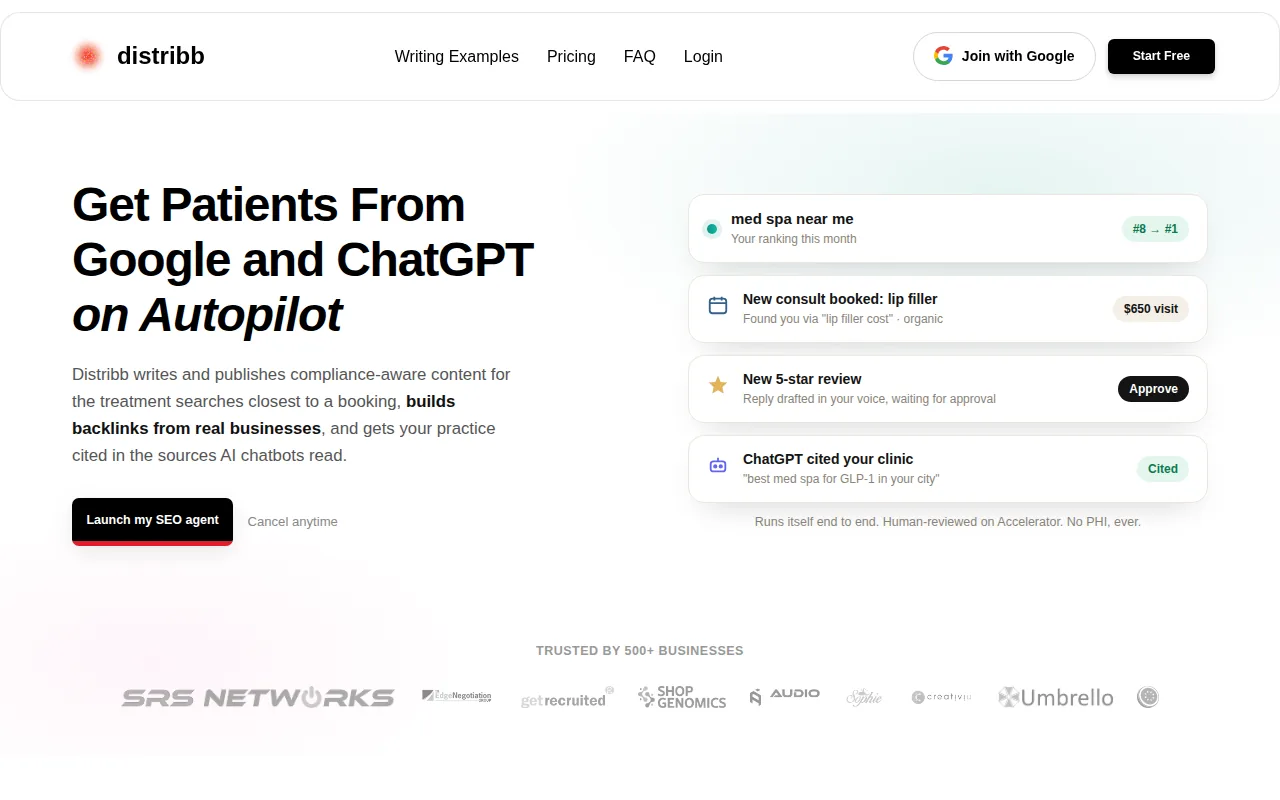
It fits a medical weight loss practice that has useful clinical knowledge but lacks time for weekly SEO work. A clinic can build topics around consultation questions, local service pages, and condition-related searches. It turns those topics into search-focused articles and publishes them to the site on its own, which is the same groundwork covered in our guide to SEO for weight loss clinics.
That full workflow is the main reason Distribb.io leads this shortlist. Many clinic software tools focus on patient records, scheduling, billing, or messaging. Those tasks matter, but they don't help a new patient find your clinic in search. Distribb.io focuses on the discovery layer that sits before the booking request.
Agencies white-label Distribb.io and resell this same output to clinics at a markup, so a weight loss practice can go straight to the source instead of paying for the layer in between.
It runs on autopilot. You connect the site once, and it does the keyword research, writes the articles, publishes them, builds the backlinks, and works on getting the practice cited in AI answers without anyone at the clinic opening a keyword tool. Approvals are there if you want them, they are not required for the system to keep publishing. Pro is $97 a month. Accelerator is $495 and puts a human reviewer on every piece before it goes out, which is the tier most weight loss clinics pick because GLP-1 content carries real claim risk. Both come with a free trial, and you can see what Distribb runs for healthcare practices before connecting anything.
The honest limitation is that it is a platform, not a bespoke creative agency, so it will not invent a brand campaign for your clinic. What it does is publish consistently on the topics your patients actually search, which is the part most practices drop after month two.
2. SEMrush, Competitor and Keyword Intelligence
SEMrush is a research tool for clinics that need to study search demand and rival clinic visibility. It fits a practice with an SEO lead, agency, or staff member who can turn research into pages and campaigns.
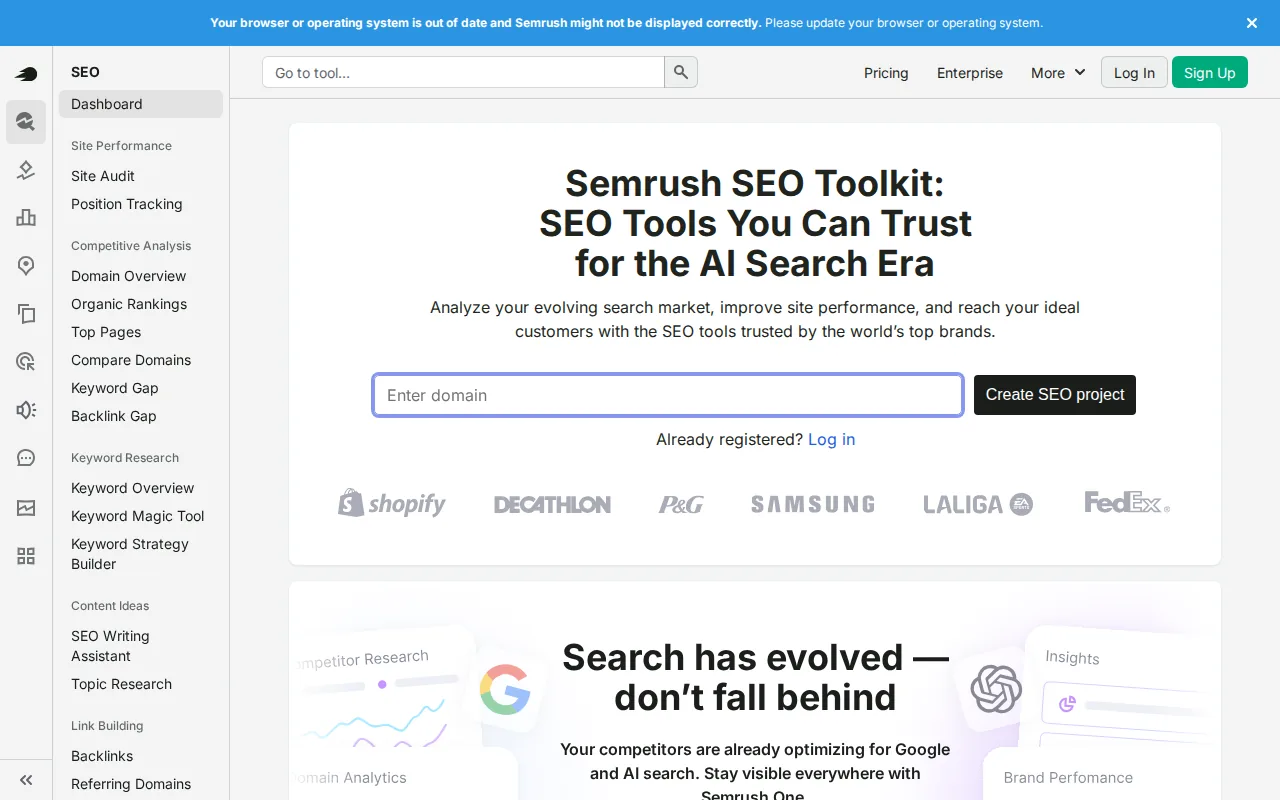
For medical weight loss marketing, the useful job is gap finding. A clinic can review the search terms that bring traffic to competing clinics, then look for related topics that its own site does not cover. Broad terms such as medical weight loss may be hard to win. More focused searches can reveal a clearer path, such as a service plus a city or a question about a first consultation.
SEMrush also helps a team keep research tied to a page plan. Instead of writing a general article called “Weight Loss Tips,” the team can map one search need to one page. That page might explain what happens at a consultation, who the program is for, or what follow-up care includes. The clinic should keep the content factual and avoid promises about patient outcomes.
A second use is competitor review. Look at the pages that appear often in local results. Note their service structure, page titles, internal links, and content gaps. Don't copy their wording. Use the review to find questions your clinic can answer more clearly.
SEMrush is a strong pick for insight. It is less useful when nobody has time to act on the findings. The tool can show the gap, but your team still needs to write, edit, publish, and measure the work.
3. SpyFu, Paid-Search and Competitor Visibility Research
SpyFu is a competitor research tool that helps clinics inspect traffic sources and keyword rankings. It suits a practice that wants to understand how nearby clinics attract search visitors before it spends more on content or paid ads.
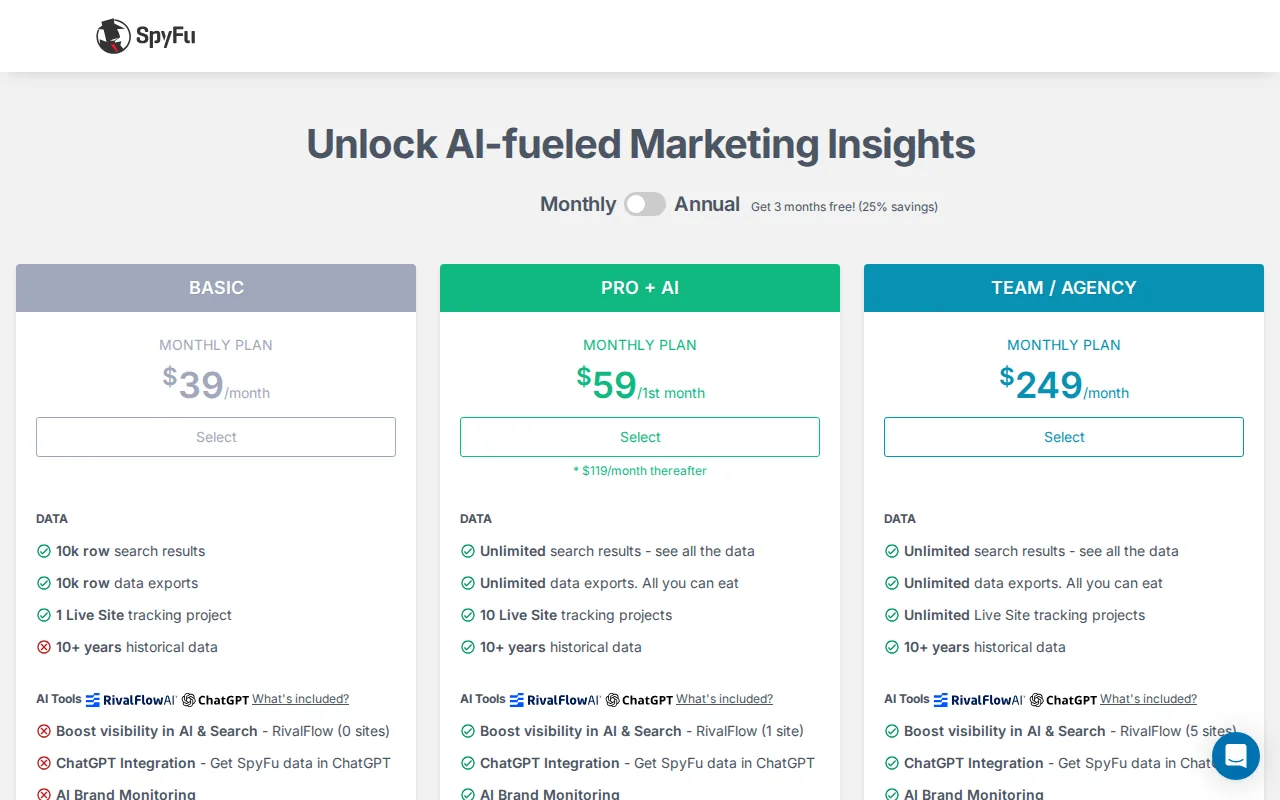
Its role in medical weight loss marketing is close to SEMrush, but the decision lens is different. A clinic can use SpyFu to ask what rivals appear to target in search. Are they building pages around a service? Are they visible for local terms? Do their ads point to a consultation page or a broader program page?
That review can shape a more useful landing page. Suppose rival clinics rank for a city-based term but send visitors to a generic home page. Your clinic could build a page that explains the program, sets clear expectations, and gives visitors one next action. The goal is not to imitate the rival. It is to remove friction for the person who has already searched for help.
SpyFu can also help a clinic separate search ideas by intent. Someone searching for “weight loss clinic near me” may be ready to compare providers. Someone searching for “what happens at a medical weight loss consultation” may need education first. Those people should not land on the same page.
The limitation is workflow depth. SpyFu gives a clinic research material, not a complete publishing system. Someone must judge the terms, write compliant copy, check medical details, and track whether visits lead to appointment requests.
Choose SpyFu when competitor visibility is your first problem. Pair it with a content system if research tends to sit in a spreadsheet without reaching the site.
4. Google Business, Local Clinic Discovery
Google Business helps existing weight loss clinics appear on Google Maps and in local search. It belongs in every local medical weight loss marketing plan because a nearby patient often starts with a location-based search.
The listing gives searchers a quick view of the clinic. They may see the practice name, address, hours, site link, reviews, and service details. That first view can affect whether someone visits the website or keeps looking.
Keep the listing aligned with the clinic's actual operations. The business name should match the practice name used elsewhere. The address and hours must stay current. Services should describe care the clinic really provides, not treatments that may be unavailable or outside its legal scope.
Reviews need care too. A clinic can ask patients for honest feedback through a compliant process. Staff should never post fake reviews or reveal private health details in a reply. A short response can thank the reviewer without confirming that person received medical care.
Local visibility also depends on the site behind the listing. Your main service page should explain the program in plain language. A location page should give useful local context rather than repeat the same text for every city.
Google Business is free to set up, but it is not set-and-forget work. Check the listing after a move, a change in hours, or a new service. Local search rewards clear signals, while patients reward accurate expectations.
5. ZocDoc, Healthcare Directory Visibility
ZocDoc is a healthcare directory that helps patients find listed providers. It fits clinics that want another discovery channel beside their own website and Google listing.
For medical weight loss marketing, a directory profile can answer basic questions before a patient reaches the clinic site. The profile should make the provider's scope clear and keep the service description consistent with the clinic's own pages. That consistency helps a visitor understand what the practice does.
Directory visibility can also support comparison behavior. A person may review several providers before choosing one. Clear profile details reduce the need to guess. The clinic should state the type of visit, the care setting, and any booking limits that affect the first appointment.
The tradeoff is control. A directory is a third-party environment. Its layout, booking flow, and profile rules may change outside the clinic's control. The clinic still needs its own website as the main source of detailed information.
Use ZocDoc as a discovery path, not as the whole marketing plan. Keep the clinic's core service pages, patient education, privacy review, and local listing in good shape first.
It is also wise to track where inquiries begin. Ask new patients how they found the practice, then compare that answer with booking data. A directory that gets views but no qualified inquiries may need a profile change, a clearer service match, or less budget.
Medical Weight Loss Marketing Tools Compared
These tools solve different parts of the patient discovery path. Distribb.io is the only option here built around a full SEO production workflow. The others focus on research, local listings, or directory access.
| Tool | Best use | What it helps you do | Main limit | Good fit |
|---|---|---|---|---|
| Distribb.io | End-to-end SEO work | Move from keyword research to content, publishing, backlinks, and AI-search visibility | Clinical review is still needed before publication | Clinics or teams that need one repeatable SEO workflow |
| SEMrush | Keyword and competitor research | Study rival rankings and find content opportunities | Research still needs a separate production process | Teams with an SEO owner or agency |
| SpyFu | Competitor visibility research | Review traffic sources and search terms tied to rival clinics | Does not replace content review or publishing work | Clinics planning search or paid-search tests |
| Google Business | Local discovery | Show clinic details in Maps and local search | Requires upkeep and accurate business data | Any clinic serving a defined local area |
| ZocDoc | Directory discovery | Help patients find a listed healthcare provider | Profile and booking experience sit on a third-party site | Clinics seeking another patient entry point |
A small clinic may start with Google Business plus one focused service page. A growing team may add SEMrush or SpyFu for research. If the main problem is the time between research and published work, Distribb.io is the more direct fit.
One review of 27 weight loss software and marketing entries found that only 11 documented automation capabilities. Integration details were available for just 10 entries. Those gaps make vendor claims hard to compare, so ask what the tool actually does after you enter a topic or competitor URL.
FAQ
What is the best tool for medical weight loss marketing?
Distribb.io is the best fit for a clinic that wants one SEO workflow. It covers keyword research, content creation, publishing, backlink building, and AI-search visibility. Clinics that need only local discovery should begin with Google Business. Clinics focused on competitor research may prefer SEMrush or SpyFu.
How can a weight loss clinic get more local search visibility?
A weight loss clinic can improve local visibility by keeping its Google Business listing accurate and building clear location and service pages. Match the practice name, address, and hours across key profiles. Ask for honest reviews through a compliant process, and track whether map visitors become website visits or appointment inquiries.
Is SEO safe for medical weight loss clinics?
SEO can be safe for medical weight loss clinics when content is accurate, reviewed by qualified staff, and written without unsupported promises. Marketing teams should avoid exposing protected health information in reviews, case studies, or tracking systems, and our breakdown of HIPAA compliant marketing covers where that usually goes wrong. The clinic remains responsible for the claims shown on its website.
Should a clinic use SEMrush or SpyFu?
Use SEMrush or SpyFu when competitor and keyword research is the main gap in your medical weight loss marketing work. Pick one based on your team's workflow, then turn findings into pages with clear clinical review.
Can a small clinic start SEO without a large budget?
A small clinic can start with a focused local page, a well-kept Google Business listing, and a short list of patient questions. Distribb.io has a free trial, which gives a small team a low-risk way to test an SEO workflow before committing budget.
Conclusion
Choose Distribb.io if your clinic needs search research, content production, publishing, and backlink work in one place. Start with one local service page and one patient question, review every medical claim, then measure qualified inquiries. When you're ready to build authority around those pages, explore Distribb's backlink exchange as the next step.