

Most ecommerce SEO services still depend on manual work, even as AI claims fill the market. Here are five named options, starting with the service built for end-to-end SEO execution.
1. Distribb.io
Distribb.io is an AI-powered SEO platform for agencies, SaaS founders, ecommerce brands, and SEO teams. It is the best fit when you want one system to move from keyword research to published work instead of managing several disconnected tools.
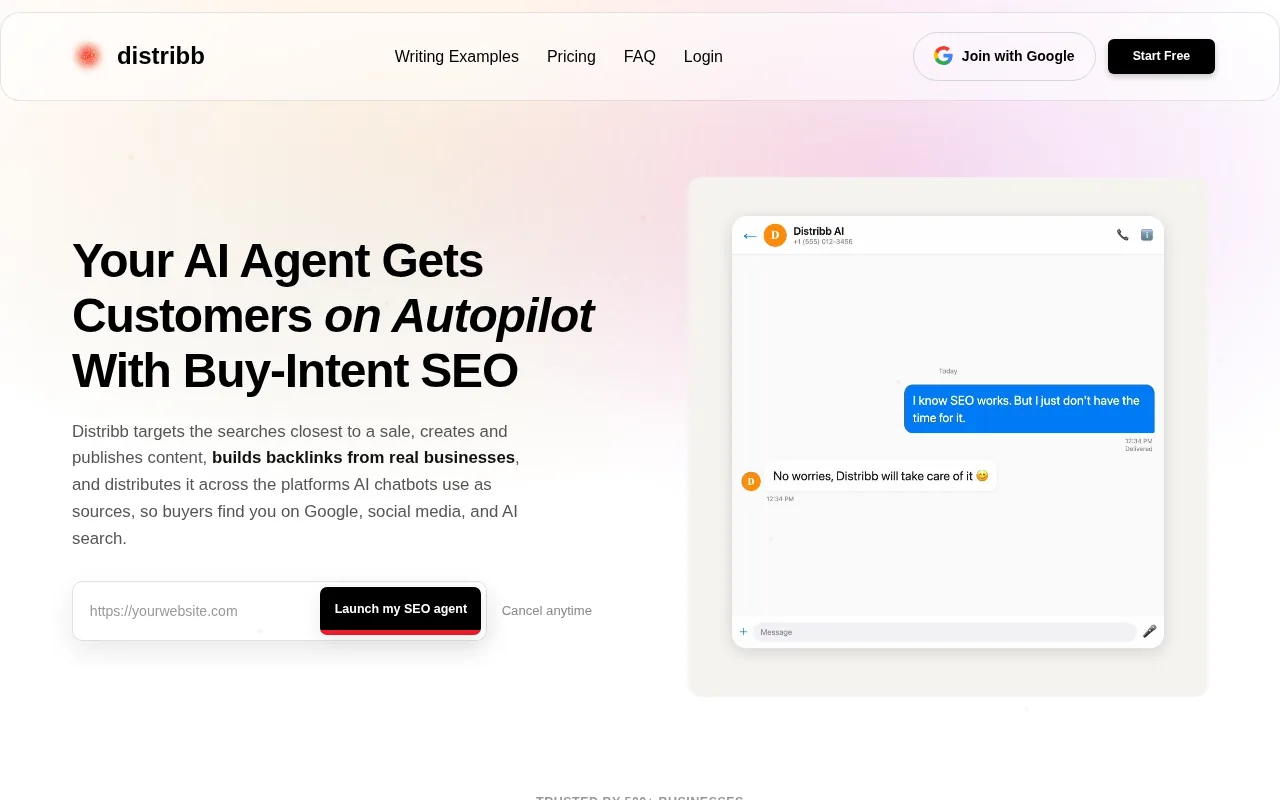
The workflow covers keyword research, content creation, publishing, backlink building, and visibility in AI search. It also connects with major work tools and platforms, including WordPress, Webflow, Shopify, Notion, Wix, Framer, Google Search Console, and Google Business Profile.
That full path is the main difference. Many tools help with research or content briefs. A smaller group helps with one automated task, such as sitemap updates or article drafts. Distribb.io puts the research, production, distribution, and authority work in one operating flow.
The platform is also a useful choice for a lean ecommerce team. A store owner can set a target, review the work, and keep a record of what went live. An agency can use the same system across several clients without adding the same manual steps to every account.
The caveat is simple: automation still needs review. Product claims, brand tone, category priorities, and internal links deserve a human check before publication. SEO software can handle repeat work, but it cannot know every margin rule or stock concern in your catalog.
For stores that want to test the workflow before making a longer commitment, Distribb pricing includes a free trial.
Start your Free Trial and see how Distribb.io fits your store's SEO workflow.
2. Reboot Online, Long-term organic growth and GEO
Reboot Online is a search marketing agency that combines ecommerce SEO with Generative Engine Optimisation, also called GEO. It suits ecommerce brands that want a long-term partner focused on organic revenue rather than a short burst of ranking work.
Reboot Online is positioned for eCommerce brands seeking a reliable long-term partner that maximises ROI and revenue through organic search. Its capabilities include Generative Engine Optimisation (GEO).
Large catalogs need more than blog posts. Product templates, category pages, filters, duplicate URLs, and international versions can all create crawl and indexing problems. Reboot Online fits best for brands that need ongoing organic growth and may operate across national or international markets.
Its GEO focus is also worth checking during a sales call. Ask how the team tracks AI visibility, what sources it tries to earn, and how those mentions connect to product discovery. A report that only shows rankings will leave out a growing part of the buyer journey.
Quality still matters. Tactics that manipulate search rankings or publish scaled content without enough value can undermine organic search performance. Any agency using AI should explain its review process, not treat automation as a reason to publish more pages blindly.
The limitation is fit. A smaller store with a narrow product range may not need a large, long-term agency program. Reboot Online makes more sense when your catalog, markets, or internal teams justify a partner with a wider organic search remit.
Choose this option when you need technical SEO, content, authority work, and GEO to sit under one long-term plan.
3. Novos, D2C expertise for fashion, beauty, and lifestyle brands
Novos is an ecommerce SEO agency for D2C and established retail brands. It is especially suited to fashion, homeware, beauty, supplements, and lifestyle companies that need search work tied to how customers discover and compare products.
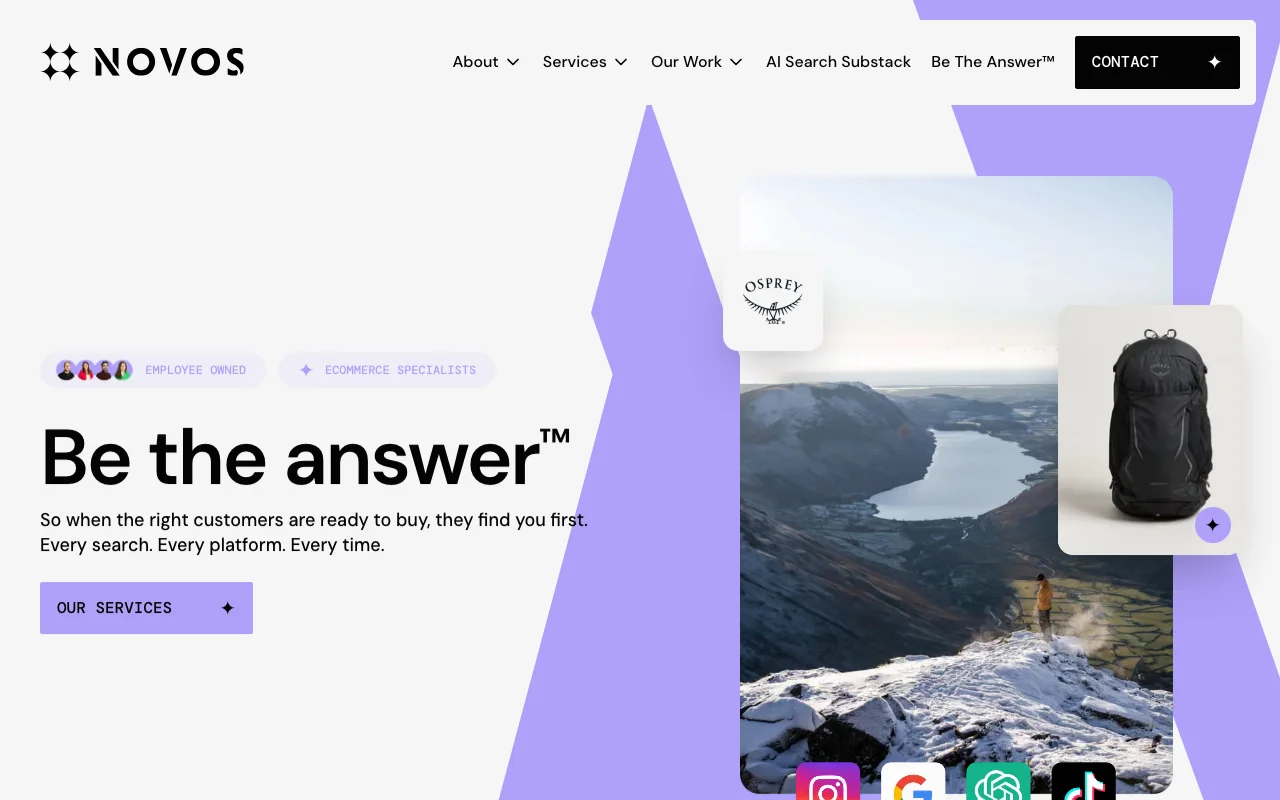
Novos also combines SEO with digital PR. That pairing can help a brand build useful content while earning external mentions that support authority.
Migrations are a key strength to test. If your store is changing domains, merging brands, or moving across markets, ask for the agency's redirect plan, staging checks, canonicals, and post-launch monitoring. A migration can lose valuable pages quickly when ownership and approval steps are unclear.
Treat testimonials as a starting point. Ask for a case study that matches your product type, sales cycle, market, and catalog size.
Novos may be less suitable for a very small shop that needs a low-touch software workflow. It is a better match when your brand has an established product range and enough internal resource to work with a specialist team.
4. Searchbloom, Flexible platform support with AI-search strategy
Searchbloom is a digital marketing agency with an ecommerce focus across Shopify, WooCommerce, BigCommerce, and custom platforms. It suits small to mid-market stores that want SEO, conversion work, and AI search planning handled by one partner.
Its ecommerce work is framed around five areas: catalog SEO, technical SEO, conversion rate optimization, AI search visibility, and documented results. That structure is useful because store growth rarely comes from rankings alone.
Catalog work needs a template view. A team should inspect product and category layouts, then look at faceted navigation, duplicate pages, internal links, and feed health. Searchbloom's platform range gives it a reasonable fit for stores that do not want to rebuild their stack before starting SEO work.
Website development should also prioritize speed, usability, security, and scalable code. Those claims should be tested against your actual site. Ask who makes code changes, how releases are reviewed, and whether the agency can work inside your version-control and staging process.
AI search deserves specific questions. Ask which AI surfaces are tracked, how the team defines a useful mention, and whether reports connect visibility to visits or orders. A brand name appearing in an answer is interesting, but it is not the same as a sale.
Searchbloom is not positioned as the cheapest option. Its agency model also means you should confirm how much senior time your account receives. If you want a self-serve system with automated execution, Distribb.io may be a closer operational fit. If you want an accountable agency team across SEO and conversion, Searchbloom deserves a sales conversation.
5. Tinuiti, Enterprise ecommerce SEO at high volume
Tinuiti is a better fit for enterprise and high-volume ecommerce brands that need SEO alongside feed depth and SEO at scale.
High-volume SEO has a different risk profile. A small template mistake can affect thousands of products. A feed issue can send incorrect product data into shopping systems. A poorly handled filter can multiply near-identical URLs and waste crawl activity.
That context matters for enterprise buyers because platform limits affect how teams manage variants, international markets, analytics, and development work.
When reviewing Tinuiti, ask how SEO connects with paid media, product feeds, and revenue reporting. You want one view of the catalog, not separate teams making changes that compete with each other. A useful monthly report should show what changed, which page groups were affected, and how those changes relate to orders or profit.
Enterprise service can bring more process. That may help when legal, merchandising, development, and regional teams all need to approve work. It may frustrate a founder who wants to change a title today and publish it without a meeting.
Tinuiti belongs on the shortlist when scale is the problem. For a smaller store, the cost and coordination of an enterprise partner may outweigh the value.
Ecommerce SEO Services Compared: Which Provider Fits Your Store?
The right provider depends on the work your team cannot keep up with. Ecommerce is the act of buying or selling goods online. SEO then has to bring qualified shoppers to pages that can support a purchase.
Use the table as a first filter. Then ask each provider to show the exact workflow, owners, review points, and business metrics it would use for your store.
| Provider | Best fit | Strongest angle | Watch closely |
|---|---|---|---|
| Distribb.io | Agencies, ecommerce brands, and lean SEO teams | End-to-end AI SEO automation | Human review still matters for product claims and priorities |
| Reboot Online | Brands seeking long-term organic growth | SEO, GEO, and digital PR | May be more agency support than a small store needs |
| Novos | D2C and established lifestyle brands | Persona-led ecommerce SEO and digital PR | Ask for a case study close to your sector |
| Searchbloom | Small to mid-market stores across several platforms | Catalog SEO, conversion work, and AI search | Confirm pricing and senior account involvement |
| Tinuiti | Enterprise and high-volume ecommerce | Scale, feeds, and retail performance programs | Process and coordination may feel heavy for small teams |
Pricing is another filter, but it should not be the only one. Ask what each price includes.
Frequently Asked Questions
What are ecommerce SEO services?
Ecommerce SEO services help online stores gain search visibility and turn that visibility into product discovery and sales. The work may cover category pages, product templates, technical fixes, content, internal links, digital PR, conversion paths, or AI search visibility. The best scope depends on your catalog, platform, market, and internal team.
Which ecommerce SEO service is best for a small online store?
Distribb.io is a strong fit when a small team needs repeat SEO work handled through one automated system. It can support keyword research, content production, publishing, backlink building, and AI-search visibility. A small store should still review every page before publication and track whether organic visits lead to useful product actions.
How much do ecommerce SEO services cost?
Ecommerce SEO pricing varies by catalog size, platform, market, and delivery model. Ask what is included, how many pages are covered, who implements changes, and which results the report will measure.
Do ecommerce SEO agencies help with AI search?
Some ecommerce SEO agencies now include GEO or AI-search work, but the depth varies. Reboot Online offers GEO, while Searchbloom offers an AI Search Optimization framework. Distribb.io includes AI-search visibility in its automated workflow. Ask how mentions are tracked and whether the work also improves standard search, product pages, and sales paths.
Should I choose SEO software or an ecommerce SEO agency?
Choose SEO software when your team wants repeatable execution and can review the output. Choose an agency when you need strategy, technical ownership, migration help, or cross-team coordination. A hybrid model can work too. For example, a store may use Distribb.io for recurring production while keeping a specialist agency for a complex platform migration.
Conclusion
Choose Distribb.io if your main problem is the amount of SEO work your team cannot keep moving. Start with the free trial, connect your store, and review the first workflow before scaling it. If backlinks are the immediate gap, explore Distribb's backlink exchange as the next step.