

Most ecommerce SEO agencies sell expertise. Far fewer explain how work gets done, what automation they use, or who their service fits. Here are five credible options, with Distribb.io first for stores that want an AI-led system and clear product access.
1. Distribb.io
Distribb.io is an AI-powered SEO platform for ecommerce brands, agencies, SaaS founders, and SEO teams. It handles the repeat work that often slows an ecommerce SEO agency down, including keyword research, content production, publishing, backlink building, and visibility in AI search.
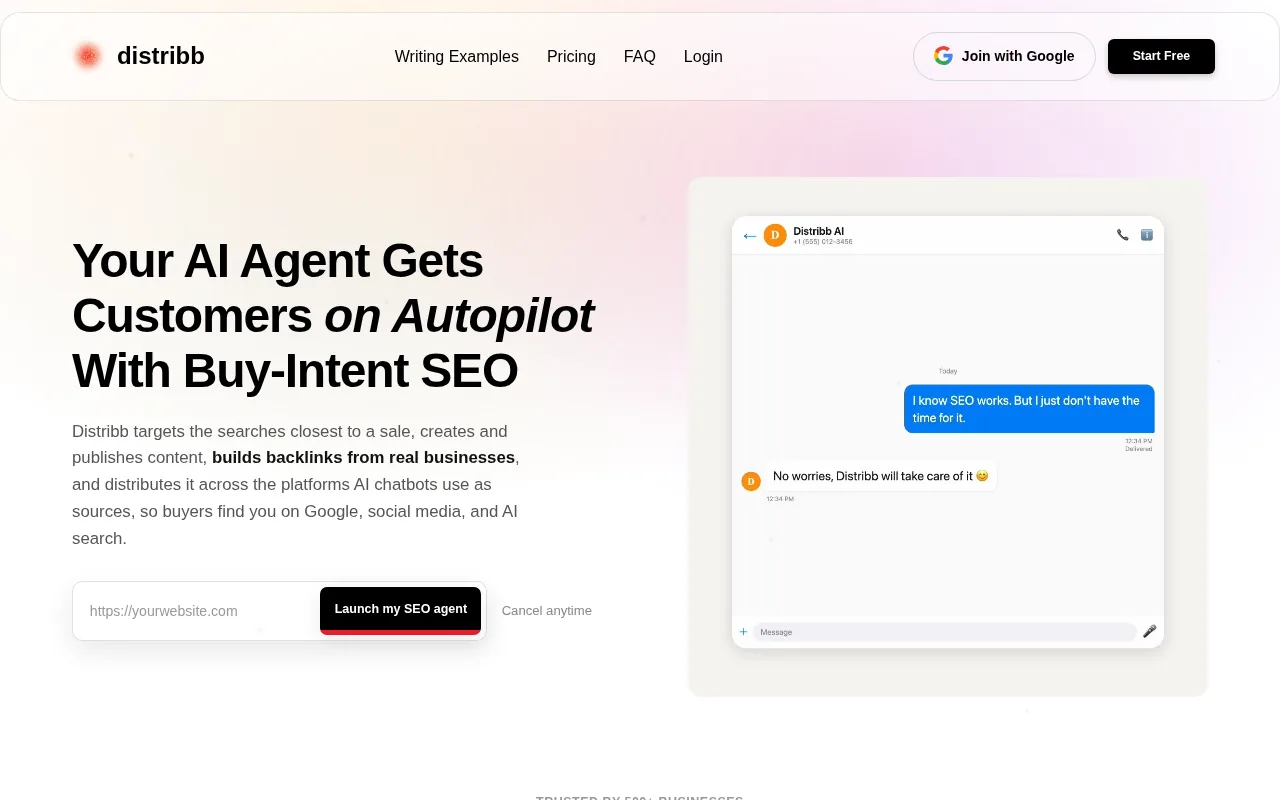
It fits a store team that wants to keep control of its SEO pipeline. Instead of waiting for a monthly agency report, it keeps research, writing and publishing moving on its own, with optional approvals if you want them. That matters when a catalog grows faster than your marketing team.
Distribb.io also makes the buying path easier to understand than many full-service firms. Pricing is public: $97/month for Pro and $495/month for Accelerator, which adds a human reviewing every piece. You can see what Distribb runs for ecommerce brands before booking any call. The platform can also support agencies that need a repeatable process across several client accounts.
The main caveat is simple. Software doesn't replace every judgment call. A store with a complex migration, international setup, or serious indexation issue may still need a technical specialist. Distribb.io works best when you want automation for ongoing SEO work, with people handling the decisions that need context.
Test the workflow against your store's next SEO tasks and see what it publishes in the first week.
2. Reboot Online, long-term organic growth and ROI
Reboot Online is an ecommerce SEO agency for brands seeking a long-term organic search partner. The agency is based in London and focuses on SEO and digital PR.
The fit is strongest when organic search is tied to revenue, not treated as a list of ranking tasks. Reboot's stated focus is on data-led campaigns that aim to improve ROI and profit. Its multilingual team also gives it a clear use case for brands working across national markets.
That broader service mix may help when your store needs authority as well as page-level work. Digital PR can support the link and mention side of SEO, while broader search visibility work can support how products are found. Reboot is a choice for brands seeking a reliable long-term partner that maximises ROI and revenue through organic search.
There is a trade-off. A full-service partner usually means a more involved sales process and a custom scope. Public pricing and automation details may be limited, so ask what the team will do each month, which tasks need your developers, and how reports connect search work to sales.
Reboot makes sense for a brand that wants a partner beside its marketing team for the long haul. It may be too much if you only need a steady stream of optimized pages and basic link support.
3. Novos, D2C growth for fashion, beauty, and lifestyle brands
Novos is an employee-owned ecommerce SEO agency aimed at D2C and established retail brands. Its strongest fit is in fashion, homeware, beauty, supplements, and lifestyle.

Sector knowledge can shorten the learning curve. A fashion store may need collection pages that match seasonal demand. A beauty brand may need content that answers comparison questions before a shopper reaches a product page. Novos is positioned around on-site work and content strategy, with less reliance on paid ads.
That makes it worth considering when organic search is meant to become a steady acquisition channel. The D2C angle also matters because these brands often need SEO to support both product discovery and brand demand. A good brief should still map work to margin, stock status, and the pages that can actually convert.
Novos won't be the obvious choice for every store. Its listed strengths are tied to ecommerce and specific consumer sectors. A complex international platform or a store that needs deep development support should ask for examples that match its site structure before signing.
Pick Novos when your brand lives in a consumer category and needs an organic plan built around products, collections, and useful content. The category fit should be part of the first conversation, not an assumption made from the agency name.
4. Pearl Lemon, agile SEO for smaller ecommerce brands
Pearl Lemon is an ecommerce SEO agency for small brands and fast-growing businesses that need a flexible search plan. It also provides wider search marketing support, including PPC.
The appeal is range without forcing a young store into a large enterprise setup. A small team may need help with technical fixes one month, category copy the next, and paid search during a product launch. A partner that can discuss those needs in one plan may reduce handoffs.
Pearl Lemon's stated approach is tailored to the client's industry and growth stage. That is useful for stores that don't yet have a fixed SEO team or a large internal content operation. The buyer should ask how priorities are set, who approves changes, and which work is included in the monthly scope.
Agility can also bring a limit. A broad search marketing offer may mean less depth in one narrow area, such as a large migration or international technical SEO. If your store has thousands of faceted URLs, test the agency's technical process before choosing it.
Pearl Lemon is a sensible shortlist choice for a smaller store that wants SEO plus related search support. Keep the first project focused. A short list of pages tied to revenue is easier to judge than a long plan filled with activity.
5. Thrive Internet Marketing Agency, personalized U.S. and global support
Thrive Internet Marketing Agency is a U.S.-based ecommerce SEO agency for domestic or global businesses seeking a personalized digital marketing partner. Its wider service set includes SEO, web development, content marketing, and social media management.

This model suits a store that wants SEO connected to other marketing work. For example, a technical change may sit beside a content update and a conversion task. One partner can help coordinate those needs when the store lacks an internal web or marketing lead.
Thrive's stated ecommerce focus is on improving conversions and revenue. Ask for the exact metrics used in your account. Rankings can help diagnose a problem, but revenue, assisted conversions, and non-brand demand give a clearer view of business value.
The caveat is scope. A broad agency can be useful, but it may not be the best fit for a team that wants one narrow SEO specialty. Confirm who will work on the account, how much development help is included, and whether your store's platform is a strong match.
Thrive belongs on the list when you want a U.S. partner with wider marketing support. It is less suited to a buyer who wants a self-serve system with public product access and minimal account management.
Ecommerce SEO Agency Comparison: Which Option Fits Your Store?
The right ecommerce SEO agency depends on the problem behind your traffic gap. A small D2C brand may need page and content work. A large catalog may need crawl control, migration help, or international SEO. A lean team may value automation more than meetings.
One useful way to compare providers is to separate the service model from the work itself. Among entries that did disclose one, full-service agencies made up 73%. That gap tells you to ask direct questions instead of guessing from a polished homepage.
| Option | Best fit | Strongest angle | Watch before signing |
|---|---|---|---|
| Distribb.io | Teams that want an AI-led workflow | Repeatable SEO production and visibility work | Complex technical problems may need specialist help |
| Reboot Online | Brands seeking long-term organic growth | SEO, GEO, and digital PR | Confirm scope, reporting, and pricing |
| Novos | D2C brands in consumer sectors | On-site and content strategy | Check platform and international depth |
| Pearl Lemon | Small or fast-growing stores | Agile SEO with wider search support | Test technical depth for large catalogs |
| Thrive | U.S. or global stores wanting broad support | Personalized SEO and digital marketing | Confirm the account team and platform fit |
Integration detail is another filter. Shopify appears most often in the wider provider research, while many firms don't list platform support clearly. That creates a simple buying test: ask whether the agency has worked inside your platform, what access it needs, and which changes your team must make.
Also ask how the provider handles AI search. Automated content used to manipulate rankings can create risk, so an AI workflow needs review and quality controls, not blind publishing. See spam policies before approving an automation-heavy plan.
If you want an agency, choose based on people, process, and technical fit. If you mainly need repeat production, compare that cost with a platform such as Distribb.io before committing to a large service package.
FAQ
What does an ecommerce SEO agency do?
An ecommerce SEO agency improves how product, category, and supporting content pages appear in search. The work may include technical checks, keyword planning, content updates, internal links, authority building, and revenue reporting. The exact mix varies, so ask for a monthly task list and the store metrics tied to each task.
How much does ecommerce SEO cost?
Ecommerce SEO costs vary by service model, store size, and technical need. Public pricing is uncommon in the provider research, which makes direct comparisons hard. AI platforms may publish entry plans, while full-service agencies often set a custom scope. Request the expected hours, deliverables, contract term, and reporting method before comparing quotes.
Is an AI SEO platform better than an agency?
An AI SEO platform is better when your team needs repeat work at a clear product cost. An agency is better when your store needs strategy, development coordination, or specialist judgment. Many teams can use both: software handles steady production while people review priorities, brand fit, technical risk, and the pages tied to revenue.
What should I ask an ecommerce SEO agency?
Ask which platform changes the team has made, how it handles faceted navigation, how it measures sales impact, and who owns implementation. You should also ask how it reviews AI-assisted content and what happens during a migration. A good answer names the process, the person responsible, and the evidence you will s.
Can SEO help ecommerce brands appear in AI search?
SEO can support AI search visibility, but no provider can promise a fixed position in an AI answer. Clear product information, useful content, technical access, and trusted mentions give search systems better material to use. Ask whether the provider tracks AI visibility separately from standard rankings, and how it turns those findings into page work.
Conclusion
For most lean ecommerce teams, Distribb.io is the clearest first test because it combines an AI-led workflow with a visible product path. If your store needs hands-on strategy or complex technical work, speak with a full-service agency instead. Start with one store problem, then try Distribb's backlink exchange as a focused next step.