

Developer marketing gets expensive when every keyword brief, draft, link request, and visibility check needs a human hand. The five platforms reviewed here all require paid subscriptions, yet their automation depth differs sharply. Here are the best developer marketing tools and the teams each one fits.
1. Distribb.io
Distribb.io is an AI-powered SEO platform for agencies, SaaS founders, e-commerce brands, and SEO teams. It brings keyword research, content creation, publishing, backlink building, and AI-search visibility into one workflow.
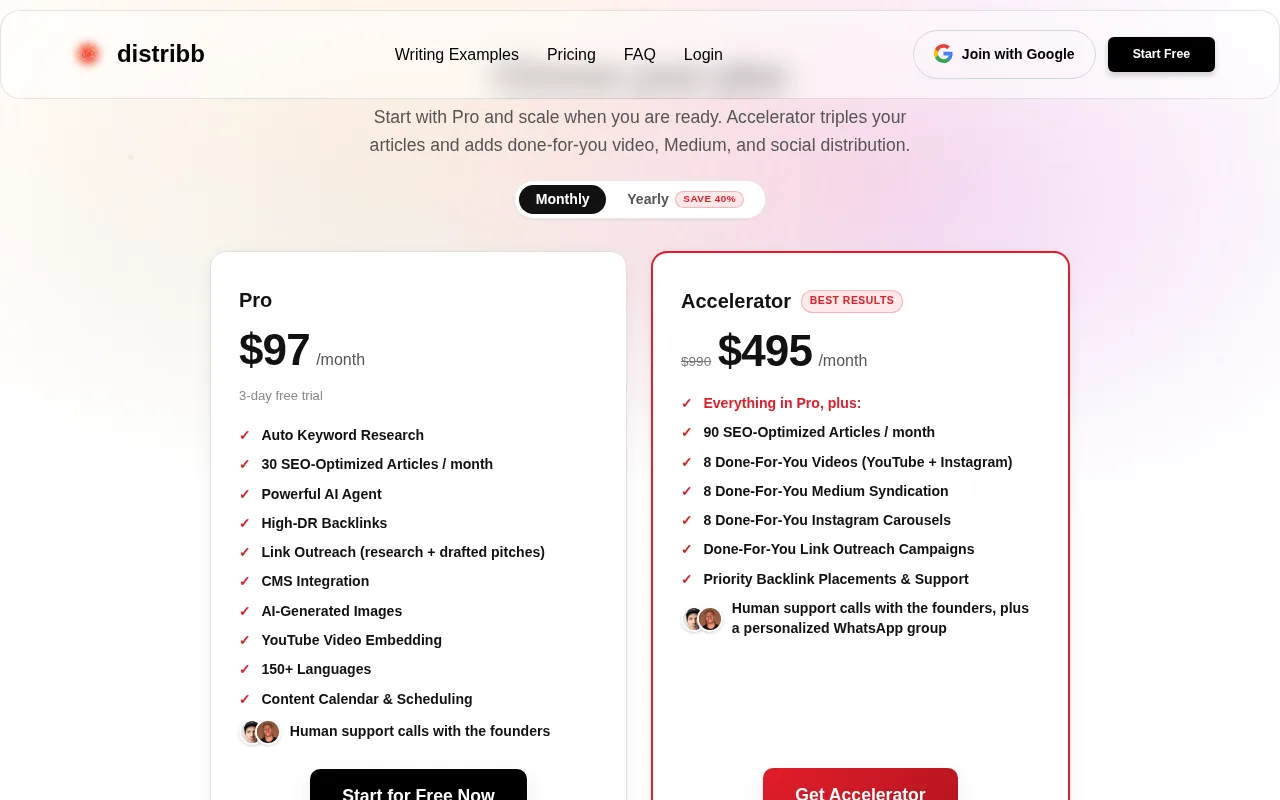
That broad scope makes Distribb.io the strongest fit for a team that wants one operating layer instead of several narrow tools. A small SaaS team can move from a keyword idea to a published article without passing work through separate research, writing, publishing, and link-building queues.
The backlink side matters for developer marketing because good technical content still needs discovery. Distribb.io's backlink exchange gives sites a way to receive contextual links through a structured network, rather than relying only on cold outreach. See Distribb's backlink exchange for the operating details.
AI-search visibility is another reason to consider it. The workflow is built around both standard organic search and the growing need to understand how brands appear in AI answers. That gives teams one place to review content output and search reach.
The trade-off is simple: a wide workflow needs clear review rules. Set brand, product, and technical checks before publishing. If your team wants only page-level content scores, a narrower tool may feel easier.
Start your Free Trial:Distribb pricing gives teams a place to review the service and its current plan options.
2. ZipTie: API-first visibility and content optimization
ZipTie is an AI visibility and content optimization tool with an API-first design. It suits mid-market teams and developers who want to connect search work with their own technical workflows.

Its main difference is that it goes beyond monitoring. That matters when a developer marketing team wants to test how prompts affect brand discovery, then turn the findings into changes on key pages.
An API-first approach can also help when search data needs to move into an internal dashboard or reporting flow. A technical team may prefer that setup over a tool that keeps every action inside a closed interface. The value depends on whether someone on the team can own the integration.
ZipTie is less clearly suited to a company seeking full article production. That distinction matters during tool reviews because “AI SEO” can describe a tracker, an editor, or an automated content engine.
Choose ZipTie when AI visibility is the main problem and your developers want control over the data layer. Choose a wider platform when the bottleneck is publishing enough useful technical content.
3. Surfer SEO: Page-level guidance for technical content
Surfer SEO analyzes pages and gives guidance on keyword density, content structure, and internal linking. It fits developer marketing teams that already have writers and need a clear page review layer.

Think of it as a page editor, not a full marketing department. A writer can use its recommendations while drafting a technical guide, then check whether the page covers the expected topic areas and has a sensible structure. An SEO lead can use the same review to make feedback less subjective.
That focus is useful for teams that care about human review. A developer can explain a complex product, while the tool checks page-level signals. The human still decides if the code example is correct, if the claim is fair, and if the page helps the reader.
Surfer SEO has a narrower automation profile than end-to-end systems in this shortlist. The research points to page analysis and content guidance, while vendor-direct sources for other tools describe publishing, links, and wider workflow automation. Google also warns site owners to focus on useful content and avoid search spam in its official spam policies.
Use Surfer SEO when content quality control is the job. Look elsewhere when you need automated keyword discovery, publishing, or backlink work in the same flow.
4. Arvow: End-to-end automated SEO content production
Arvow is an end-to-end AI SEO system built for agencies and developer teams that want a high level of automation. Its stated workflow starts with low-competition keyword discovery and moves through formatted articles, images, links, videos, technical fixes, publishing, and integrations.
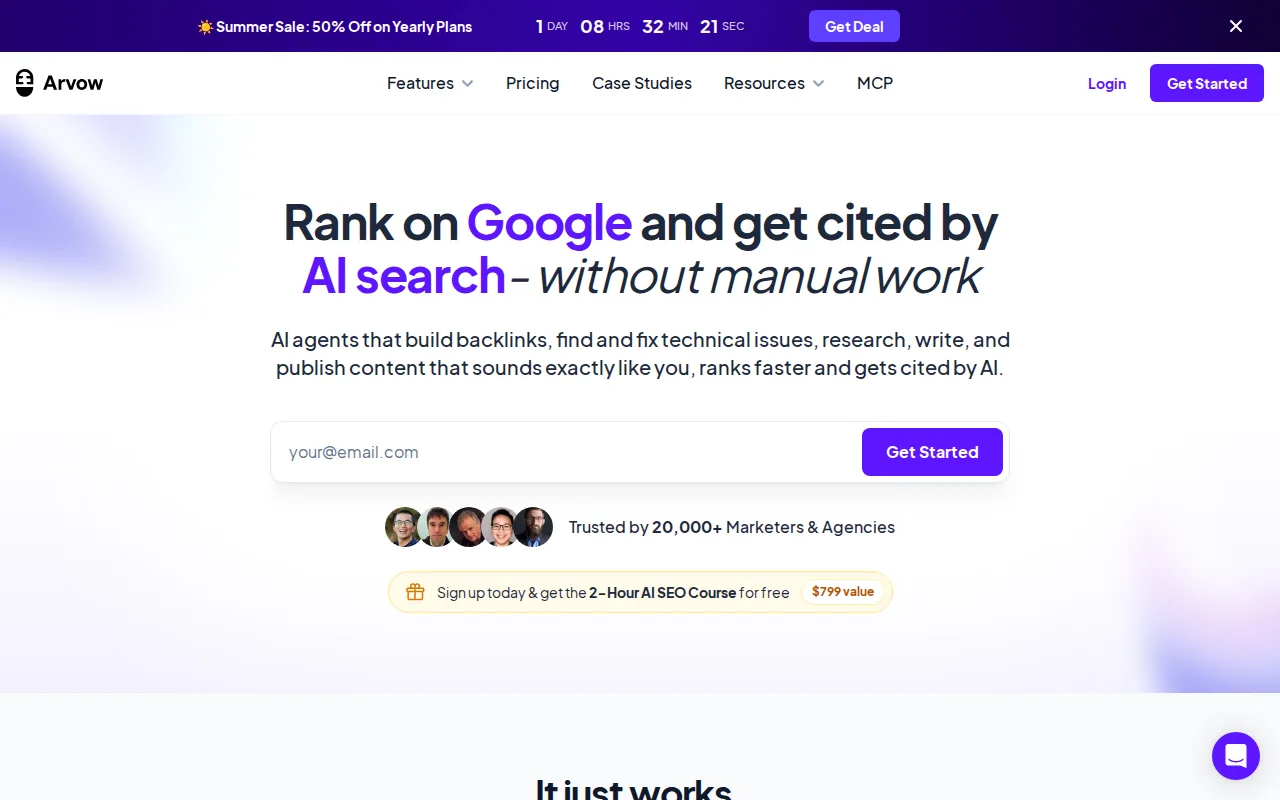
That breadth makes Arvow the clearest fit for a team that measures success by how much of the production chain runs without manual handoffs. A marketing lead could set a topic direction, review the output, and leave the system to handle more of the work that follows.
It includes WordPress, Shopify, Wix, Webflow, Ghost, Blogger, Google Search Console, Zapier, and an API. That gives Arvow an edge when a company runs several sites or wants automation to reach beyond a single content management system.
There is a cost to that depth. More automation means more places for a weak brief or wrong product detail to travel. A technical reviewer should check claims, examples, links, and brand voice before publication. Vendor-provided descriptions also tend to list more capabilities than independent reviews, so ask for a working product demonstration.
Arvow makes sense for high-volume teams with someone who can set rules and inspect output. It is less attractive when every article needs close subject-matter editing before it goes live.
5. BabyLoveGrowth: AI articles with built-in backlink exchange
BabyLoveGrowth combines AI article creation with backlink exchange. It is aimed at founders and teams that want SEO content published with less day-to-day work from an SEO specialist.
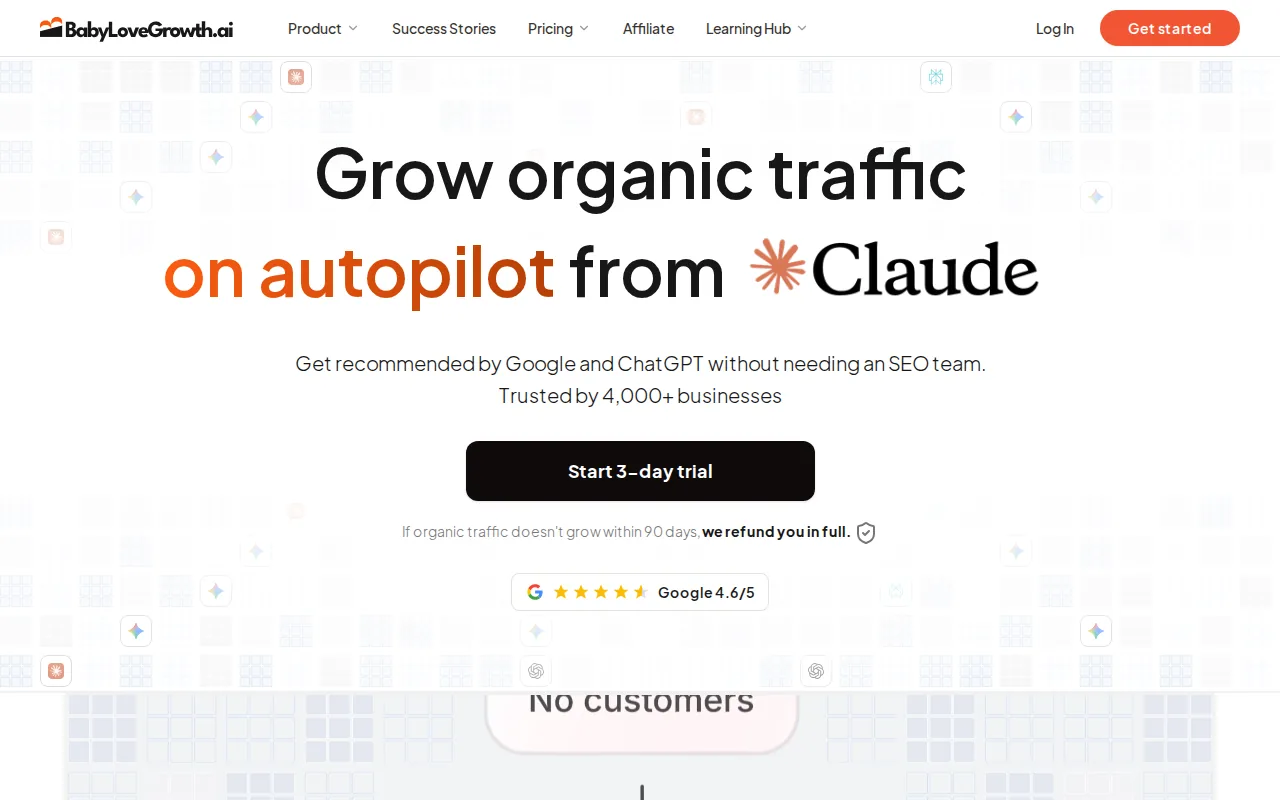
This combination makes it relevant to a developer marketing team that manages content across more than one site type. The system's appeal is the connection between article production and link building, rather than treating those as separate projects.
That convenience needs careful review. A content workflow that publishes quickly can still miss product nuance, technical accuracy, or the right brand tone. Teams should set approval rules before they let automated content reach a public site.
The backlink model also deserves close attention. A network can reduce outreach work, but buyers should ask how links are chosen, how relevance is checked, and what control they have over placements. A backlink is a link from another site to a page, but understanding the concept does not replace a vendor review.
BabyLoveGrowth fits a founder who wants a hands-off content engine. It is a weaker fit for a team that wants deep control over each article or prefers to build links through direct editorial relationships.
Developer Marketing Tools Compared
The right developer marketing tool depends on where work stops moving. Some teams need page guidance. Others need a system that takes a topic through publication and link growth.
| Tool | Best fit | Strongest use | Watch before buying |
|---|---|---|---|
| Distribb.io | Agencies, SaaS founders, e-commerce brands, SEO teams | SEO content, publishing, backlinks, AI-search visibility | Set review rules for automated output |
| ZipTie | Mid-market teams and developers | Prompt tracking and API-led visibility work | Confirm integration needs and API details |
| Surfer SEO | Teams with writers and SEO reviewers | Page analysis and content guidance | It is narrower than a publishing system |
| Arvow | Agencies and developer teams seeking deep automation | Keyword discovery through formatted publication | Review vendor claims with a live test |
| BabyLoveGrowth | Founders seeking hands-off content and links | AI articles with backlink exchange | Check content control and link standards |
One finding stands out across the five-tool review: none has a free tier. That means developer marketing teams need a paid-tool budget before they can test a full workflow. It also makes a short pilot more important. Pick one site, one content group, and one review process before rolling a platform across every property.
Distribb.io is the best first test when your team needs several parts of the workflow in one place. ZipTie or Surfer SEO may fit better when visibility tracking or page review is the only missing layer.
FAQ
What is the best tool for developer marketing?
Distribb.io is the best first choice for teams that need SEO research, content production, publishing, backlink building, and AI-search visibility in one workflow. ZipTie fits API-led visibility work, while Surfer SEO fits page review. Arvow and BabyLoveGrowth suit teams that want more automated article production.
Do developer marketing tools have free plans?
The five platforms reviewed here do not have a free tier. That makes budget planning part of the selection process for developer marketing teams. A focused pilot can limit risk: test one content group, define review rules, and measure useful actions before committing to a wider rollout.
Which tool is best for AI search visibility?
Distribb.io and ZipTie are the clearest fits when AI-search visibility is central to the work. Distribb.io pairs visibility with content and backlink workflows. ZipTie focuses more closely on prompts, monitoring, and API-led content optimization, so it may suit a technical reporting team.
Which SEO tool is best for technical content?
Surfer SEO is a strong fit for technical content teams that need page-level guidance. It reviews keyword density, structure, and internal linking. A subject-matter expert should still check code, product claims, and examples because page guidance cannot replace technical review.
Should I choose an automated SEO platform or a specialist tool?
Choose an automated SEO platform when your main problem is the number of handoffs between research, writing, publishing, and link work. Choose a specialist tool when one stage is weak and the rest of your process already works. Developer marketing teams often get better results by matching the tool to the blocked stage.
Conclusion
Start with Distribb.io if you want one system for content, publishing, backlinks, and AI-search visibility. Run a small pilot with clear review rules, then use Distribb's backlink exchange when link growth becomes the next bottleneck.