

Publishing a good piece is only half the job. It also needs to reach people where they read, work, and share ideas.
These content distribution platforms handle different parts of that work, from SEO publishing to press release reach and paid placements. Here’s what each one does well, and where it fits.
1. Distribb.io
Distribb.io is an AI-powered SEO platform for agencies and businesses that want to connect content work with publishing and visibility. It automates keyword research, content creation, publishing, backlink building, and AI-search visibility.

That mix makes it a fit for SEO teams, SaaS founders, e-commerce brands, and digital-marketing agencies. A team can use it to plan content around search terms, create pages, then publish them as part of the same SEO workflow. That’s a different job from a platform focused only on paid placements or social scheduling.
Distribb.io can also suit agencies managing more than one site. It offers multi-domain plans, so teams can add websites as their work grows. Its Pro plan includes content publishing, Google Search Console optimizations, and backlink exchange. The Accelerator plan adds Reddit Radar, link outreach, and brand publishing on YouTube, Instagram, Medium, Quora, and LinkedIn.
For a team weighing link-building options alongside distribution, Distribb.io’s backlink exchange platform is part of the wider SEO workflow. It can be useful when the goal is to build authority as well as get a new page published.
One point to keep in mind: this platform handles SEO production and publishing. Teams still need to decide which audiences they want to reach and how they’ll judge results, such as referral traffic, shares, or conversions.
2. StoryChief: Repurpose and distribute one piece across destinations
StoryChief is a content publishing platform built around one source piece and many channel-specific versions. It suits agencies and in-house teams that need to publish blog posts, social content, newsletters, or other formats without rebuilding each item from scratch.
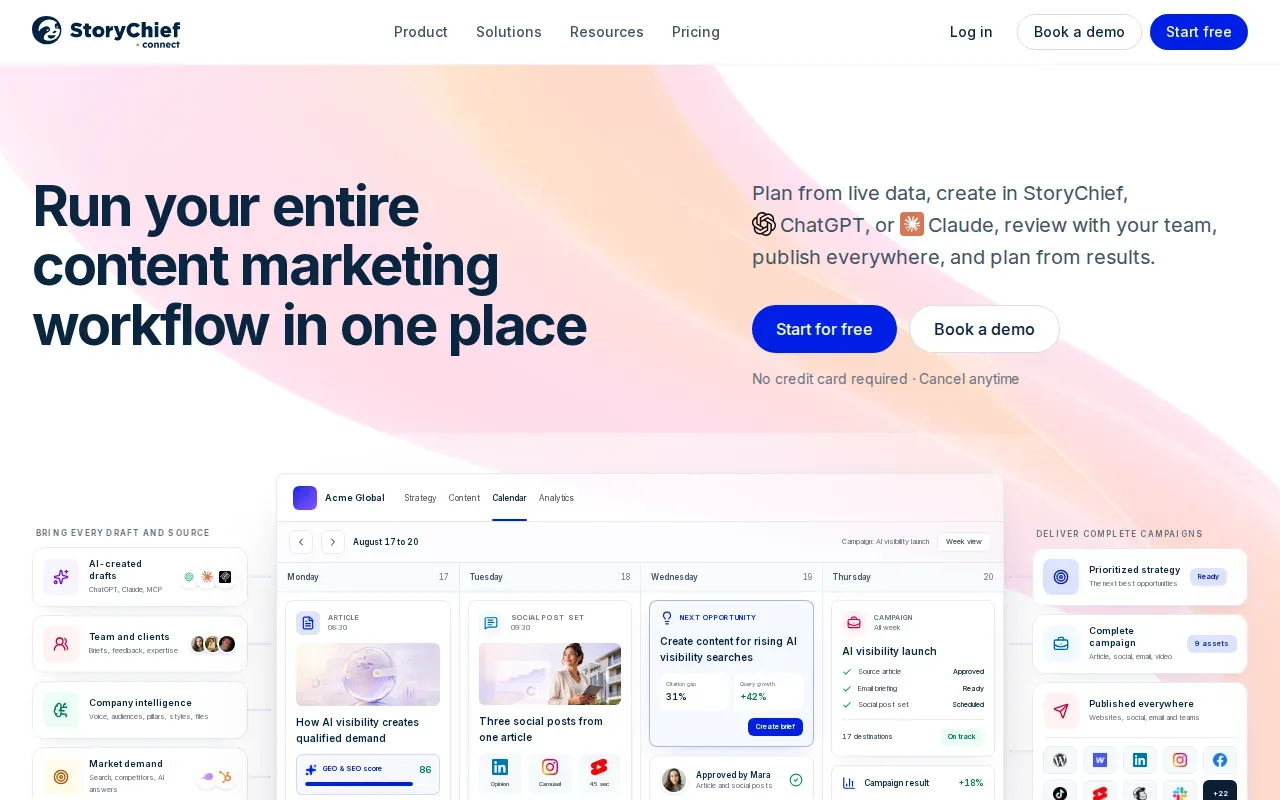
Its key strength is the “one piece, many destinations” workflow. A team can turn an approved source into a blog post, a LinkedIn thread, a newsletter, or a carousel. Each version can be tailored for its destination, so the social post doesn’t have to read like a copied blog excerpt.
StoryChief also supports websites, social networks, syndication hubs, and email channels. Its channel connections work in both directions: teams can update or unpublish content across supported destinations from the same workflow. That can help when a claim changes and a correction needs to reach several versions.
Repurposing still needs editorial judgment. A long article may need a different opening for a social thread, while an email might need a shorter lead. StoryChief’s channel tailoring helps teams adapt each version, but the team should review those edits before publishing.
Choose StoryChief when the hard part is coordinating many versions of one approved piece. It’s less suited to teams whose main need is keyword research or paid media reach.
3. PR Newswire: Broad reach for press release distribution
PR Newswire is a press release and multichannel distribution service for organizations that need news to reach journalists and media outlets. It’s a natural fit for communications teams announcing a launch, partnership, earnings update, or research finding.
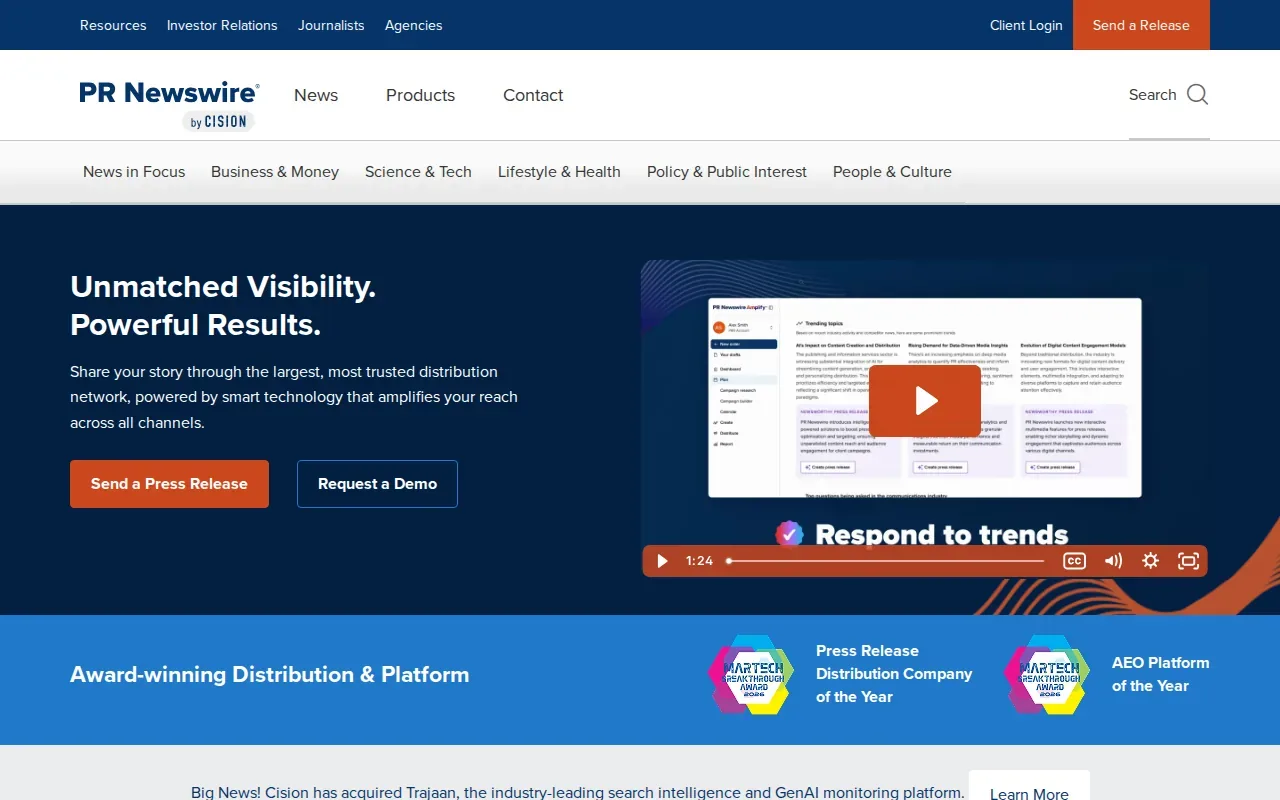
Its main distinction is the sheer scale of its distribution network. Teams can target distribution by region, industry, and other audience details.
That breadth can help when a company has news that merits a formal release. The platform’s editorial team reviews releases for issues such as grammar, broken links, tagging, and SEO guidelines. It also provides performance insights, including visibility, engagement, and reach, so a communications team can review what happened after distribution.
PR Newswire also supports multimedia in releases. Its Multichannel Amplification feature can repurpose a release into blog posts, social content, and media pitches. That gives a communications team more formats to work with, though it doesn’t replace the need to make the original announcement newsworthy.
Distribution scope, location, and added services affect cost. This is a paid reach option, so it makes more sense for announcements with clear PR value than for every routine blog post.
4. Taboola: Native content placements across publisher sites
Taboola is a paid content discovery platform that places sponsored content across publisher sites. It fits marketers who want to pay for visibility beyond their own channels and can track whether that spend brings useful visits or actions.
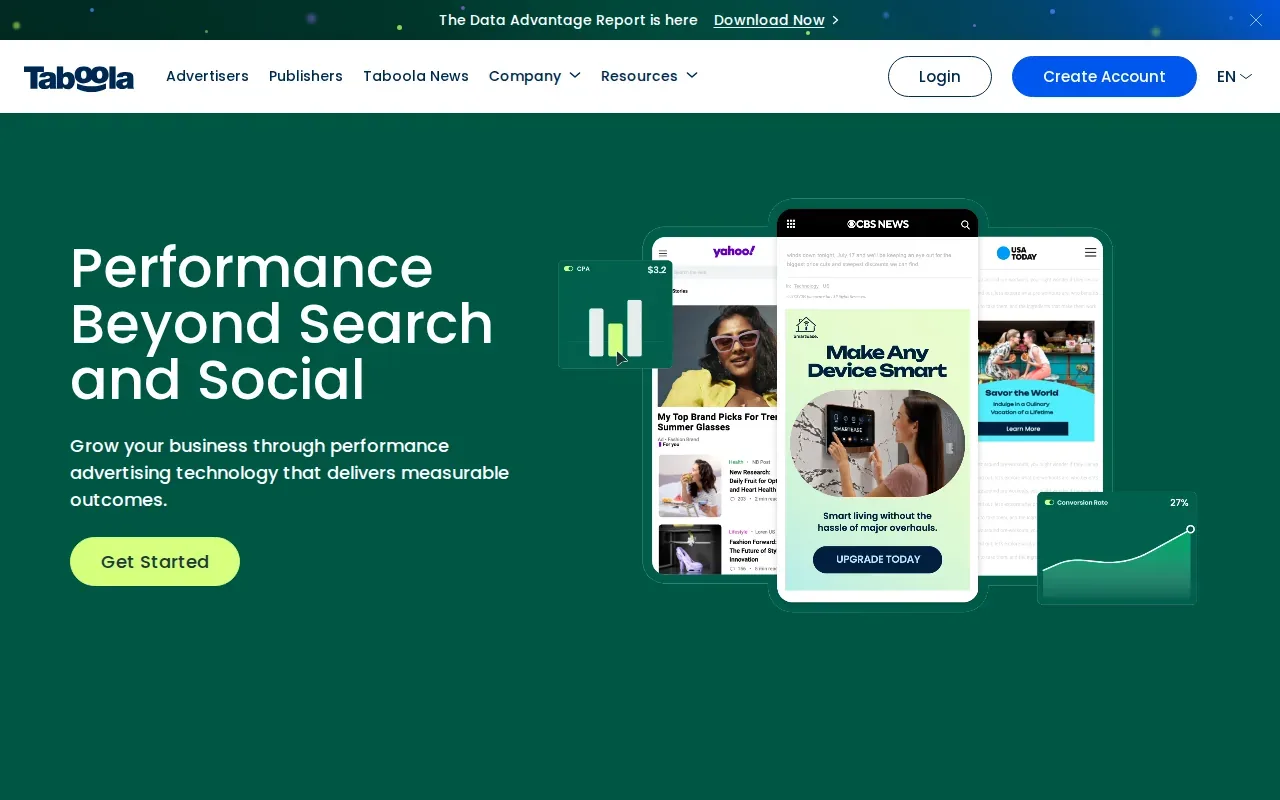
Its core distinction is native placements across premium publishers. These placements are designed to appear within publisher content feeds, rather than as a standard social post on a brand’s own profile. Taboola uses AI-driven audience targeting to optimize campaign performance.
That makes it a performance-focused choice, not a substitute for owned or earned distribution. Before a campaign starts, decide what counts as a useful result. A click may matter for an awareness campaign, while a conversion may be the better measure for a campaign tied to a product or lead form.
Paid discovery can become costly, and cost is a recurring concern across paid distribution options. Set a clear test budget and compare the traffic or actions against the campaign goal. If a piece hasn’t drawn interest through other channels, paid placement alone may not fix the message.
Taboola is worth considering when paid placements are central to the plan. It’s a weaker fit if the team needs a free way to publish or has no budget for testing paid reach.
5. Sprout Social: Cross-network publishing and analytics
Sprout Social is a social media management platform for teams that publish across several networks and want cross-network analytics. It fits mid-sized to enterprise teams managing social content across multiple brand profiles.
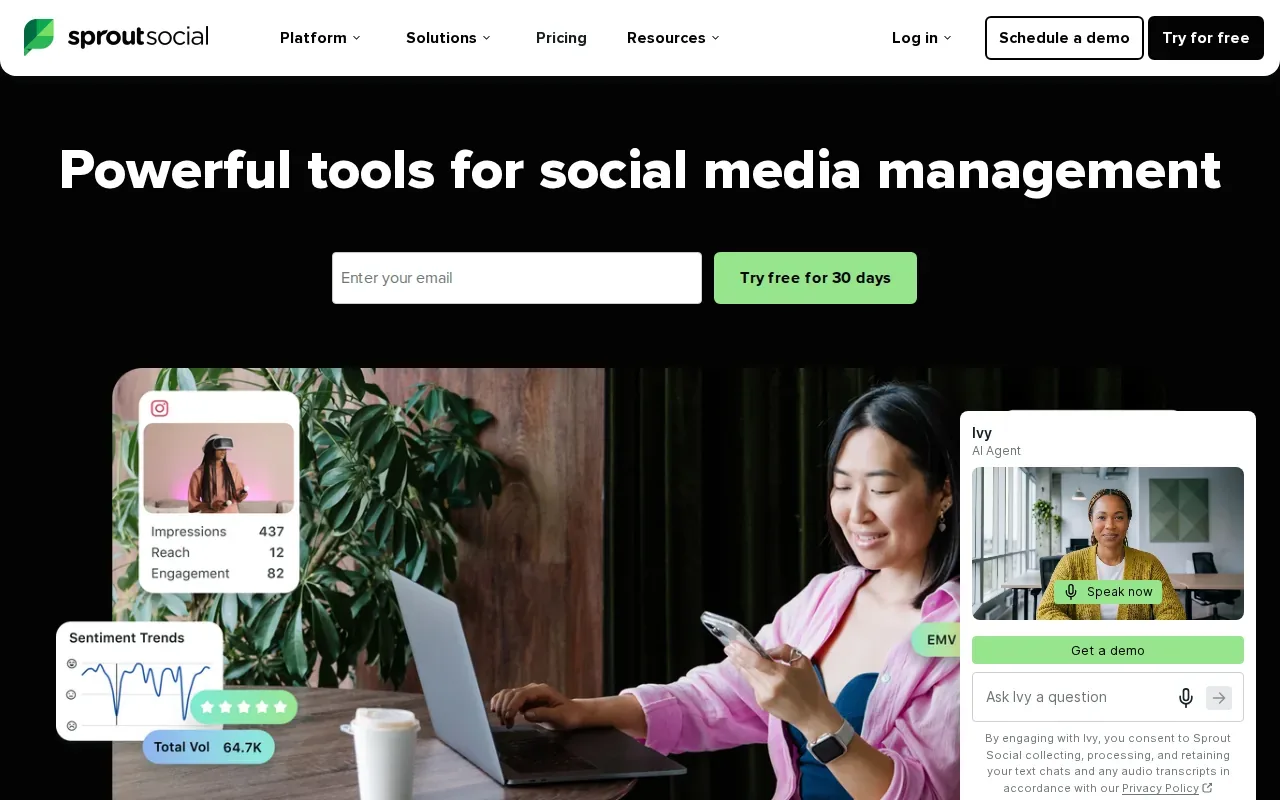
Its distinguishing strength is the depth of its analytics across connected networks. Sprout Social also has ViralPost® send time optimization, which uses account engagement patterns to help teams choose when to publish. That can support a more informed publishing schedule than picking times by habit.
Its integrations include Facebook, Instagram, X (Twitter), LinkedIn, and Pinterest, among others. For a social lead, that can mean reviewing performance across several profiles in one place instead of stitching together separate reports before a weekly meeting.
Keep the scope in mind. Sprout Social’s strengths are social publishing and analytics, rather than press release distribution or SEO content production. Teams should check whether their main problem is social coordination before adding another system to the workflow.
It’s a fit when the social team needs to compare performance across networks and use that review to adjust future posts. If the main goal is broad press pickup or native ad reach, a different type of platform may match the task better.
Content distribution platforms compared
Content distribution means getting useful content in front of its intended audience after or as it’s published. It includes three broad channel types: owned channels, such as a company website or email list; earned channels, such as media coverage or shares; and paid channels, such as sponsored placements.
The best fit depends on what your team needs to move. This table compares the five picks by their main job, rather than treating every platform as if it solves the same problem.
| Platform | Main job | Best fit | What to measure |
|---|---|---|---|
| Distribb.io | SEO research, content creation, publishing, and backlink building | Teams connecting SEO work with publishing | Search visibility, referral traffic, conversions |
| StoryChief | Repurpose and publish content across destinations | Teams managing many versions of one piece | Reach and engagement by channel |
| PR Newswire | Press release distribution and amplification | PR teams sharing significant news | Media pickup, visibility, reach |
| Taboola | Paid native content placements | Marketers testing paid discovery | Visits and campaign actions |
| Sprout Social | Social publishing and cross-network analytics | Teams managing several social profiles | Reach, shares, and engagement |
A workable distribution plan starts with audience research: where does the intended reader already spend time, and what format fits that channel? Then set a publishing plan, adapt the source content, and choose owned, earned, or paid routes. After publishing, track referral traffic, reach, shares, and conversions against the goal.
Use organic response to test a message before putting paid spend behind it. A post that earns saves, meaningful comments, or steady clicks may be a better test candidate than one with views alone. Review results weekly, then adjust the next round of content or channel choices.
Paid networks can buy placement, but they don’t guarantee that the audience will care. Community partnerships and relevant groups can also help content travel through trusted networks, sometimes without the same media spend. Choose based on fit and track the result.
Frequently asked questions
What does a content distribution platform do?
A content distribution platform helps a team publish, promote, or measure content across one or more channels. Some focus on owned channels, such as websites and social accounts. Others sell paid placements or help distribute press releases. The right tool depends on the content format, the audience, and the result the team needs to measure.
What are the three types of content distribution?
The three common types are owned, earned, and paid distribution. Owned channels include a company website or email list. Earned distribution comes through actions such as media coverage or audience shares. Paid distribution includes sponsored content and advertising placements. A content plan can use more than one type, but each should have a clear purpose.
How should I measure content distribution?
Measure the result that matches the goal. Referral traffic can show whether a channel sends visitors to your site. Reach and shares can show how far content spreads. Conversions can show whether visitors take a desired action. Review results by channel, then use what you learn to adjust the next campaign.
Are content distribution platforms free?
Many dedicated distribution platforms require a budget, and paid networks charge for placements. That doesn’t mean every distribution action costs money: owned channels and community sharing can help spread content without buying a placement.
Should I pay to promote every piece of content?
No. Test content through organic channels first, then consider paid promotion when a piece shows signs of interest. For example, saves or useful comments may suggest the message resonates with its intended audience. Set a test budget and track the outcome against a clear goal before spending more.
Conclusion
Choose the platform that matches the work your team needs done: SEO publishing, content repurposing, press release reach, paid discovery, or social analytics. If SEO research and publishing are the priority, review Distribb pricing and start a free trial to see how the workflow fits your team.