

A clinic website has to do more than look polished. It should help local patients find the practice, understand what to expect, and take the next step. Here are five options for different needs, plus a look at how chiropractic SEO can support a site after launch.
We analyzed the Clutch.co review profiles for all 5 chiropractic website providers ranked here and found Doctor Multimedia is the only one with reviews logged, 133 in total, averaging 4.7 out of 5. ChiroCandy and ChiroBasix each list 0 reviews, and Mobirise AI and PatientGain have no Clutch profile at all.
1. Doctor Multimedia: Healthcare Websites and Online Marketing
Doctor Multimedia builds websites and runs online marketing for healthcare professionals, including chiropractors. It’s a fit for clinics that want a provider with a healthcare focus rather than a general-purpose site builder.

Its chiropractic website work is framed around practice goals such as inquiries, booked appointments, and visibility in Google. The company says its sites and systems are designed to scale and are HIPAA and ADA compliant and secure from day one. Those points matter when a clinic is weighing design alongside the way its site handles patient-facing tasks.
For a practice, the key review is the actual patient journey. Can someone on a phone find the services, location, and next step without hunting? Are contact forms easy to use? Does the site explain the clinic’s approach in plain language? A good agency conversation should address these details, not stop at colors and page layouts.
Doctor Multimedia is worth considering when a clinic wants a custom healthcare website and online marketing under one provider. Ask how the finished site will be measured, and make sure the reporting tracks inquiries or bookings rather than only visits.
2. Mobirise AI: A DIY Website Builder for Clinic Sites
Mobirise AI is a do-it-yourself builder that can generate a website draft from details about a practice. It may suit a clinic that wants to shape its own site and edit content without starting with a blank page.
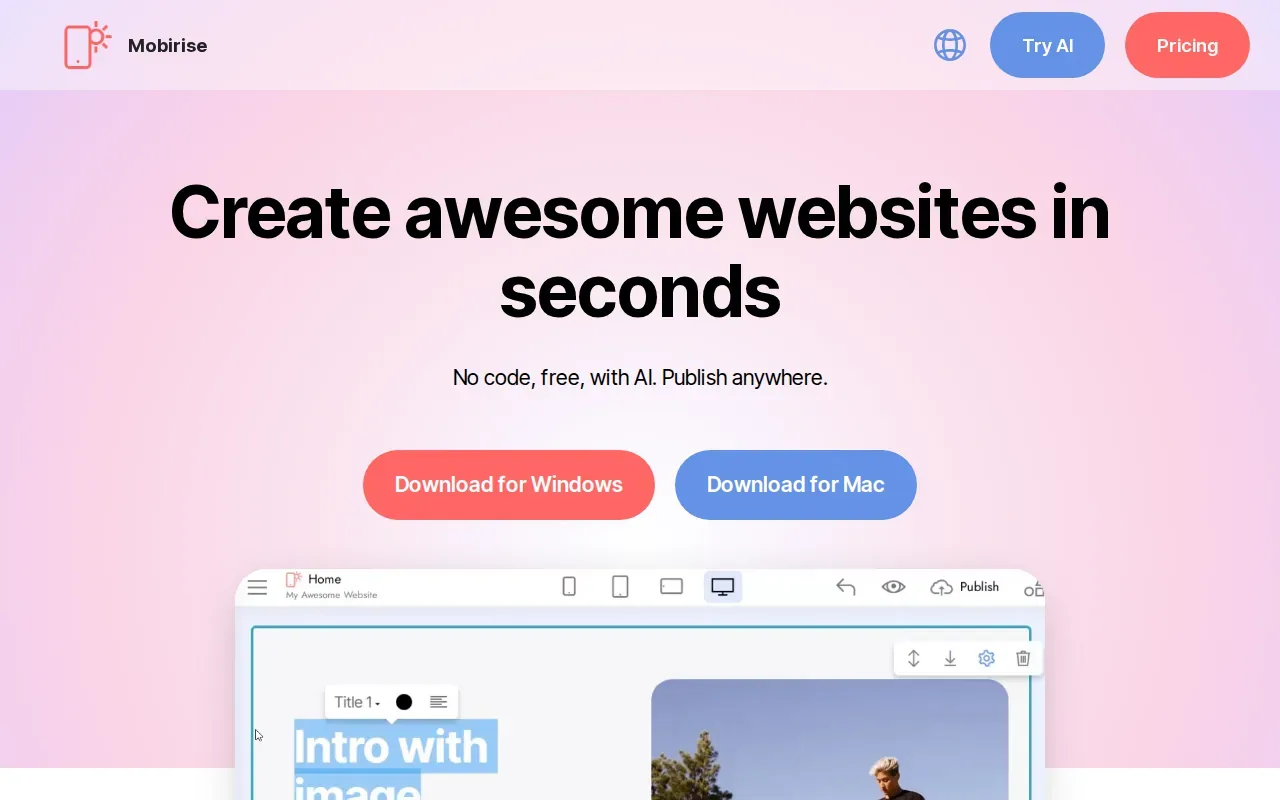
The chiropractic site material describes mobile-friendly layouts and AI help with page text, images, and search terms. It also describes blocks for contact forms and reviews. A clinic can use those pieces to make a simple path: a visitor checks services, reads patient feedback, then sends an inquiry.
Other described features include online appointment booking, a chatbot, social media embeds, and site analytics. These can help reduce friction, but the clinic still needs to check each feature in context. For example, a form that asks people to describe a health concern may handle sensitive information. Confirm how the form data is stored and who can access it before putting it live.
DIY control has a tradeoff: the clinic owns the edits and upkeep. Before launch, test the site on a phone, check every link, and ask someone unfamiliar with the practice to find its location and booking route.
3. ChiroCandy: Chiropractic-Only Marketing to Support a Clinic Website
ChiroCandy works only with chiropractors. It’s a fit for clinics that want website support as part of a broader patient-acquisition plan, rather than a standalone site build.
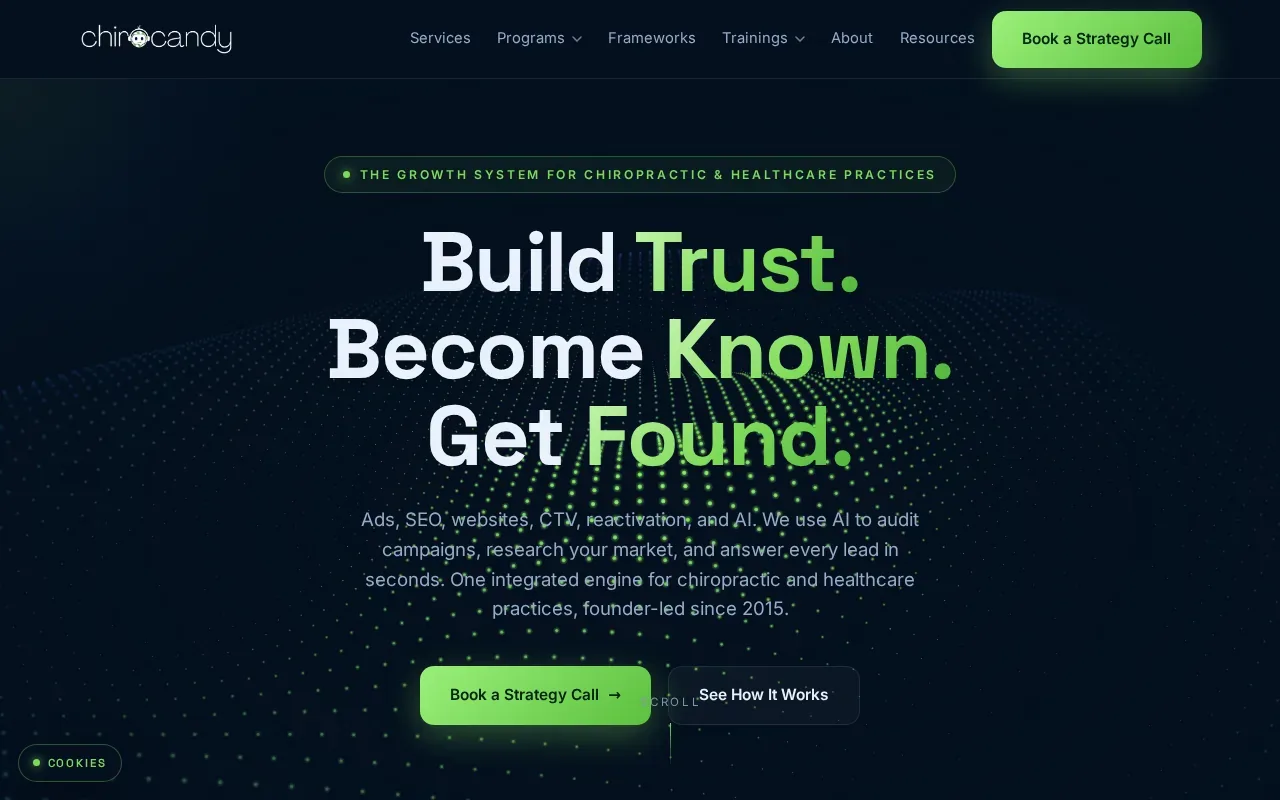
The service mix includes conversion-focused chiropractic websites built for speed, mobile use, and search visibility. ChiroCandy also describes local SEO and paid ads. A clinic can weigh those services together if its website needs more qualified visits, or if an existing site needs a clearer route from search result to inquiry.
Its marketing services also include AI chat and SMS, voice AI, patient reactivation, and done-for-you social content. That breadth may be relevant to a multi-location group or a practice managing a sizable list of inactive patients. The operational question is who handles each step when a new inquiry arrives, and how the clinic will know whether its marketing leads to bookings.
ChiroCandy’s service list is broad. Before committing, define the work that matters most now: a new website, local visibility, paid campaigns, or follow-up for existing leads. A focused scope makes it easier to judge progress.
4. PatientGain: A Healthcare Marketing Platform for Doctors
PatientGain is a HIPAA-compliant digital marketing platform for doctors and dentists, and may be relevant to a chiropractic practice considering healthcare-focused marketing software.

PatientGain describes its platform as AI-enabled and automated. Its stated typical price is $999 per month. That price makes it important to compare the full scope of the platform with the work your clinic needs done, rather than judging by the word “automation” alone.
Before choosing a platform that may touch patient inquiries, map the information a visitor submits and where it goes next. Ask which parts of the website or marketing workflow the platform handles. Then check that the clinic’s staff can manage the handoff from a submitted inquiry to a response and an appointment.
PatientGain may be a better match for clinics seeking a healthcare marketing platform than for a small practice that only needs a simple site. Confirm the specific website and patient communication tasks included in the plan.
5. ChiroBasix: Review and Citation Support for Local Visibility
ChiroBasix provides custom chiropractic websites and local marketing services. It may suit a clinic that wants website work alongside review and local listing support.

Its website service describes custom design, search optimization, mobile layouts, lead forms, hosting, and security. The company also describes a managed build process that includes a practice-focused sitemap and content strategy, followed by a custom design for clinic review. That level of support can help a clinic that doesn’t want to assemble every page itself.
ChiroBasix also focuses on review requests and citation maintenance. Its reputation service describes automated review requests and help keeping practice listings consistent. For a clinic with a thin or inactive review profile, that work can support local visibility while the website gives searchers clear details about services and the practice.
Review workflows need care. Ask how patients are invited to leave feedback, how replies are handled, and how listing details stay accurate when hours or locations change. A clinic should be able to review the process before it runs at scale.
When judging the site itself, check the mobile version and test the lead form. A polished homepage won’t help much if a new patient can’t find the location or send an inquiry.
Compare the Chiropractic Website Options
These options do different jobs. Some focus on a custom site, while others add marketing or local reputation work. Use the table to match the main need to the type of support each option describes.
| Option | Best fit | What to inspect before choosing |
|---|---|---|
| Doctor Multimedia | Custom healthcare website and online marketing | How inquiries and bookings are measured |
| Mobirise AI | Clinic that wants to build and edit a site itself | Mobile layout, form handling, and booking workflow |
| ChiroCandy | Chiropractic practice seeking wider marketing support | Which channels and follow-up tasks are in scope |
| PatientGain | Practice considering a healthcare marketing platform | Which website and patient communication tasks are included |
| ChiroBasix | Custom clinic site paired with review and citation support | How review requests and listing updates are managed |
Whatever the provider, assess the site on a phone before launch. Make sure the clinic’s branding feels consistent, the photos represent the real practice, and key pages explain services in language patients use. Add useful contact routes, clear appointment instructions, and social proof only where it helps visitors make a decision.
Also ask about speed, accessibility, analytics, and secure handling of any patient information. A site may collect only basic inquiries, or it may connect to scheduling or a patient portal. The clinic should understand what data each form or tool collects before it goes live.
For the content that supports local search, start with the terms patients use for services and concerns. This chiropractic keyword resource can help a clinic plan pages around local searches and common patient questions.
Distribb.io is an SEO platform, not a website builder. It can support the content and search work around a clinic site, including keyword research, publishing, and backlink building. If your site is in place but needs ongoing search work, see Distribb.io’s chiropractic SEO approach.
Frequently Asked Questions About Chiropractic Websites
What should a chiropractic website include?
A chiropractic website should make it easy to understand the practice and take the next step. Start with clear service details, the clinic’s location and hours, and a simple inquiry or booking route. Check the site on a phone. Add real practice photos and review content where it helps visitors build trust, and review how forms handle patient information.
Do chiropractors need a mobile-friendly website?
Yes, the site should work well on phones as well as desktop screens. Test key pages on a phone, including the services page and contact or booking form. Text should be easy to read, buttons should be easy to tap, and visitors shouldn’t need to zoom or hunt for the clinic’s location.
Should a chiropractor use a website builder or hire a provider?
Choose a builder if someone at the clinic can create and maintain the pages. Hire a website provider if the practice needs custom design or wants outside help with marketing and upkeep. Compare the actual work included, then test how easily a new visitor can find services and send an inquiry.
How can a chiropractic website help attract new patients?
A website can help by answering the questions a prospective patient has before reaching out. Explain the services in clear terms, show accurate location details, and make booking or asking a question straightforward. Local search content can help people discover the clinic, while a well-designed page gives them a clear next step.
Can a chiropractic website collect patient information?
Yes, a website can collect information through forms, booking tools, or a patient portal. Before enabling those features, find out what data they collect and where it is stored. Ask the provider how access is controlled and confirm that the clinic’s chosen workflow fits its privacy and security needs.
Conclusion
Pick the option that matches the work your clinic needs now: a custom site, a DIY build, or a site paired with marketing support. Before signing, test the patient journey on a phone and ask how inquiries are handled. If your website is ready but search visibility needs work, explore Distribb.io’s chiropractic SEO service.