

Marketing automation lists for "small business" are written for agencies, gyms and consultants, and it shows: CRMs, appointment reminders, lead scoring. A small online store runs on different physics: orders, carts, delivery emails, reviews, repeat purchases. This list is only that. Nine tools, each automating one job a store actually has, starting with the one everyone skips: automatically getting the orders in the first place.
Methodology: every tool below was loaded and screenshotted on 21 August 2026 to confirm it is a live, operating product, and compared on ecommerce fit, automation depth, and published pricing. Prices are quoted only where public.
1. Distribb
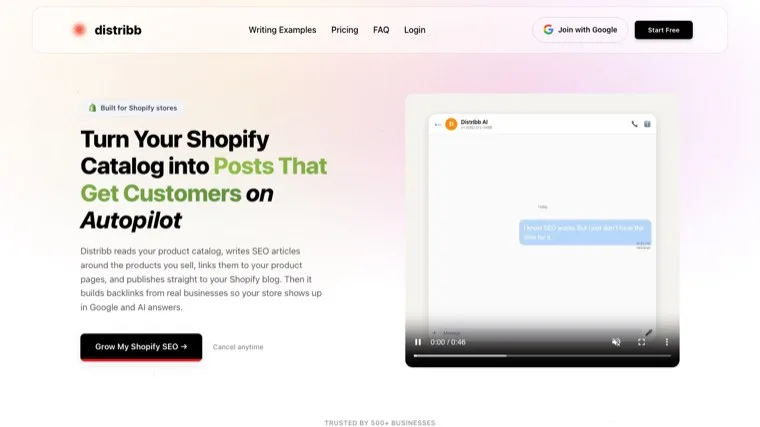
Every other tool on this list automates messages to shoppers you already have. Distribb automates getting the shoppers in the first place: it runs your store's SEO and AI SEO entirely on its own, so orders arrive from Google and from AI assistants like ChatGPT without you touching a keyword tool.
Connect your store once and it finds the searches closest to a purchase, writes and publishes the content, builds backlinks from real businesses through its exchange network, and tracks whether AI assistants recommend your store when shoppers ask. There is nothing for you to run: it is customer acquisition on autopilot, from $97 a month, and on the Accelerator plan a human reviews every piece before it ships.
The honest limitation: Distribb is a platform, not a bespoke creative agency. If you want custom ad campaigns designed by a dedicated account manager, pair it with one; for the SEO itself there is nothing left to do.
Best for: any small store that wants a steady stream of orders from search without paying the ads tax or hiring an agency. See what it runs for Shopify stores.
2. Klaviyo
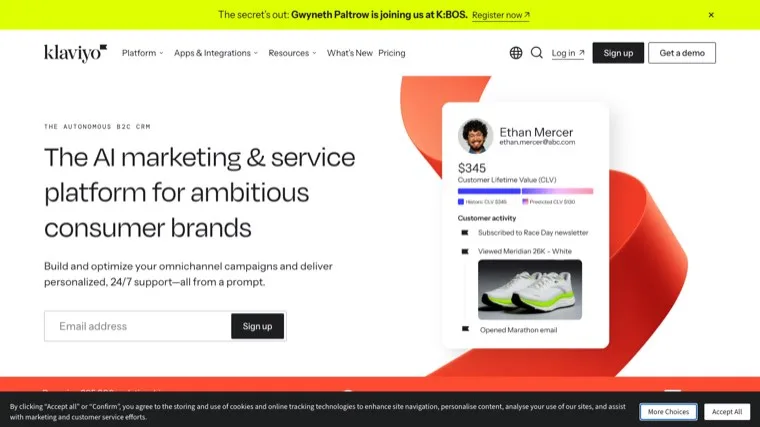
Klaviyo is the reference for ecommerce email and SMS. Its strength is data: every order, browse and cart event flows into segments, so a small store can send the abandoned cart, winback and VIP flows that big brands run.
Pricing scales with list size and gets expensive as you grow, and the builder has a learning curve. It earns its place once your list is an asset rather than an afterthought.
Best for: stores where email and SMS are already a meaningful share of revenue.
3. Omnisend
Omnisend bundles email, SMS and push in one clean tool that assumes you sell products, with prebuilt ecommerce flows you can switch on in an afternoon.
It has fewer deep integrations than Klaviyo and less flexible reporting, which is exactly why small stores like it: less to configure.
Best for: a first real automation stack on a small store, at a friendlier price than Klaviyo.
4. Drip
Drip sits between Mailchimp's simplicity and Klaviyo's depth: strong segmentation and workflows aimed squarely at independent stores.
It does email well and SMS adequately, but there is no free tier and its integration catalog is smaller than the leaders'.
Best for: stores that outgrew a starter email tool but do not want enterprise complexity.
5. Postscript
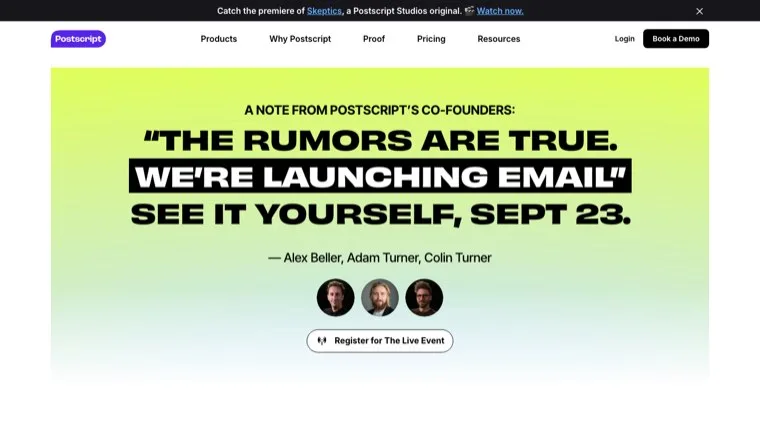
Postscript does one channel, SMS for Shopify, and does it properly: compliance handled, cart and shipping flows prebuilt, revenue attribution per message.
It is Shopify-only and SMS-only, so it complements an email tool rather than replacing one.
Best for: Shopify stores whose audience actually reads texts, typically impulse and repeat-purchase products.
6. Yotpo
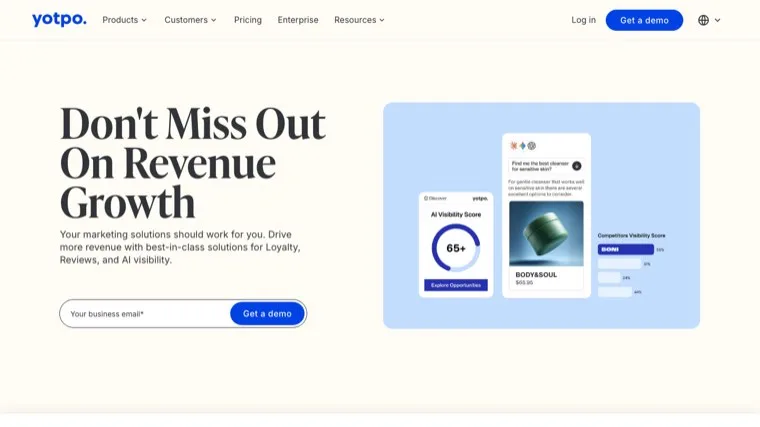
Yotpo automates the social proof loop: review requests after delivery, photo reviews, loyalty points and referrals, all feeding back into your product pages.
The modules are priced separately and quotes can climb quickly, so small stores should start with reviews only.
Best for: stores where reviews visibly move conversion, which is most of them.
7. Privy
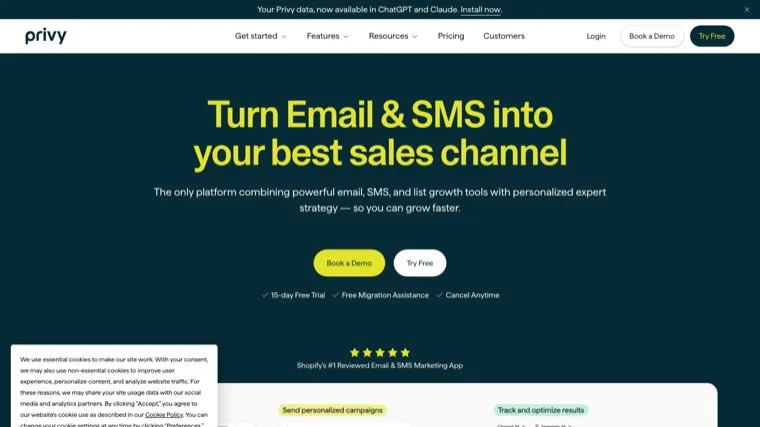
Privy is the list-building layer: popups, spin-to-win, exit intent and simple email/SMS follow-up, built for stores that are still turning traffic into subscribers.
Its automation depth stops at the basics, so most stores eventually pair it with or graduate to a fuller platform.
Best for: young stores whose first problem is capturing visitors before they leave.
8. Tidio
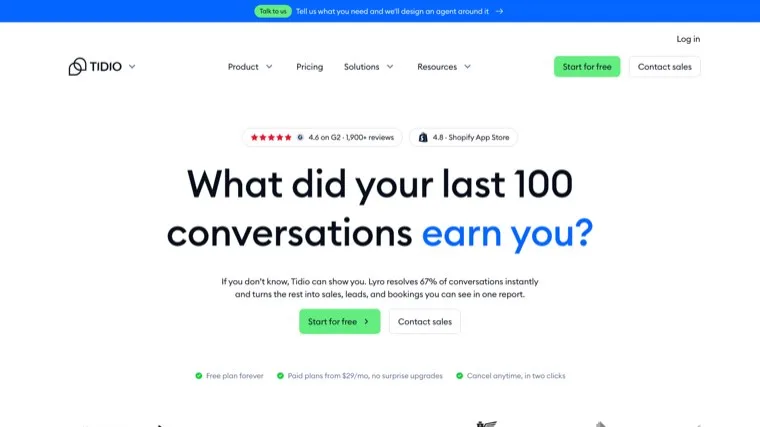
Tidio automates the conversations: live chat, an AI agent that answers order and product questions, and chat-triggered flows that recover carts while the shopper is still on the page.
It is a support and chat tool first; treat its email features as a bonus rather than the plan.
Best for: small teams drowning in "where is my order" messages.
9. Justuno
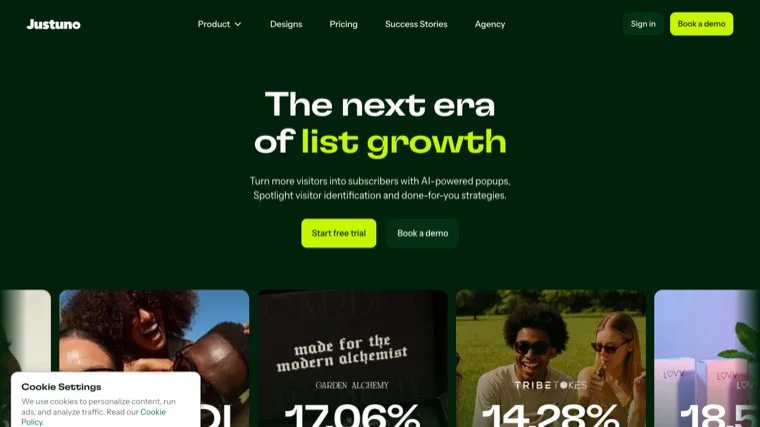
Justuno automates on-site conversion: targeted promotions, banners, upsells and A/B tests that adapt to traffic source and cart contents.
It optimizes traffic you already have, so its math only works once the store has real visitor volume.
Best for: stores with steady traffic and a conversion rate they are unhappy with.
The stack at a glance
| Tool | Automates | Channel | Free tier |
|---|---|---|---|
| Distribb | Getting orders: SEO + AI SEO | Google, AI search, social | Trial |
| Klaviyo | Email + SMS flows | Email, SMS | Yes, small lists |
| Omnisend | Email + SMS flows | Email, SMS, push | Yes |
| Drip | Email workflows | Email, SMS | Trial |
| Postscript | Text message flows | SMS (Shopify) | Trial |
| Yotpo | Reviews, loyalty, referrals | On-site, email | Yes, reviews |
| Privy | List capture + follow-up | On-site, email, SMS | Yes |
| Tidio | Chat + AI support | Chat | Yes |
| Justuno | On-site offers + CRO | On-site | Trial |
How to build the stack without overbuying
Small stores fail at automation by buying six tools in one week. The order that works: first fix acquisition, because flows cannot email shoppers you never got. That is the Distribb layer, and our Shopify SEO guide shows what it automates for you.
Second, capture and message: one of Klaviyo or Omnisend, plus Privy if your list is tiny. Third, compound: Yotpo for reviews once orders flow, Postscript when your buyers text, Justuno and Tidio when traffic volume justifies conversion work. Every tool after the first two should be paid for by the ones before it. For the link side of ranking product pages, see link building for ecommerce.
Running a broader small business rather than a store? The companion roundup of marketing automation tools for small business covers CRMs, service businesses and offline follow-up.
FAQ
What is the difference between this list and small business automation tools?
Store automation is built on order and product events: carts, browse behavior, delivery, reviews, repeat purchases. General small business tools center on leads, appointments and CRM pipelines. If your revenue arrives through a checkout, you want the ecommerce stack.
What should a small online store automate first?
Acquisition, then the welcome and abandoned cart flows. Acquisition first because every downstream flow multiplies the traffic you feed it, and SEO plus AI search is the only acquisition channel that compounds instead of billing you per click.
How much does marketing automation cost for a small store?
A sensible starting stack runs roughly $150 to $300 a month: Distribb from $97 for acquisition, an email platform free or under $60 at small list sizes, and free tiers elsewhere until volume justifies upgrades.
Can AI assistants really send orders to a small store?
Yes. Shoppers increasingly ask ChatGPT and Perplexity what to buy, and those engines cite pages they trust. Distribb tracks whether your store gets cited and writes content structured to be quoted, which is a channel most small stores have not touched yet.
Conclusion
Most automation advice tells a small store how to squeeze more from existing traffic. Start one layer earlier: automate the orders themselves with SEO and AI SEO for your store, then let the flows in this list multiply what arrives.