

Most B2B SEO tools help you find opportunities. Far fewer help you act on them. That gap matters when your buyers use low-volume searches, compare vendors for months, and now ask AI assistants for shortlists.
Here are the best B2B SEO tools for agencies, SaaS teams, e-commerce brands, and in-house marketers, with a clear use case and an honest limit for each.
1. Distribb.io (Our Top Pick)
Distribb.io is an AI-powered SEO platform for teams that need the full work cycle in one place. It targets buyer-focused keywords, helps produce and publish content, builds backlinks, and tracks visibility in AI search.
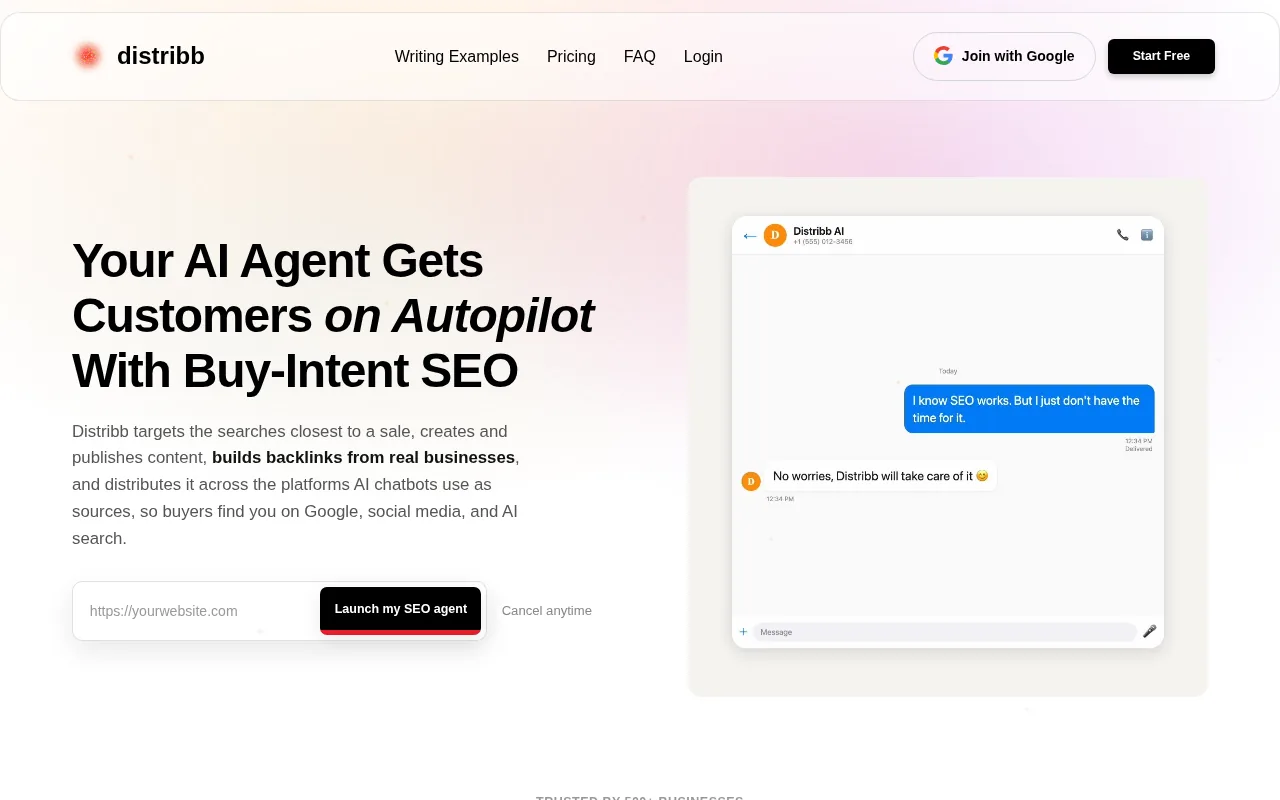
That makes Distribb.io a strong fit for agencies and lean B2B teams. These teams often know which topics matter, yet lack enough people to research every cluster, draft every page, manage every CMS handoff, and run link outreach each week.
Distribb.io supports WordPress, Webflow, Shopify, Notion, Wix, Framer, Google Search Console, and Google Business Profile. That range helps when a company has a marketing site in one system and product or commerce pages in another.
Its B2B use case is clear. A team can focus on terms such as an integration query, a vendor comparison, or a problem-specific phrase with low search volume but high sales value. The workflow then connects research with content production, publishing, backlink building, and AI-search visibility.
Distribb.io also gives agencies a way to test the workflow before making a larger commitment. Its three-day trial requires no credit card and can be cancelled at any time. Full AI agent features, such as automated outreach and continuous audits, are available on paid plans.
The honest limit is important: Distribb.io isn't a keyword database on the scale of Ahrefs or SEMRush. Large in-house teams may want a dedicated research or enterprise platform beside it. For teams that need execution more than another data warehouse, Distribb pricing is the sensible place to assess the fit.
2. Ahrefs, Deep backlink and keyword research
Ahrefs is a research suite with particular value for backlink analysis, competitor research, keyword discovery, and content gaps. It suits agencies and B2B teams that want to decide which pages deserve investment before they start writing.
Its useful B2B workflow starts with a close look at competing domains. A marketer can compare the keywords a competitor ranks for against the terms their own site owns. The missing set becomes a research queue, not a random list of blog ideas.
That distinction matters in B2B. A keyword with 50 monthly searches may lead to more pipeline than a broad term with thousands of searches. The team still needs to check the search results, sales value, and page intent before committing resources.
Ahrefs is also useful for link planning. A marketer can review which pages attract links, then shape a stronger research piece, benchmark, or product comparison. The tool helps reveal the market's existing authority patterns, though it can't replace a good reason for another site to link.
Ahrefs' figures are estimates, so treat search volume and difficulty as directional signals. Your own Search Console data, analytics, and CRM should settle high-stakes choices. The tool can narrow the field, but it can't tell you which account will close.
Pricing is another constraint. The entry tier is listed at $99 per month, while full features require a $199 tier in the cited comparison. The interface is approachable, but its wide feature set takes time to learn.
3. SEMRush, Broad SEO workflows for growing teams
SEMRush is a broad SEO and marketing platform for growing teams that want research, competitor analysis, audits, content support, and reporting in one account.
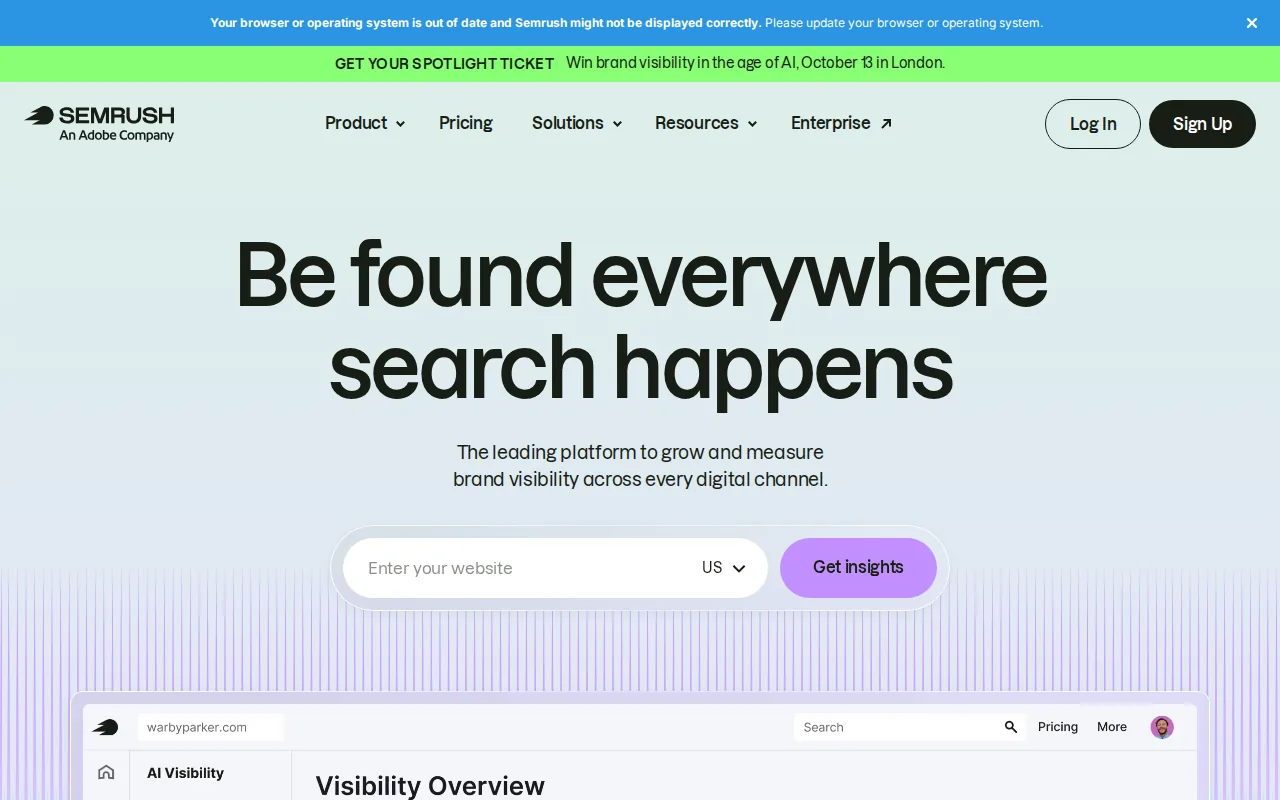
For B2B work, its keyword tools help teams filter ideas by intent and difficulty. The Domain Vs. Domain workflow can show where another business ranks while your site does not. That gives a content lead a clear place to look before building a quarterly plan.
Its on-page workflow can review target pages and suggest changes based on competing results. A writer can use those ideas during a refresh, while an SEO lead checks whether the page still matches the query. This is useful when an old page gets impressions but fails to move qualified visitors forward.
SEMRush also supports broader marketing work. A team that handles SEO, paid search, and competitor research may prefer one data set over several narrow subscriptions. That can make handoffs easier during a campaign review.
For a SaaS company, the risk is overbuying. A small team may pay for a large feature surface that nobody has time to use. SEMRush's backlink data is also described as less complete than Ahrefs' in the supplied comparison. Current plans and product scope can change, so review the official SEMRush website before procurement.
Choose it when breadth matters more than a single specialist strength. If your team mainly needs automated execution, a workflow-led platform may reduce more work.
4. Moz Pro, Accessible reporting and integrations
Moz Pro is a paid SEO toolkit built around keyword research, rank tracking, site audits, backlink analysis, and clear reporting. It fits teams that need a gentler learning curve than a large enterprise suite.
Its reporting options are useful for agencies. One-click CSV reports, APIs, and pre-built Looker Studio connectors can help turn raw SEO work into a client update. The value shows up during the monthly handoff, when a client needs a short answer rather than a tour of five dashboards.
Moz Pro can also help a team review a competitor's backlink profile before planning outreach. That does not guarantee a link, but it can show which types of pages attract attention in the category.
The main drawback is relative depth. The supplied comparison says Moz has historically been less accurate than Ahrefs and has fewer features than SEMRush. That may be acceptable for a team moving up from free tools, but advanced analysts may want more data before making a large link or content bet.
Moz Pro makes sense when reporting clarity is part of the job. It is less compelling when your team needs the deepest backlink data or a full publishing workflow.
5. Screaming Frog, Technical SEO diagnostics
Screaming Frog is a crawler for technical SEO checks. It is best for finding crawl depth problems, broken links, redirect chains, duplicate titles, and rendering issues before they block content from performing.
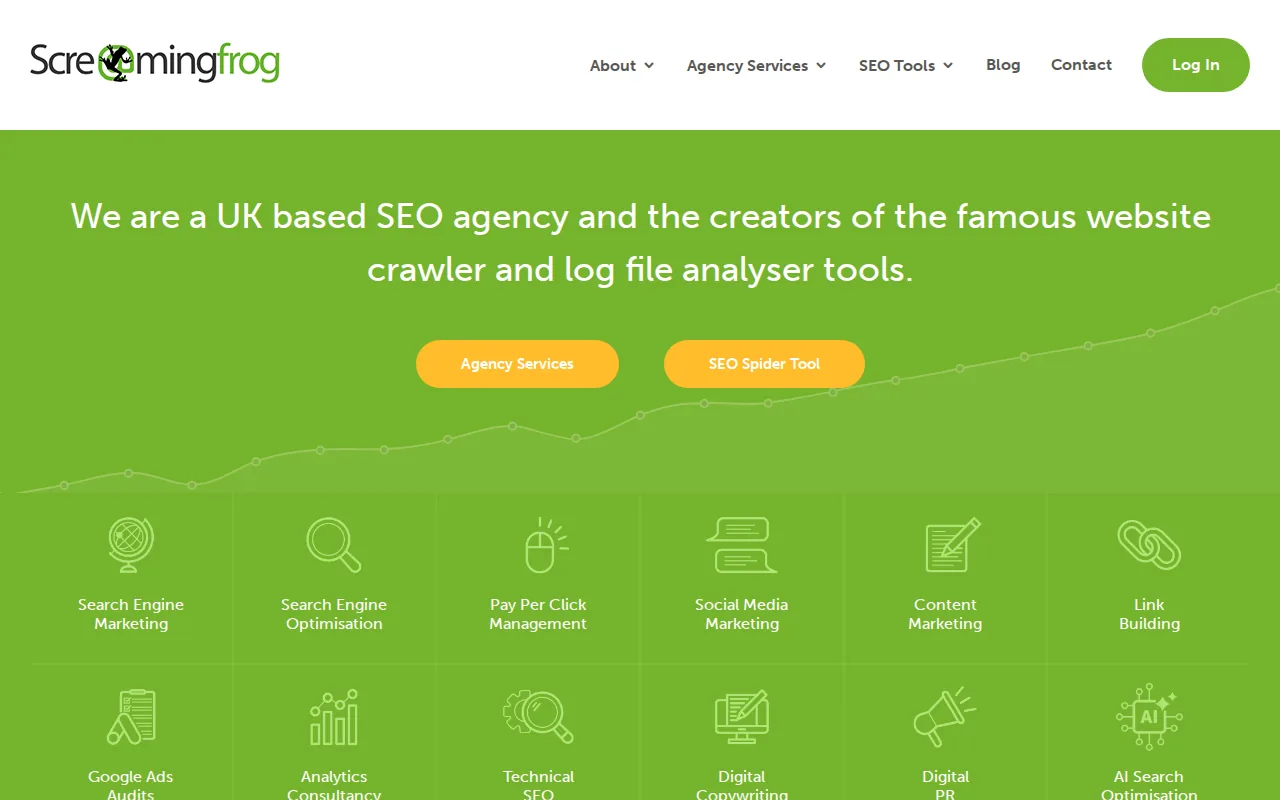
A B2B site can look small while hiding a messy structure. Old campaign pages may redirect through several hops. Product pages may share the same title. A JavaScript element may hide key copy from a crawler. Screaming Frog puts those issues into a report that a marketer can send to a developer.
The free version crawls up to 500 URLs. It also integrates with Google Analytics and Google Search Console, which helps connect crawl findings with traffic and query data. A page with no links, no impressions, and a weak internal path deserves a different response than a page that already drives demo visits.
This is a specialist tool, not a keyword or content system. Someone still needs to set crawl rules, interpret the report, and assign fixes. Its desktop setup may also feel less convenient for teams that want a browser-based shared workspace.
Use it before a site migration, after a major template change, or during a technical cleanup. A clean crawl won't replace a sales plan, but it stops avoidable technical debt from hiding the work.
6. Clearscope, NLP content optimization for editorial teams
Clearscope is a content optimization tool for editorial teams that refresh existing pages or build new briefs around a defined search topic. It is strongest when the team already knows the business angle and needs help checking topic coverage.
Its reports review top search results and suggest related terms, questions, headings, readability changes, and a target length. The writer can work from the report while keeping the page focused on the buyer's question. For a one-off page, the free readability checker covers the readability part without a Clearscope seat.
That works well for B2B content because a single buying decision often creates many related questions. A page about an analytics tool may need to address integrations, setup time, security, reporting, and team access. A content score can't decide which concern matters most, but it can reveal gaps in topical coverage.
Clearscope also tracks content relevance over time. That gives an editor a way to spot decay instead of waiting for a sales lead to say that a page feels dated. Its document-editor and WordPress add-ons can fit teams that already use those workflows.
The drawback is scope. Clearscope isn't a full backlink, crawl, or revenue attribution system. Pricing for the Essentials plan is available on request, which may be hard to justify for a small publishing team with only a few priority pages.
Pick Clearscope when content quality control is the bottleneck. Pair it with analytics and a technical crawler when the wider SEO system needs coverage.
7. Botify, Enterprise crawling and log-file analysis
Botify is an enterprise SEO platform for complex sites that need large-scale crawling and log-file analysis. It suits organizations where the main problem is seeing how search engines move through a large architecture.

For a large B2B organization, the issue may sit below the content plan. Faceted URLs, regional folders, JavaScript-heavy templates, and old redirects can waste crawl attention. Log files add another view by showing which pages search bots actually request.
That level of detail helps technical teams form a better queue. Instead of fixing every warning in a generic audit, they can examine sections that affect valuable templates or receive repeated crawler visits.
Botify is aimed at enterprise B2B organizations with complex site architectures that need log-file analysis and crawl-level technical SEO. It is a poor fit for a small SaaS site with a few hundred pages. The platform may also exceed the needs of a team that mainly wants keyword research or content briefs. For briefs alone, the free content brief generator is a lighter starting point.
Choose Botify when crawl behavior is the core business problem. For most smaller teams, the cost and setup burden make a lighter crawler a better first move.
8. Similarweb
Similarweb answers the question the other tools cannot: how much traffic a competitor actually gets and where it comes from. For B2B teams sizing a market or benchmarking against a rival, its traffic and audience estimates are the reference point.
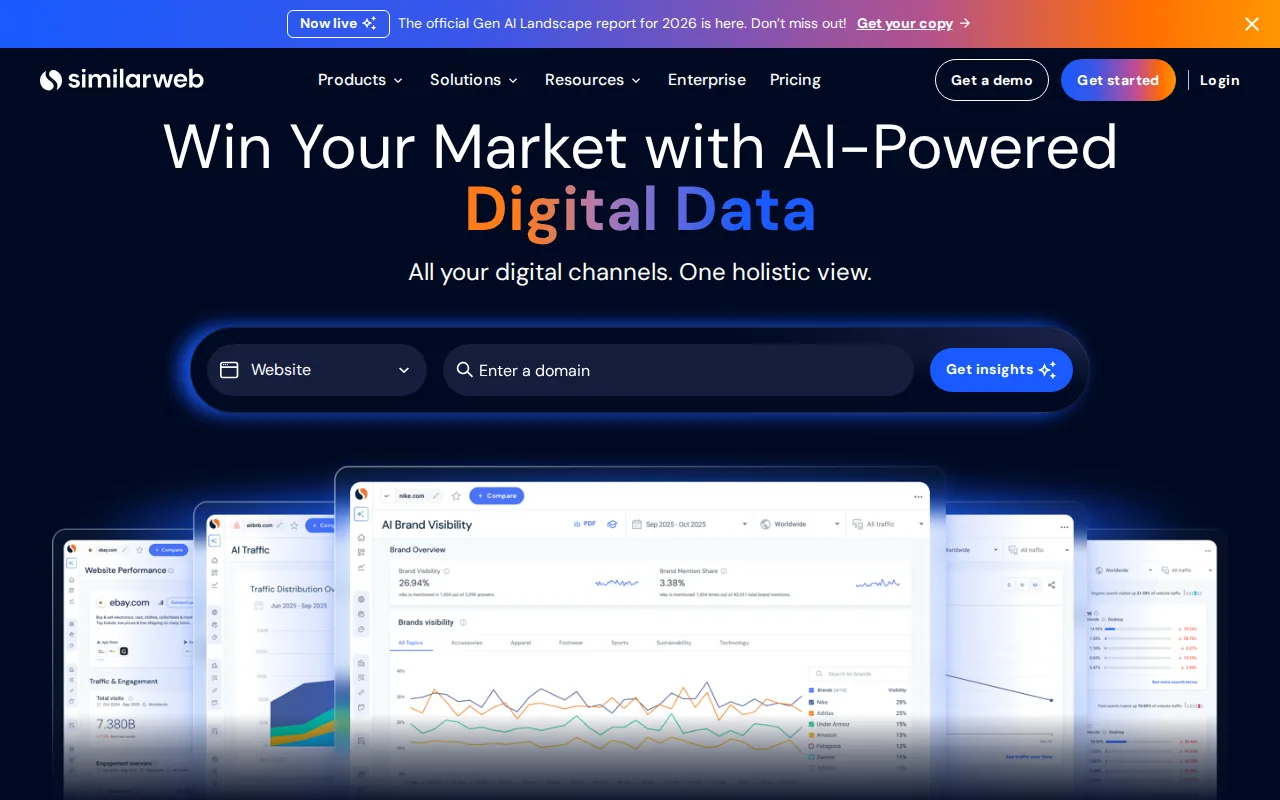
The honest weakness is that estimates on smaller B2B sites get rough, and the full platform is priced for enterprise budgets. Use it for direction, not decimals.
9. Sitebulb
Sitebulb is a desktop and cloud crawler that turns technical audits into prioritized, explained issues instead of raw exports. For a B2B site with a lean team, its hints system is the fastest route from crawl to fix list.
It is a crawler, not a full suite: no rank tracking, no keyword data. Pair it with a research tool from earlier in this list.
10. AgencyAnalytics
AgencyAnalytics assembles rankings, GSC, analytics and backlink data into client-ready dashboards. If your B2B motion involves reporting to stakeholders or clients every month, it removes the spreadsheet assembly work.
It reports on data more than it generates it, so its value depends on the tools you connect to it.
11. Looker Studio
Looker Studio is the free way to build exactly the SEO dashboard you want on top of Search Console and GA4. For pipeline-focused B2B reporting, blending GSC queries with conversion data is where it earns its place.
The cost is time: everything is possible and nothing is prebuilt. Budget setup hours or start from a community template.
Best B2B SEO Tools Compared by Use Case
The best B2B SEO tools depend on the work your team can actually complete each week. B2B SEO also differs from e-commerce and local SEO because the buyer pool is smaller, the terms are often more specific, and a conversion may happen months after the first visit.
That makes pipeline signals more useful than traffic alone. A report should show which pages create sales conversations, assist a deal, or help an account move from research to evaluation.
| Tool | Best B2B use | Main limit | Pricing tier |
|---|---|---|---|
| Distribb.io | End-to-end SEO automation for agencies and businesses | Not a keyword database at Ahrefs or SEMRush scale | Paid plans, three-day no-card trial |
| Ahrefs | Backlink research and content gaps | Full features need a higher tier | Entry tier and higher paid tiers |
| SEMRush | Broad research and competitor workflows | Backlink data is less complete than Ahrefs | Free, Pro, Guru, and Business tiers |
| Moz Pro | Clear reports and first paid SEO platform | Fewer features than SEMRush | Paid tiers |
| Screaming Frog | Technical crawling | No keyword or content workflow | Free up to 500 URLs, paid plan |
| Clearscope | Editorial optimization and content refreshes | Doesn't cover full SEO measurement | Paid plans, Essentials pricing available on request |
| Botify | Large-site crawling and logs | Too heavy for small sites | Enterprise pricing |
| Mangools | Keyword ideas for smaller teams | No automatic reporting | Paid plans, plus free AI Search Watcher |
| BuzzSumo | B2B content research | Backlink research falls short of leading tools | Paid plans, limited free trial |
| SpyFu | Early-stage competitor and PPC research | Smaller feature set | Paid plans with free add-on services |
| Keygrip | AI visibility actions and deployment | Specialist scope | Free keyword research report, paid options |
| Conductor | Enterprise content reporting and CMS workflows | May exceed smaller team needs | Enterprise pricing |
| Surfer SEO | Scalable content briefs for mid-market teams | Best paired with other analytics tools | Paid plans |
| Sistrix | Visibility trends in Germany, Austria, and Switzerland | Thinner global keyword and backlink coverage | Paid plans |
Use the table as a filter, not a scorecard. If execution is slow, Distribb.io may remove more work than another research subscription. If a large site has crawl waste, Botify may matter more than a content editor.
Search Console can help monitor search performance and indexing. Pair first-party data with a specialist tool rather than treating any third-party estimate as the final truth.
Teams that need a wider look at automation can compare the workflows in Distribb's AI-driven SEO tools guide. The useful question is simple: what task disappears from your weekly queue after you add the tool? When you're ready to simplify that work, review Distribb pricing.
What to Look for in a B2B SEO Tool
Start with the bottleneck. A lean SaaS team may need research plus publishing. An agency may need repeatable delivery across clients. An enterprise team may need crawl data, permissions, APIs, and reporting that finance can trust.
- Intent depth:Can you separate a buyer query from a broad information query?
- Pipeline links:Can the team connect organic pages with demos, trials, accounts, or assisted revenue?
- Technical checks:Can it find indexation and template problems before content work compounds them?
- Workflow fit:Does it remove handoffs, or does it add another dashboard?
- AI visibility:Can it show when an assistant cites or omits your domain?
- Scale and access:Do crawl limits, seats, exports, and permissions match your team?
Don't buy three tools that all produce keyword lists. Buy one tool for the main constraint, then add a specialist only when the next constraint is clear.
If your team is smaller than the tools above assume, our guide to SEO tools for small business covers the budget end. Agencies running SEO for B2B clients should also see the best white label SEO tools.
FAQ
What are the best b2b seo tools for a small team?
The best B2B SEO tools for a small team are the ones that reduce manual work first. Distribb.io is a strong starting point when research, content, publishing, backlinks, and AI visibility all need attention. Add Screaming Frog for technical checks or Search Console for first-party performance data. Avoid paying for overlapping suites before you have a weekly workflow.
What is the best b2b seo software for agencies?
The best B2B SEO software for agencies depends on delivery speed and reporting needs. Distribb.io fits agencies that want repeatable SEO execution across accounts. Ahrefs or SEMRush can add deeper research, while Moz Pro can help with client-friendly reports. Pick the stack that shortens the path from client brief to published work and clear monthly results.
What is SEO for B2B SaaS?
SEO for B2B SaaS is the process of earning visibility for the problems, use cases, integrations, and comparisons that influence software buyers. The best tools help map low-volume queries to funnel stages, connect pages to pipeline, and maintain technical health. Traffic still matters, but demo quality and account influence matter more.
Do B2B SEO tools track AI search visibility?
Some B2B SEO tools track AI search visibility, but the depth varies. Distribb.io includes monitoring for whether AI engines cite a domain when buyers ask for recommendations. Other platforms may focus on traditional rankings or provide only partial AI reporting. Ask which assistants are covered and whether the output leads to an action your team can take.
Can one tool replace an entire B2B SEO stack?
One tool can cover much of a B2B SEO workflow, but it may not replace every specialist system. Distribb.io can handle a broad execution cycle, while Ahrefs has deeper research data and Botify suits large technical estates. Start with one core platform, then add a crawler, analytics layer, or enterprise system only when the gap affects revenue work.
Conclusion
For most agencies and lean B2B teams, start with Distribb.io because it connects research to execution instead of adding another report to your queue. Test a focused buyer-keyword workflow, then review which pages reach qualified accounts. If backlink acquisition is the main gap, assess Distribb's backlink exchange as the next step.