

Backlinks for SaaS are not hard because the tactics are secret. They are hard because most SaaS teams are choosing between slow manual outreach they cannot staff and tools that automate one slice of the job. This guide covers the channels that actually earn links for SaaS companies in 2026, ordered by return, then compares five tools and services that do the work for you.
Why backlinks for SaaS work differently
Link building advice is usually written for media sites and online stores. Those playbooks lean on infographic campaigns, coupon pages, and volume guest posting. Most of it does not transfer to software.
Backlinks for SaaS companies have three properties that change the plan:
- The directories are unusually generous. Software review sites hand out permanent dofollow links to any vendor that fills in a profile. Very few industries have an equivalent.
- The commercial keywords are brutal. Terms like "best project management software" are defended by sites with a decade of authority, so a single relevant link can compound for years.
- Your customers publish. Integration partners, agencies that resell you, and the tools you connect to all run blogs and directories with a reason to mention you.
That last point is why a new SaaS domain can move faster than its Domain Rating suggests. The links are already available. Somebody has to go and claim them. If you want the wider picture of how links fit next to keywords and technical work, our guide to SEO for SaaS covers the full stack.
The 8 backlink channels for SaaS, ranked by ROI
Work down this list in order. The channels at the top pay off in days and cost nothing but time. The ones at the bottom take months and need budget or a genuine story.
1. Directory and review-site listings
The highest-return channel for any SaaS under DR 40. You submit once and the link stays live. On Ahrefs' scale, SourceForge, G2 and Capterra all sit in the DR 90s and all accept free vendor listings. Below them sit Indie Hackers, SaaSHub, BetaList and dozens of product directories in the DR 50 to 80 range.
Do the free tier first, in an afternoon. Be selective after that: hundreds of directories are nofollow, unindexed, or pass no equity at all.
2. Launch platforms
Product Hunt, BetaList and similar launch venues give you a dated, indexable page plus the secondary coverage that a launch attracts. The link is worth less than the referral traffic and the reviews you can collect on the day, but you only get to launch once, so plan the assets before you post.
3. Alternatives and comparison placements
Pages titled "best X alternatives" and "X vs Y" are where buyers with a credit card already are. Getting listed on them is the single most commercially valuable link a SaaS can hold, because the traffic converts as well as the link ranks.
Two routes: pitch the author of an existing roundup, or publish your own comparison pages so you own the term. Most teams should do both.
4. Integration and partner pages
If your product connects to anything, the other side almost certainly has a partner directory, an integrations page, or a marketplace listing. These links are topically perfect and nobody has to be persuaded, because the listing helps them too. Audit your own integrations list and claim every entry.
5. Original data and digital PR
You are sitting on numbers nobody else has. Anonymised, aggregated product data turned into a small annual benchmark gives journalists and bloggers something to cite, and citations are how links arrive without asking. This is slower and needs a real finding, not a survey of 200 people padded into a press release.
6. Unlinked brand mentions
Set an alert for your product name. Sites review you, list you, and mention you in passing without linking. A short, polite note to the author converts a meaningful share of those, and it is the cheapest link you will ever earn because the editorial decision is already made.
7. Guest posts and link insertions
Still works, still slow. A guest post on a site your buyers read is worth more than ten on generic marketing blogs. Link insertions into articles that already rank tend to act faster, because the page has history.
8. Link exchanges done properly
Trading links with non-competing SaaS companies in adjacent categories is normal practice, and it is safe when the placements are contextual and the sites are real. It goes wrong when it becomes reciprocal linking between two sites at scale. Distribb runs this as a managed exchange network so the pairing is handled for you rather than negotiated by email.
For the tactical detail behind these channels, see our walkthrough on how to build high quality backlinks.
1. Distribb, the full SEO and backlink workflow in one place
Distribb is an SEO platform that runs the whole chain on autopilot. You connect the site once and it handles keyword research, writing, publishing, backlinks, and AI-search visibility without you assigning the work each week.
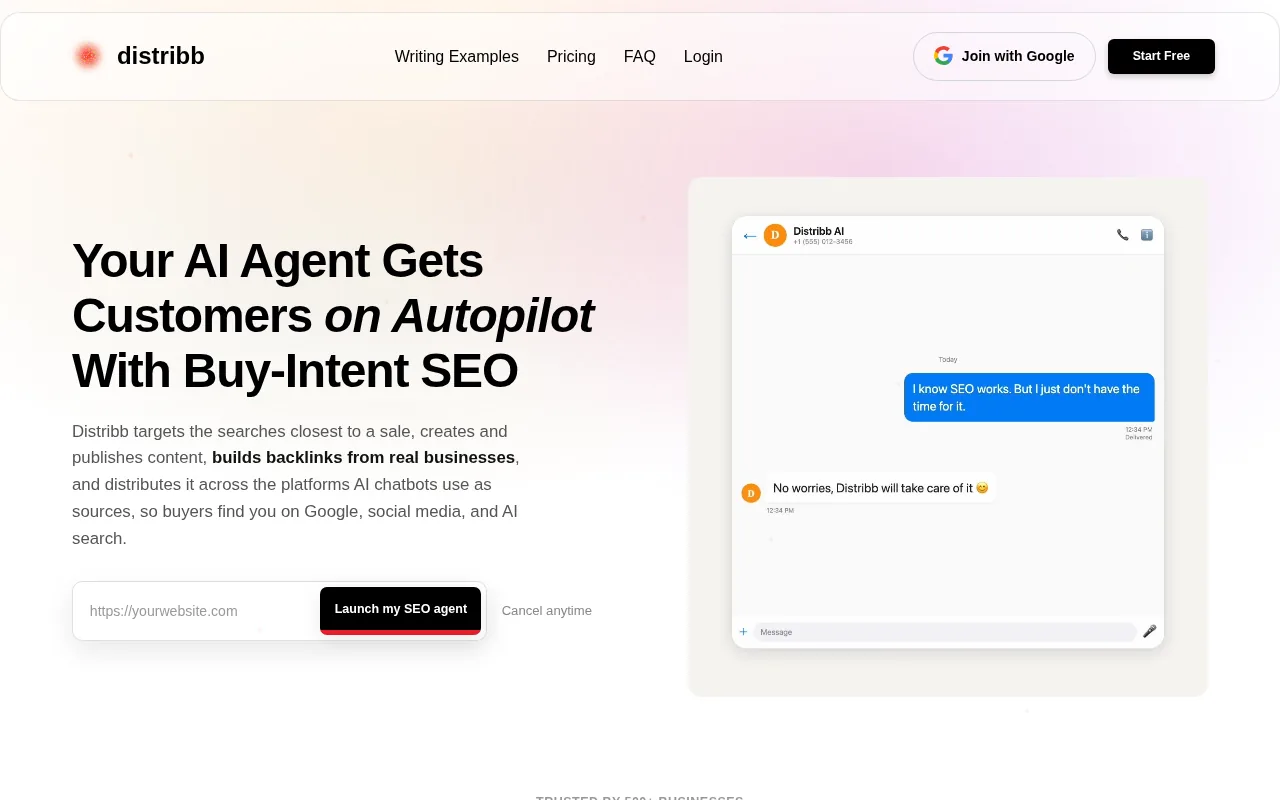
Most tools in this category stop at research or reporting. Distribb keeps going, which matters for links specifically, because the pages that attract links have to exist before anyone can point at them. Content and link acquisition run as one system instead of two queues that drift apart.
What it covers:
- Keyword research and planning across your commercial and informational terms.
- Writing and publishing straight into your CMS, on a schedule.
- Backlink exchange network that pairs you with non-competing sites for contextual placements.
- Link building outreach playbooks for editorial placements.
- AI-search visibility tracking, so you can see whether answer engines cite you when buyers ask for recommendations.
- Internal linking and social repurposing handled automatically as the library grows.
Approvals are optional. You can review every piece before it goes out, or let it publish and check the results, which is what most founders end up doing once the first month looks right. On the Accelerator plan a human reviews every piece before publication.
Pricing is $97 a month for Pro and $495 a month for Accelerator. The honest limitation: it is a platform, not a bespoke creative agency. If you need a flagship research report art-directed from scratch, that is a different kind of engagement.
SaaS teams can see what Distribb runs for SaaS companies before signing up.
2. Respona, done-for-you placements
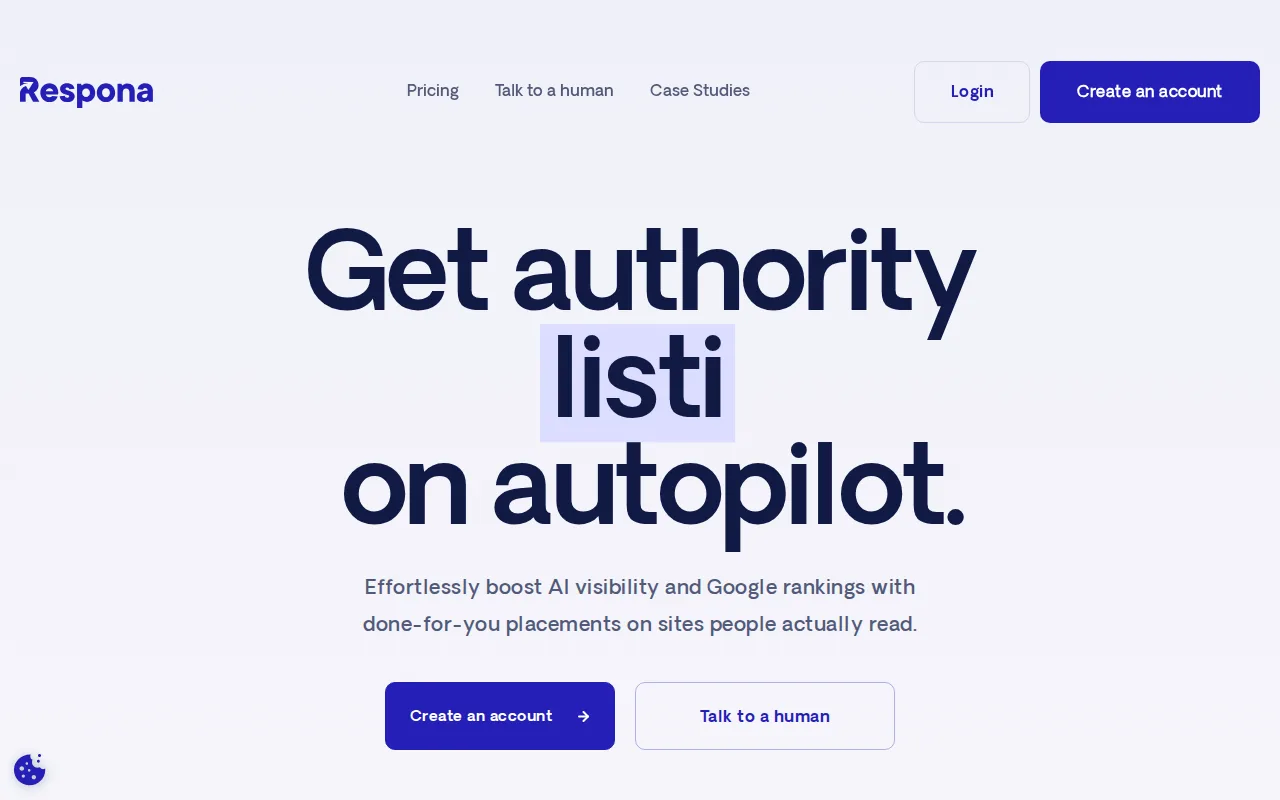
Respona is a done-for-you link building service for SaaS and B2B brands. You submit your target pages, anchors, and preferred publisher tier, and the team handles publisher discovery, the content, and the placement.
- Best for: teams whose bottleneck is outreach capacity rather than strategy.
- Turnaround: a standard queue of about 28 days, with a faster track available.
- Control: you can pre-approve domains and request specific formats, including listicle and comparison placements.
The watch-out is cost comparison. Per-placement pricing is harder to line up against a monthly software subscription, so work out your cost per live link before committing to a volume.
3. Ahrefs, backlink research and competitor analysis
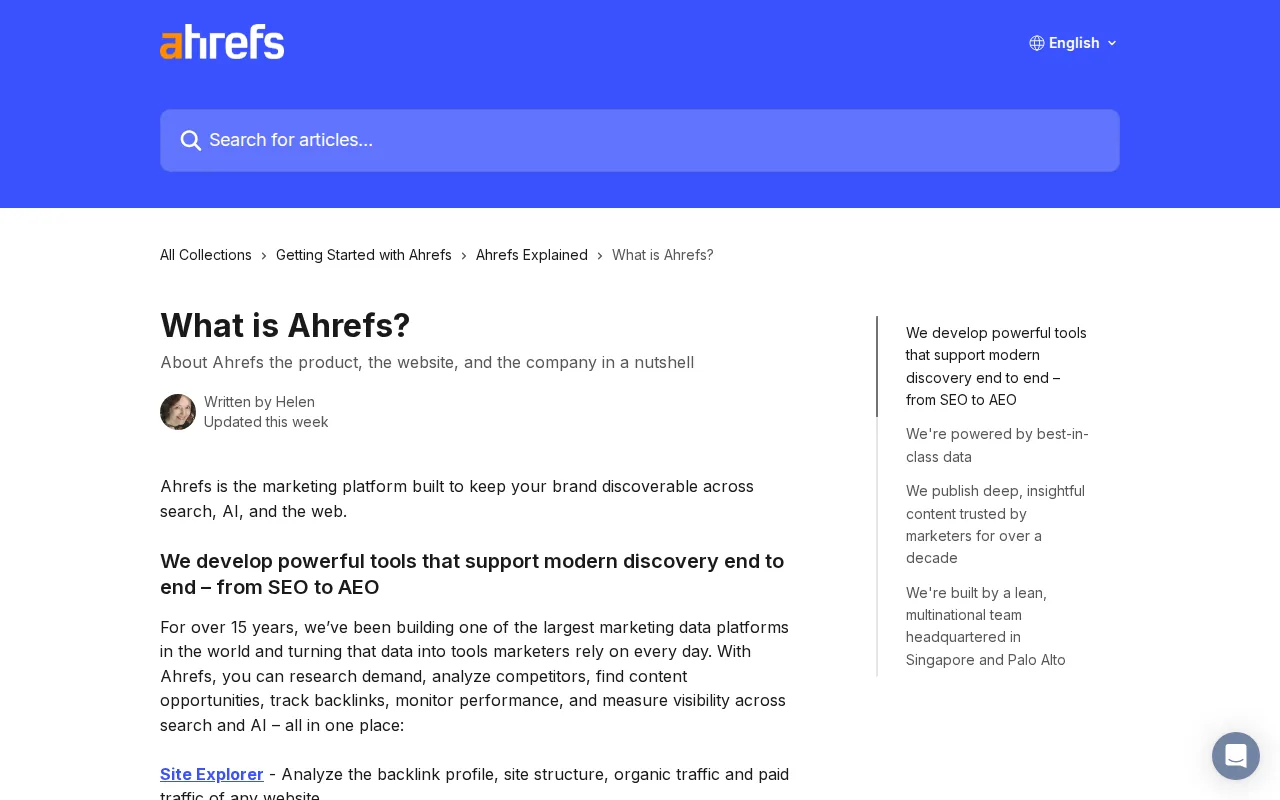
Ahrefs is the reference tool for backlink research. It is what you use before you spend money on outreach, to find out which sites already link to your competitors and which of those links are worth chasing.
Competitor links are especially revealing in SaaS, because a rival's profile usually exposes the pattern that works in your category: integration pages, comparison posts, data studies, or a single widely-cited guide. Each pattern suggests a different campaign.
- Best for: building a prospect list and judging whether a site is genuinely worth a pitch.
- Strength: the index depth, and the ability to separate a strong domain from one that only looks strong.
- Limitation: it finds links. It does not earn them. A person still writes the pitch and manages the relationship.
4. SE Ranking, a broader suite for link monitoring
SE Ranking bundles backlink monitoring with rank tracking and site audits. It suits an in-house marketer who wants one view of search health rather than a link-only workspace.
The value here is connecting a link campaign to what happened afterwards: which target pages moved, and whether a technical problem is holding back the page receiving the links.
- Best for: monitoring rather than acquisition.
- Strength: ranks, audits, and links in one dashboard.
- Limitation: prospect research and publisher contact still happen somewhere else.
Tie the reporting to a small set of commercial pages. A backlink report can look busy while the campaign quietly sends authority to pages that never support a trial or a demo.
5. Outreach Desk, manual editorial outreach
Outreach Desk is a manual link building agency working across SaaS, technology, and industry publications. Placements are vetted by hand for real traffic, editorial standards, and topical fit, and you see the site and its metrics before a link goes live.
- Best for: competitive terms where human judgement about publisher fit matters more than workflow automation.
- Services: guest posting, link insertions into pages that already rank, and contextual placements.
- Limitation: the most hands-on and typically the highest monthly spend of the five.
Before signing with any managed service, ask how they define a qualified site: page type, traffic checks, topical rules, anchor policy, and reporting format. A spreadsheet of URLs is not enough if the links never reach pages that support the business. Our roundup of SaaS link building agencies goes deeper on how to run that vetting call.
Backlinks for SaaS: comparison of the 5 options
| Option | Best fit | How much it automates | Main strength | Watch-out |
|---|---|---|---|---|
| Distribb | SaaS teams that want one SEO workflow | Full workflow, on autopilot | Connects content, publishing, backlinks, and AI visibility | A platform, not a bespoke creative agency |
| Respona | Teams that want managed placements | Managed service | Done-for-you editorial and listicle placements | Per-placement pricing is harder to compare |
| Ahrefs | Teams researching competitor links | Research only | Backlink index and competitor analysis | Does not do the outreach |
| SE Ranking | Teams monitoring broader SEO performance | Monitoring only | Ranks, audits, and links in one place | Acquisition needs a separate process |
| Outreach Desk | Teams seeking manual editorial outreach | Manual, human-run | Hand-vetted SaaS and tech placements | Higher monthly cost, slower pace |
A short rule of thumb:
- Pick Distribb when you want the content and the links handled in one place without hiring for it.
- Pick Respona when outreach capacity is the bottleneck and you want placements delivered.
- Pick Ahrefs when you need the research before committing budget.
- Pick SE Ranking when monitoring has to cover more than links.
- Pick Outreach Desk when a human team should own publisher relationships.
How to measure SaaS backlink results
Domain metrics are the easiest thing to report and the least useful thing to optimise. Track these instead:
- Referring domains to commercial pages, not to the blog in aggregate.
- Rankings for the specific terms those pages target, before and after.
- Qualified organic sessions and assisted conversions, so a link is judged on pipeline.
- Citations in AI answers when buyers ask for recommendations in your category.
- Cost per live link, which is the only number that compares a tool to an agency honestly.
Give any campaign at least one full quarter before judging it. Links are indexed, then weighted, then reflected in rankings, and that sequence rarely completes inside a month. If you are weighing paid placements as part of the mix, our guide on where to buy dofollow backlinks covers what to check first.
FAQ: backlinks for SaaS
What are the best backlinks for SaaS?
The best backlinks for SaaS come from pages your buyers actually read: software review directories, comparison and alternatives roundups, integration and partner pages, and industry guides that cite real data. Relevance beats raw authority. A link from a smaller specialist publication your market reads is worth more than one from a large site with no audience overlap.
How do backlinks for SaaS companies differ from normal link building?
Backlinks for SaaS companies lean much harder on directories, integrations, and comparison pages, because those channels barely exist in other industries. Software review sites give away high-authority dofollow links to any vendor who creates a profile, and every tool you integrate with is a site with a standing reason to link to you. The classic media tactics still work, they are just not where a SaaS should start.
Is automated link building safe for SaaS?
It is safe when the automation removes the repetitive work and a real editorial standard still applies to the placements. Automating research, matching, scheduling, and reporting is fine. Generating thousands of links from unrelated sites is what triggers problems. Check target sites, page context, anchor text, and destination pages before a campaign runs.
Should a SaaS startup use a tool or an agency?
Use a platform when you want the work to keep happening without hiring for it. Use an agency when you need publisher relationships or a bespoke campaign. Distribb covers the platform side, including the content the links point at, from $97 a month, which is well below a typical agency retainer.
How many backlinks does a SaaS website need?
There is no fixed number. It depends on the keyword, the pages you are competing with, and the strength of your existing profile. Look at the referring domains pointing to the pages currently ranking for your target term, and treat that as the bar, rather than chasing a total link count across the site.
How long do SaaS backlinks take to work?
Directory links can be indexed within weeks and often move a new domain quickly. Editorial placements aimed at competitive commercial terms usually take one to two quarters to show in rankings. Plan the free directory work first so something is compounding while the slower channels run.
Conclusion
Start with the channels that cost nothing: claim the review-site listings, audit your integrations, and chase your unlinked mentions. That work alone moves most new SaaS domains further than a first month of paid outreach would.
Once that is done, the question is who keeps it running. Ahrefs and SE Ranking tell you what is happening. Respona and Outreach Desk place links for you. Distribb runs the content and the links together on autopilot, which is the one combination that does not leave you assigning the work every week.