

Patients may ask an AI assistant about a clinic before they visit a search results page. AI search optimization for healthcare helps teams make accurate, useful site content easier for search systems to find and cite. Here are six options, starting with Distribb.io, and the work each one can support.
We analyzed 34 comments and questions from Reddit, YouTube and Quora about AI search optimization for healthcare and found that 44% mentioned AI visibility for healthcare clinics.
1. Distribb.io: Automated AI-search and SEO workflows
Distribb.io is an AI-powered SEO platform that automates keyword research, content creation, publishing, backlink building, and AI-search visibility. It’s a fit for healthcare marketing teams that need repeatable SEO work across one or more websites, rather than a tool focused only on tracking AI mentions.
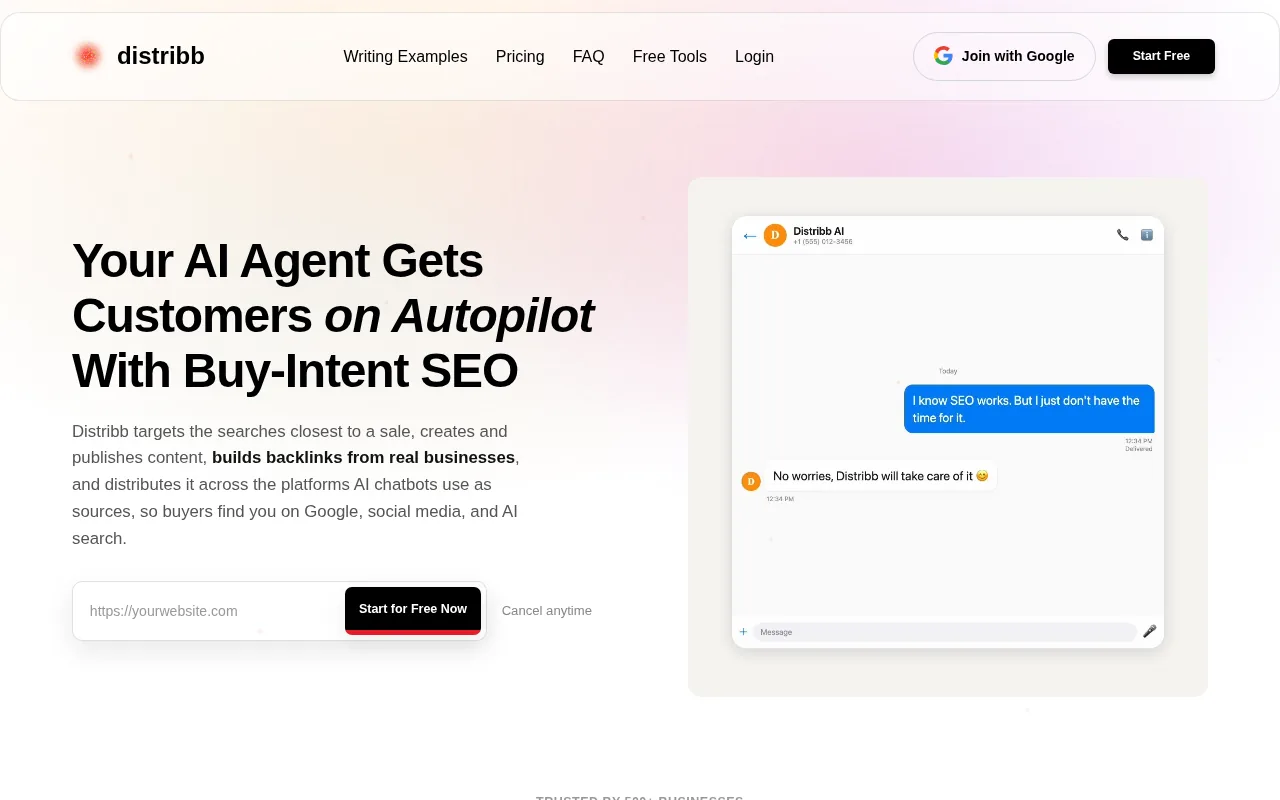
The workflow can connect research to publishing. A team might map patient questions about a specialty, prepare content around those questions, then publish it and build supporting links. Distribb.io also supports multi-domain solutions, which can help an agency or health group manage separate sites within its work.
For healthcare sites, automation needs a clear review boundary. Use AI to support research and drafting, then have a qualified reviewer check claims before publication. A tool can help move content through the process, but it shouldn’t make clinical judgments for the practice.
Distribb.io is the broadest fit on this shortlist when the bottleneck is the amount of recurring SEO work. Teams focused mainly on AI citation reports may prefer a monitoring tool instead. Healthcare teams can explore Distribb.io’s healthcare SEO page for the practice-focused service.
2. AthenaHQ: AI-search visibility and citation tracking
AthenaHQ tracks how AI systems cite healthcare brands and represent providers, treatments, and medical expertise. It suits hospitals, clinic groups, and healthcare teams that need to see which providers appear in answers to patient-style searches.
Its healthcare use case centers on monitoring public-facing content and AI outputs. A team can check whether an AI answer names its providers, compare recommendations across facilities or specialties, and flag outdated or misleading descriptions for review. AthenaHQ states that its brand monitoring does not process or store protected health information.
For a multi-location system, separate views by facility, provider group, or specialty can help keep the review focused. A cardiology team and an orthopedic team may need to watch different patient questions. Weekly prompt checks can help teams spot changes without treating every shift in an AI answer as a lasting trend.
AthenaHQ is a stronger match for visibility monitoring than for a team seeking a single workflow to research, write, and publish site content. It can show where an answer needs attention; the healthcare team still needs a process to verify facts and update the source page.
3. Peec AI: LLM visibility monitoring
Peec AI monitors brand visibility, position, and sentiment across AI search platforms. It works for healthcare marketing teams that want to track whether their organization appears in AI answers and how those answers describe it.
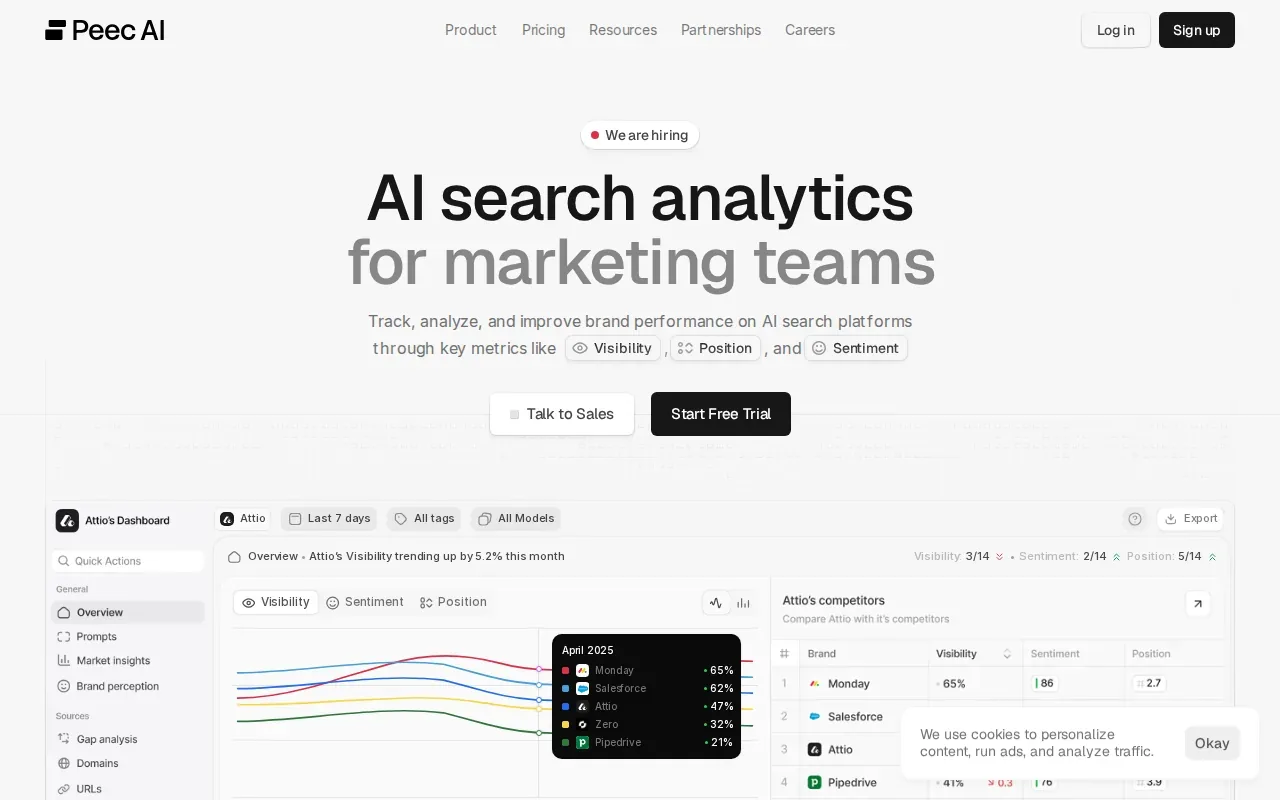
Teams can add prompts that reflect patient or buyer questions, then group them with tags and track them across countries. For a clinic, prompts might cover a specialty, a local service, or a provider recommendation. The goal is to build a steady view of which questions mention the brand and which sources appear in the answers.
Peec AI also describes recommendations based on visibility opportunities. Those findings can inform content planning. For example, if a prompt repeatedly surfaces outside sources, a team can review whether its own service page answers the question clearly and whether its public information is current.
As with any visibility tracker, a report is a signal, not proof that a patient saw or acted on an answer. Pair prompt tracking with site measures such as organic visits and appointment actions. Peec AI is a good fit when measurement is the main gap, while content production and medical review remain in other workflows.
4. Clearscope: Clinical content optimization
Clearscope is an on-page content optimization tool with term recommendations that can suit clinical vocabulary. It’s useful for teams writing surgeon-facing material, where a draft needs to cover the right terms without sounding like a list of keywords.
A content editor can use term suggestions while shaping a page about a procedure or specialty. The recommendations can help identify related concepts to consider, but a medical reviewer should decide which terms fit the page and whether the explanations are accurate. A suggested term isn’t evidence that a claim belongs in the copy.
That division of work matters for patient-facing pages, too. A page should answer the question in plain language, explain relevant care options accurately, and make the source of medical expertise clear. A tool can guide coverage; it can’t replace clinical review or approval rules.
Clearscope is best considered for the content optimization part of the job. Teams that need prompt-level AI citation tracking or publishing automation will need other capabilities alongside it. For spoken searches, writers can also shape headings around the questions patients actually ask, then check that each answer is easy to follow aloud.
5. Onely: Healthcare-focused AI search strategy
Onely is an AI Search Optimization and Generative Engine Optimization partner. Its healthcare approach focuses on content and entity architecture that helps AI systems interpret and extract clinical information. It’s aimed at organizations with complex sites or technical needs, rather than a simple content scoring task.
The work described for healthcare includes an engineering-led approach, conversation-intelligence technology, and compliance integration within development workflows. Entity architecture can help clarify relationships among specialties, providers, conditions, treatments, and locations. That structure matters when a health system has many service lines and its facts sit across different parts of the site.
Onely also describes work on content creation, AI visibility research, and monitoring citation frequency across AI platforms. For a large organization, the value is in connecting what patients ask with the way the site presents clinical expertise. A discovery question for a potential partner is how its recommendations fit the organization’s existing medical and compliance reviews.
This is a partner-led option, not a standalone tracking tool. It may suit a team facing technical architecture or entity issues across a large site. A smaller practice with one straightforward website may have a simpler need, such as maintaining accurate service pages and local listings.
6. PatientGain: AI-driven healthcare website and search tools
PatientGain combines AI-driven healthcare website design with a proprietary reverse search algorithm and AI-assisted content creation. It’s an option for practices looking at website and patient-acquisition needs together.
Its reverse-search approach is intended to analyze patient search patterns. A practice can use that kind of insight to think about the questions that lead people toward a service, then check whether its pages explain the service in terms patients can understand. PatientGain also describes content creation that is verified by medical experts.
That review point is relevant in healthcare. AI-assisted copy still needs a clear owner who can confirm that claims are correct, current, and suitable for the intended audience. Teams should also keep sensitive patient details out of general content prompts and follow their own privacy and review rules.
PatientGain is a closer fit when a practice wants a healthcare website and related search tools in one offering. Teams whose site is already in place and whose main question is how AI systems cite them may find a visibility tracker more directly aligned with that task.
Compare the healthcare AI search optimization options
These options solve different parts of the work. Before choosing, map the actual bottleneck: ongoing SEO production, AI answer monitoring, clinical content structure, or a site and strategy partner. Then check whether the tool fits the team’s approval process.
| Option | Best fit | Main work it supports | Healthcare review point |
|---|---|---|---|
| Distribb.io | Teams with recurring SEO work | Keyword research through publishing and backlink building | Keep clinical claim review with qualified reviewers |
| AthenaHQ | Health systems tracking AI answers | Healthcare brand and provider citation monitoring | Review inaccurate or outdated public descriptions |
| Peec AI | Teams measuring AI visibility | Prompt tracking, visibility, position, and sentiment | Connect shifts in reports to real site or business measures |
| Clearscope | Clinical content teams | On-page term recommendations for content | Have a clinical reviewer assess suggested language |
| Onely | Organizations with complex site structures | AI search strategy and clinical entity architecture | Fit recommendations into existing compliance workflows |
| PatientGain | Practices reviewing website and search needs together | AI-driven website work and patient search analysis | Confirm medical expert review for content |
Whatever the tool, keep the site foundations in view. Use clear page paths for each real location and service. Make sure key pages work well on mobile. Structured data can help describe page content, but it should match visible facts on the page.
Trust also comes from the content itself. Name the relevant clinician or qualified author where appropriate, support medical claims with reliable references, and keep review dates accurate. For local discovery, check that each location’s address, hours, services, and booking details match across public listings and the site. Reviews can inform reputation work, but patient privacy should guide how a practice responds.
Frequently asked questions
What is AI search optimization for healthcare?
AI search optimization for healthcare is the work of making a medical organization’s accurate public information easier for AI search systems to find, interpret, and cite. It builds on sound SEO, clear site structure, and trustworthy content. It doesn’t replace medical review, and no tool can guarantee that an AI system will cite a particular page.
Which tool is best for tracking healthcare AI citations?
AthenaHQ and Peec AI are the clearest fits in this shortlist for monitoring AI visibility and citations. AthenaHQ describes healthcare-focused monitoring of providers and facilities. Peec AI tracks visibility, position, and sentiment across AI search platforms. Choose based on the prompt coverage and reporting your team needs to review regularly.
Can AI tools write healthcare content without a doctor reviewing it?
AI tools can assist with research or drafting, but a qualified reviewer should check medical claims before publication. The reviewer needs to confirm that the content is accurate and appropriate for its audience. Keep patient information out of general AI prompts, and follow your organization’s privacy and approval rules.
What should a healthcare site fix before focusing on AI search?
Start with the basics: make important pages accessible on mobile, organize services and locations clearly, and keep public business details current. Add structured data only when it accurately reflects page content. Then review whether each page answers a real patient question and shows who is responsible for the medical information.
Conclusion
For healthcare teams that need SEO work to move through research, content, and publishing, start with Distribb.io; use a specialist tracker or partner when visibility measurement or complex site structure is the main gap. Review one key service page with your clinical approver, then see whether Distribb.io’s healthcare service fits the work you need to run.