
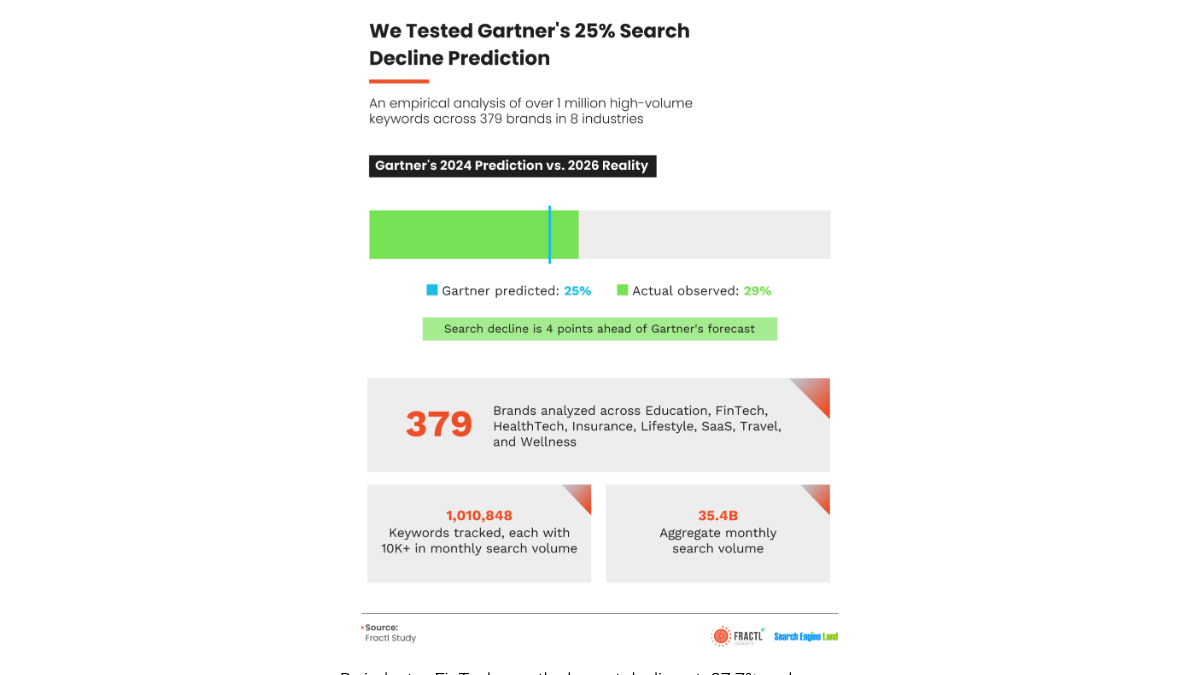
High-volume search demand fell 29% over the past year, according to a Fractl study of 1,010,848 keywords published on Search Engine Land by Fractl co-founder Kelsey Libert. That drop lands four points beyond the 25% decline Gartner had projected for 2026, and it is the clearest evidence yet that AI answers are absorbing queries people used to type into Google.
The study pulled Semrush volume data on keywords with at least 10,000 monthly searches each, spanning 379 brands across eight verticals and roughly 35.4 billion monthly searches in total. PPC Land picked up the findings on July 12.
FinTech is bleeding the most, Lifestyle the least
The decline is not evenly spread. Fractl's per-vertical numbers:
- FinTech: -37.7%
- HealthTech: -35.2%
- Wellness: -31.5%
- Travel: -27.1%
- Education: -26.0%
- Insurance: -20.2%
- SaaS: -19.3%
- Lifestyle: -15.2%
The pattern is consistent: wherever a chatbot can deliver a complete answer on its own, like a fund overview or an explanation of deductibles, search volume falls hardest.
Search is redistributing, not dying
The headline number hides the more useful finding. While 29% of high-volume demand declined, 20.1% of keywords grew significantly over the same period. The growing keywords now generate about 10.31 billion monthly searches against 10.29 billion for the declining ones, which means total demand is close to flat. Fractl frames it plainly: search is not dying, it is redistributing.
One more stat worth sitting with: 18% of consumers have bought something based on an AI recommendation without checking it against a separate search. The AI answer is increasingly the whole journey, not a step in it.
What this means for your traffic
If your content targets informational queries in a hard-hit vertical, the decline is structural, not seasonal. The demand did not vanish, it moved into AI answers, and the brands that win now are the ones those answers cite. That starts with knowing how to get AI engines to recommend your business, and with publishing the kind of original, citable data that chatbots quote instead of summarize.
The practical move is to rebalance: keep ranking for the commercial queries that still convert, and invest in the pages AI engines pull from. Our breakdown of the best AI SEO tools for content distribution covers the tooling side of that shift.