

Restaurant SEO is not the same job as SEO for most businesses, and the difference decides where your money should go. For a restaurant, the search that matters happens on a phone, within a few miles, usually within an hour of eating. Before comparing providers, it helps to know typical market rates, and our SEO pricing guide lays them out by service type.
That means Google Business Profile, reviews, and appearing in the map pack for "near me" queries. Content and links matter, and they matter second. Any provider who leads with a blogging package has the order wrong.
What restaurant SEO costs in 2026
| Situation | Typical monthly spend |
|---|---|
| Single-location independent | $1,000 to $2,500 |
| Common range across US providers | $500 to $3,000 |
| Multi-location or competitive metro | $2,000 to $10,000 |
Local ranking improvements usually show within three to six months. Anyone promising the map pack in weeks is describing something else.
How we checked this list
Every provider and tool below was loaded on its live site in August 2026 and captured there. Two names that appear in other roundups for this term were dropped: one domain no longer resolves at all, and one turned out to be a general SEO agency with no restaurant specialism despite ranking for the term. Pricing figures come from published pricing research rather than quotes we obtained.
Where the money should go, in order
1. Google Business Profile. Hours, menu, photos, attributes, ordering and reservation links, posts. This is free and it is the single largest lever. Most restaurants have it half filled in.
2. Reviews. Volume, recency and responses. Reviews affect map pack position and they affect whether someone picks you over the place next door. No software fixes a 3.2 average.
3. Citations and listings. Name, address and phone consistent across the directories and the delivery platforms. Inconsistencies actively suppress local rankings, and our guide to local SEO optimisation covers the audit process.
4. On-site basics. A menu in readable text rather than a PDF or an image, location pages if you have several venues, and a site that loads on a phone on mobile data.
5. Content. "Best brunch in [neighbourhood]", dietary questions, event and private hire pages. This is where content earns its place, and it comes after the four above. Our guide to automating restaurant SEO covers how to keep that layer running without adding it to the week.
1. Distribb, the content layer and nothing else
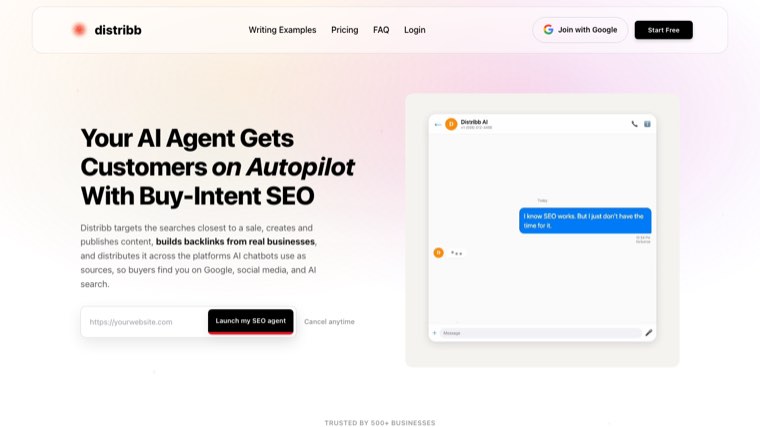
Be clear about what this is. Distribb is software, not an agency, and it covers step five on the list above.
What it does is find the searches diners actually run around your venue and answer them: neighbourhood and cuisine queries, dietary questions, private hire and event pages, seasonal menus. It writes those pages, publishes them to your site, links them together, and runs a backlink exchange that earns links from other real businesses. Through its local SEO product it also publishes Google Business Profile posts and replies publicly to reviews you have already collected.
The arithmetic is why it sits first on this page. A restaurant paying $1,500 a month is spending $18,000 a year, and a share of that retainer is content production. Moving that share to $97 a month is a real saving on one part of the bill, for an owner willing to spend twenty minutes a week reviewing drafts.
Pros:
- Answers the searches diners actually run, down to neighbourhood, cuisine and dietary queries rather than generic restaurant marketing topics
- Publishes and interlinks on its own, so the content layer keeps moving without a weekly meeting about it
- Google Business Profile posts and public review replies included, which is the one local job the software genuinely does
- Backlinks come from other real businesses through the exchange rather than from a directory blast
Cons: It does not generate reviews and it does not clean up citations, and for a single venue with a thin profile those are the two highest-value jobs. It will not rebuild a neglected restaurant website either. If steps one to four above are the broken part, the purchase order is wrong and an agency should go first.
For who: Venues whose Google Business Profile is already in decent shape and whose website says almost nothing. Wrong choice for a single location that has never finished its hours, menu and photos.
Pricing: $97 a month with a 7-day free trial, against $1,000 to $2,500 a month for a local agency. Accelerator, which adds done-for-you off-site distribution, is $495 a month. Two prices, no free plan.
2. Malou, built for multi-location restaurants
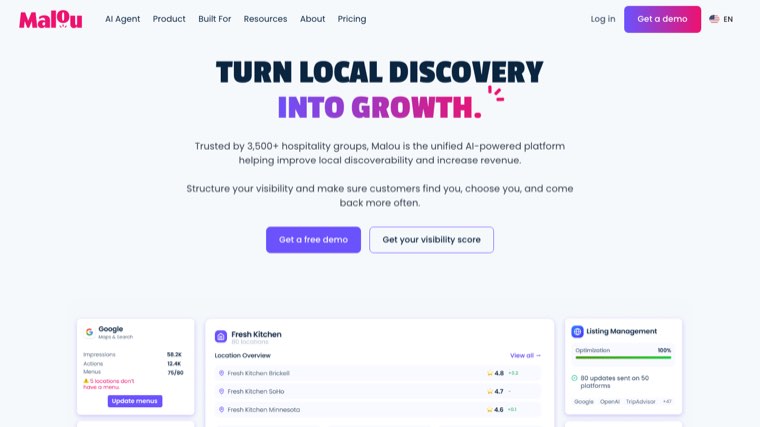
A growth platform aimed specifically at restaurant groups, covering listings, reviews, social and local visibility across many venues from one place.
Restaurant-specific software is rare, and managing forty Google Business Profiles by hand is the problem it exists to solve.
Pros:
- Built for restaurants natively, so menus, delivery links and service hours are first-class fields rather than custom ones
- Fifty-plus platforms updated from one place, including OpenTable and Resy alongside Google
- Network-wide distribution, pushing a post or an information change to every location in a single action
- A managed tier exists, so a group can hand the work over rather than staff it
Cons: The price structure works against the single independent venue, which pays the highest per-location rate on a twelve-month commitment while using the least of what it is paying for. Almost everything that makes Malou good is a multi-location feature.
For who: Groups of three venues and up, and agencies running several restaurant clients. A single site is better served by BrightLocal plus the free Google tools.
Pricing: 169 euros excluding VAT per month for one location on a twelve-month commitment, falling to 99 euros per location for two to fourteen. The managed Copilot tier is 599 euros per location per month. Fifteen locations and above is quoted.
3. Restaurant Velocity, marketing app for restaurants
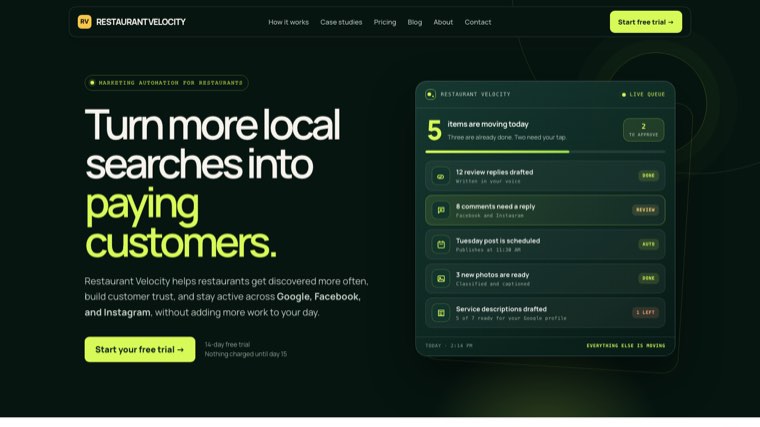
A restaurant-focused marketing product covering the local search and customer acquisition side, with a price published on the homepage rather than hidden behind a quote form.
Transparent pricing is unusual enough in this market to be worth something on its own.
Pros:
- The price is on the homepage, which almost nothing else in this category manages
- One flat rate per location, so the second and third venue cost what the first did
- Restaurant-first, rather than a general local tool with a hospitality page bolted on
- Simple enough for one location, without multi-location machinery in the way
Cons: The published rate is founding-member pricing on an early-access product, so both the feature set and the price are provisional. Early access also means the shortest track record of anything on this page, and you still operate it yourself.
For who: Owners who want a fixed monthly cost they can plan around and are comfortable being early. Wrong choice if you need years of restaurant case studies before you sign anything.
Pricing: $50 per location per month, described on their site as founding member pricing locked in for as long as you stay.
4. Bloom Intelligence, data-led restaurant marketing
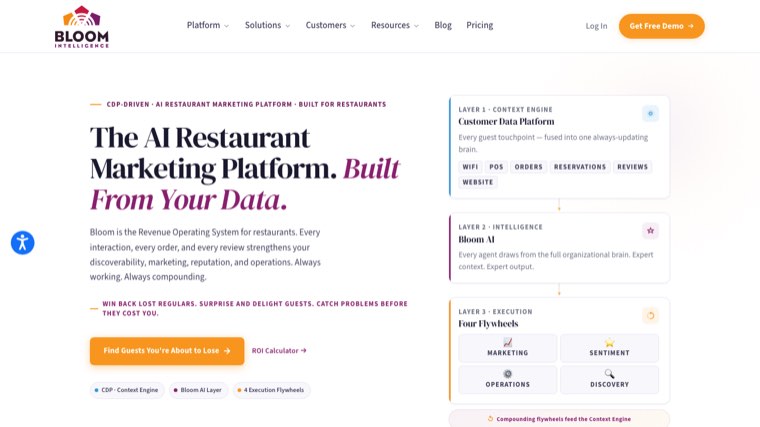
A restaurant marketing platform built around customer data, WiFi analytics and revenue attribution, with local marketing on top.
The attribution angle is the real differentiator: connecting marketing spend to covers rather than to clicks.
Pros:
- Attribution back to covers, not to sessions, which is the number an owner actually argues about
- Guest data from WiFi and point of sale, a genuinely different input from anything else on this page
- Automated review response on the top tier
- Per-location pricing published in full, monthly and annual, for every tier
Cons: Search is a small corner of what you are buying. This is a customer data and marketing automation platform, so if organic visibility is the actual problem you are paying for a lot of machinery that never touches it.
For who: Groups with enough covers for the data to say something, usually several locations. Overkill for one restaurant trying to appear for brunch searches in its own neighbourhood.
Pricing: $105 per location per month for the Customer Data Platform tier, or $95 billed annually at $1,140 a year. Marketer is $165 ($150 annually) and Enterprise+ is $225 ($210 annually). Multi-location deals go as low as $60 per location.
5. BrightLocal, the local SEO toolkit
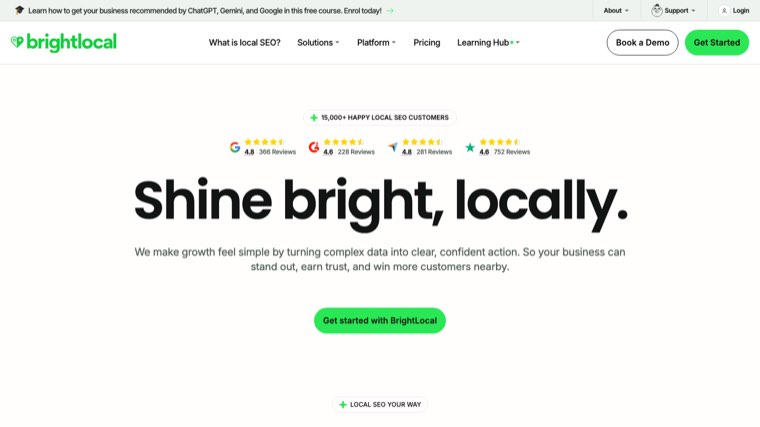
Local rank tracking including map pack positions, citation monitoring, review management and Google Business Profile audits, sold as a self-serve platform.
For an owner willing to do the work, this is the cheapest way to see exactly where you stand locally and what is broken.
Pros:
- Geo-grid rankings on the entry plan, so you can see the radius you genuinely compete in
- Profile audit benchmarked against competitors, which is where most restaurants find their gap
- Citation accuracy monitoring, with a pay-as-you-go builder if you want the fixes carried out
- Fourteen-day trial with no card, unusual at this price point
Cons: It reports and it does not act. It will show you that nine directories disagree about your phone number and then leave all nine corrections to you or to a separately billed service.
For who: An owner or manager with an hour a week to act on what it shows. Wrong choice if nobody in the building has that hour.
Pricing: Track is $31 a month billed annually ($369 a year), Manage $40 ($485) and Grow $49 ($584). The managed service is $1,299 a month and citations are billed separately from $2 each.
6. Local Falcon, map pack visibility by location
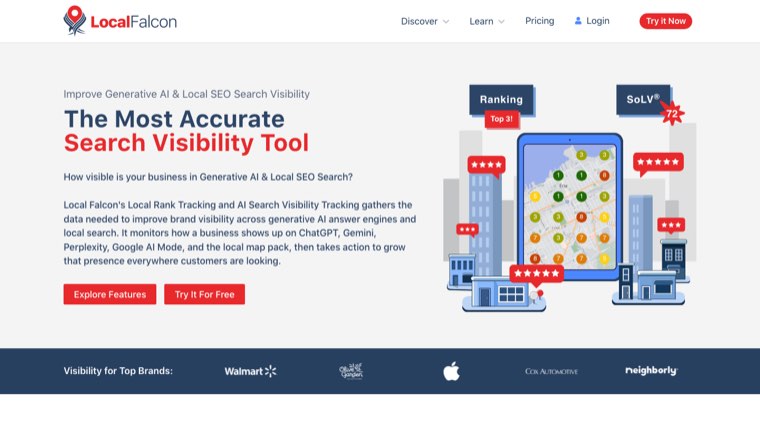
Shows your map pack ranking across a geographic grid rather than as a single number, so you can see how far your visibility actually extends from the door.
For a restaurant this is the most useful single report in local SEO, because it shows the radius you genuinely compete in.
Pros:
- Rankings drawn as a map, which turns an abstract position into a picture of your catchment
- Credits rather than seats, so one venue can run it for the price of a couple of covers
- Scan history over time, making a change in the map pack visible rather than anecdotal
- Pay-as-you-go credits that never expire, for occasional checks between campaigns
Cons: It measures one thing and changes nothing. A grid full of red tells you that you vanish three streets away without telling you which of the twenty possible causes to fix first.
For who: Anyone already doing local SEO who needs to know whether it is working. Not a first purchase for a restaurant that has not finished its profile yet.
Pricing: Starter $24.99 a month, Basic $49.99, Pro $99.99 and Premium $199.99, each with a cheaper annual option. Extra pay-as-you-go credits are $0.05 each.
7. Birdeye, reviews at scale
A multi-location marketing platform with review generation, monitoring and response at its core, plus listings management alongside.
Reviews are the second most important lever for a restaurant, so a platform aimed squarely at them earns its place here.
Pros:
- Review requests by email, SMS and in person, which is how review volume actually gets built
- Every review platform in one inbox, so replies stop depending on someone remembering to check
- Listings management in the same contract, covering two jobs with one vendor
- Reporting that rolls up across a group, built for many locations from the start
Cons: There is no published price anywhere on the site. You enter a location count and wait for a call, which makes it impossible to compare against anything else on this page without first entering a sales process.
For who: Groups where review volume is the binding constraint and someone owns the vendor relationship. Wrong choice for an owner who wants to buy something this afternoon.
Pricing: Not published. Birdeye quotes per location through its sales team, on an annual contract.
8. Yext, listings across the whole ecosystem
Pushes consistent business information across a large network of directories, maps and apps from one source of truth.
For a group with locations opening, closing and changing hours, the alternative is updating dozens of listings by hand.
Pros:
- One source of truth fanned out to a large network of directories, maps and apps
- Changes propagate quickly, which matters when hours or a menu change across many venues at once
- Coverage past the obvious directories, including surfaces you would never maintain by hand
- Controls for franchise structures, where local operators edit their own details
Cons: You are renting consistency rather than owning your listings, and if you stop paying the network can drift back. With one or two locations, most of what it syncs can be done by hand for nothing.
For who: Multi-location brands and franchise groups where nobody can be trusted to update forty listings manually. Not a purchase a single restaurant should be weighing up.
Pricing: Not published. Yext has no public pricing page and sells by quote, priced on location count and modules.
9. SEO.com, a general agency with local depth
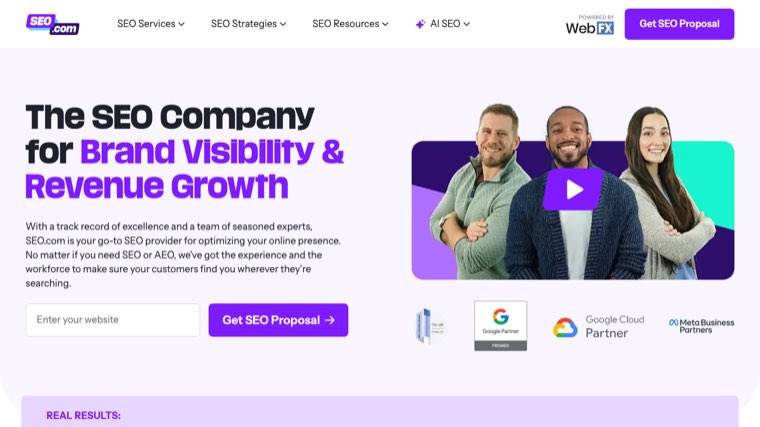
A large general SEO agency with a substantial local practice and published guidance on what local work costs.
Scale means process, reporting and people who have done map pack work in your market before.
Pros:
- Real scale behind the work, with process and reporting rather than one freelancer with a spreadsheet
- Map pack experience in competitive metros, which is where a single venue usually stalls
- Published cost guidance, so you can sanity check a quote before the call
- Covers the jobs software cannot, citation cleanup, technical fixes and profile work
Cons: Not a restaurant specialist, so the first month goes on explaining covers, delivery platforms and seasonality. Everything is quoted, and the entry point is several times the cost of doing the same work with tools.
For who: A group with a real budget and nobody in-house to run marketing. Wrong choice for an independent venue where $2,000 a month is the entire marketing line.
Pricing: Quote only. Their own published guidance puts professional SEO at $1,500 to $5,000 a month, $100 to $300 an hour, or $5,000 to $30,000 for a project.
10. Thrive Internet Marketing Agency
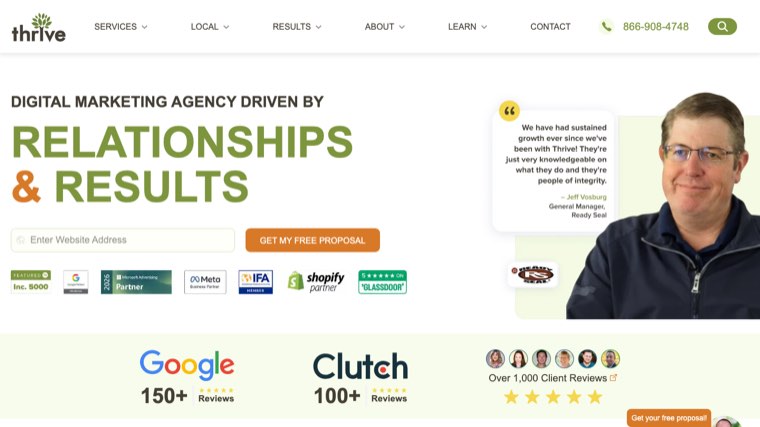
A full-service digital agency with a local SEO practice covering restaurants among many other local business types.
Breadth is useful if you also want paid social and web work handled in one relationship.
Pros:
- One account for everything, paid social, web design and search under a single manager
- Local SEO priced separately from national SEO, which suits a single venue
- A published local pricing band, unusual for a full-service agency
- Experience across franchise and multi-location local businesses
Cons: A restaurant is one of dozens of verticals here, so the playbook arrives generic and gets tailored on your time. Breadth also means search competes for attention with whatever else you bought.
For who: Owners who would rather manage one agency than three vendors. Not the pick if search is the only thing you need and you want a specialist doing it.
Pricing: Quote only. Their own page puts local SEO at $500 to $1,500 a month, with broader SEO programmes running from $500 to $10,000 and above.
11. WebFX, reporting-heavy full service
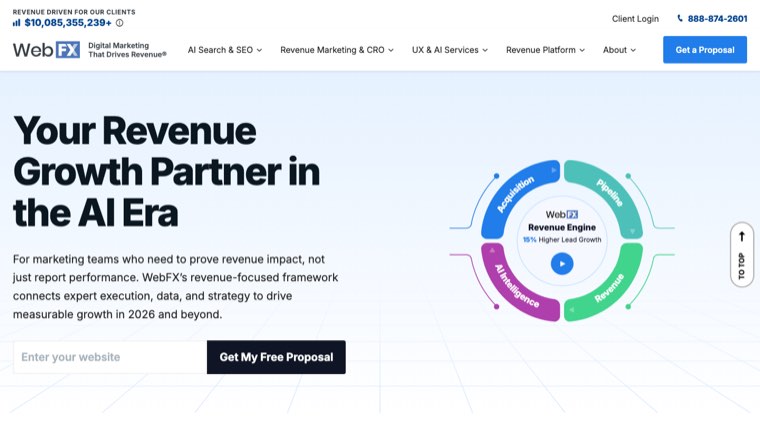
A large full-service agency built around measurement, with a proprietary platform tying activity back to revenue.
If you want to see exactly what a month of spend produced, this is the more accountable end of the agency market.
Pros:
- Attribution reporting connecting the work to revenue rather than to rankings
- A very large team, so capacity is rarely the reason something stalls
- Cost ranges published openly before you speak to anyone
- Technical and content work handled together, not advice handed to someone else to implement
Cons: The reporting apparatus is part of what you pay for, and a fifteen-table restaurant does not need a revenue attribution dashboard. Retainers start well above what the content layer alone costs.
For who: Multi-location groups that have to justify marketing spend upward to owners or investors. Wrong choice for an independent venue.
Pricing: Quote only. WebFX's own published guidance puts SEO retainers at $1,000 to $5,000 a month, consulting at $75 to $200 an hour, and one-off projects from $500.
12. Social Hospitality, digital marketing for hospitality

Digital marketing aimed at small businesses with a hospitality focus, covering social and search together.
Restaurants live on social as much as on search, and a provider treating both as one job matches how diners actually find you.
Pros:
- Social and search treated as one job, which is closer to how a restaurant is actually discovered
- Hospitality focus, so the vocabulary and the seasonality are already understood
- Small enough to reach a decision maker, rather than an account coordinator
- Suited to independents, not built around enterprise reporting
Cons: A small operation, so capacity and scope are narrower than the large agencies and one busy month on their side is felt on yours. Nothing about what they charge is published, so the comparison starts with an enquiry.
For who: Independent venues that want a hospitality-literate partner and value access over scale. Wrong choice for a group needing guaranteed throughput across many locations.
Pricing: Not published. There is no pricing page on the site, so pricing comes by enquiry.
13. Gourmet Marketing, hospitality specialists
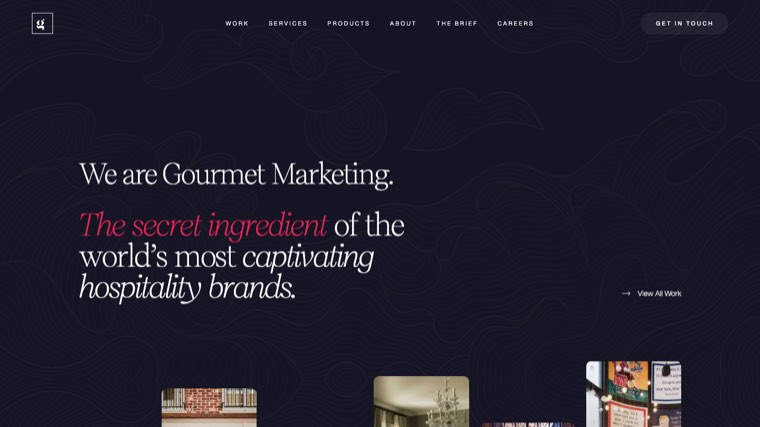
Now positioned around hotel and wider hospitality digital marketing, with the vertical familiarity that implies.
Worth a conversation if your venue sits inside a hotel or a larger hospitality group.
Pros:
- Deep hospitality vertical knowledge, including booking engines and direct revenue rather than covers alone
- Strong fit for hotel restaurants, where the venue and the property share a marketing job
- Long operating history in the sector, with published client outcomes
- Handles paid alongside organic, which suits venues with a seasonal push
Cons: The focus has shifted toward hotels, so a standalone restaurant is no longer the core client and you should confirm current restaurant work before engaging. Their published numbers are revenue generated for clients, not a rate card.
For who: Restaurants attached to a hotel or a hospitality group with real budget. Wrong choice for a single independent site looking for a content partner.
Pricing: Not published. There is no pricing page on the site, so engagements are quoted.
Questions to ask any restaurant SEO provider
Ask what they will do to the Google Business Profile in month one. If the answer is vague, they are selling blogging.
Ask how they handle reviews. Generation, monitoring and response. Restaurants live or die on this and many SEO agencies do not touch it.
Ask about delivery platform listings. Your information on the delivery apps affects both orders and search consistency, and generalists forget it exists.
Ask to see map pack results for a venue like yours. Not traffic graphs. Map pack positions in a comparable market.
Ask what happens to the website if you leave. Some agencies keep it.
FAQ
How much should a single restaurant spend on SEO? Between $1,000 and $2,500 a month with a small agency. Below that you are usually buying a listings tool and some reporting rather than a service, which can still be the right choice. The same breakdown for other local trades, including SEO for dentists and SEO services for accountants, shows how much these quotes move by sector.
Is SEO worth it for a restaurant? Yes, but weighted heavily toward local. More than nine in ten diners research a restaurant online first, and "restaurants near me" is among the highest-volume local queries there is.
How long until it works? Three to six months for local ranking movement. Google Business Profile improvements can show within weeks, which is why they come first.
Can I do restaurant SEO myself? The highest-value parts, yes. Completing your Google Business Profile, asking every happy diner for a review and fixing your menu so it is readable text will outperform most retainers, and all three are free.
Do I need a restaurant-specific agency? Not necessarily, but you need one that leads with local. A generalist who starts with keyword research and blogging is solving a different business's problem.
What content actually works for a restaurant? Neighbourhood and cuisine pages, dietary questions, private hire and events, and seasonal menus. General food blogging does nothing, which is the same mistake made in every vertical, as our breakdown of SEO services for photographers describes.
Should I pay for citation cleanup? Once, yes, if your details are inconsistent across directories. It is a one-off project rather than an ongoing retainer, and be sceptical of anyone billing it monthly forever.
Where to start
Spend a week on the free things. Complete the Google Business Profile properly, get the menu into readable text, and set up a routine for asking diners for reviews. That will move more covers than the first three months of most retainers.
Once that is done and you want the content layer running without adding it to your week, Distribb writes and publishes the neighbourhood, dietary and event pages diners actually search for, and earns links from other real businesses. It is the content half only, on a subscription rather than a retainer, and it works alongside whoever handles your local listings. Seven-day free trial.