Best SEO Marketing Automation Tools


SEO marketing automation tools can save time, but many focus on one part of the work. This shortlist compares six options by the tasks they automate, the teams they suit, and where their workflows differ.
1. Distribb.io
Distribb.io is an AI-powered SEO platform that automates keyword research, content creation, publishing, backlink building, and AI-search visibility. It’s built for digital-marketing agencies, SaaS founders, e-commerce brands, and SEO teams that want more of those tasks connected in one workflow.
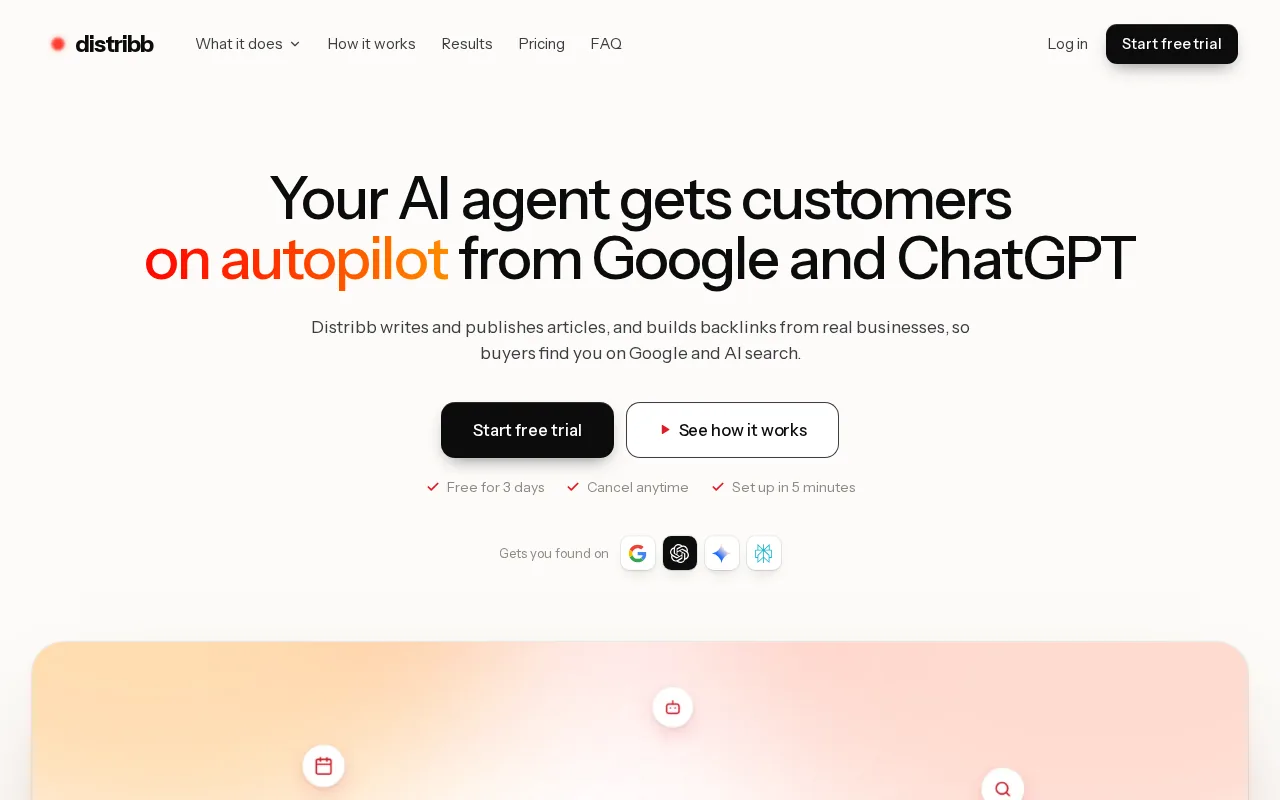
That breadth matters when a team finds a topic but struggles to turn it into a published page. With Distribb.io, the workflow can move from keyword research into content production and publishing, then cover backlinks and AI visibility. For an agency, that can mean fewer handoffs between separate tools. A founder can use the same process to keep a site’s SEO work moving while focusing on the product.
Distribb.io’s site lists Pro at $97 per month or $948 per year, and Accelerator at $495 per month or $4,788 per year. Check Distribb pricing to see the current offer and plan details before choosing.
It’s a fit when execution is the bottleneck, not just finding data. If a team mainly needs deep competitor research or large-scale technical reporting, the other tools below may suit that part of the work better.
2. Semrush: Broad SEO research and auditing for established teams
Semrush is an SEO research and auditing platform for traditional SEO teams, agencies, and established marketing groups. Its core strengths are keyword research, site audits, competitor monitoring, and backlink analysis.
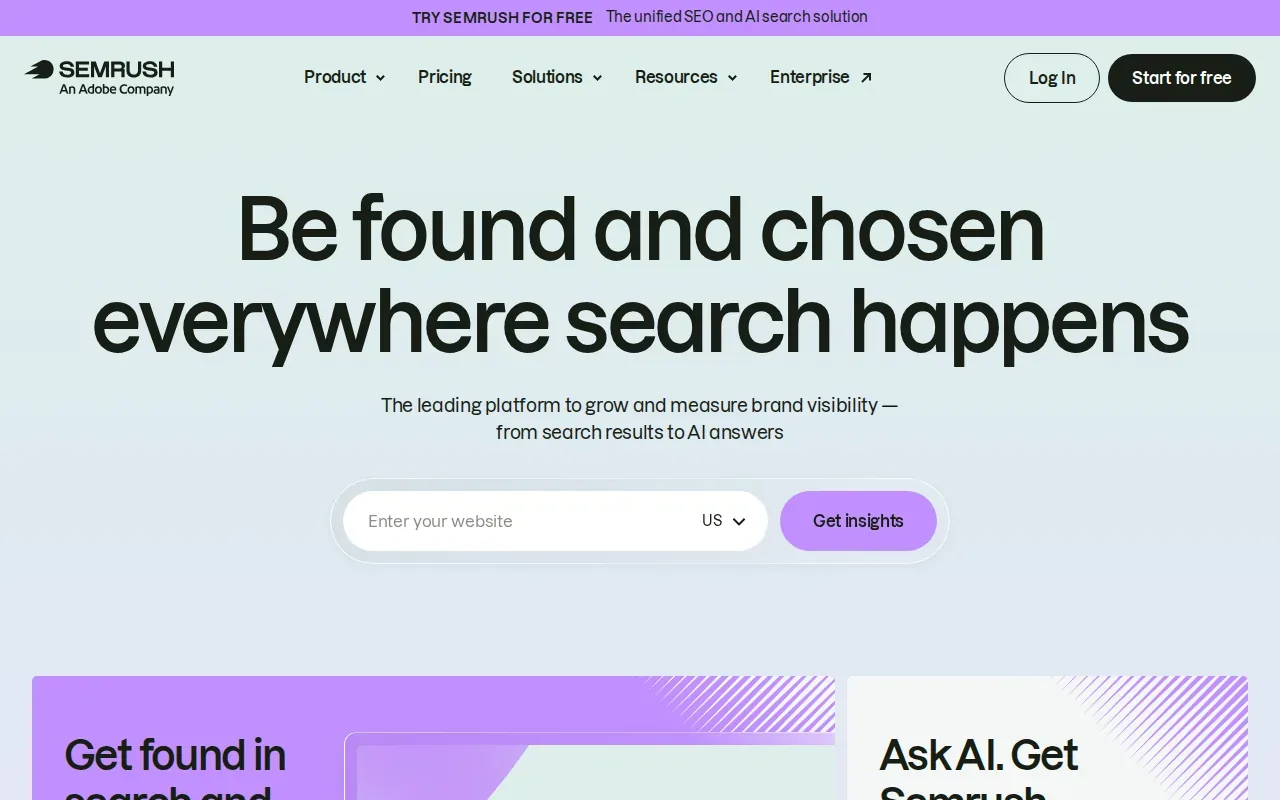
For a team planning a content calendar, Semrush can help surface search terms, intent signals, competitor gaps, and technical issues. Its site audit can flag problems for the SEO team to review, while competitor data can help explain which topics rival sites cover. That makes it useful when the main job is deciding what deserves attention and measuring what changes.
Semrush also supports scheduled, branded reporting, which can help agencies share progress without rebuilding each report by hand. Its MCP connection brings Semrush data into AI assistants, so teams can ask questions about keyword or competitor data in that setting. AI visibility tools are part of its current platform lineup, too.
Semrush suits teams that want broad research and reporting in one place. Its range can take setup and ongoing management, so teams should map the workflows they need before adding modules. For a wider look at how these choices fit together, see this SEO automation tools comparison.
Pick Semrush when research depth and recurring analysis are central to the job. It’s less focused on handing off a complete content workflow from discovery through publication.
3. RankSpot: Automated research-to-publishing workflow with GEO
RankSpot is an automated AI workflow that takes SEO content from research through publishing, with GEO optimization and competitor targeting. It’s aimed at businesses that want an ongoing blog workflow rather than a research dashboard alone.
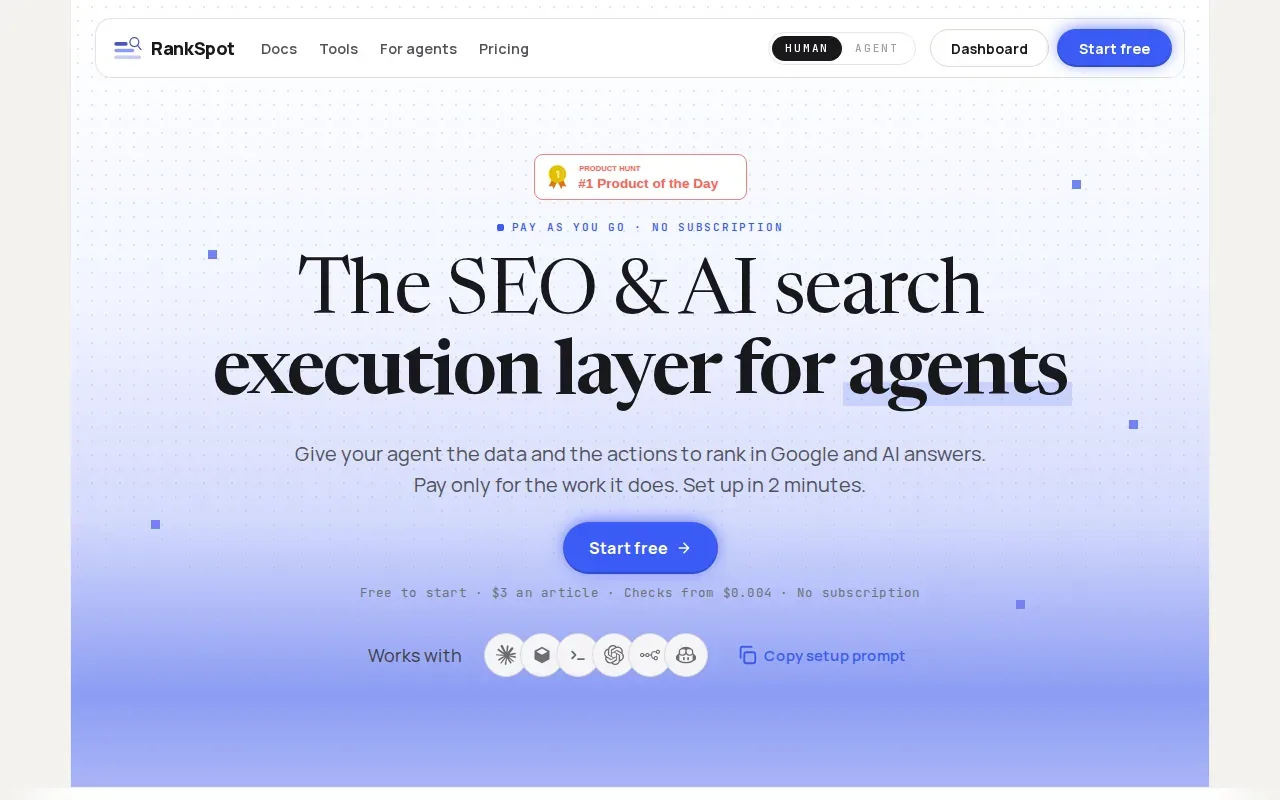
The process starts with keyword discovery and competitor keyword analysis. RankSpot can prioritize topics, help plan content, write articles, generate visuals, format pages, add internal links, and publish through connected CMS platforms. Its integrations include WordPress, Webflow, Wix, Shopify, Framer, and Ghost.
This setup can help a small team that knows it should publish more but lacks time for each production handoff. A marketer can review the topic plan, then work with the article and CMS steps in one connected workflow. GEO and AI answer engine optimization are part of its positioning, so teams can consider AI search visibility alongside regular search content.
RankSpot’s emphasis is the content pipeline. A team choosing it should check that its own review process fits the publishing setup and that its content plan reflects business priorities. Automation can move drafts along, but people still need to confirm that each topic is accurate and useful.
Choose RankSpot when the gap is getting from topic selection to a live article. Its defined CMS connections are useful for teams already publishing on one of those systems.
4. Sorank: Editorial production automation from keywords to publication
Sorank is SEO and GEO software that automates parts of editorial production, from keyword research to publication. It suits marketing teams and site owners who want a more regular content process without handling every production task by hand.
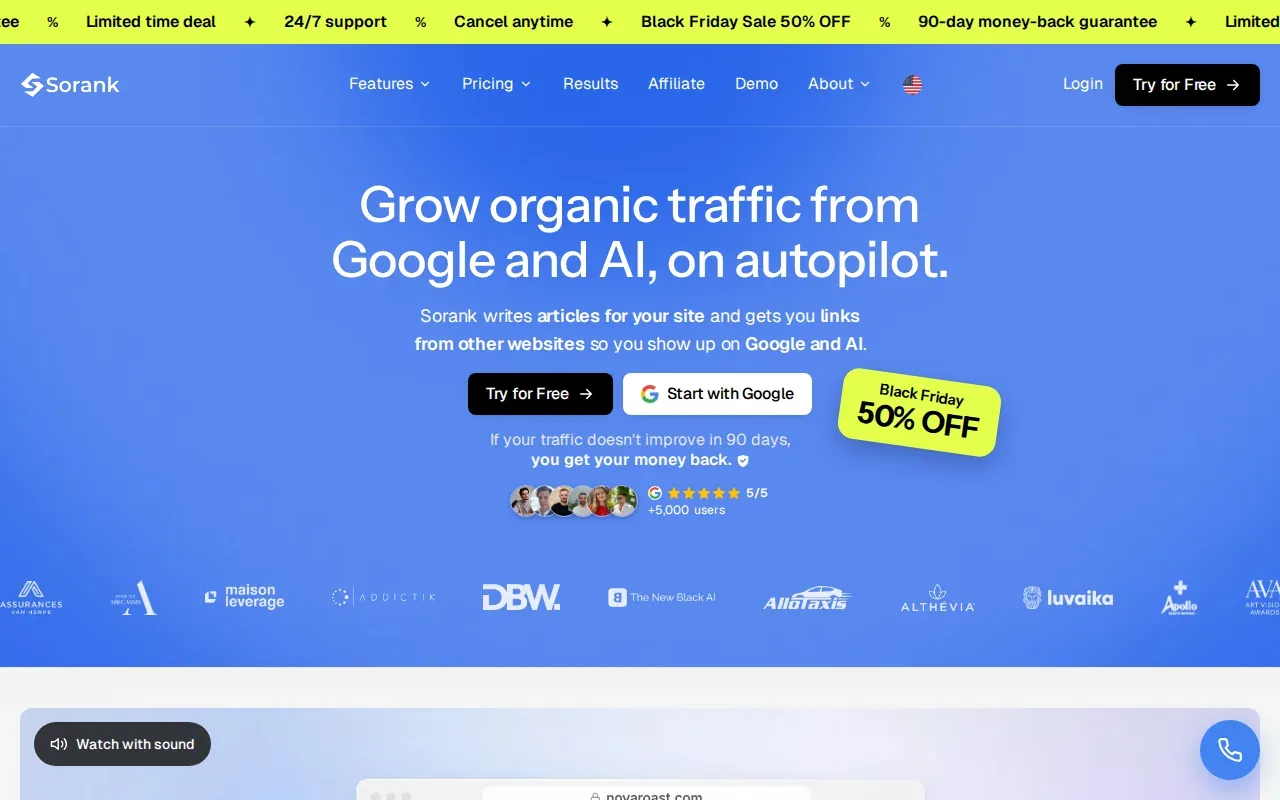
Sorank can research keywords, generate articles and images, add metadata, build internal links, and publish through a CMS. Its workflow can also compare candidate topics with existing pages before they enter a content calendar. That check can help a team avoid assigning two pages to the same search intent.
Publishing options include WordPress, Shopify, Webflow, Wix, and a webhook. Teams can also save work as drafts for review. That gives editors a chance to check facts and fit before a page goes live, which is useful when the subject needs a clear brand voice or careful subject-matter review.
Sorank includes GEO tracking, with prompts checked across AI services and brand mentions counted by model. Its focus is production and visibility tracking. Teams with deep technical SEO needs may still need a separate process for that work.
Consider Sorank when editorial output is the main bottleneck and draft review is part of the publishing routine. The option to save drafts makes it easier to keep an editor in the loop.
5. seoClarity: Enterprise SEO operations at large data scale
seoClarity is an enterprise SEO platform for organizations with large sites, extensive data, and teams working across departments. It focuses on reporting, enterprise crawling, site governance, and workflows that help teams coordinate SEO operations.
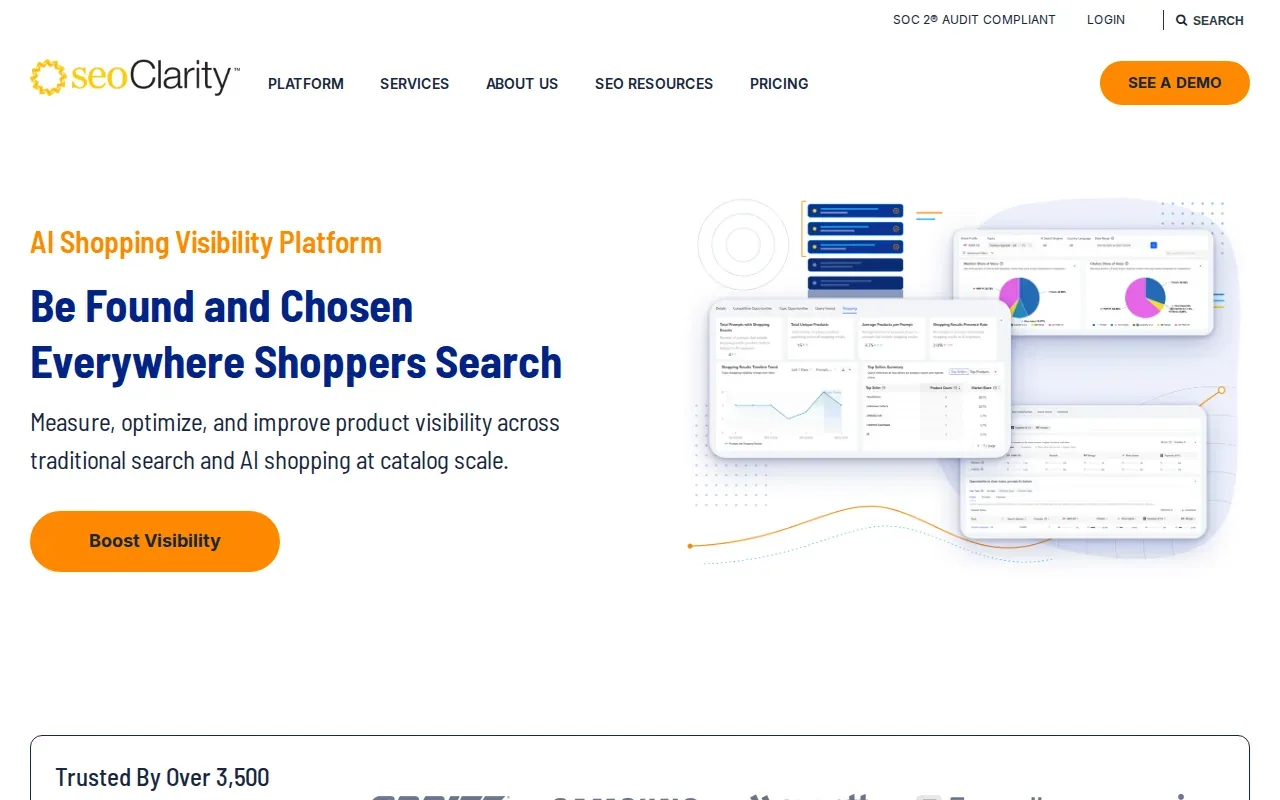
For a large organization, SEO tasks can span many site sections and teams. seoClarity brings data and work into shared processes, with reporting and dashboards that can support planning across those groups. Its platform supports enterprise crawling and large-site governance, which can matter when teams need to review many pages and keep standards consistent.
The platform’s scale is its main draw, but it can be expensive and complex. It may be more than a small business or lean marketing team needs. Teams should weigh the number of sites, pages, stakeholders, and reporting needs against the work involved in adopting an enterprise system.
seoClarity makes the most sense when the organization needs advanced workflows across a large SEO program. For a smaller team looking to publish and manage content, a lighter production-focused tool may be easier to put to work.
Choose it for enterprise operations and extensive data needs, not simply because the platform has a wide feature set.
6. Arvow: AI agents for SEO research, fixes, content, and backlinks
Arvow is an SEO platform built around AI agents for research, technical fixes, content, publishing, backlinks, and AI visibility. It may suit agencies and marketing teams that want several recurring SEO tasks handled through one platform.
Its capabilities include scanning pages and applying fixes to titles, descriptions, and image alt text. Arvow also supports keyword research, content writing and publishing, backlink matching, local SEO tasks, and tracking AI visibility. Google review replies are another listed feature. Teams can connect it with Zapier, webhooks, an API, Google Search Console, WordPress, and AI assistants.
Arvow’s backlink exchange is based on niche matching and contextual placements. Its availability depends on the plan: backlinks, brand-visibility tracking, and API access sit on upper plans. Arvow also uses monthly credits and limits the number of websites by plan, so compare the tier you’d actually need rather than judging by the entry level.
Arvow covers a broad task mix. Before adopting it, map which features are included at the plan level your team needs and how its credit limits fit your sites. That’s especially important if backlinks or API access are part of the goal.
SEO Marketing Automation Tools Compared
These options differ most in where they save work. Use this table to match the main bottleneck to the tool’s center of gravity, rather than treating every platform as a full replacement for every other one.
| Tool | Best fit | Automation focus | Decision check |
|---|---|---|---|
| Distribb.io | Agencies and businesses seeking connected SEO execution | Research, content, publishing, backlinks, AI visibility | Useful when several steps need to run as one workflow |
| Semrush | Established SEO teams | Research, audits, competitor and backlink analysis | Assess the reporting and research depth your team needs |
| RankSpot | Teams focused on blog production | Research through CMS publishing with GEO | Check fit with the content review process |
| Sorank | Editorial teams seeking production automation | Keyword research, articles, internal links, publication | Draft review can keep editors involved |
| seoClarity | Large organizations | Enterprise crawling, reporting, governance | Match its complexity to site and team scale |
| Arvow | Teams automating a range of recurring SEO tasks | Technical fixes, content, backlinks, AI visibility | Review the plan’s credits and site limits |
For teams comparing broader workflows, the SEO automation software guide can help clarify which tasks to automate first.
Frequently Asked Questions
What is SEO marketing automation?
SEO marketing automation uses software to handle repeatable search optimization tasks. Depending on the tool, that can include keyword research, audits, content production, publishing, backlink work, or visibility tracking. Some tools focus on one task, while others connect several stages. The best fit depends on where work gets stuck in your current process.
Which SEO automation tool is best for content publishing?
RankSpot and Sorank both focus on moving content toward publication, while Distribb.io connects publishing with research, content creation, backlink building, and AI visibility. Compare their CMS connections and review steps with your team’s workflow. If an editor must approve every page, make sure the publishing process supports that control.
Can SEO marketing automation improve AI search visibility?
Some platforms include features for tracking or supporting visibility in AI-generated answers. Distribb.io, RankSpot, Sorank, and Arvow include AI-search or GEO capabilities. These features can help teams plan and monitor work, but publishing content alone doesn’t guarantee that an AI system will cite it.
Do SEO automation tools replace SEO teams?
No. Automation can reduce repeat work, but teams still need to set priorities and review important decisions. People should check whether a topic fits the business, whether content is accurate, and whether technical changes are safe. The software handles defined tasks; the team remains responsible for strategy and quality.
How should I compare SEO automation software?
Start with the task that slows your team most, then check how each tool handles that work. Look at the handoff from research to execution, CMS fit, review controls, and plan limits. For enterprise teams, also consider governance and reporting. A platform with more features isn’t automatically a better match for a smaller workflow.
Conclusion
If your team needs one workflow across research, content, publishing, backlinks, and AI visibility, start with Distribb.io. Review Distribb pricing, choose a workflow to test, and start your free trial.