
Fashion SEO is harder than most e-commerce SEO. Your catalog changes every season, your product variants multiply fast, and your competitors include global retailers with dedicated SEO teams. But the brands winning organic traffic right now aren't necessarily the biggest. They're the ones with the tightest keyword strategy, the cleanest technical setup, and a content engine that keeps publishing. This guide covers exactly that , in the order that matters. For a professional services version of the same competitive problem, see our guide to SEO services for accountants.
Why Fashion SEO Is Different From Standard E-Commerce SEO
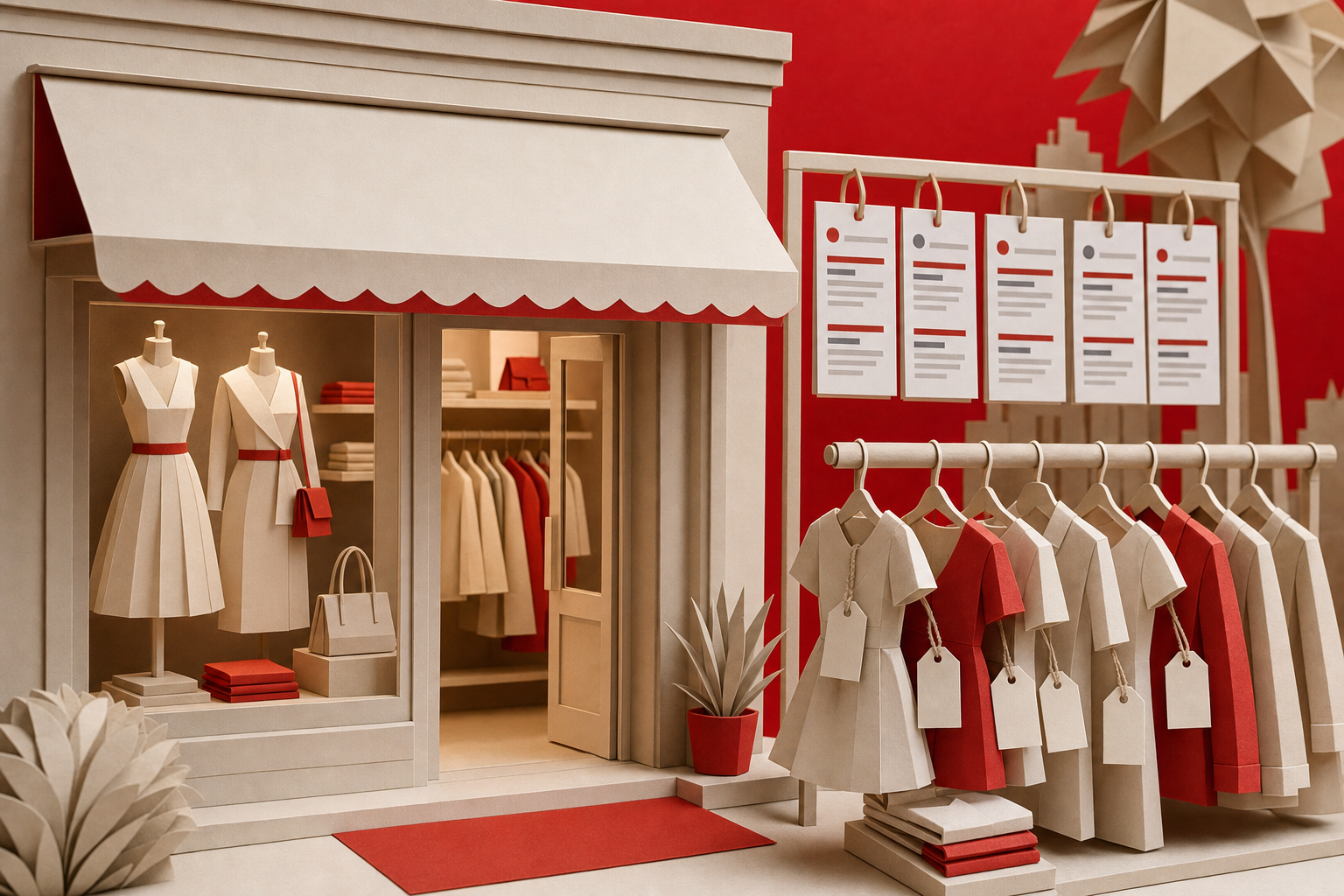
Standard e-commerce SEO is relatively stable. You pick your evergreen product keywords, optimize your pages, build authority, and the traffic compounds. Fashion doesn't work that way. A service business with the opposite problem, a stable catalogue and a local buyer, is covered in our guide to SEO for photographers.
Your inventory rotates. A "Women's Ribbed Midi Dress" that was a bestseller in spring becomes irrelevant by August. New colorways create URL decisions. Collections launch and retire. And your customers don't just search for products , they search for aesthetics, occasions, and styles they've seen on social media but can't quite name. Where the pages barely change at all, the work looks different again, as our guide to SEO for dentists shows.
That makes fashion SEO a moving target in ways that, say, a software tool or a home goods store simply isn't.
There are five challenges that come up specifically in fashion SEO. First, site architecture tends to revolve around collections rather than flat product categories. Second, image-heavy pages slow down Core Web Vitals if not optimized carefully. Third, brands selling through distributors and channel partners end up with duplicate product descriptions scattered across the web. Fourth, size and color variants generate near-duplicate URLs that split ranking authority. Fifth, most fashion shoppers are on mobile , often arriving from Instagram or TikTok , so mobile UX isn't optional.
There's also a subtler issue: search intent in fashion is much harder to read. Someone searching "black midi dress" might want to buy one, might want outfit ideas, or might want to see what's trending. Matching the right content type to that intent is where many fashion brands get it wrong, sending editorial content where a product page should rank, or vice versa.
Content should be created for people first , not search engines. In fashion, that means writing product descriptions and style guides that actually help a shopper decide, not just stuff keywords onto a page.
Fashion SEO also has to account for velocity. Trends move on a weeks-long cycle now, not a seasons-long one. A keyword like "coastal grandmother aesthetic" can spike from zero to hundreds of thousands of monthly searches inside a month. The brands that capture that traffic are the ones with a content pipeline ready to move fast.
Keyword Strategy for Fashion Brands: From Trend Terms to Buyer Intent
The biggest keyword mistake fashion brands make is chasing head terms. "Dresses" has enormous search volume. It also has enormous competition, and the searcher intent is vague. You're unlikely to rank for it, and if you did, the conversion rate would be low.
The smarter move is layering your keyword strategy across three levels.
Seed keywords and category pages
Start with your navigation menu. Every top-level category , "Women's Knitwear," "Men's Outerwear," "Accessories" , is a seed keyword. From there, apply modifiers: fabric type, occasion, silhouette, season. "Women's Linen Trousers," "Oversized Wool Blazer," "Black Tie Guest Dress." These become your category page targets.
For medium-tail keywords that balance search volume and intent, this modifier approach is where fashion brands find their biggest organic wins. The terms are specific enough to convert but broad enough to drive real traffic.
Long-tail and trend terms
Long-tail keywords in fashion often reflect style language that customers have picked up from social media. "Quiet luxury office outfits," "mob wife aesthetic coat," "ballet flats with wide leg trousers." These terms can spike suddenly and settle into consistent demand. They're also low competition , nobody's written the definitive guide to "mob wife aesthetic" yet on your site, but your competitors in big retail probably haven't either.
A sensible split for most fashion brands is roughly 60, 70% evergreen content (style guides, fabric explainers, occasion dressing) and 30, 40% trend-led content (seasonal edits, "what to wear" reactive pieces). The evergreen content builds steady authority. The trend content captures spikes and feeds internal links back to your core pages.
Buyer intent alignment
Fashion searches fall into four intent buckets. Informational searches like "how to style wide leg jeans" need editorial content. Commercial investigation searches like "best midi dress for pear shape" need a well-optimized collection page or a style guide with product embeds. Transactional searches like "buy navy linen blazer" need a product page with clean title, description, and schema. Navigational searches mean someone already knows your brand.
If you send a transactional searcher to a blog post, you lose the sale. If you send an informational searcher straight to a product page, they bounce. Getting intent matching right is probably the single biggest lever in fashion content strategy.
Technical SEO Issues Fashion Sites Face (And How to Fix Them)
Technical SEO problems in fashion e-commerce are predictable. They come up on almost every store audit. Here are the ones that do the most damage and how to fix them.
Faceted navigation and index bloat
Faceted navigation is the filter system on your category pages , size, color, price, material. It's great for shoppers. It's a crawl budget nightmare if left unmanaged.
Every filter combination creates a new URL. A category with 8 sizes, 12 colors, and 4 price ranges can generate thousands of URL permutations. Google crawls many of them, indexes some, and gets confused about which one to rank. The result: your important category page loses authority to dozens of near-duplicate filtered pages nobody searches for.
The fix is to use canonical tags pointing filtered URLs back to the clean category page, and to use the robots meta tag or parameter handling in Google Search Console to block low-value filter combinations from being indexed. High-value combinations that match real search queries , like "women's black leather boots" as a filtered page , can stay indexable. Everything else shouldn't be.
Clean, descriptive URLs that don't create unnecessary parameter chains are strongly preferred for crawl efficiency.
Variant duplication
If your "White Cotton Shirt" and your "Blue Cotton Shirt" are the same product with a color swap, they're likely near-duplicate pages splitting ranking signal. The right approach is to canonicalize color and size variants to the main product page, unless a specific variant targets a distinct search query with real volume (like "women's white linen shirt" versus "women's blue linen shirt," which might both be worth targeting separately).
Thin collection pages
A collection page with only a grid of product images and no text is thin. Google has nothing to rank it for except the URL slug. Add 150, 300 words of real, helpful copy above or below the fold , what makes this collection distinctive, who it's for, how to style the key pieces. This isn't filler; it's the content that gives the page a reason to rank.
Site speed and Core Web Vitals
Fashion sites are image-heavy by nature. High-resolution product photography is essential for conversion, but it kills page speed if not handled correctly. Use WebP or AVIF formats, lazy-load images below the fold, and use a CDN. Check Core Web Vitals in Google Search Console regularly , Largest Contentful Paint is almost always the problem on fashion sites, and it's almost always caused by an unoptimized hero image loading above the fold.
For teams dealing with large catalogs, AI-powered on-page SEO optimization can handle metadata generation, internal linking, and content gap analysis at scale without manual auditing for every SKU.
Content Marketing That Drives Organic Traffic for Fashion Brands
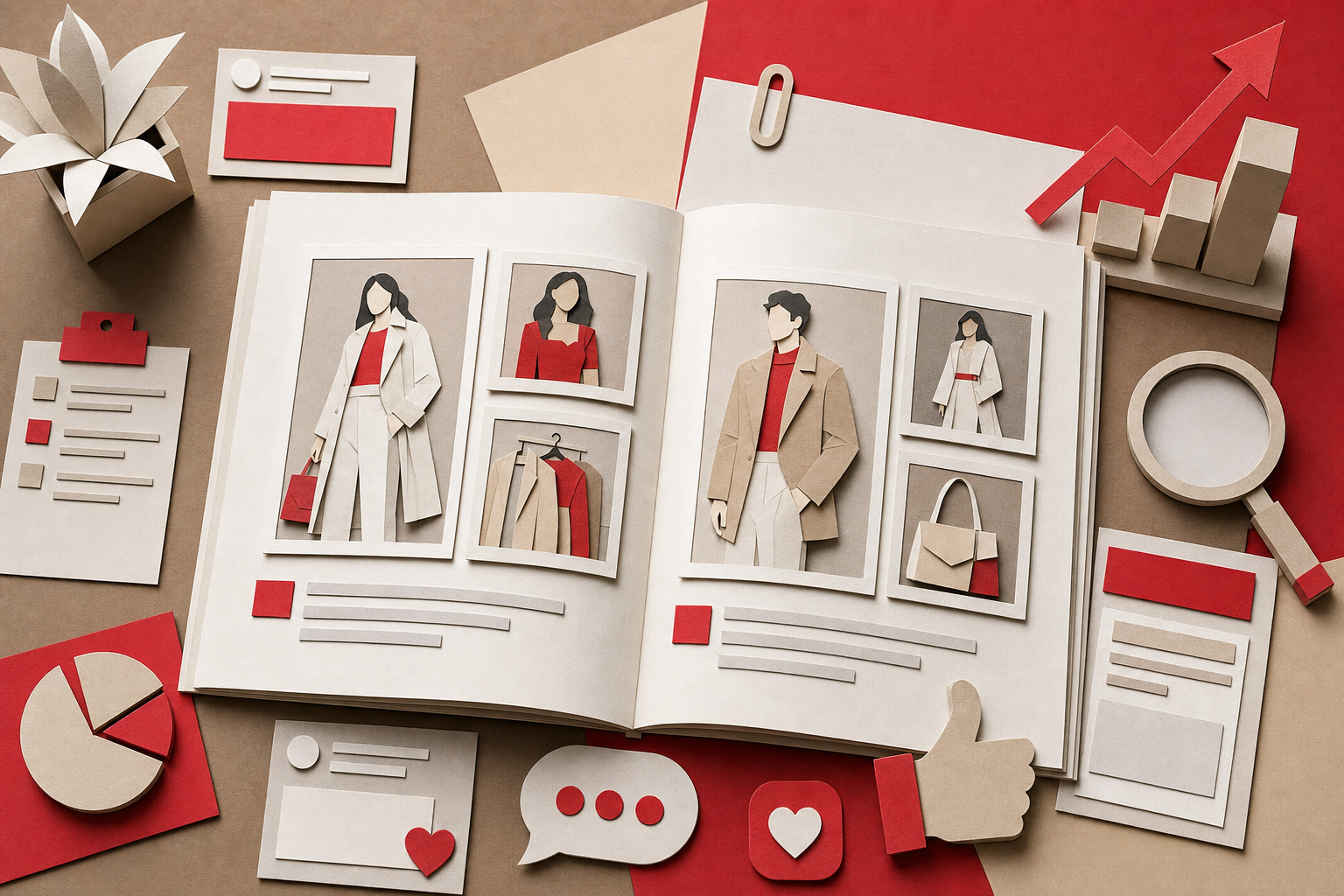
Content is where fashion SEO either compounds or stalls. The brands with the best organic traffic aren't just optimizing product pages. They're running a content operation that captures shoppers at every stage of discovery.
Style guides and lookbooks
Style guides work because they target informational and commercial investigation intent at the same time. A guide titled "How to Style a Midi Skirt for Every Occasion" serves someone who's already bought a midi skirt and wants ideas, but it also captures someone considering a purchase who needs convincing. When it links to your collection pages, it passes authority down and shortens the path to purchase.
Lookbooks serve a similar function with higher visual weight. They work particularly well as link targets , fashion press, bloggers, and Pinterest users link to strong visual editorial content more readily than to product pages.
Seasonal content calendars
Fashion SEO runs on a calendar. "Winter coats" starts picking up search volume in September, peaks in November, and drops in January. If you publish your winter coat guide in October, you're already late. Build a seasonal keyword calendar that maps search demand to your content publishing dates, giving yourself six to eight weeks of lead time before peak interest.
Trend-led content needs even faster turnaround. When a new aesthetic breaks, the window to rank is narrow. Having a content pipeline already in motion , drafts ready, production process tight , means you can publish within days of a trend emerging rather than weeks.
Social SEO and platform discovery
Fashion content increasingly lives on social platforms that now function as search engines. TikTok, Pinterest, and Instagram all have search functionality, and fashion is one of the highest-engagement categories on each. Optimizing your social content for platform search , not just the algorithm , means using descriptive captions, keyword-rich titles, and hashtags that mirror how people actually search on those platforms.
This connects directly to your website SEO too. Social content that drives brand searches on Google is a positive signal. And with Instagram content now surfacing in Google search results, well-optimized social posts can contribute to your brand's overall search visibility. The brands with strong social media SEO strategies are seeing their content appear across multiple discovery surfaces simultaneously.
Product descriptions that actually rank
Most fashion product descriptions are written for the shopper who's already on the page. They need to also be written for the shopper who hasn't arrived yet. That means including fabric details, fit notes, occasion language, and style descriptors that match how people search. "Relaxed fit, 100% linen, perfect for outdoor weddings" hits more search queries than "beautiful summer dress."
Link Building and Brand Authority for Fashion Labels
Backlinks in fashion come from a different ecosystem than in B2B or tech SEO. The highest-authority links come from editorial coverage , fashion magazines, style blogs with real audiences, and trend roundups in major publications. These aren't won through generic link outreach. They're earned through newsworthy content.
Digital PR as the primary link channel
The most effective approach for fashion brands is digital PR built around data or cultural commentary. A trend report , "The 10 Most-Searched Dress Silhouettes This Season" , gives fashion journalists a story with numbers they can cite. An original design collaboration or a campaign with a clear cultural angle gets covered. Coverage in publications with high domain authority moves rankings in ways that a dozen links from niche blogs can't match.
For Shopify stores specifically, building a targeted backlink outreach pipeline starts with identifying which existing content mentions your competitors but not your brand , those are the highest-value targets to approach first. Getting the brand listed consistently across those directories is covered in our guide to citation building for SEO.
Influencer and editorial overlap
Fashion brands already invest in influencer marketing. The SEO opportunity is to make sure that influencer content generates links, not just social impressions. When an influencer writes a blog post or a "shop my style" page that includes your product, that's a backlink. Brief creators on how to link to your collection pages directly rather than just tagging you on Instagram.
What to avoid
Link schemes and paid placements on low-quality fashion blogs add noise to your backlink profile without moving the needle. E-E-A-T principles weight editorial credibility heavily, and a link from a site with genuine editorial standards carries more authority than ten links from thin affiliate blogs. Quality over volume is the only strategy that holds up over time.
How Distribb Automates SEO for Fashion Brands
The operational challenge in fashion SEO isn't knowing what to do. It's doing it consistently, at scale, across a catalog that changes every season. Most fashion brands don't have a dedicated SEO team. They have a marketing manager juggling paid, social, email, and organic simultaneously.
That's the problem Distribb is built for. It's an AI SEO system that handles the full content workflow , keyword research, content planning, writing, publishing, and social repurposing , without requiring manual input at each step. You tell it what you sell, connect your site (Shopify, WordPress, Webflow, Wix, or via webhook), and it runs the process for you.
In a research analysis of 18 SEO platforms, Distribb was the only one that combined automated keyword research, a rolling 30-day content calendar, AI-generated long-form articles, and a contextual backlink exchange with a tracking dashboard. Only 22% of platforms in that analysis offered any form of AI content generation, and just 11% disclosed any backlink strategy at all. Distribb covers all of it in one place.
For fashion brands specifically, that matters because the content volume required to compete is high. You need seasonal guides, trend pieces, product-focused articles, and collection landing page copy , all on a publishing cadence that matches how fast search demand shifts. Doing that manually is a part-time job. Distribb runs it on autopilot, with an editor available to review or adjust anything before it goes live.
The platform also supports the kind of integrated content and SEO strategy that fashion brands need , where keyword research, content production, internal linking, and authority building all connect rather than sitting in separate tools managed by different people.
The backlink exchange is worth noting separately. It earns contextual links from real businesses inside Distribb's network, with every link tracked in your dashboard. For a fashion brand trying to build domain authority without a full PR team, that's a meaningful addition.
FAQ
How long does SEO take to work for a fashion brand?
Most fashion brands see initial ranking movement within three to six months of consistent effort. Competitive terms take longer , sometimes twelve months or more. The timeline depends heavily on your site's current authority and how consistently you publish. Trend-led content can rank within days for low-competition terms. Evergreen category pages compound steadily over months.
How do I handle seasonal products that go out of stock?
Don't delete seasonal product pages. Either redirect them to the current season's equivalent, or keep the URL live with a "back next season" message and links to similar products. Deleting pages loses the backlinks and ranking history they've accumulated. Redirecting preserves link equity. Keeping them live with helpful content maintains crawl value and gives returning shoppers a path forward.
What's the difference between SEO for luxury fashion versus fast fashion?
Luxury fashion SEO targets high-intent, brand-aware searches and avoids discount or comparison keywords that dilute brand positioning. Fast fashion SEO chases trend velocity, high keyword volume, and seasonal content at scale. Both need technical SEO fundamentals, but the keyword strategy and content tone differ significantly. Luxury brands rank for exclusivity and craftsmanship terms. Fast fashion brands optimize for trend terms and affordability signals.
Do fashion brands need a blog to rank on Google?
Yes, if you want to compete for informational and commercial investigation searches. Product and collection pages alone only capture transactional intent. A style guide or trend article captures shoppers earlier in the decision process , and those pages build the internal link structure that passes authority to your product pages. Fashion brands without editorial content leave a large share of organic traffic on the table.
How do I optimize product pages for size and color variants?
Use canonical tags to point variant URLs to the primary product page unless a specific variant targets a distinct high-volume search query. Write unique, specific product descriptions that include fabric details, fit notes, and occasion language rather than generic copy. Add Product schema markup so search engines can display price, availability, and reviews directly in search results, which improves click-through rates for fashion searches.
Can small fashion brands compete with large retailers in search?
Not on broad head terms. But smaller brands can absolutely outrank big retailers on specific long-tail and niche queries. A boutique specializing in sustainable linen clothing can dominate search for "organic linen summer dress women" even if it can't touch "summer dresses." The strategy is to go narrow and deep on a specific aesthetic, material, or occasion niche rather than trying to compete across every fashion category. If the brand also sells from a physical store, local SEO adds a second lane that the big retailers cannot crowd out in your city.
Conclusion
Fashion SEO rewards brands that treat it as an ongoing operation, not a one-time project. Get the technical foundations right first , clean URLs, canonical variants, fast pages, structured data. Then build a keyword strategy that spans trend terms and evergreen buyer intent. Feed it with a consistent content calendar. And build authority through editorial links and digital PR rather than shortcuts. If you want the content and publishing side running without constant manual effort, Distribb handles the full pipeline from keyword research to autopublishing , connect your store at distribb.io and let it run.