Best SEO Automation Platform Reviews: 6 Picks


Most SEO tools automate a slice of the work. These SEO automation platform reviews compare six options, from recurring audits to content publishing and backlink building.
We analyzed 49 comments and questions from Reddit and Quora about SEO automation platforms and found that 29% mentioned automated analytics reporting.
Distribb.io covers keyword research, content, publishing and backlinks in one platform, for teams that want to automate more of the full workflow. The other picks suit teams that need a specific kind of research, monitoring, or publishing support.
1. Distribb.io
Distribb.io is an AI-powered SEO platform for agencies and businesses that want to automate keyword research, content creation, publishing, backlink building, and AI-search visibility. It’s best for teams that want content production and link growth tied to the same workflow, rather than handled in separate tools.
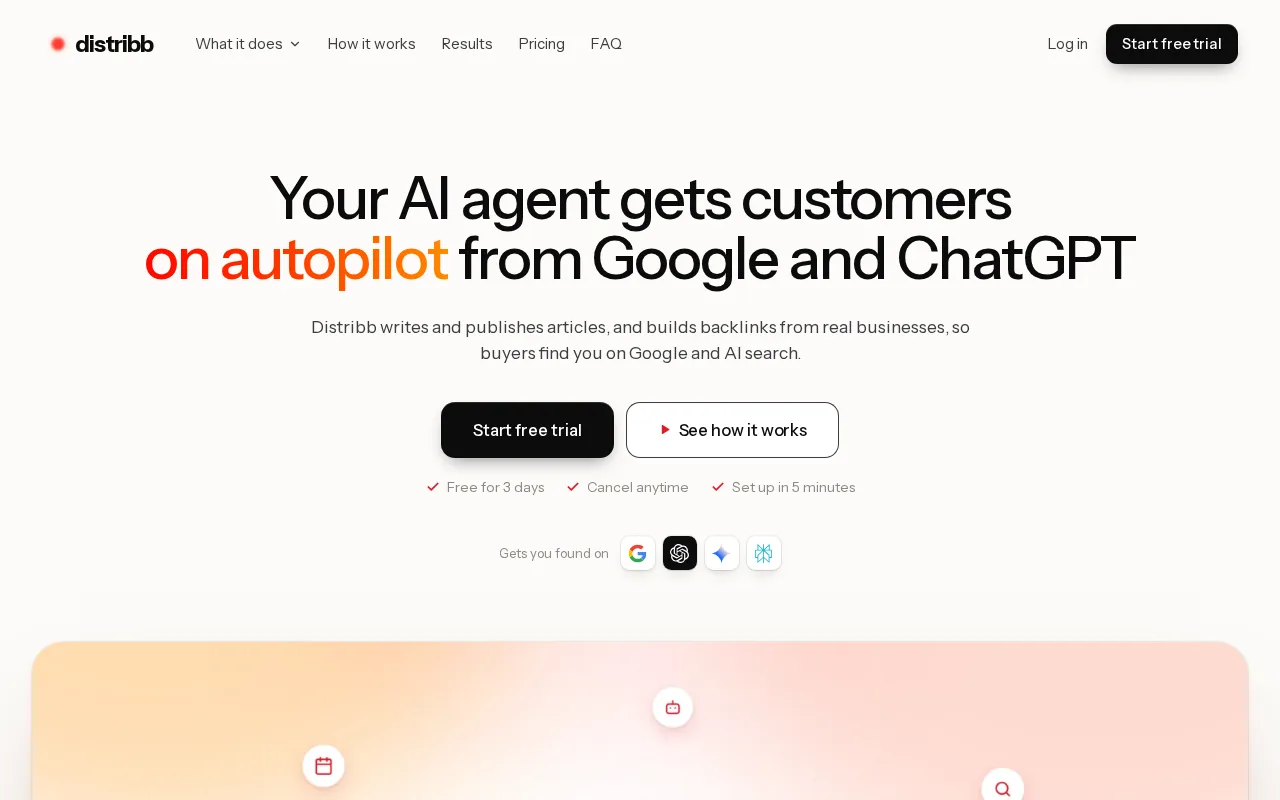
The work starts with keyword research, then moves into creating and publishing content. Backlink building and AI-search visibility are part of the same product scope. That broader workflow is useful for an agency managing several client tasks or a SaaS team that needs a steady content process.
Distribb.io Pro costs $97 per month and includes 30 SEO-optimized articles a month, high-DR backlinks, link outreach research with drafted pitches, and CMS integration. Accelerator costs $495 per month and adds 90 articles a month, done-for-you YouTube and Instagram videos, Medium articles, Instagram carousels, and done-for-you link outreach campaigns.
Teams should still decide which tasks need review before they go live. For example, an editor may want to check a draft’s angle before it gets scheduled. Distribb pricing lets you compare both plans before starting the 3-day free trial.
If you want one system to handle more than reporting and research, Distribb.io is built for that wider job.
2. Semrush: Broad SEO workflow automation
Semrush automates recurring SEO checks and monitoring, including scheduled site audits, daily rank tracking, backlink monitoring, and content scoring. It’s best for agencies that need several SEO data workflows in one place.
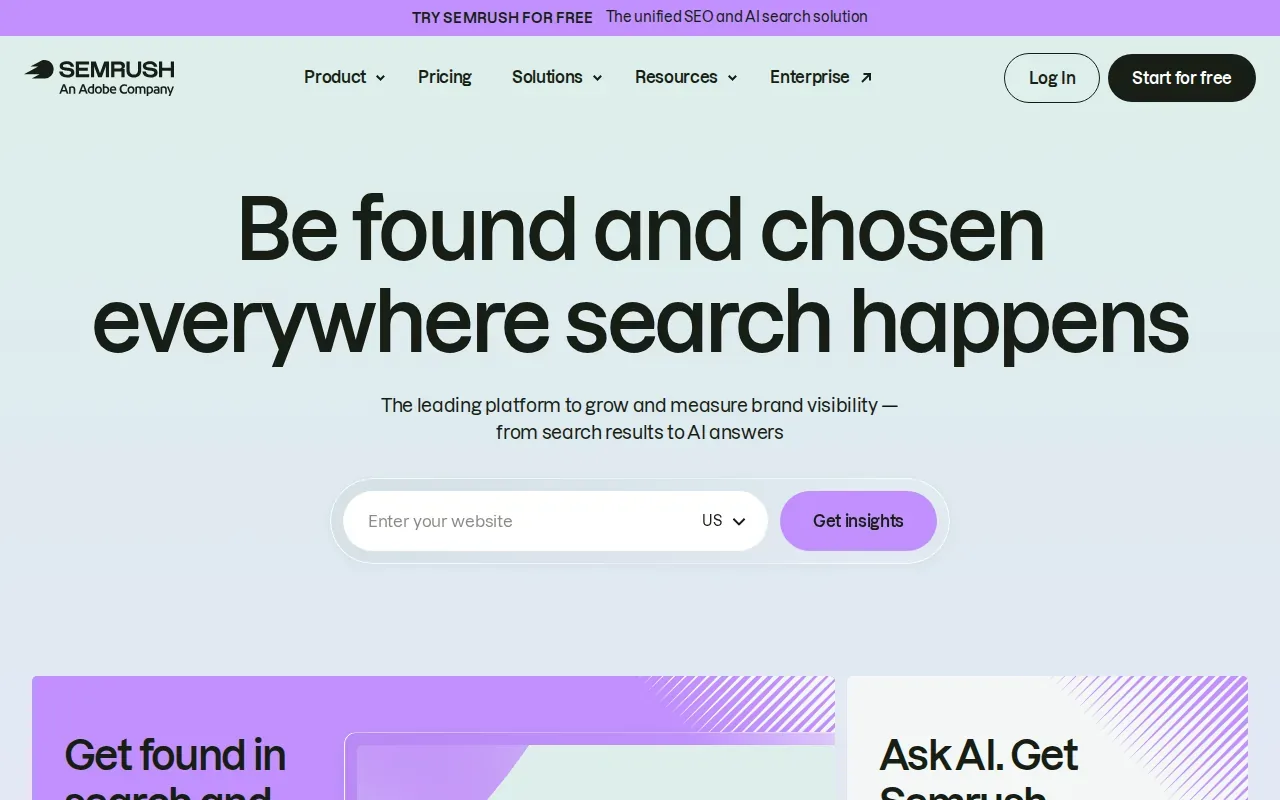
A scheduled audit can help an account manager catch site issues before a regular client review. Daily rank tracking gives the team a way to check keyword movement without running a manual report each morning. These are useful time-savers when the same tasks repeat across client sites.
Semrush is strongest when the team needs to understand what is happening across search data and audits. That’s different from a production-first tool that moves content through writing and publishing. Its scope also includes competitive research, backlink audits, and PPC intelligence, which may suit agencies working across more than organic search.
Content scoring can add a check to the writing process, but a score still needs context. A team should review whether the page answers the reader’s question, not just whether a tool marks it as optimized.
Choose Semrush when recurring research and monitoring are central to the job. If the main bottleneck is producing and publishing content, compare it with platforms built around that part of the workflow.
3. Ahrefs: Automated link intelligence and alerts
Ahrefs is a strong fit for teams that need link monitoring and automated alerts. Its automation includes backlink monitoring, alerts, site audits, and scheduled crawls, alongside keyword research, backlink analysis, and rank tracking.

Alerts can help an SEO team notice a change in its link profile without checking it by hand every day. That’s useful when a client asks whether a new link appeared or an existing one changed. The team can then review the alert and decide whether any follow-up is needed.
Site audits and scheduled crawls help keep recurring checks on a calendar. That can make it easier to compare a new crawl with a prior one after site changes. Still, identifying an issue is not the same as making the fix. A team needs a clear handoff to the person who can update the page or site.
For readers weighing different kinds of automation, the broader SEO automation tools comparison explains how platforms vary by task. Ahrefs fits best when link intelligence is the central need, rather than a complete content-production workflow.
Pick Ahrefs when alerts and backlink analysis are the work you want to keep close at hand. It’s a focused choice for teams that already have a process for acting on what they find.
4. Search Atlas OTTO SEO: Technical and on-page automation
Search Atlas OTTO SEO identifies technical and on-page issues, then supports implementation through website workflows. It’s best for teams that want more than reports and recommendations.
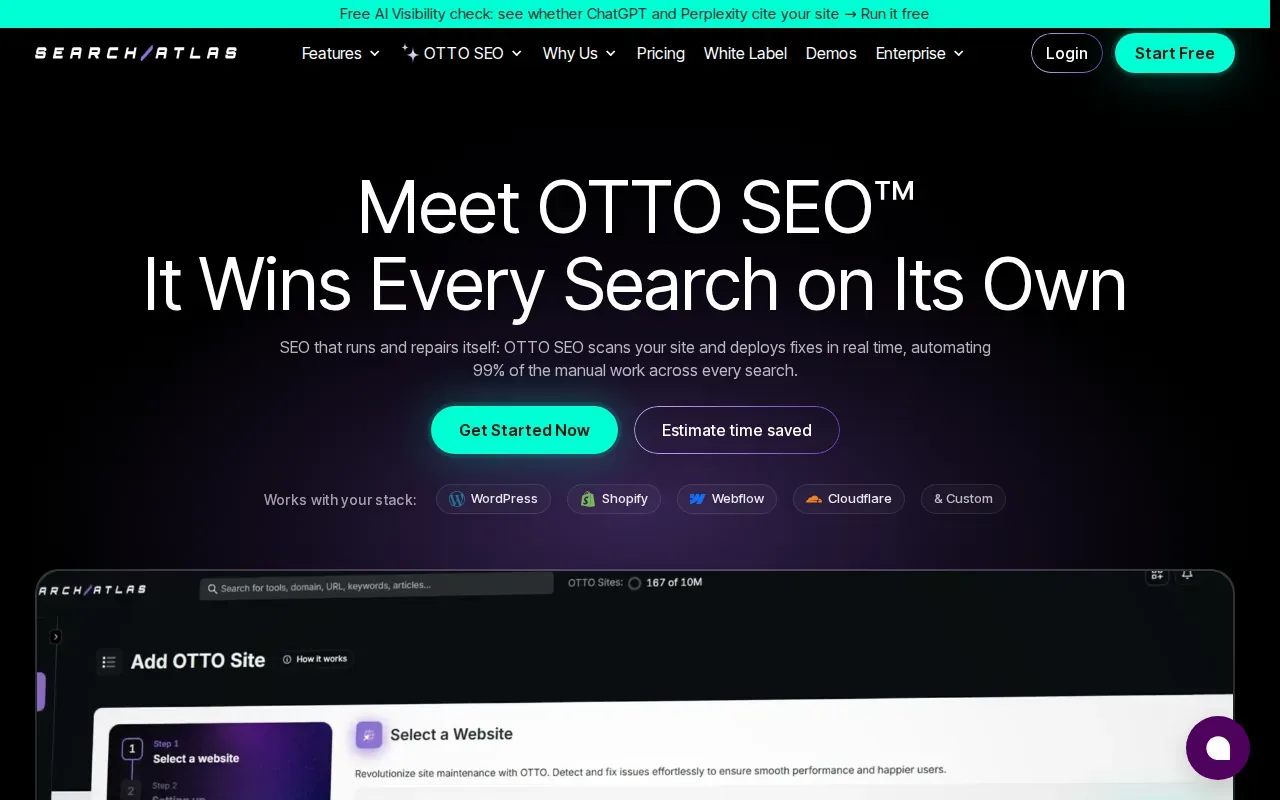
The key difference is the move from detection toward implementation. A report can flag a technical problem, but the team still has to assign it, wait for a site change, and check the result. OTTO’s workflow includes identifying issues and implementing changes through website workflows.
That approach may suit an SEO team with a long queue of on-page and technical tasks. It can also change how work is handed off between the person reviewing recommendations and the person making site updates. Teams should map those steps before adopting any system that can apply changes, so they know what needs approval.
Consider OTTO when implementation speed is the main concern. The right fit depends on how much of the technical and on-page work your team wants the platform to handle.
5. Contentpen: Keyword research through publishing
Contentpen covers a content workflow that starts with keyword research and continues through article creation and publishing. It’s best for teams that want those tasks in one workspace.
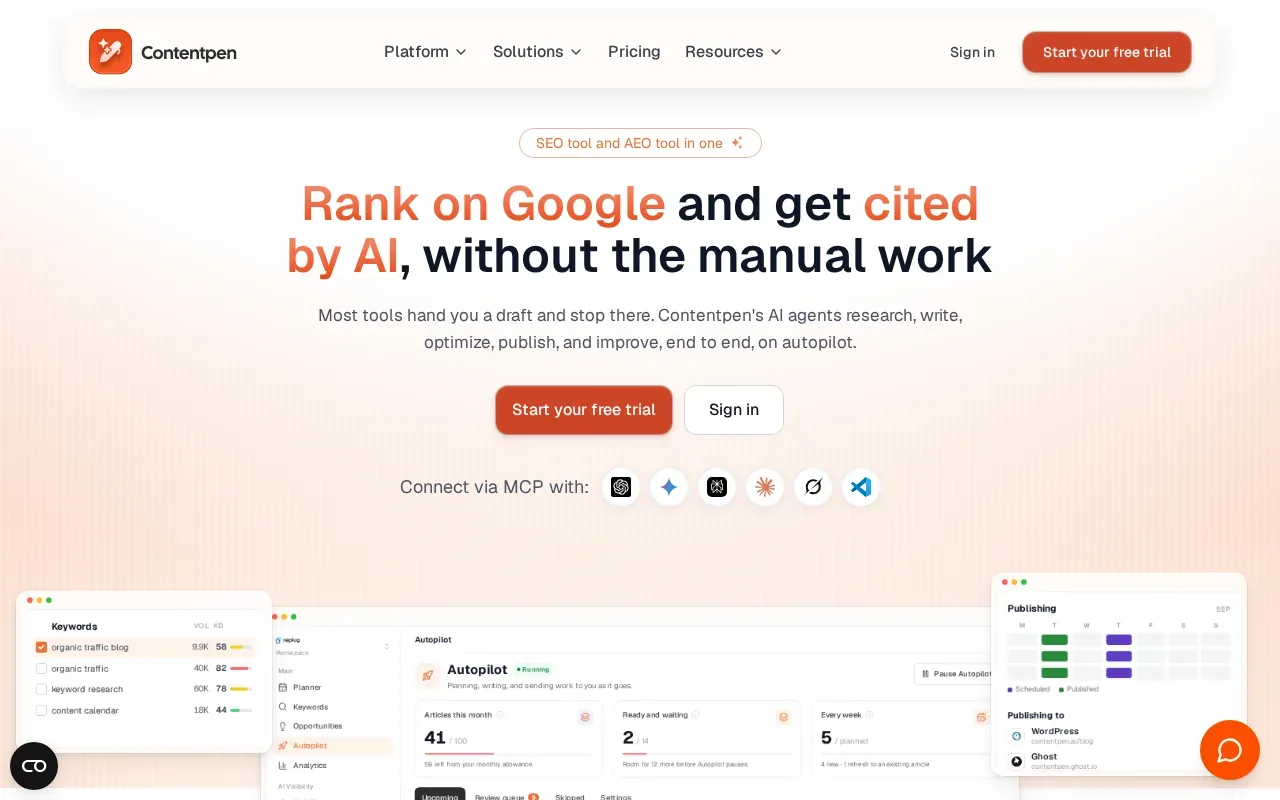
Its automation includes content refresh and autopilot scheduling. That can help a small content team keep planned work moving instead of managing every draft and publish date in a separate set of documents. Its integrations include WordPress, Webflow, Shopify, Wix, and Ghost.
Contentpen also includes AI visibility tracking. That gives teams a way to monitor this area alongside a content workflow, though tracking visibility is different from carrying out a technical fix or building backlinks. A team should match the tool to the work it wants to automate, not assume one feature covers every SEO task.
For a publishing team, the useful question is how the research step connects to the article plan and the publishing schedule. Contentpen brings those steps into one content workspace. Teams that need backlink building as part of the same system should compare its scope with a broader SEO workflow.
Choose Contentpen when content planning and publishing take up most of the repetitive work.
6. RankPill: Automated content publishing across site platforms
RankPill automates keyword research, content writing, content optimization, publishing, and backlink building. It’s best for teams that want articles to go live across supported site platforms with less manual publishing work.
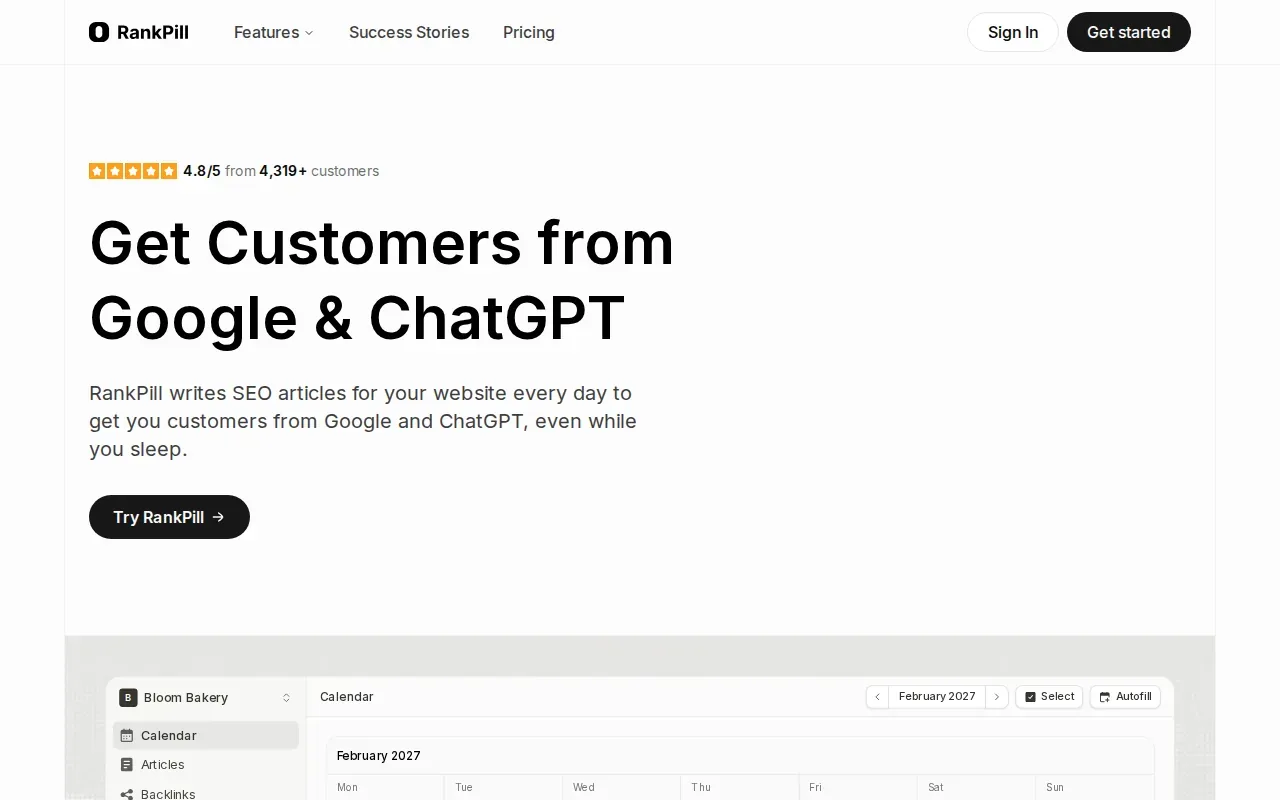
RankPill works with WordPress, Shopify, Webflow, Wix, Framer, Ghost, Notion, Zapier, and webhooks, among other integrations. New articles can go live automatically. That makes the publishing handoff a central part of the product’s fit.
Its process includes keyword research and content optimization before publishing, and backlink building is part of its automation. For a business that wants a recurring article pipeline, those steps can reduce the number of separate handoffs between research, drafting, and the CMS.
Automatic publishing deserves a clear review policy. Decide who checks the draft, what must be true before it goes live, and how the team handles pages that need an expert’s input. Set that policy around reader value, not page count alone.
RankPill is a fit when multi-platform publishing is a priority. Check that its workflow matches the review rules and site connections your team already uses.
SEO automation platforms compared
These tools differ most in whether they monitor work, help implement changes, or carry content through publishing. Use the table to match a platform to the task that currently slows your team down.
| Platform | Main automation | Best fit | Workflow emphasis |
|---|---|---|---|
| Distribb.io | Keyword research through content, publishing, backlinks, and AI-search visibility | Agencies and businesses | Full-cycle SEO work |
| Semrush | Scheduled audits, daily rank tracking, backlink monitoring | Agencies | Research and monitoring |
| Ahrefs | Link monitoring, alerts, audits, scheduled crawls | Teams focused on link intelligence | Monitoring and analysis |
| Search Atlas OTTO SEO | Technical and on-page issue detection with implementation workflows | Teams that want action beyond reports | Site changes |
| Contentpen | Keyword research, article creation, publishing, content refresh | Content teams | Content workflow |
| RankPill | Keyword research, writing, optimization, publishing, backlink building | Teams using supported site platforms | Automated content publishing |
For a team choosing between platforms, start with the work that repeats most often. A reporting gap points toward a different fit than a publishing queue or a backlog of technical fixes.
FAQ
What does an SEO automation platform do?
An SEO automation platform handles repeat tasks such as audits, rank tracking, backlink alerts, or content publishing. The exact work varies by product. Some tools mainly collect and monitor data, while others help implement site changes or run a content workflow. Check which tasks are truly automated before choosing a platform.
Which SEO automation platform is best for agencies?
Distribb.io is a strong fit for agencies that want keyword research, content work, publishing, backlink building, and AI-search visibility in one platform. Semrush is another option for agencies focused on recurring audits and rank tracking. The better choice depends on whether your team needs production support or research and monitoring first.
Can SEO tools publish content automatically?
Yes, some platforms in this shortlist include publishing automation. Contentpen covers publishing in its content workflow, while RankPill supports automatic publishing across listed site connections. Before enabling it, set a review process for drafts and decide which pages need an editor’s approval.
Should I use one SEO platform or several tools?
Use one platform when it covers the tasks your team repeats and fits your review process. Several tools may make sense when one specializes in research and another handles publishing or implementation. Compare the handoffs, not only the feature lists. Extra tools can add work if your team has to move data between them.
Conclusion
For teams that want one workflow spanning content and backlink work, start with Distribb pricing and review its plan details against your needs. Then test the free trial with one real workflow, such as a content brief through publication, before moving more work into the platform.