

Private label SEO and white label SEO mean the same thing in practice. A provider does the work, you put your name on it, and the client never learns anyone else was involved. Buyers looking for an agency for their own site rather than a supplier to resell should start with our comparison of AI SEO agencies.
The distinction people sometimes draw is that private label implies more customisation and white label more off-the-shelf. In the market as it actually trades, the terms are used interchangeably, and you should judge providers on what they deliver rather than which word they use.
What agencies actually buy
Private label SEO breaks into four services, and most providers are strong at one or two rather than all four. Running your own white label SEO audit first tells you which of the four a given client actually needs.
Content production. Articles written for the client's site, in the client's voice, published on a schedule. Link building. Contextual backlinks, guest posts or niche edits. Technical SEO. Audits, fixes, site health monitoring. Reporting. Branded dashboards and monthly reports the client sees. Technical work is the one most agencies keep in house, and a white label SEO audit is usually where that decision gets made.
Buying all four from one supplier is simpler. Buying each from a specialist is usually better. Which trade-off is right depends on how many clients you run. Packaged programmes that bundle all four are compared in our list of SEO reseller programs. Whichever way you go, the tooling question follows it, and our roundup of white label SEO tools for agencies covers what you will need on your side. If most of your clients are local businesses, the narrower comparison of white label local SEO providers is the better place to start.
How we picked these
Every provider here has a live site, a published reseller or white label programme, and pricing you can find without a sales call, or a clearly stated quote process. Checked directly in August 2026. Providers that exist only inside other people's roundups are excluded.
Who are the best private label SEO providers?
Quick comparison
| Provider | Core strength | Reporting | Best for |
|---|---|---|---|
| Distribb | Content + backlinks, automated | White label dashboard | Agencies scaling content across many clients |
| Vendasta | Full marketplace, many services | Strong, mature platform | Agencies reselling more than SEO |
| The HOTH | Broadest service catalogue | Mature reseller platform | One supplier for everything |
| Boostability | SMB-focused fulfilment | Branded reporting | Agencies with many small local clients |
| FATJOE | Links and content, productised | Reseller dashboard | Predictable, repeatable ordering |
| DashClicks | Fulfilment plus agency software | Built-in dashboard | Agencies wanting software and services together |
| Page One Power | Custom editorial link building | Yes | Enterprise and regulated niches |
| SEOReseller | Full-service reseller fulfilment | Partner dashboard | Agencies wanting sales support too |
| E2M Solutions | Flat-rate production | Yes | Agencies with swinging monthly volume |
| SEO Vendor | AI-assisted fulfilment at scale | Partner dashboard | Many small-to-mid accounts |
| Rankifyer | Agency-focused reselling | Yes | Agencies wanting closer attention |
| White Shark Media | Managed campaigns, reporting depth | Yes | Agencies selling on reporting quality |
1. Distribb, our pick for content at scale
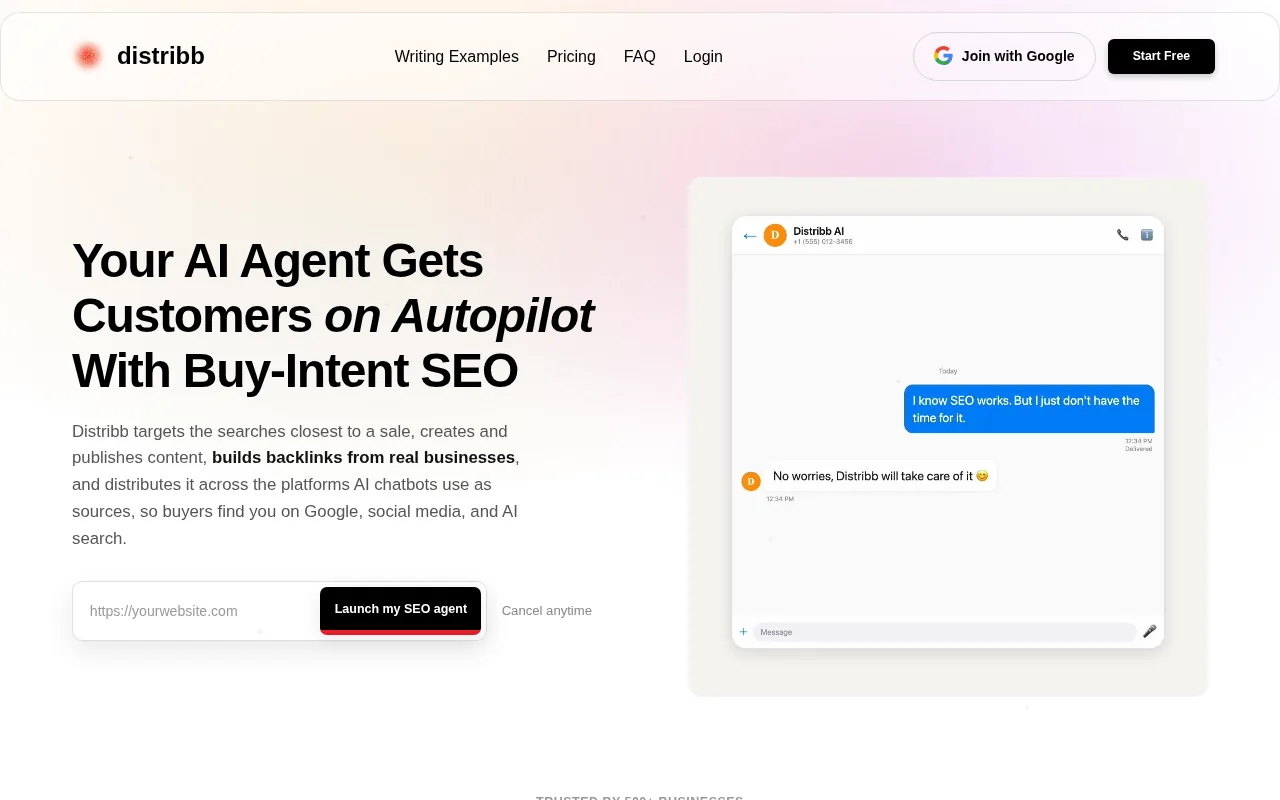
Everything else on this list is a team you rent, priced like a team. Distribb is the software version of the same job, which changes what you can put on your own rate card and what it costs you to deliver. Links are the line item that varies most, and our white label link building pricing breakdown sets out the rates behind it.
What you can sell under your own name: a technical and Search Console audit, keyword research, topical clusters, articles written and published into the client's CMS, internal linking across their existing archive, contextual backlinks from the exchange network, social repurposing on publish, and AI visibility tracking across ChatGPT, Perplexity, Gemini, AI Overviews and AI Mode.
That last deliverable is the one almost nothing else on this page can sell yet, and it is the one clients have started asking about by name.
Pros:
- A deliverable list, not one service: audit, keywords, clusters, published articles, internal links, backlinks and AI visibility all come from the same place
- Flat cost per client: you pay per project per month, so a client who publishes twelve articles costs the same as one who publishes four
- Publishes into their CMS: WordPress, Webflow, Shopify, Ghost, Wix, Notion, GoHighLevel, Framer or an API webhook, so nothing sits in a supplier portal
- Per-client separation: each client is its own project with its own tone, pillars, competitors and schedule, around thirty settings, so accounts do not bleed
- AI visibility as a line item: tracked across the assistants clients are already asking about, which most rate cards on this page cannot quote for yet
Cons: It sells one department. There is no PPC, no paid social, no email and no web design, so a full-service agency still needs the rest of its supplier list. There is also no account manager who will join a client call for you.
For who: Agencies that want to widen what SEO they can promise without hiring a writer or a link builder.
Pricing: $97 per month per client project with a 7-day free trial. Accelerator is $495 per month and adds managed outreach and wider distribution. There is no free plan.
2. Vendasta, the marketplace approach
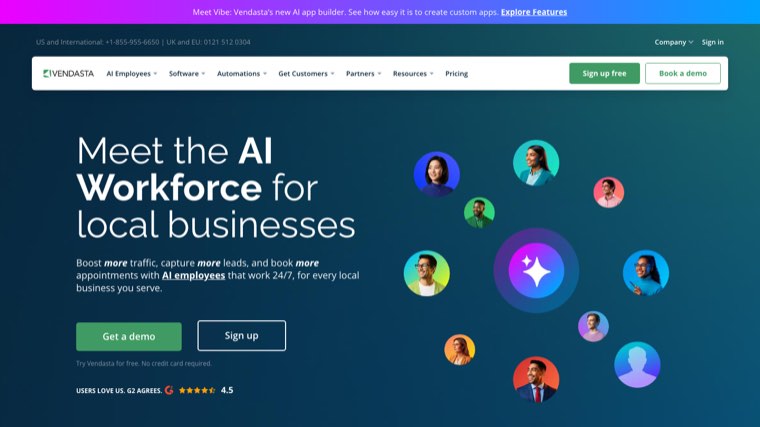
Vendasta is a storefront rather than a fulfilment team. You resell services from many vendors under one brand, with SEO sitting as one category next to websites, ads, listings and reviews.
Pros:
- One rate card across categories: SEO, web, ads, reviews and listings are all resold from the same storefront
- Built-in commerce: proposals, ordering, billing and a client portal are part of the platform rather than bolted on
- Wholesale margin control: you set retail against a published wholesale cost, so the markup is yours to choose
- Useful beyond SEO: agencies selling a bundle to local businesses get more of the bundle in one place
Cons: You are buying access to vendors rather than a standard of work, so quality moves with whoever fulfils the order. When a client asks why one deliverable is weaker than another, the answer sits a layer below you.
For who: Agencies whose offer is broader than SEO and who want one storefront covering all of it.
Pricing: Starter is a $0 subscription with a $99 per month minimum spend on wholesale products, with platform tiers above it at $499 and $999 per month. Checked on vendasta.com on 6 August 2026.
3. The HOTH, the widest catalogue
The HOTH started in link building and turned into a catalogue. If a client asks for something specific, there is usually a product for it, which is a real advantage when requests arrive one at a time.
Pros:
- Buy exactly one thing: products are ordered individually, so a single client request does not need a retainer
- Published prices: almost every service carries a public price, which makes quoting a client fast
- Mature reseller tooling: a long-running partner programme with white label reporting behind it
- Range: links, content, local, technical, digital PR and AI visibility products all sit under one login
Cons: Breadth costs consistency, and the catalogue is wide enough that two products can feel like two different suppliers. Treat each service line as its own decision and test it on your own site before a client's.
For who: Agencies fielding varied one-off requests who want a supplier that already has a product for most of them.
Pricing: A la carte, published per product: blog content from $50, link outreach $150, link insertions $200, Google Business Profile management $275, and Managed SEO from $1,000 per month. Checked on thehoth.com on 6 August 2026.
4. Boostability, built for small local clients
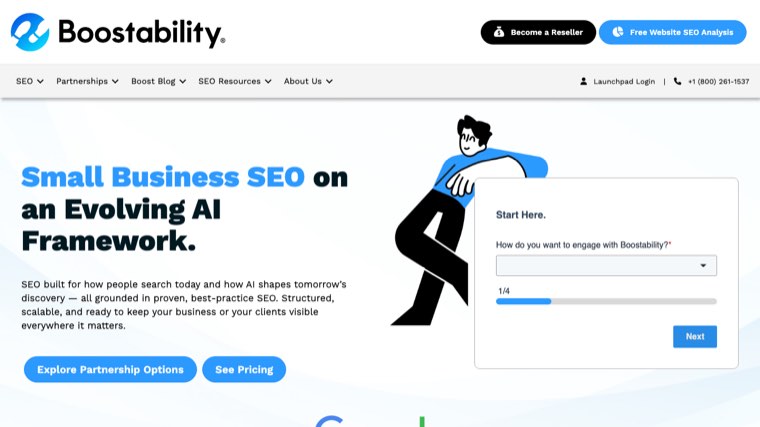
Boostability built its model around small local businesses at volume, mostly through agency and partner channels. The work is standardised on purpose, which is what makes it affordable at the bottom of the market.
Pros:
- Priced for small budgets: packages start well below the usual managed SEO floor, so a $600 client is still viable
- Volume-ready: the process is designed for a long tail of accounts rather than a handful of flagship clients
- Branded reporting: client-facing reports carry your name, not theirs
- Local specificity: citations, profiles and local ranking work are the core competence rather than an add-on
Cons: The standardisation that makes the price work is also the ceiling. A competitive national campaign will outgrow the playbook, and you will feel it as flat results rather than a missed deadline.
For who: Agencies with a long tail of local clients paying modest monthly retainers.
Pricing: Small business packages start at $480 per month, with tiers at $900 and $2,000. Partner and reseller rates are quoted on application rather than published. Checked on boostability.com on 6 August 2026.
5. FATJOE, productised links and content
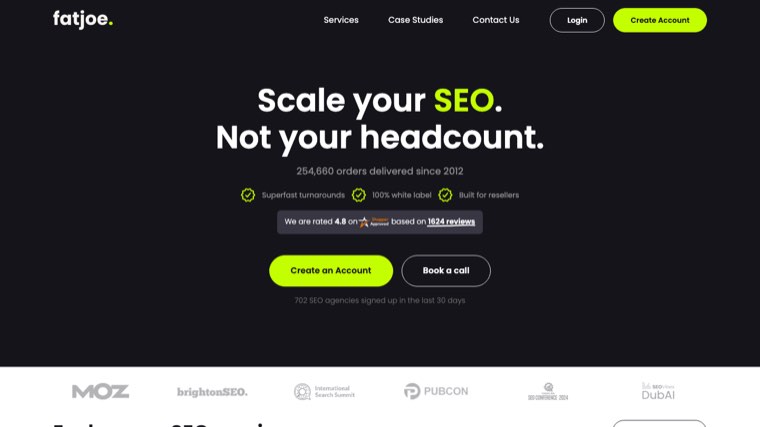
FATJOE is a catalogue with a turnaround time attached. You order, it arrives on a defined schedule, and you resell it at whatever margin you set.
Pros:
- Predictable ordering: every service has a stated delivery window, which makes client promises safer to make
- Genuinely white label: the reseller programme is the product, so nothing arrives carrying their name
- Low commitment: no retainer, so a quiet month costs you nothing
- Deep link catalogue: blogger outreach, niche edits, digital PR and local, each ordered separately
Cons: There is no strategy layer, so a bad brief produces exactly what you asked for. Prices are also set in pounds, which means your margin moves with the exchange rate if you sell in dollars.
For who: Agencies that already know what to order and want it repeatable.
Pricing: Per deliverable and quoted in GBP: blogger outreach from £60, niche edits from £60, international outreach from £200, and managed packages from £500. Checked on fatjoe.com on 6 August 2026.
6. DashClicks, software plus fulfilment
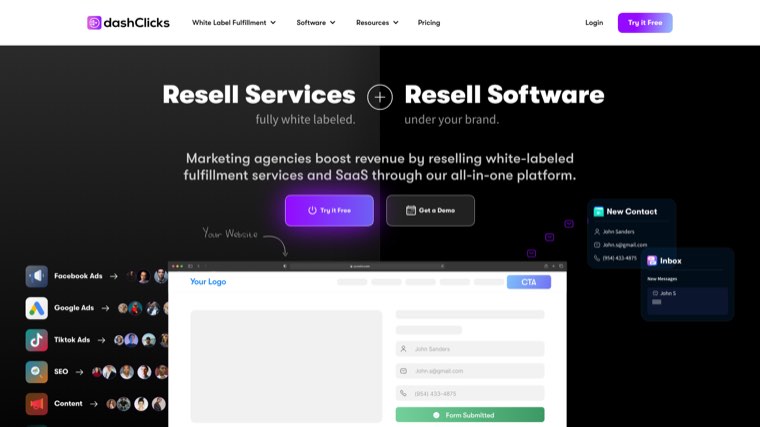
DashClicks sells the software and the fulfilment together, so the dashboard your client logs into and the team doing the work bill from the same company.
Pros:
- One system: reporting, CRM, proposals and fulfilment sit behind a single login
- Flat software cost: the platform price does not move with client count
- Services on demand: fulfilment is ordered inside the tool you already use to report
- Fast to stand up: an agency without its own stack can be client-ready quickly
Cons: You are adopting an ecosystem, not buying a service, and that is a harder decision to reverse later. If you leave, the reporting layer goes with the fulfilment.
For who: Agencies replacing their tooling and their supplier in the same move.
Pricing: DashClicks Pro is $199 per month for the software, or $1,788 billed annually. Fulfilment services are priced separately per order. Checked on dashclicks.com on 6 August 2026.
7. Page One Power, custom editorial
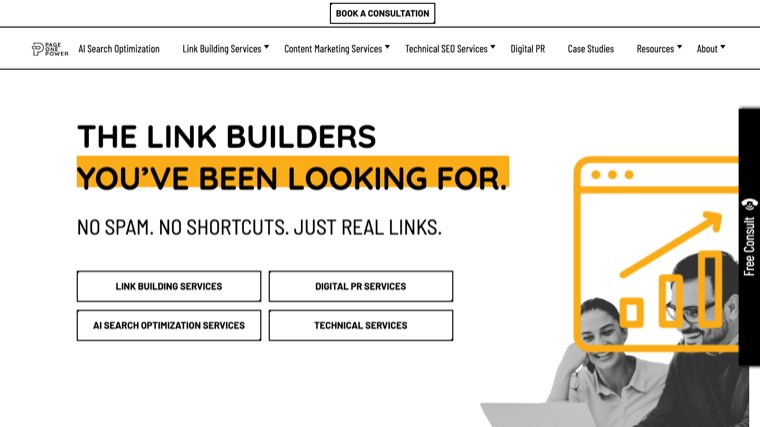
Page One Power runs bespoke link campaigns rather than a product catalogue. Targets are researched, outreach is manual, and placements are argued for individually.
Pros:
- Editorial standard: placements are pitched on merit, which is what survives scrutiny in a regulated niche
- Campaign strategy included: the target list is built for the client rather than pulled from a stock inventory
- Reporting you can hand over: live placements on real sites, which is the evidence a cautious client asks for
- Genuine white label option: the programme is set up for agencies reselling under their own name
Cons: Cost and lead time both sit at the top of the category, and campaigns are quoted rather than listed. A long tail of small accounts is the wrong shape for this supplier.
For who: Agencies with enterprise or regulated clients where one bad link is a real liability.
Pricing: Not published. Campaigns are scoped and quoted on a consultation, and there was no public rate card on pageonepower.com when we checked on 6 August 2026.
8. SEOReseller, built for the reseller model from the start
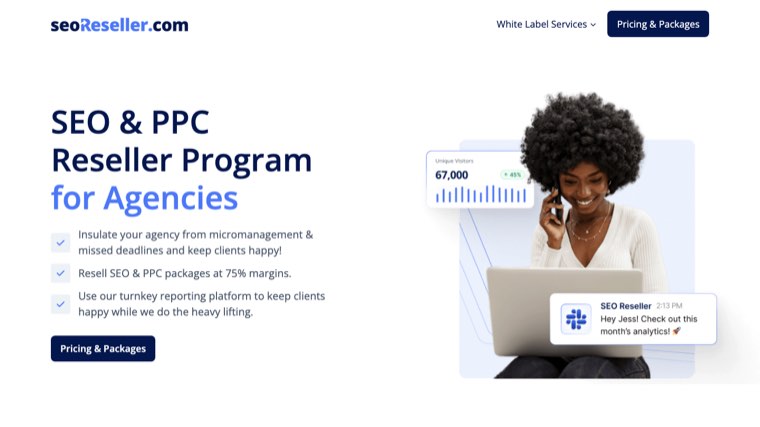
SEOReseller has run white label fulfilment for well over a decade, and the partner side shows it. The dashboard, the sales collateral and the campaign management were built for resellers rather than adapted for them.
Pros:
- Sales support included: pitch decks, audits and pre-sale help come with the partnership
- Full-service fulfilment: strategy through execution, so you are not stitching three suppliers together
- Long track record: over a decade of agency work behind the process
- Partner portal: campaigns, deliverables and client reporting live in one branded place
Cons: The platform is opinionated and you work their way, which is the trade for the process being mature. Pricing is also the least transparent here, so budgeting means booking a call first.
For who: Agencies that want fulfilment and help selling it, not just delivery.
Pricing: Not published. Their pricing link resolves to an image rather than a live rate card, and plans are quoted on a partner call. Roundups commonly cite around $250 per client per month, which we could not confirm on seoreseller.com on 6 August 2026.
9. E2M Solutions, flat-rate production
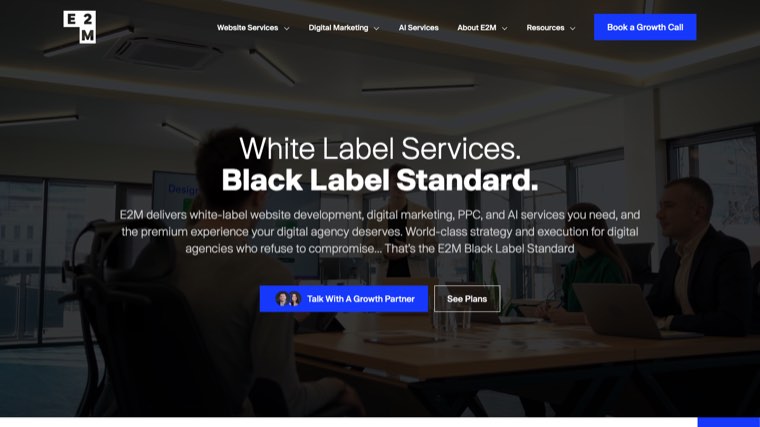
E2M sells production capacity by the month rather than by the deliverable. You buy a block of hours across content, design, development and SEO, and you spend it on whichever client needs it.
Pros:
- Fixed monthly cost: the bill does not move when one client has a heavy month
- Wide skill coverage: content, design, development and SEO come from the same retained team
- Dedicated resource: the higher plans are effectively staff you did not have to hire
- Good for swinging demand: unused capacity in a quiet month absorbs a busy one
Cons: Delivery is queue-based, so urgent work is not urgent. SEO is also one skill inside a broader production shop rather than the whole focus of the company.
For who: Agencies whose monthly workload swings and who would rather buy capacity than deliverables.
Pricing: White label plans run $1,299, $2,099, $3,999 and $9,999 per month, scaling from roughly 30 hours to a full dedicated squad. Checked on e2msolutions.com on 6 August 2026.
10. SEO Vendor, AI-assisted fulfilment at scale
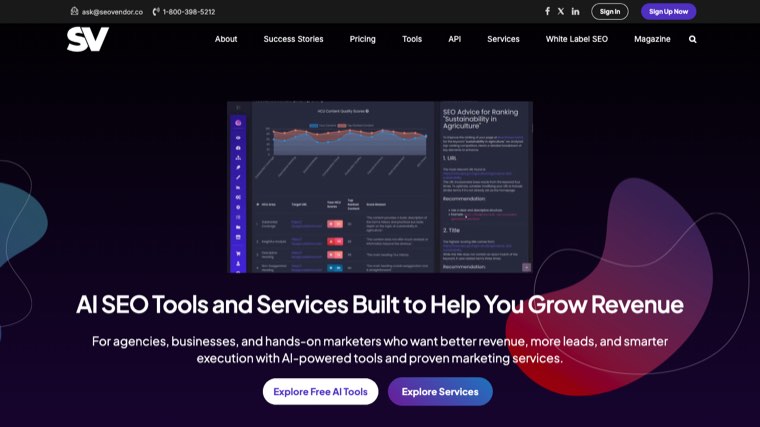
SEO Vendor runs white label campaigns with a heavy automation layer behind them, priced for agencies carrying a lot of accounts at once.
Pros:
- Built for account volume: the process assumes many mid-sized clients rather than a few large ones
- Partner dashboard: white label reporting and campaign visibility come with the programme
- Broad service menu: local, national, enterprise, PPC and design all sit under one partner account
- Automation on the heavy lifting: the analysis layer is where their AI work is aimed, which is the part that scales badly by hand
Cons: Per-account strategy is lighter than a boutique supplier gives, which shows most on accounts that need a genuinely custom plan. The published pricing is also fragmented across many separate pages.
For who: Agencies running many small to mid-sized accounts that need consistent execution more than bespoke thinking.
Pricing: Quoted per service. The site lists separate pricing pages per category, but none of them rendered a readable rate card when we checked on 6 August 2026, so treat it as quote-based.
11. Rankifyer, newer and agency-focused
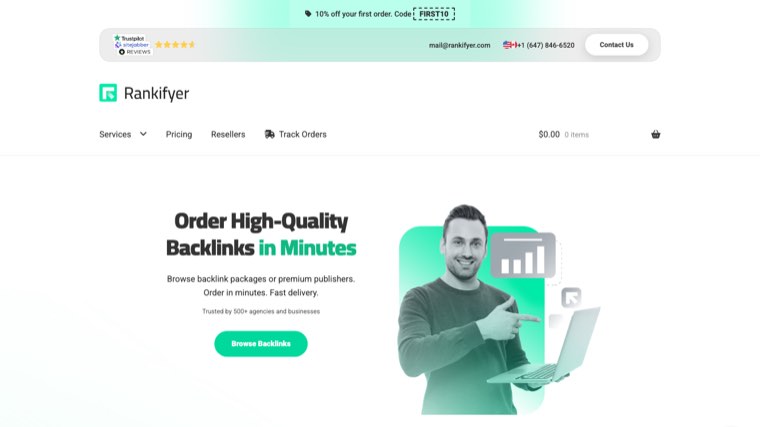
Rankifyer is a smaller and more recent entrant aimed specifically at agencies reselling links. In practice it sells packages rather than retainers.
Pros:
- Package clarity: link products are sold in fixed bundles with a published price
- Attention: a smaller book of clients usually means faster answers than a large provider gives
- Reseller focus: the programme is aimed at agencies rather than end clients
- Low entry commitment: a single package is a small enough test to run before moving a client
Cons: The track record is short, so ask for placements in your client's niche before you commit anything real. There is also no monthly reseller plan, which makes forecasting cost harder than it looks.
For who: Agencies buying link packages who want a supplier that answers quickly.
Pricing: Sold per package. Ten guest posts on DA 30 to DA 70 sites listed at $379, discounted from $890, and ten niche guest posts at $349. Their pricing page returns a 404, so the shop is the only rate card. Checked on rankifyer.com on 6 August 2026.
12. White Shark Media, managed campaigns with reporting depth
White Shark Media is a long-established agency that also fulfils white label work, historically strongest on paid media and local.
Pros:
- Reporting depth: client reporting is the part of the offer they lead with, which helps if that is your pitch
- Managed campaigns: accounts are run by people rather than ordered from a catalogue
- Cross-channel: paid and local sit alongside SEO, so one supplier covers more of a local client's budget
- Established: a long operating history and a large client base behind the process
Cons: SEO is one line in a wider service mix rather than the core of the business, so depth varies by discipline. Their site also blocked automated checks entirely, which makes independent verification harder than it should be.
For who: Agencies selling on reporting quality whose clients also buy paid media.
Pricing: Not published. Campaigns are quoted after a consultation, and whitesharkmedia.com blocked our checks on 6 August 2026, so no public figure could be confirmed.
What margin is realistic
Agencies reselling private label SEO typically hold 30% to 60% gross margin. The spread depends on two things. Your tooling cost sits inside that spread, and we priced the full stack of white label SEO tools for agencies. A white label rank tracker is often the first line item agencies forget to count there.
Standardised fulfilment at volume sits at the top of that range, because your cost per client falls while your retail price does not. Bespoke work sits at the bottom, because the provider's cost scales with effort.
The margin killer is account management you did not price in. A client on a $1,500 retainer who needs two calls a month can be less profitable than one on $800 who needs none. Price the meetings, not just the deliverables.
What to check before signing
Is the reporting genuinely unbranded? Ask for a live sample. Some providers leave their name in a footer or a URL. The same check applies to the audit software itself, which we ran across our white label SEO audit tool comparison. Run the same check on any white label SEO audit tool you hand to a client, since audit exports leak vendor names more often than dashboards do.
Who talks to the client? It should be you. Any provider suggesting direct contact is a risk to the relationship.
What is the content actually like? Read three published articles they produced for other resellers. Thin content published under your client's domain is your problem, not the provider's.
Can you leave? Check contract length and whether you keep the content and links if you go.
Where do the links come from? Ask for live placement examples on real sites with real traffic.
How to choose
- Content volume across many clients: Distribb
- Reselling more services than just SEO: Vendasta or DashClicks
- Long tail of small local clients: Boostability
- Predictable link and content ordering: FATJOE
- Enterprise or regulated: Page One Power
- One supplier for everything: The HOTH
FAQ
Is white labeling SEO profitable? Typically 30% to 60% gross margin. Standardised fulfilment at volume sits at the top of that range, bespoke work at the bottom. The margin killer is unpriced account management.
What is the difference between white label and private label SEO? In practice, nothing. Some providers use private label to signal more customisation, but the market trades the terms interchangeably. Judge on deliverables.
Is private label SEO the same as white label SEO? In practice yes. Some providers use private label to signal more customisation, but the market uses the terms interchangeably.
How much does private label SEO cost? Productised links and content start around $100 to $500 per deliverable. Managed monthly fulfilment typically runs $500 to $3,000 per client. Platform tools are priced per month rather than per client, which is why margin improves with volume. Packaged SEO reseller programs price differently again, usually per client per month.
How do I keep the provider invisible? Use branded reporting, keep all client communication yourself, and check that no deliverable carries the provider's name in metadata or footers. Ranking reports leak a vendor name more often than anything else, which is why our white label rank tracker comparison checks the exports.
Is it safe to let a partner build links for my clients? Only if you can see where the links go. Ask for live examples and check the host sites have real organic traffic.
Can I white label the reporting dashboard? Most providers here offer it. See our guide to white label SEO dashboards for the reporting side specifically.
What if results do not improve? Agree what happens up front. Reputable providers will extend or replace deliverables. Nobody credible guarantees rankings.
How do I scale as the agency grows? Standardise. Bespoke fulfilment does not scale past roughly ten clients without adding headcount. Platform-based fulfilment does. The same logic is why more agencies are testing an AI SEO agency model rather than hiring their way out of it.
Private label SEO breaks in a predictable place. You sign five clients, fulfilment slows, quality slips, and the margin you priced disappears into account management.
Distribb's white label SEO handles the part that scales badly: finding keywords, writing articles in each client's voice, publishing to their CMS, and earning contextual backlinks. Your branding, your client relationship. Seven-day free trial.
---