

A clinic can draw search traffic and still leave appointment slots open when its pages don't match what patients need. The five options differ in focus and services. Distribb.io also has a physical therapy SEO resource for clinics considering software alongside agency support.
1. E-Rehab: physiotherapy-focused clinic marketing
E-Rehab is a physiotherapy-only provider focused on clinic websites, SEO, and patient-intent pages. It may suit an independent practice that wants a partner centered on physical therapy rather than a broader healthcare program.
Its services include website design, treatment landing page buildouts, citation hygiene, and Google Business Profile optimization. That mix links a clinic’s site work with its local search presence. A clinic adding a service line, for example, can plan a page around that treatment while checking whether local listings reflect the same service.
E-Rehab’s differentiator is its focus on condition and treatment landing pages built around patient intent, rather than relying on general blog publishing alone. That can be a useful fit when patients search for a specific problem and need a clear path to the related service page.
The company also describes work around local visibility, reviews, email, video, and analytics. Those measures can help a practice connect search work with intake, provided the team agrees on how appointment actions will be recorded.
Before signing, ask which treatment pages are included and who reviews clinical details. The clinic’s service names and care descriptions need to match what its practitioners actually provide.
2. WebFX: managed local SEO and treatment content
WebFX is a broad healthcare marketing provider with SEO, website development, and patient growth services. It may fit clinics that want managed local search and treatment content within a wider marketing program.
Its healthcare services include local SEO, paid search, web design, content marketing, and conversion rate optimization. A clinic can use that breadth to coordinate its website and search campaigns rather than managing each channel with a separate partner. For example, a new service page can be part of an SEO plan while paid search supports faster visibility for relevant searches.
One stated differentiator is clinic-focused medical claims review and author-bio governance within the content publishing workflow. That gives a clinic a clear process to discuss when its pages cover clinical topics. The practice should still supply accurate practitioner details and review care claims before publication.
WebFX also describes local SEO work that targets people searching in and around a clinic’s community. That may matter to a practice with distinct service areas or a site that needs clearer paths from location pages to treatment information.
For a clinic evaluating paid campaigns, ask how the team plans to measure leads and what the practice must provide for campaign reviews. A shared definition of an inquiry prevents clicks and booked evaluations from being treated as the same result.
3. PatientGain: local search support for physiotherapy practices
PatientGain serves healthcare practices, including physiotherapy clinics, with local search and patient acquisition services. It may suit a clinic that wants its local search activity tied to treatment-page planning.

Its services include SEO, paid advertising, Google Business Profile optimization, and review response workflows. The combination can help a clinic keep local search tasks in view while it develops content for patient searches. A team can discuss who updates business details and who responds to reviews as part of its working process.
PatientGain’s differentiator is treatment landing page planning based on symptom-to-treatment keyword clusters, with each page mapped to a conversion action. In plain terms, the page plan starts with how someone may describe a concern, then connects that search to a relevant clinic service and next step.
That structure can be useful when the site has broad service descriptions but few pages for specific treatments. The clinic should check that each proposed page reflects its scope of care and that the suggested action, such as an appointment request, is easy to find.
For clinics using paid advertising as well as SEO, ask how those channels will be reported together. The goal is to see which patient actions came from which campaign, not simply to combine channel totals.
4. DoctorLogic: appointment-ready clinic search visibility
DoctorLogic provides healthcare marketing services, including SEO focused on clinic search visibility and appointment-ready traffic. It may suit practices that want search work planned around patients looking for a specific service.
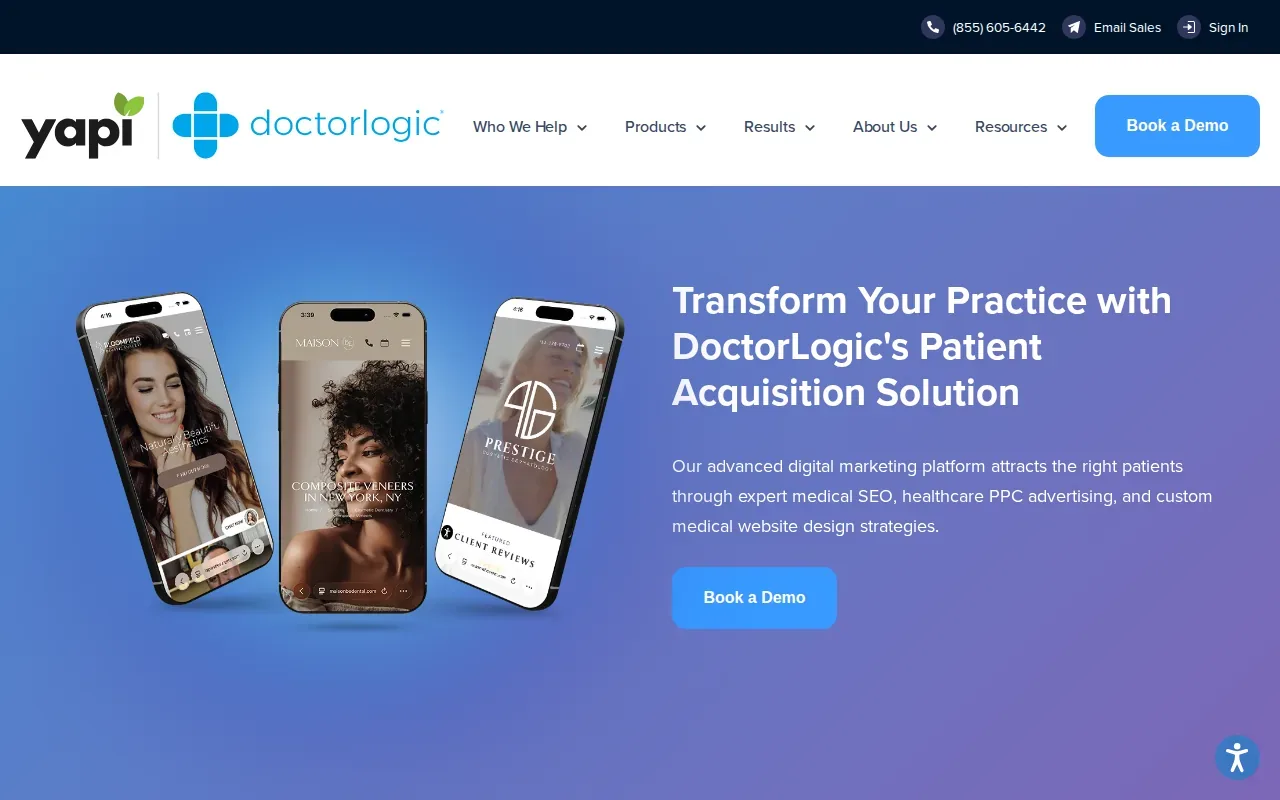
Its services include SEO, content, lead generation, Google Business Profile optimization, and map pack ranking. That work covers both a clinic’s pages and its local presence in search. A practice can ask how a proposed service page will connect to its local listing and its appointment path.
DoctorLogic’s approach to discuss is patient-intent keyword clustering that links symptoms to treatment service landing pages. For example, the page plan can distinguish a search about a symptom from a search for a named service, then map each to the most relevant page.
That focus is relevant when a clinic wants its search traffic to reach pages with a clear booking action. During planning, confirm how the agency defines an appointment-ready visit and which actions count as a lead. Those definitions shape the reports the clinic will use to judge progress.
DoctorLogic’s mix includes content and lead generation as well as local visibility. Ask who approves content about treatment and how the clinic will share accurate details about practitioners, locations, and services.
5. Intrepy Healthcare Marketing: local search intent for clinics
Intrepy Healthcare Marketing works with healthcare practices, including physiotherapy clinics, on SEO built around local search intent. It may fit a practice that wants condition and treatment pages as part of its search plan.
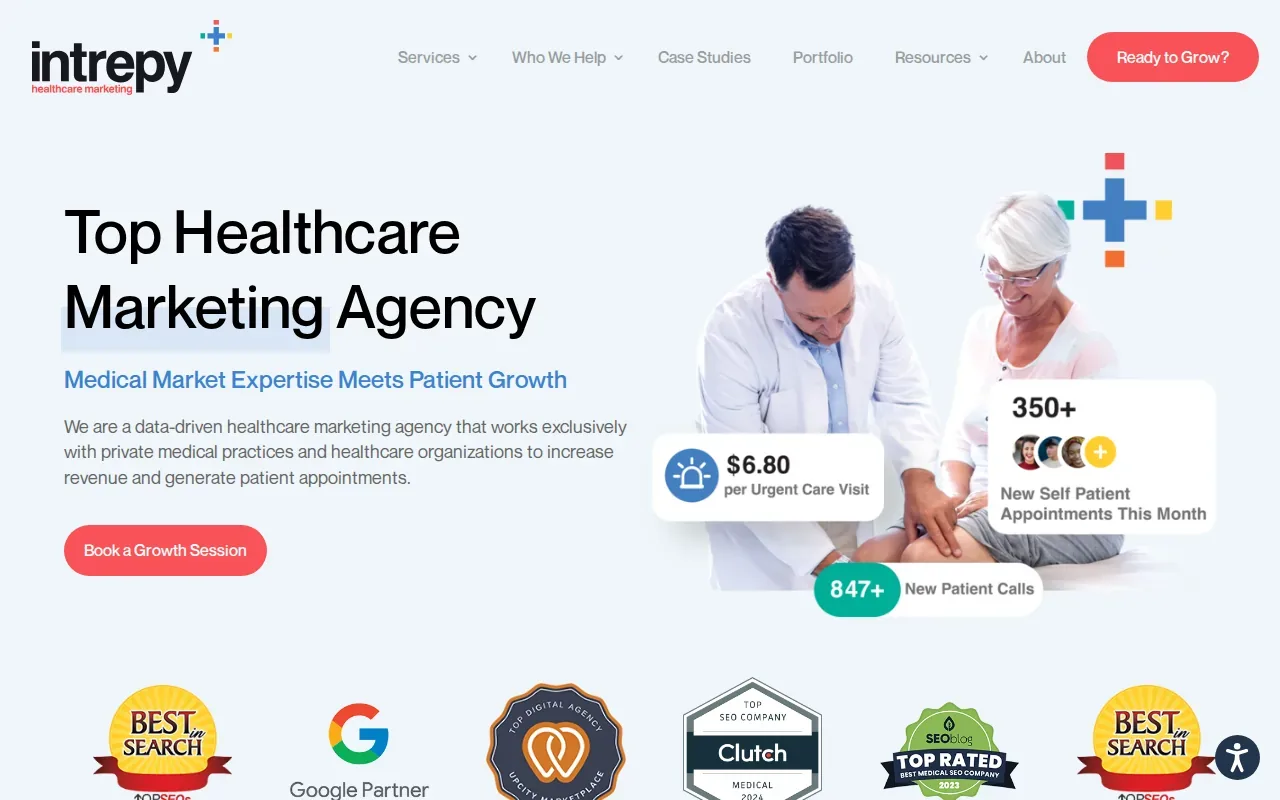
Its services include SEO, paid search, web design, and content briefing. A clinic can discuss how those pieces fit together before work begins. For instance, a content brief can guide a treatment page while the clinic decides whether paid search should support that service.
Intrepy’s differentiator is condition and treatment page targeting based on symptom-to-treatment mapping. That gives the team a way to plan pages around the patient’s search intent instead of using one broad page for every service. It also gives clinic staff a specific point to review: does each page describe a service the clinic provides?
For a clinic with more than one location, ask how the page plan will handle each service area. Location details need to be clear without making pages feel like copies with only the place name changed.
Because the services include paid search and web design, a clinic can also ask how campaign visitors will move from an ad or search result to an appointment action. A simple review of that path can reveal whether the page answers basic questions before asking someone to book.
Intrepy’s fit comes down to the clinic’s need for locally focused search work and its willingness to review content briefs. Set review roles early, especially when treatment descriptions or practitioner details need clinical approval.
Compare the five physiotherapy marketing agencies
The table below compares each provider by focus and the work it says it does. Use the final column to guide a first conversation. It is a prompt for due diligence, not a promise about results.
| Provider | Stated focus | Services to discuss | Good first question |
|---|---|---|---|
| E-Rehab | Physiotherapy only | SEO, website design | Which treatment pages are part of the plan? |
| WebFX | Broader healthcare, including physiotherapy | SEO, website | How does content review handle clinical claims? |
| PatientGain | Broader healthcare, including physiotherapy | Local search execution | How are treatment pages mapped to patient actions? |
| DoctorLogic | Broader healthcare, including physiotherapy | SEO, clinic search visibility, appointment-ready traffic | What counts as an appointment-ready action? |
| Intrepy Healthcare Marketing | Broader healthcare, including physiotherapy | SEO, local search intent | How will service pages differ across locations? |
Across the market, agencies often talk about conversion measurement and patient-intent keywords. A clinic still needs to check how those reports connect to its booking or practice-management records. Ask who owns that link between marketing leads and actual appointments.
Also compare what the clinic team must supply. Practitioner bios, approved treatment details, and timely review of drafts can affect how quickly pages move from planning to publication. If your team wants software for content operations rather than an agency engagement, Distribb.io is a separate option. Its platform automates keyword research, content creation, publishing, backlink building, and AI-search visibility.
Frequently asked questions
What should a physiotherapy marketing agency do?
A physiotherapy marketing agency should help a clinic reach relevant local searches and guide visitors toward an appointment action. The exact mix can include SEO, treatment pages, local profile work, paid search, or website changes. Ask how the agency will report leads and how your staff will review content about care and practitioners.
How do I choose a marketing agency for a physiotherapy clinic?
Choose based on your clinic’s main need, such as local visibility, treatment-page coverage, or support across several marketing channels. Then ask what the agency will deliver, what your team must review, and how results will be tied to inquiries or bookings. A clear scope makes proposals easier to compare.
Should a physiotherapy clinic hire a specialist agency?
A specialist may be a good fit when the clinic wants work centered on physiotherapy services and patient searches. Broader healthcare agencies may suit clinics seeking a wider set of marketing services. Compare the actual page plan and workflow, not the label alone, and confirm that the clinic can review clinical content.
How can I measure whether agency marketing is working?
Track the actions that matter to the clinic, such as appointment requests or booked evaluations, alongside search visibility and website visits. Agree on what counts as a lead before campaigns start. Then ask how reports will connect to the clinic’s scheduling or practice-management process.
Conclusion
For a clinic seeking a physiotherapy-only partner, start by discussing E-Rehab’s treatment-page and local search scope. Compare that plan with the broader service mix you need, then ask every finalist how it will report appointment actions. Clinics weighing software support can explore Distribb.io’s physiotherapy SEO option and Start your Free Trial.