

Keyword research written for enterprise teams tells you to build a topic model of your category. A five-person business does not need that, and following it produces a spreadsheet nobody uses.
What a small business needs is a short list of terms it can realistically rank for, that bring people who are close to buying. Usually that is thirty to fifty keywords, not three thousand. Organising those thirty to fifty terms into pages is covered in our guide to topic cluster strategy.
These nine steps produce that list in an afternoon, using tools that are free or nearly free.
How this guide was checked
Every tool named here was loaded on its live site in August 2026 and screenshotted, so all of them resolve and are current. Free tier limits were read from the vendors' own pages the same day.
The process itself is the one we would run for a business with no SEO team. Where a step can be skipped on a tight budget, it says so.
The two mistakes that waste the whole exercise
Chasing volume you cannot win. A term with 40,000 monthly searches is dominated by sites with thousands of backlinks. A new local business ranking there is not a realistic plan for this year, and building a content calendar on those terms means twelve months of work with nothing to show.
Ignoring intent. "What is bookkeeping" and "bookkeeper near me" have nothing in common commercially. One is a student, one is a customer, and a small business should be writing for the second long before the first. Our explainer on search intent covers how to tell those two apart before you write anything.
Step 1. Write down what you sell, in your customers' words
Before any tool, list your services the way customers describe them rather than the way your industry does. "Emergency plumber" not "reactive maintenance provision". "Tax return help" not "compliance services".
Where to get the wording: your own inbox, your last twenty enquiries, the questions you answer on every sales call, and the reviews people have left you. That is your seed list, and it is better than anything a tool will suggest.
Aim for fifteen to thirty seeds. This step takes twenty minutes and determines the quality of everything after it.
Step 2. Add the local and qualifier variants
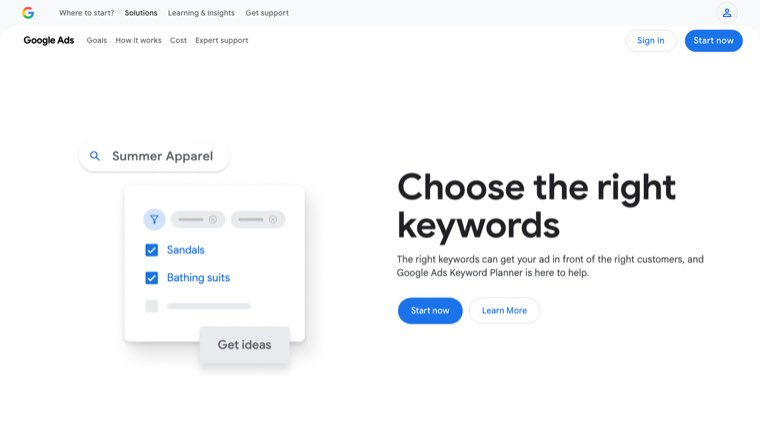
For most small businesses, the money terms carry a location or a qualifier. Take each seed and add your city, your neighbourhood, "near me", "for small business", "cheap", "best", "24 hour", and whatever else fits.
Why this matters more than volume: "plumber" is unwinnable and half the searchers are in another country. "Emergency plumber [your town]" is winnable and every searcher is a potential job today.
Google Keyword Planner is free with an Ads account and shows local volumes, which is the number you actually care about.
Step 3. Take the free data Google is already giving you
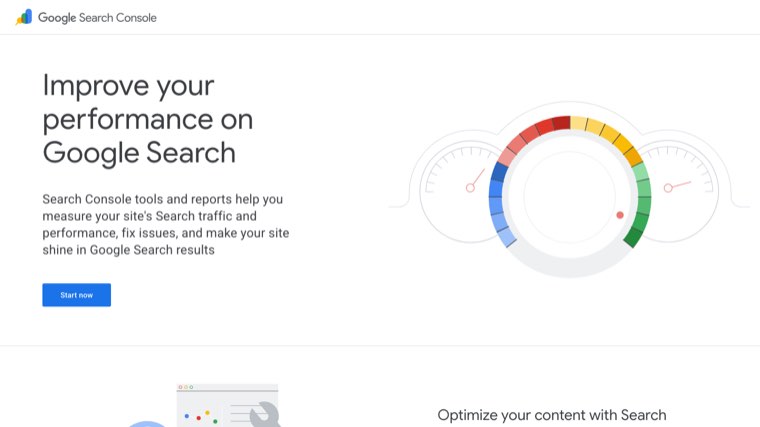
If your site has existed for more than a few months, Search Console is already showing you queries where you appear. This is real data about your site rather than an estimate about the market. Search Console also has a free API, and if you want volume and difficulty pulled the same way, we compare the keyword research API options in a separate guide.
Look for two things. Queries where you rank between 8 and 20, because those are one decent article away from page one. And queries where you get impressions but almost no clicks, which usually means your page does not match what the searcher wanted.
Why this step is first among the tool steps: it is free, it is specific to you, and it usually produces the fastest wins on the entire list.
Step 4. See what your competitors already rank for

Take the three businesses that keep appearing above you and look at which terms bring them traffic. You are looking for terms they rank for that you have no page about at all.
Ahrefs and Semrush both do this properly and both cost real money. Their free tiers, and Ubersuggest's, will give you enough to work with for a one-off exercise.
The shortcut if you have no budget: search your main terms and read the pages that rank. Their headings are their keyword list, written out for you.
Step 5. Get the questions people actually ask
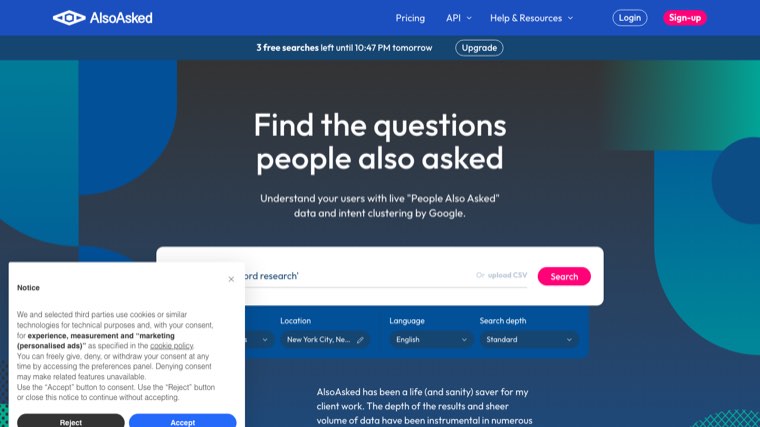
Question keywords are the easiest to rank for and the easiest to write. AlsoAsked and AnswerThePublic both map the questions around a topic, and both have free tiers. The wider method for mining those phrases is in our guide to long tail keyword research.
The free version of this step: type your main service into Google and read the People Also Ask box, then click one and watch it expand. Do that for ten minutes and you have a month of article topics.
Step 6. Filter by whether you can actually win

Now cut the list. For a site with few backlinks, discard anything with a keyword difficulty score above roughly 30 and anything where the first page is entirely national brands, Amazon or Wikipedia.
Look at the SERP, not just the score. If the top ten results are all pages from businesses roughly your size, you can compete regardless of what the difficulty number says. If they are all from sites with a thousand referring domains, no score changes that.
Mangools, KeySearch and LowFruits are all built for exactly this filtering job and cost a fraction of the big platforms. If Mangools and the big platform are the two you are choosing between, our comparison of Ahrefs vs KWFinder covers what you give up at the lower price.
Step 7. Sort what is left by intent
Split the surviving keywords into three buckets, because they need different pages.
| Intent | Example | What to build | Priority |
|---|---|---|---|
| Ready to buy | "emergency plumber leeds" | A service page | First |
| Comparing options | "best accounting software for cafes" | A comparison or listicle | Second |
| Learning | "how often to service a boiler" | A blog article | Third |
Do the first bucket before anything else. Most small businesses write blog posts for months while their actual service pages remain thin. The service pages are where the revenue is.
Step 8. Group them into pages, not keywords
Five keywords that mean the same thing are one page, not five. "Bookkeeper for small business", "small business bookkeeping services" and "bookkeeping for small companies" all want the same page.
How to check: search two terms and compare the results. If the same pages rank for both, one page serves both.
Writing separate pages for near-identical terms splits your own authority and the pages compete with each other. This is the most common self-inflicted SEO problem we see on small business sites.
Step 9. Put it on a calendar and publish

A keyword list is not a plan until it has dates. Order by intent bucket, assign one page a week, and start with the service pages from step seven.
This is the step where most small businesses stop, because writing consistently while running the business is genuinely hard. Distribb exists for that gap: it takes the keyword and Search Console data, builds the calendar, then writes and publishes the pages to your site on a schedule.
Honest limitation: software cannot do steps 1 and 7 for you. Only you know how your customers describe what you sell and which terms bring people who actually buy, and a plan built without that knowledge produces traffic rather than enquiries.
The tools, and what each costs
| Tool | Cost | Use it for |
|---|---|---|
| Google Search Console | Free | Queries you already appear for |
| Google Keyword Planner | Free with Ads account | Local search volumes |
| AnswerThePublic | Free tier | Question keywords |
| AlsoAsked | Free tier | Question structure |
| Keywords Everywhere | Low, pay as you go | Volumes inside search results |
| LowFruits | Low, credit based | Finding weak competition |
| Mangools | Mid | Difficulty scores and tracking |
| KeySearch | Mid | Difficulty scores, cheaper |
| Ubersuggest | Mid | Competitor terms |
| Ahrefs or Semrush | High | Everything, if you can justify it |
What we would actually buy: nothing, for the first pass. Search Console plus Keyword Planner plus reading the SERP covers steps 3 through 6 at zero cost. Buy a difficulty tool once you have run out of the obvious wins. If you do decide to spend, our guide to automating keyword research covers what that buys a business this size. When you do buy one, our Long Tail Pro vs Ahrefs comparison covers the cheap and the expensive end of that decision.
How often to redo this
Once a year for the full exercise. Every month, spend fifteen minutes in Search Console looking for queries where you have started appearing without meaning to. Our guide to how to track keyword rankings covers what to watch in that fifteen minutes.
Those accidental impressions are the highest-value keyword research available, because they are proof Google already thinks your site is relevant to something. Our guide to keyword research automation covers how to make that monthly check happen without remembering to do it.
What to do next
Do steps 1 and 2 today, on paper. Then open Search Console and do step 3.
If that produces ten keywords where you rank between 8 and 20, you already have your next ten pieces of work and you can skip the rest of the tooling entirely. Our guides to the best keyword research tools and finding low competition keywords go deeper on steps 4 and 6 when you get there.