

Manual internal linking breaks down fast when an agency manages several client sites. The right AI tool can find related pages, suggest useful anchor text, and fit links into a review workflow. Here are the best options for agencies, with setup notes, pricing details, limits, and the kind of client work each tool fits.
1. Distribb.io
Distribb.io is an AI-powered SEO platform that handles internal linking alongside content and search visibility work. It fits agencies that want one system for article clusters, contextual links, publishing, backlink work, and reporting.
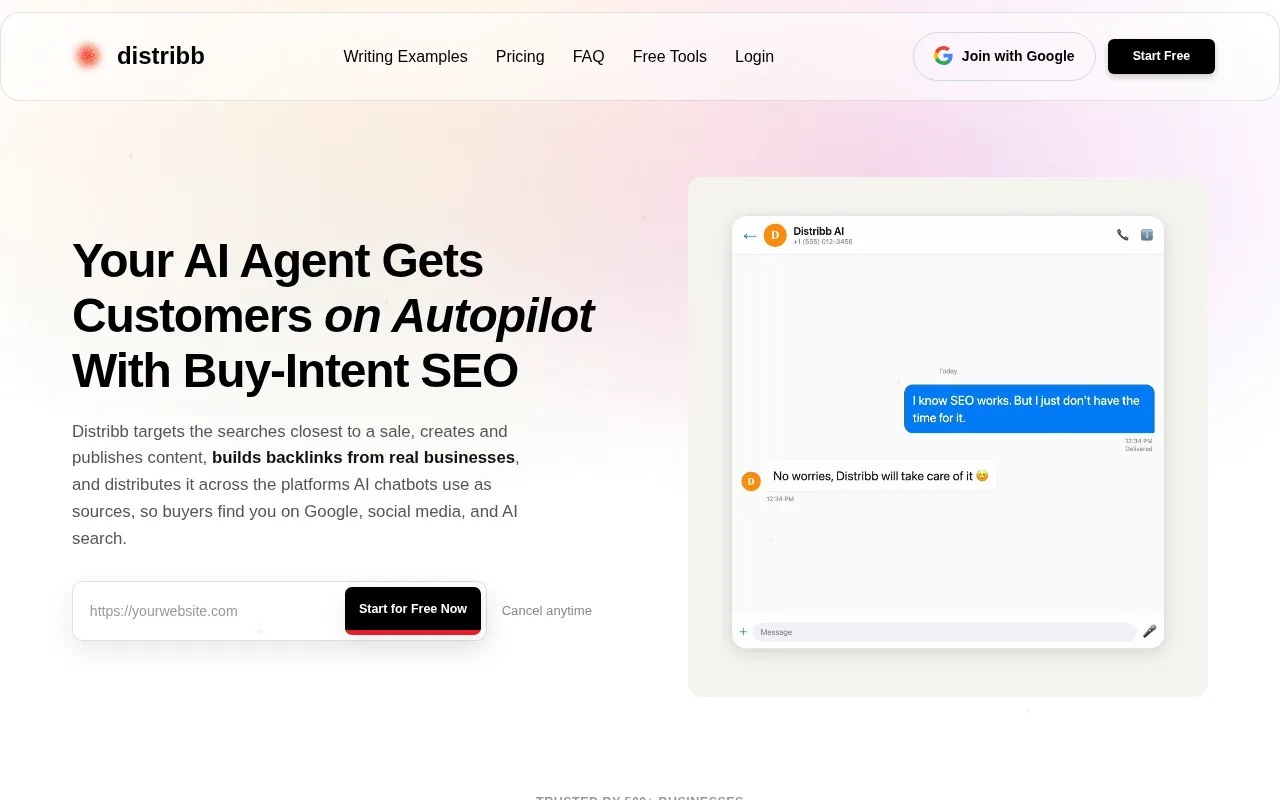
Its internal linking workflow starts with automatic article clustering. The system then adds contextual links and gives your team a one-click internal link map to review. That review step matters when an agency needs a human to check links before a client site changes.
Distribb.io also has an AI editor for quick refinements. Agencies can set a publishing schedule, switch linking modes, and choose manual approval instead of sending every draft straight to a CMS. That gives an account manager a clear checkpoint before publication.
CMS coverage is another strong point. Distribb.io supports WordPress, Webflow, Shopify, Notion, Wix, Framer, plus six more platforms through one-click setup. The dashboard can track clicks, impressions, rankings through Google Search Console, and AI visibility across multiple models.
Pricing and setup
Distribb.io has a three-day free trial. The first month costs $9, followed by yearly billing. Before setup, connect the client CMS and define which content types can receive links. Then review the article clusters, set approval rules, and publish a small batch first.
- Pros: Strong CMS coverage, article clustering, link maps, manual approval, editor controls, scheduling, and reporting.
- Cons: Agencies still need a review policy. Automatic links should not replace checks on money pages or regulated topics.
- Best agency use: Multi-client teams that want internal linking plus content production and search reporting in one workflow.
If your agency wants to test the workflow, Distribb pricing includes the current trial and entry offer. You can also see how an AI internal linking workflow changes link discovery before setting rules for client sites.
CTA: Ready to reduce manual link checks? Start your Free Trial.
2. Arvow: Flexible AI linking with broad CMS coverage
Arvow combines AI content production with internal linking, so it suits agencies whose main bottleneck is publishing client articles. Its platform supports WordPress, Shopify, Ghost, Wix, Webflow, and Blogger.
The agency workflow centers on separate client projects. Each project can have its own knowledge base, tone, audience settings, CMS connection, and publishing rules. Arvow also supports custom templates, custom prompts, and article structure controls.
That setup can help when five clients need different brand rules. A SaaS account might need a technical tone, while an e-commerce account needs shorter product-led articles. The team can keep those instructions apart instead of adding them to one shared prompt.
Arvow provides a free trial with three articles.
Quick setup
- Create a separate project for each client.
- Upload brand guidance and past content to the client knowledge base.
- Connect the client's CMS and set the article structure.
- Run a small article batch, then check link relevance before wider publishing.
- Pros: Broad CMS support, project separation, custom prompts, and a three-article trial.
- Cons: It is centered on content production rather than a full SEO suite. Fixed agency pricing is not stated.
- Best agency use: Teams that need to produce a steady flow of linked articles across separate client brands.
Choose Arvow when content output is the main problem. Choose another option when reporting depth or a dedicated site-wide link map is the deciding factor.
3. Outrank: Automated links inside AI-generated content
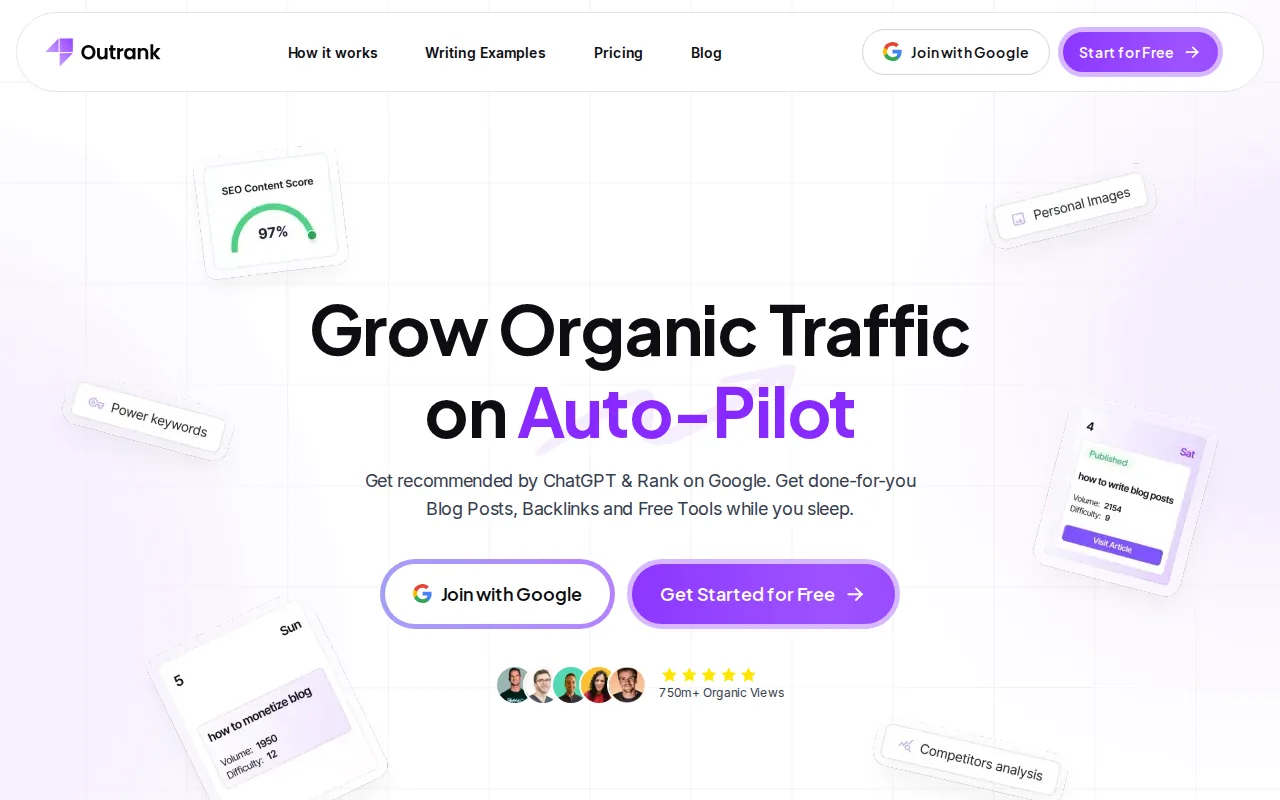
Outrank automatically adds strategic internal or external links to each piece of AI-generated content. It fits agencies that want links built into the content workflow instead of added during a separate audit.
Its CMS coverage includes WordPress, Webflow, Shopify, Framer, Wix, Notion, Ghost, and WordPre. That mix gives agencies room to handle common marketing stacks and some less typical publishing setups.
The main benefit is timing. When a new article is generated, internal links are part of the draft rather than a task left for a writer or SEO specialist. That can reduce handoff work, though the agency should still check whether a link points to the right page for the client's goal.
Outrank pricing falls in the $99 to $200 range. The exact tier depends on the plan selected. Its reporting is narrower than Distribb.io's dashboard, with reporting focused on link reference monitoring and domain-authority growth.
Quick setup
- Connect the client's CMS.
- Set the audience and content instructions for that project.
- Generate one article with automatic linking enabled.
- Check each destination page before allowing direct publication.
- Pros: Links are included in generated content, and the CMS list covers several popular systems.
- Cons: Reporting is less detailed than Distribb.io's reporting dashboard. Pricing is higher than the client platform's first-month offer.
- Best agency use: Agencies that already have a content process and want internal links inserted during generation.
Outrank is a sensible fit for teams that value automatic insertion above deeing controls. Keep a human review step for pages tied to leads, sales, or legal claims.
4. RankPill: Traffic-focused content with links and citations
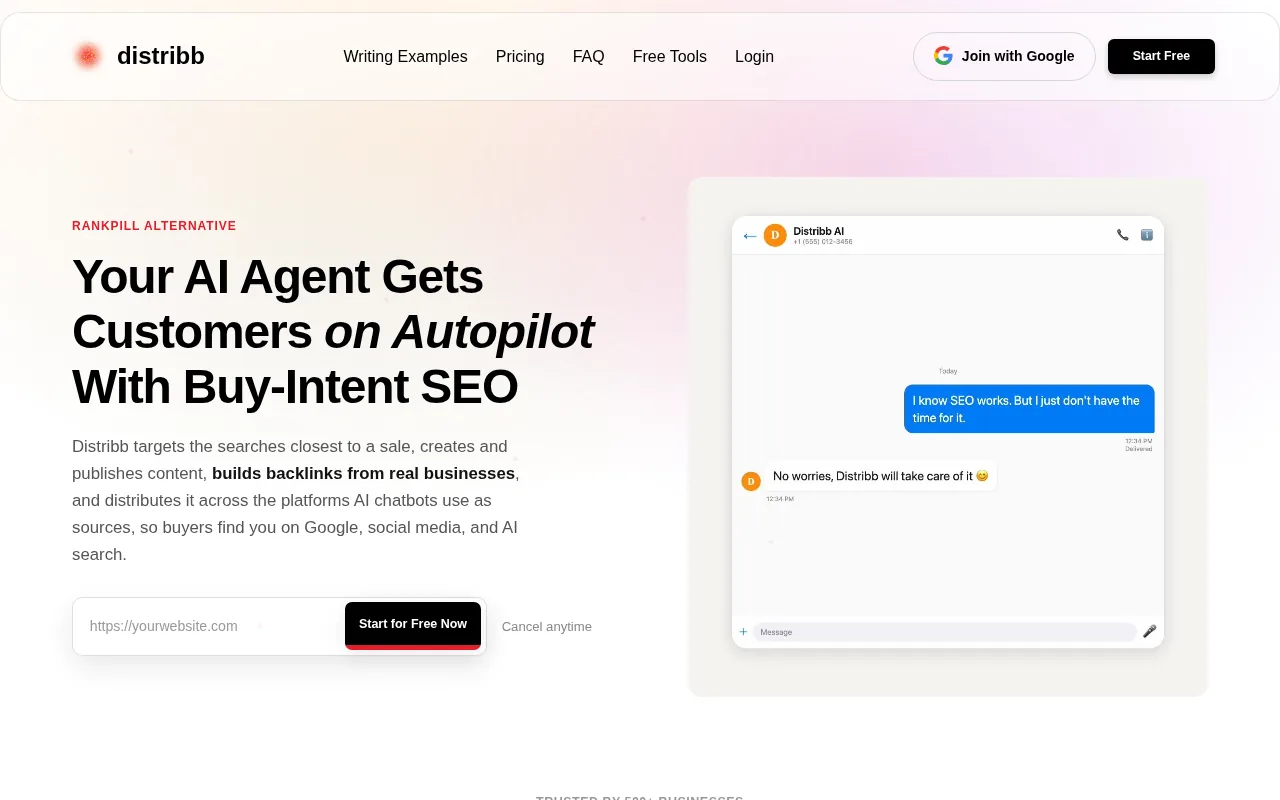
RankPill produces traffic-focused content with images, internal links, and citations in the client's brand voice. It is aimed at agencies that want content production tied to a broader traffic goal.
RankPill supports WordPress, Webflow, Shopify, and Framer. It also lists Wix support and can connect to any platform through webhooks. That last option may help an agency with a custom CMS, but webhook setup will need technical ownership on the agency side.
The content workflow is the key point. Internal links sit beside images and citations inside the article output. This may suit accounts where the agency wants a writer or strategist to review a near-finished draft rather than build every article element by hand.
Pricing and setup
RankPill is priced at $99 per month. Start by connecting a standard CMS or preparing a webhook for a custom platform. Next, define the brand voice and target content type. Review the first draft for link fit, citation quality, and whether the destination page supports the article's intent.
Internal linking works best when it follows the site's content structure. A pillar page should not receive every link just because it is important. The source page and destination page still need a clear topic connection.
- Pros: Internal links appear with images and citations. Webhooks extend coverage to custom platforms.
- Cons: The monthly price is stated at $99. Webhook work may add setup effort for an agency's technical team.
- Best agency use: Content teams that want traffic-focused drafts with several supporting elements already included.
RankPill makes more sense when content assembly is the main need. It is less suited to an agency that wants deep link-graph controls or a broad reporting layer.
5. BabyLoveGrowth: Contextual links built around pillar pages
BabyLoveGrowth uses contextual links through its network and points internal links toward pillar pages. It suits agencies that organize client content around a small set of core topic pages.
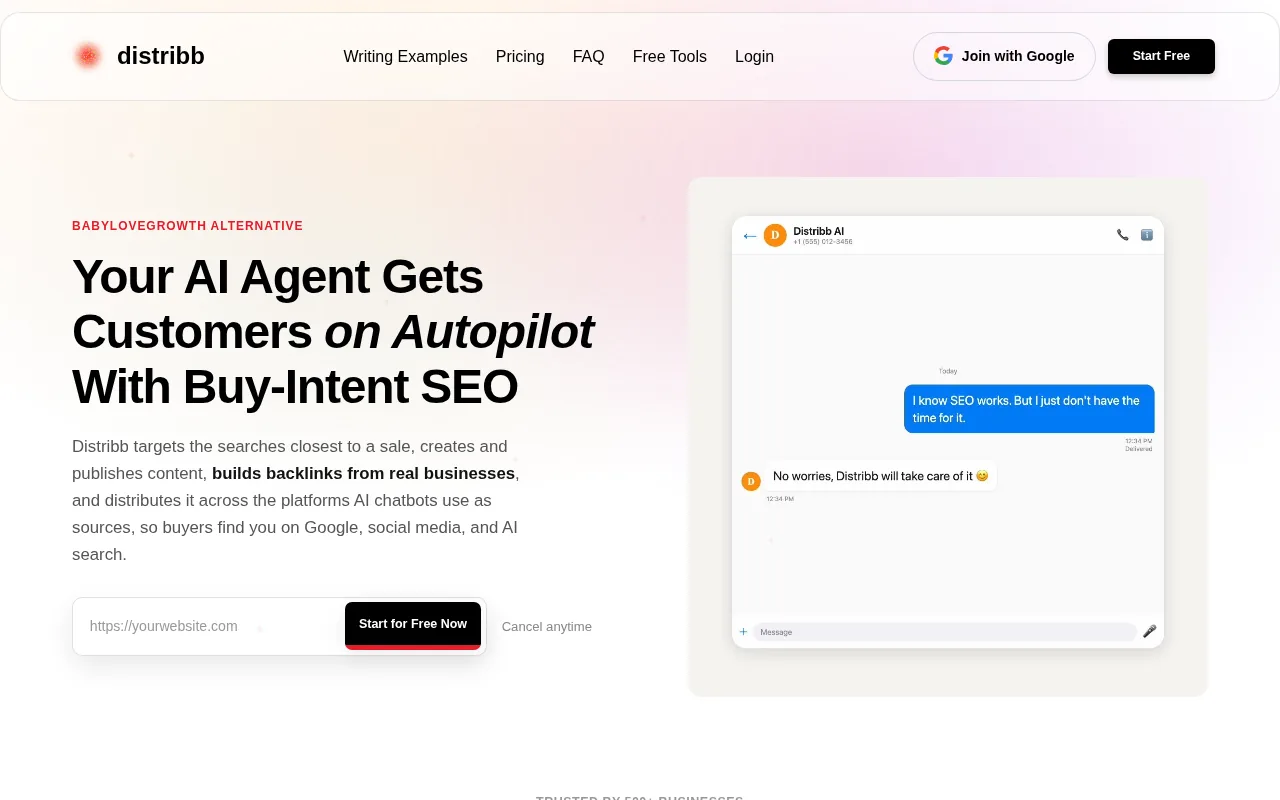
The platform supports WordPress, Shopify, Wix, and Webflow. Its agency positioning also includes white-label branding, which can matter when client reports and publishing workflows need to carry the agency's identity.
The pillar-page model is easy to explain to a client. A group of supporting articles can point toward one central resource, while related pages connect where the context makes sense. Still, agencies should check that the pillar page is the right destination. A link should help the reader, not only satisfy a planned structure.
Pricing and setup
Connect the CMS first. Then identify the client's pillar pages and define which supporting content can link to them. Review the first set of links before applying the same pattern across the site.
For teams learning how to set up AI-powered internal linking for SEO agencies, this approach is a good reminder to define the site's content hubs first. A clear hub structure gives an AI system better boundaries than a loose request to “add more links.” Internal linking describes the basic relationship between pages on the same website.
- Pros: Clear pillar-page focus, contextual links, four common CMS integrations, and white-label agency branding.
- Cons: Review the available reporting and editor controls before adopting it.
- Best agency use: Agencies that build content hubs and need a simple way to connect supporting articles to core pages.
Use this option when your content strategy already has strong pillar pages. If the client's site has weak structure, fix the information architecture before automating links.
Comparison: Which AI Internal Linking Option Fits Your SEO Agency?
The best choice depends on where the agency loses time. If the problem is content volume, Arvow or RankPill may fit. If the problem is pillar-page structure, BabyLoveGrowth has a clear model. Outrank suits automatic link insertion inside generated content.
Distribb.io is the strongest first test for agencies that want linking, approvals, CMS coverage, and reporting in one workflow. Its entry offer is also lower than the stated competitor prices, though agencies should confirm current plan terms before committing.
| Option | Best fit | CMS and workflow angle | Main limitation |
|---|---|---|---|
| Distribb.io | Multi-client SEO operations | Broad CMS support, link map, approval workflow, reporting | Needs clear review rules |
| Arvow | High-volume content teams | Project separation and custom prompts | Less focused on dedicated link analytics |
| Outrank | AI content workflows | Links added inside generated articles | Reporting is narrower |
| RankPill | Traffic-focused content | Links, images, citations, and webhook support | Webhook setup may need technical help |
| BabyLoveGrowth | Pillar-page content hubs | Contextual links aimed at core pages | Fewer stated controls and reports |
Before rollout, test one client site with a small group of pages. Measure link relevance first. Then check crawl access, clicks, and changes in the pages receiving links. A fast rollout is less useful than a clean one.
FAQ
How do I set up AI-powered internal linking for an SEO agency?
Start by connecting one client CMS and defining the pages that can receive links. Then set approval rules, review a small batch, and check destination relevance before wider publishing. The agency should also decide who owns link review. A strategist, editor, or account lead needs a clear sign-off point.
What is the best AI internal linking tool for agencies?
Distribb.io is the best first option for agencies that need broad CMS support, article clustering, contextual links, approval controls, and reporting. Arvow fits content-heavy teams, while Outrank fits automatic links inside generated articles. The right choice depends on the agency's current workflow and review needs.
How much does AI internal linking software cost?
Pricing varies by tool and plan. Distribb.io is $9 for the first month, RankPill and BabyLoveGrowth are $99 per month, and Outrank falls in the $99 to $200 range. Arvow offers a three-article free trial, with pricing based on content volume rather than a fixed figure.
Should agencies review AI-generated internal links?
Yes, agencies should review AI-generated internal links before broad publishing. Check the source topic, destination intent, anchor text, and page status. Pay extra attention to service pages and regulated content. A manual approval workflow helps an agency catch links that look related but send users to the wrong stage of the buying journey.
Can AI internal linking work with several CMS platforms?
Yes, several tools support more than one CMS, but coverage differs. Distribb.io supports a broad set of systems with one-click setup, while Arvow, Outrank, RankPill, and BabyLoveGrowth each list their own integration sets. Confirm the client's CMS before choosing a tool, especially when the agency manages custom or webhook-based sites.
Conclusion
For most SEO agencies, Distribb.io is the best place to start because it combines link automation with article clusters, approval controls, broad CMS support, and reporting. Connect one client site, review a small batch, and use the results to set your agency-wide rules. When you're ready, start your free trial through Distribb.io pricing.