
A full schedule rarely comes from one ad or social post. A clear chiropractic marketing plan connects the right local audience with useful information, a simple booking path, and follow-up that respects patient choice.
We analyzed 51 comments and questions from Reddit, Quora and YouTube about chiropractic marketing and found that 24% mentioned a lack of ad visibility.
Start with these five steps. Each one gives you a task to complete before you spend more time or money on the next channel.
Step 1: Define Your Ideal Patients and Practice Positioning
Goal: Decide who your clinic is best set up to serve, then make that choice clear in your messaging.
Write down the services your practice provides, the areas it serves, and the questions people ask before booking. Then look for the patient groups that fit those services. A clinic may focus on sports-related care, family care, or support for people seeking better mobility. Use your actual training and services to set the boundaries.
Next, choose one main audience for your first campaign. Avoid trying to speak to every person in town at once. If your strongest service is care for active adults, explain what a first visit involves and how someone can ask whether the service fits their needs. Keep claims about outcomes measured and accurate.
Check how nearby clinics describe their services. Look at their public websites and local listings. Note what they explain well, where their messages sound alike, and which common patient questions remain unanswered. Use those observations to make your own descriptions clearer, not to copy another clinic's claims.

Make a short positioning statement for staff to use consistently: “We help [audience] understand [service] and what to expect at a visit.” Fill the blanks with accurate, plain language.
To connect the plan with the search work behind it, Distribb.io has a chiropractic SEO service page. Use it to assess where ongoing search content fits your clinic’s goals.
Milestone: You should have one primary audience, a clear service focus, and a short description your whole team can explain.
Step 2: Strengthen Your Website and Local Search Presence
Goal: Help nearby people find the practice, understand what happens next, and take one clear booking action.
Start with a mobile check. Open your website on a phone and try to book or ask a question. Can a visitor find your location, hours, services, and booking route without hunting? Remove dead links and fix pages that load slowly or hide key details. A visitor who cannot tell what to do next may leave before contacting you.
Give each main service a useful page. Explain who the service is for, what an initial visit involves, and how to ask questions. Add your clinic’s qualifications and the author or reviewer for health information. Keep pages current. Don't promise a result or imply that every patient will have the same experience.
Review your Google Business Profile. Check that the name, address, hours, services, and booking link are accurate. Add real photos of the clinic and respond to public reviews with care. Don't share or confirm personal health details in a reply.
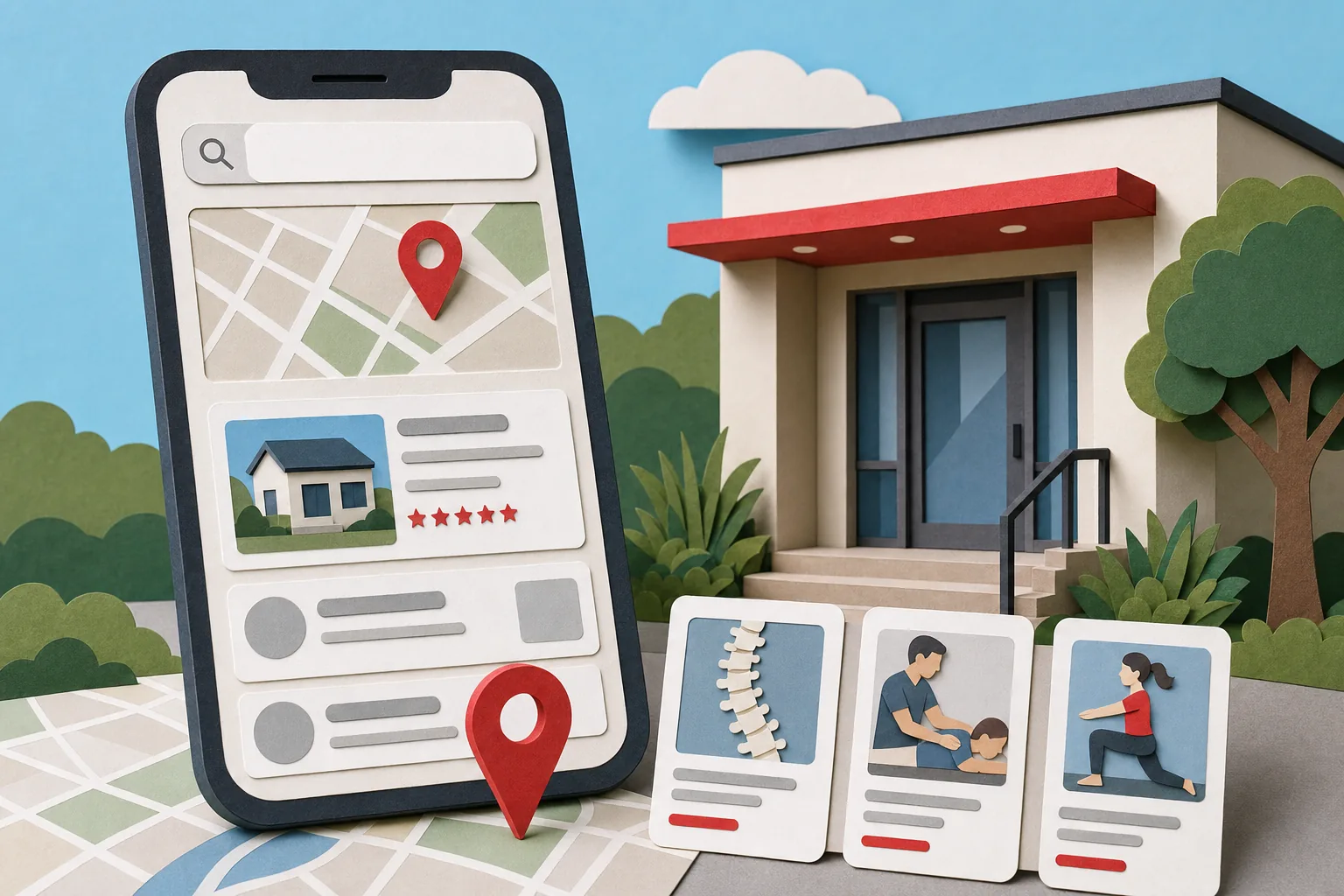
Use location terms where they fit naturally, such as a neighborhood or city name on the relevant service page. A separate page can help if you truly serve another location. Don't make near-identical pages that change only the place name. Google's guidance on helpful, people-first content can help your team keep the focus on useful answers rather than search phrases.
For clinics publishing many local service pages, Distribb.io can support keyword research, content creation, publishing, backlink building, and AI-search visibility. Review each draft for local accuracy and clinical claims before it goes live. The overview of SEO services for chiropractors can help you compare the kind of search work a clinic may need.
Milestone: A visitor should be able to confirm where you are, understand a service, and find the next booking step on a phone.
Step 3: Build Patient Trust Through Reviews and Referrals
Goal: Make it easy for patients to share honest feedback, then build referral relationships without pressure.
Set a simple review process. Ask patients for feedback after a suitable point in their visit or care, and give everyone the same neutral request. Don't ask only people you expect to leave a positive review. Reply to feedback with a calm tone. Thank the reviewer without confirming they received care at your clinic or discussing health details.
Patient stories need added care. Before using a quote, photo, or video in your advertising, check the consent and advertising rules that apply in your state. Never edit a story so it promises a typical result or suggests a cure.
Build referral ties by first listing nearby groups whose work complements your services. A gym, wellness center, or physician’s office may be a good fit, but the relationship should support patient choice. Explain what your clinic does and agree on a simple way to share information. Don't offer a reward for referrals unless your local rules and legal review allow it.
Track referral sources in your intake process. Ask new patients how they heard about the clinic, then record the answer in a consistent field. Review the pattern each month. If one partner sends people who are a strong fit, keep the relationship active with useful education rather than repeated sales messages.
Step 4: Choose Outreach Channels and Create Useful Content
Goal: Pick a small set of channels you can maintain, then give each one a clear job.
Choose one owned channel and, if the budget allows, one paid channel to test. Your website and email list are owned channels. Search ads can reach people actively looking for care, while social posts can help local people get familiar with the clinic. Set a local area and one offer or message for each test. Send ad clicks to a page that matches the ad, with one booking action.
Build content from questions your team hears often. A page or short video can explain how to prepare for a first visit, what a consultation includes, or how the clinic handles scheduling. Short clips for Reels, TikTok, or YouTube Shorts can answer one question at a time. Don't use patient images or stories without the right permission.
Email can support patient education and keep the practice easy to remember. Send useful notes to people who have agreed to receive them. For past patients, create a gentle reactivation message that invites them to ask about returning, rather than assuming they need more care. Use text reminders only through a process that respects consent and gives people a clear way to stop messages.
Try a monthly workshop or webinar if the team can run it well. Topics such as posture at a desk or preparing for activity can educate the community without making a promise about health outcomes. Share the same event through your site, email, and social channels, then track which channel led to registrations.
Before any ad or promotion goes live, review its wording for accuracy and applicable professional and advertising rules. Rules differ by state, so have a qualified reviewer check campaign language when needed.
A channel is worth keeping when the team can maintain it and it produces qualified inquiries. If neither is true, change the plan before adding another platform.
Step 5: Track Results and Improve Your Marketing
Goal: Find out which activities lead to booked visits, then adjust based on your own numbers.
Set a baseline before launching a campaign. Record new patient inquiries, booked first visits, completed first visits, and the source each person names. For paid campaigns, record spend beside those outcomes. A click or form fill is an early signal, not proof that the campaign brought in a patient.
Use a simple monthly sheet with one row per channel. Include campaign name, dates, spend, inquiries, booked visits, completed visits, and notes. Calculate cost per booked visit by dividing channel spend by booked first visits. Also check the share of inquiries that book. These measures help separate a traffic problem from a booking problem.
When inquiries rise but bookings don't, review the page and the front-desk handoff. Check if the page matches the ad, whether the booking step works on a phone, and whether staff can respond promptly during business hours. When bookings rise but visits don't, check reminder timing and whether people know what to expect.
Set a monthly review date. Keep what is working, pause what is not, and test one change at a time. You might change the landing page headline while leaving the audience and budget alone. That makes it easier to see whether the change helped.
For organic search, track the pages that attract local visits and the inquiries connected to them. Distribb.io can help manage recurring search content and publishing, while your clinic checks each page for accuracy and monitors the leads it brings. Don't judge a content page only by visits; connect it to the next step a patient takes.
Milestone: Your monthly review should show which channel produced booked visits, what it cost, and the next test you plan to run.
FAQ
What should a chiropractic marketing plan include?
A chiropractic marketing plan should define the patients you want to reach, the message your clinic can support, and the channels you can maintain. It should also cover your website, local search presence, review process, outreach, patient follow-up, and results tracking. Begin with a small set of actions and assign an owner to each one.
How can chiropractors get more patients locally?
Chiropractors can improve local discovery by keeping their business listing accurate and making service pages useful to nearby visitors. Give each page a clear next step. Ask patients for honest reviews without filtering who gets asked, and build appropriate community relationships. Measure inquiries and booked visits by source to see what is working.
Should a chiropractic clinic use Google Ads?
A clinic can test Google Ads when it has a clear service page, a local target area, and a way to track booked visits. Start with one focused campaign and match its landing page to the ad. Review the cost per booked visit, not only clicks. Keep health claims accurate and check ad rules before launch.
How often should a chiropractor review marketing results?
Review the main numbers once a month and check active paid campaigns more often while they run. Track inquiries, booked visits, completed visits, and spend by channel. If a result changes, look at the page and booking process before changing several campaign parts at once. A steady review makes it easier to spot what needs attention.
Conclusion
Build one clear audience and booking path before adding more channels. Then review your numbers monthly and improve the step where people drop off. If ongoing search content is part of your plan, explore Distribb.io’s chiropractic SEO service, then Start your Free Trial when you’re ready to try it.