

Semrush can be a big monthly bill when you only use a few of its tools. These cheaper alternatives to Semrush cover different needs, from automated content work to free data about your own site.
Distribb.io suits teams that want SEO tasks handled in one workflow. The other five picks focus on all-in-one research, competitor insights, or Google’s own performance data.
1. Distribb.io
Distribb.io is an AI-powered SEO platform for agencies and businesses. It automates keyword research, content creation, publishing, backlink building, and AI-search visibility work.

The main difference is the workflow. Instead of stopping at keyword or competitor data, Distribb.io can take work through content and publishing. You can add more websites to one account, which may suit agencies or brands managing more than one site. Pro is listed at $97 a month on Distribb pricing.
If you’re comparing the work each product handles, Distribb.io’s Semrush comparison lays out how the two differ. A free trial gives you a way to check the workflow against your team’s actual publishing needs.
For a team that spends more time getting pages shipped than reading dashboards, that execution focus may matter more than a bigger set of research reports.
2. SE Ranking: a budget-conscious all-in-one suite
SE Ranking is an all-in-one SEO suite with keyword research, rank tracking, competitor research, site audits, and backlink monitoring. It also has AI writing and content add-ons.
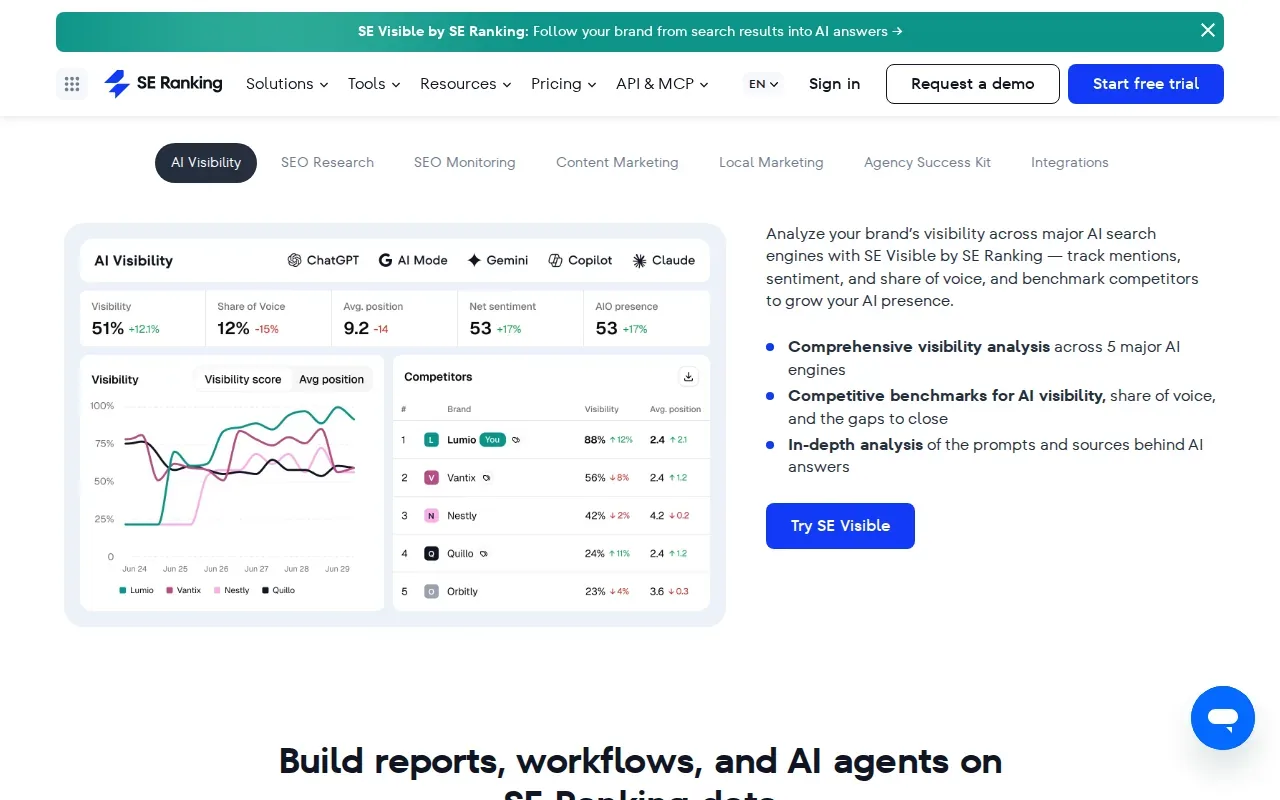
Its main appeal is breadth. An agency can use it to check keyword positions, review a client’s site, and prepare white-label reports in one system. Client management and white-label reporting make it a fit for teams that need to share findings under their own brand.
SE Ranking's Core plan is listed at $129 a month, or $103.20 a month when billed annually. Check which features sit in the plan you’re considering, especially if you need reporting or content add-ons. The annual rate lowers the monthly equivalent, but commits you to yearly billing.
For a team replacing several Semrush workflows, SE Ranking is the closest match among these picks. For a solo site owner who checks rankings now and then, the wider suite may be more than the job requires.
3. Mangools: approachable tools for focused SEO research
Mangools bundles five tools: KWFinder, SERPChecker, SERPWatcher, LinkMiner, and SiteProfiler. Its strength is an interface that’s easier to get started with than a large SEO suite.
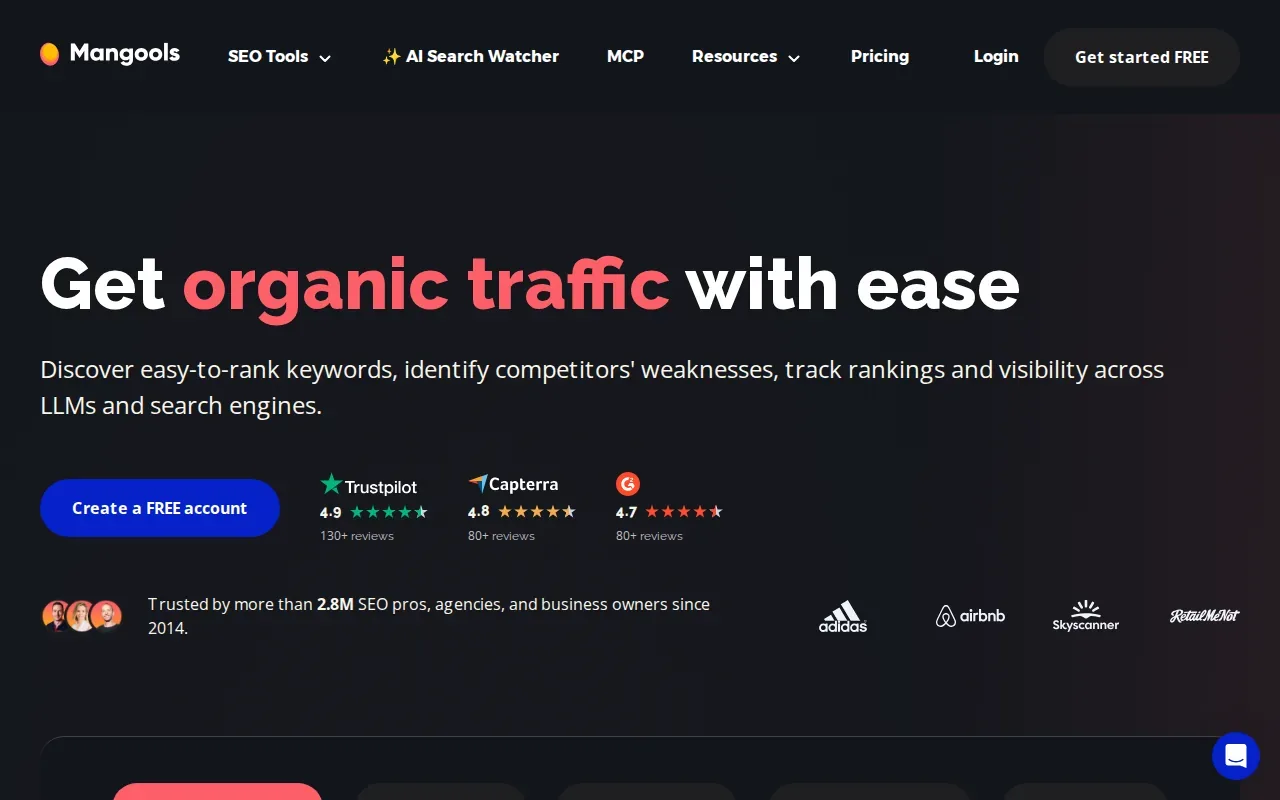
The tools cover keyword research, SERP checks, rank tracking, link research, and site profiling. That mix can work well for a blogger or small team that wants to find topics and check how pages perform without building a large monitoring setup.
Check Mangools’ pricing page for current plan rates; annual billing lowers the monthly equivalent but requires paying the year upfront. Mangools has daily limits for keyword and SERP checks, so frequent research sessions may run into those caps.
Mangools is a focused choice, not a one-for-one match for every Semrush task. If technical site audits are part of your regular routine, plan on using another way to handle them.
4. SpyFu: a lower-cost pick for competitor research
SpyFu focuses on competitor research. It shows keywords a rival ranks for organically and terms that rival buys through Google Ads, with years of historical data.
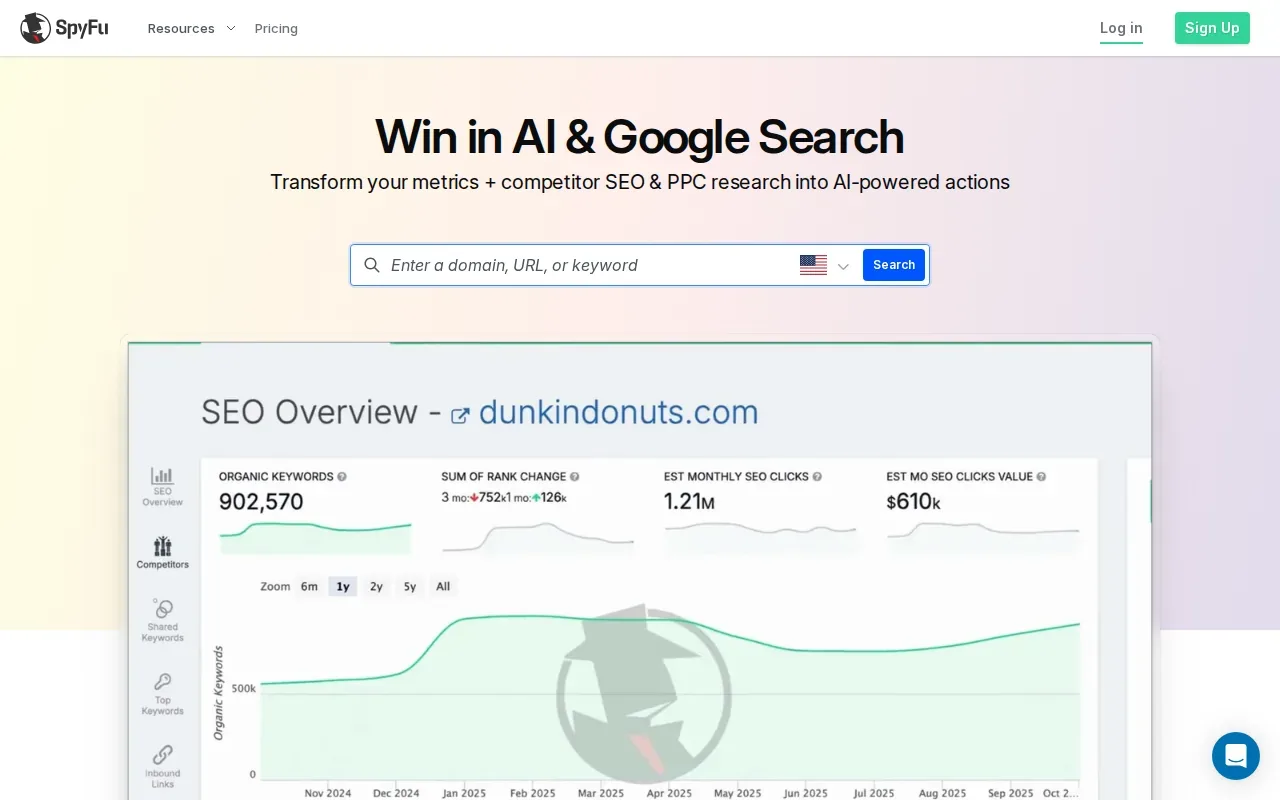
That makes it useful when the question is about a competitor’s search strategy. For example, a marketer preparing a campaign review can look at organic keywords and paid terms together, then decide which areas deserve closer analysis.
SpyFu is a lower-cost pick for this job; check its pricing page for current rates. Its main value is competitor and PPC intelligence rather than broad, end-to-end SEO automation.
Choose SpyFu when competitor keyword history is the job you need to do most. If your team also needs a full content and publishing workflow, you’ll need to account for those tasks separately.
5. Serpstat: mid-market coverage across SEO tasks
Serpstat is an all-in-one SEO platform for keywords, rankings, backlinks, site audits, and competitor analysis. Keyword clustering and rank tracking are two of its standout areas.
Clustering can help a team group related searches before planning pages. Rank tracking then helps the team review how those target terms change over time. The broader suite also includes audits and competitor analysis, so it can support routine research and site checks in one account.
The Individual plan starts at $69 a month, or $600 a year. The monthly plan costs more over a year than the annual payment, so compare the billing choice against how often your team will use the tools.
Serpstat suits a team that wants several SEO tasks in one platform and values topic grouping. A team that mainly needs a light keyword tool may not need its wider coverage.
6. Google Search Console: free search performance data
Google Search Console is free and reports first-party data for your own site. It shows impressions, clicks, average position, and the queries and pages behind those results.
That makes it a useful partner to any paid SEO tool. Use it to see which pages receive search impressions, then review the query data to spot pages that may need clearer content or a better match to search intent.
Search Console gives you Google data about your own site, not a paid research suite’s estimates about the wider market. It isn’t a substitute for competitor keyword research or a full set of SEO workflows. But if the key question is how your own pages appear in Google, it’s a strong place to start without adding a subscription.
Pair it with a paid platform when you need competitor insights, broader backlink research, or a more hands-on content workflow.
Compare the cheaper Semrush alternatives at a glance
Use this table to match each option to the task that matters most. A low price alone doesn’t make a tool a replacement for every Semrush workflow.
| Tool | Best fit | Coverage to weigh | Starting price |
|---|---|---|---|
| Distribb.io | SEO work that includes content and publishing | Automates research, content, publishing, backlink building, and AI-search visibility | $97/month (Pro) |
| SE Ranking | Agencies needing a broad suite | Research, tracking, audits, backlinks, client management, and white-label reports | $129/month; $103.20 monthly when billed annually |
| Mangools | Focused research with a friendly interface | Five tools for keyword, SERP, rank, link, and site research | See website |
| SpyFu | Competitor and paid-search research | Organic and Google Ads keyword history | See website |
| Serpstat | Mid-market SEO coverage | Keyword clustering, rankings, backlinks, audits, and competitor analysis | $69/month; $600/year |
| Google Search Console | First-party data about your own site | Impressions, clicks, average position, queries, and pages | Free |
Semrush’s broad feature set can feel costly if you only rely on a few parts of it. These alternatives trade breadth, workflow, or data scope in different ways.
Frequently asked questions
What is the cheapest alternative to Semrush?
Google Search Console is free, but it only reports Google performance data for your own verified site. Among the paid options here, SpyFu and Mangools are the lower-cost picks; check their pricing pages for current rates. Serpstat’s Individual plan is $69 a month, or $600 a year, and Distribb.io Pro is listed at $97 a month.
Which Semrush alternative is closest to an all-in-one suite?
SE Ranking is the closest match in this shortlist for broad SEO research and reporting. It covers keyword research, rank tracking, competitor research, site audits, and backlink monitoring. Distribb.io takes a different approach by automating content creation and publishing alongside SEO work.
Can Google Search Console replace Semrush?
No, Google Search Console can’t replace Semrush on its own. It reports impressions, clicks, average position, queries, and pages for your own site. It doesn’t provide the competitor research or broader paid-tool workflows that some teams need. It’s best used as a free source of first-party Google data.
Which alternative is best for competitor keyword research?
SpyFu is the most focused pick here for competitor keyword research. It shows organic keywords and Google Ads terms associated with rivals, plus historical data. SE Ranking and Serpstat also include competitor analysis as part of broader SEO suites, so they may suit teams that need competitor research alongside other tasks.
Should I choose a monthly or annual plan?
Choose based on how sure you are that the tool fits your workflow. Monthly billing costs more over a full year for some options, while annual billing lowers the monthly equivalent but requires a larger upfront payment. Check the plan’s included features and usage limits before you commit to a year.
Conclusion
If you want SEO automation that reaches beyond research and into content and publishing, start by testing Distribb.io against a real task your team needs to ship. Review Distribb’s backlink exchange as part of that workflow, then check Distribb pricing to see whether the platform fits your budget and site needs.