

Most lists of blog examples are lists of blogs with nice design. Design is the least transferable thing about them, and copying it produces a good-looking blog that does nothing for the business.
What is worth studying is the job each blog does. A blog built to capture search demand looks nothing like a blog built to establish a founder's authority, and both are correct for their purpose. This list groups fourteen live examples by job, and names the specific thing to take from each.
How we checked these
All fourteen were loaded live in August 2026 and screenshotted, so every blog shown is genuinely online and current.
One well-known example was cut as a result. Signal v. Noise, Basecamp's long-running and much-copied blog, now displays a notice that it is closed. It appears on almost every list in this category as a live recommendation, which it is not. Two others, Wait But Why and Seth Godin's blog, block automated access, so they are not shown here despite being worth reading.
The four jobs a blog can do
| Job | What success looks like | Examples |
|---|---|---|
| Capture search demand | Ranking pages, steady inbound | Ahrefs, HubSpot, Shopify, Zapier |
| Build product credibility | Readers trust the company more | Stripe, Cloudflare, GitLab |
| Establish a point of view | People quote you | Paul Graham, James Clear |
| Support the product | Fewer support tickets, better activation | Notion, Figma, Wistia, Intercom |
A blog trying to do all four does none well. Pick the job before the design.
Where you publish is a smaller decision than which job you pick, but it is the next one. If you are weighing your own domain against writing on a platform that already has readers, our comparison of Substack and Medium for writers covers what each choice costs you in ownership and in reach.
Blogs that capture search demand
1. Ahrefs Blog

The clearest example of a blog as a growth channel. Every post targets a specific query, the data in it comes from Ahrefs' own index, and the product appears as the natural tool for the job rather than as a pitch.
Copy this: using proprietary data as the differentiator. Anyone can write "how to do keyword research". Only Ahrefs can write it with numbers from a 14-trillion-link index, and that is why their version ranks.
2. HubSpot Blog

The largest and most systematic content operation in marketing, covering an enormous topic range with rigorous internal linking and constant updating of old posts.
Copy this: the updating discipline. HubSpot's traffic comes as much from refreshing existing posts as from publishing new ones, and almost nobody does the refreshing.
3. Shopify Blog

Shopify writes for people who want to sell online but do not yet have a store, capturing an audience before it is anyone's customer.
Copy this: targeting the stage before purchase intent. Longer payback, much larger audience, and far less competition from your direct rivals.
4. Zapier Blog

Zapier ranks for enormous volumes of "best X app" and productivity queries that are only loosely connected to its product, then connects them naturally to automation.
Copy this: the adjacent-topic strategy. Writing about the tools your customers already use reaches them earlier than writing about your own category.
Blogs that build product credibility
5. Stripe Blog
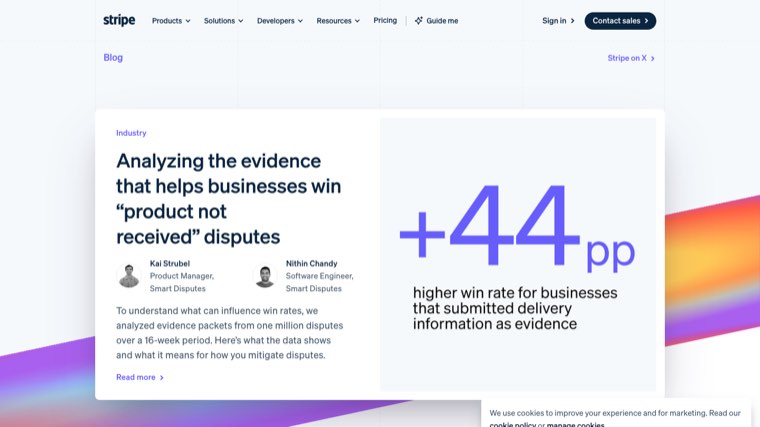
Stripe writes about payments infrastructure, economics and engineering at a level that assumes an intelligent reader, and publishes far less frequently than the SEO-driven blogs above.
Copy this: treating restraint as a signal. Low volume and high quality communicates confidence, and for a company selling to engineers that is worth more than ranking for a hundred queries.
6. The Cloudflare Blog
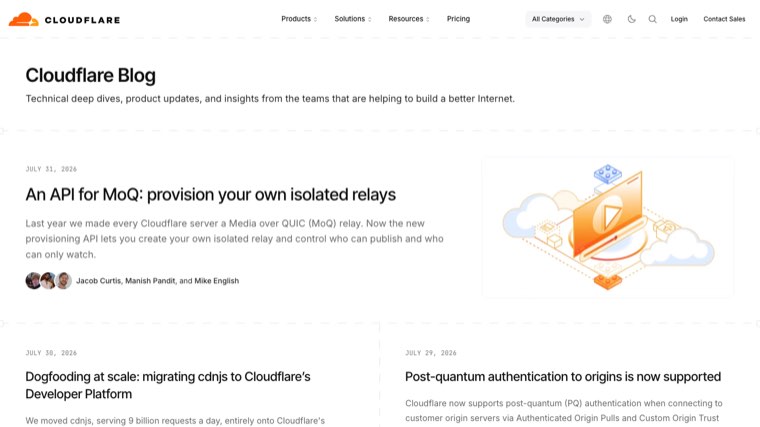
Deeply technical writing, including detailed public post-mortems when things go wrong. Those incident write-ups are widely read and widely respected.
Copy this: publishing your failures in detail. It is the single most credibility-building thing a technical company can do and almost nobody has the nerve.
7. GitLab Blog

GitLab writes openly about how it operates, including things most companies keep internal, alongside product and engineering content.
Copy this: the transparency as positioning. When your public handbook is itself a reason people trust you, the blog becomes an extension of the product.
Blogs that establish a point of view
8. Paul Graham's Essays

Plain HTML, no images, no navigation to speak of, no newsletter popup. Among the most influential writing in technology, entirely on the strength of the ideas.
Copy this: the proof that design is not the variable. If the thinking is original, the presentation can be almost nothing. If the thinking is not original, no design saves it.
9. James Clear, Articles
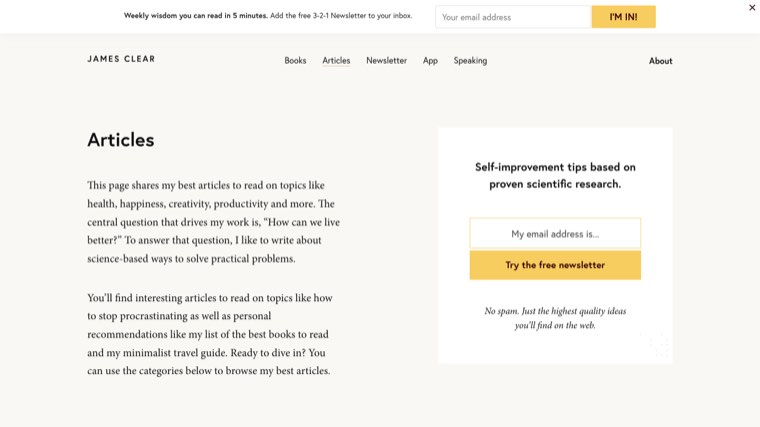
A well-organised library of articles on habits and decision-making, structured so a new reader can find the best entry points immediately rather than hitting a reverse-chronological feed.
Copy this: the "best articles" entry page. Most blogs show newest first, which is the worst possible introduction for a first-time reader.
Blogs that support the product
10. Notion Blog
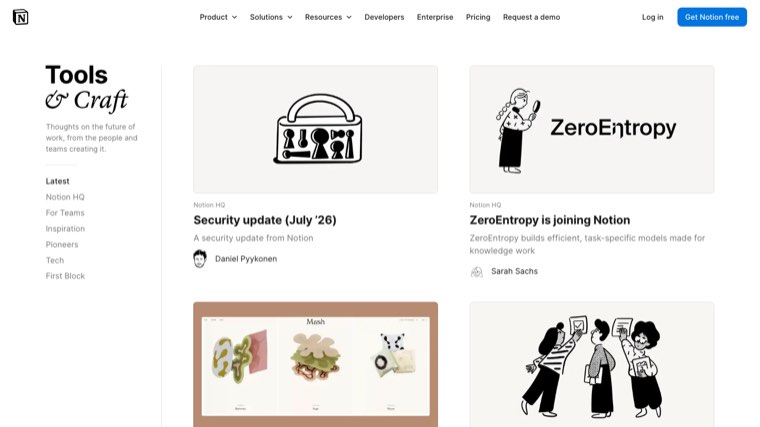
Notion's blog covers how people actually use the product, alongside broader writing on tools and craft, which teaches the product without reading as documentation.
Copy this: use-case storytelling. Showing a real person's workflow activates new users better than a feature announcement.
11. Figma Blog

Figma writes for designers about design, with the product present but rarely the subject, which is why designers read it voluntarily.
Copy this: writing for the identity rather than the job title. People read things that make them better at what they care about being.
12. Intercom Blog
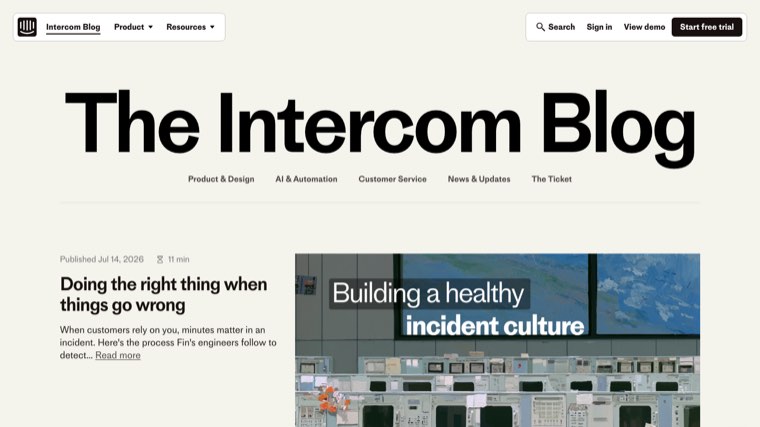
Intercom pairs written content with a long-running podcast, covering customer service, product and AI, and has built a genuine audience around the ideas rather than the tool.
Copy this: the multi-format approach. The same thinking published as an article and an episode reaches two audiences for slightly more than the cost of one.
13. Wistia, Learn
Wistia teaches video marketing thoroughly, using its own videos throughout, so the blog demonstrates the product simply by existing.

Copy this: letting the medium prove the product. If you sell video hosting, the case study is the page itself.
14. Buffer Blog
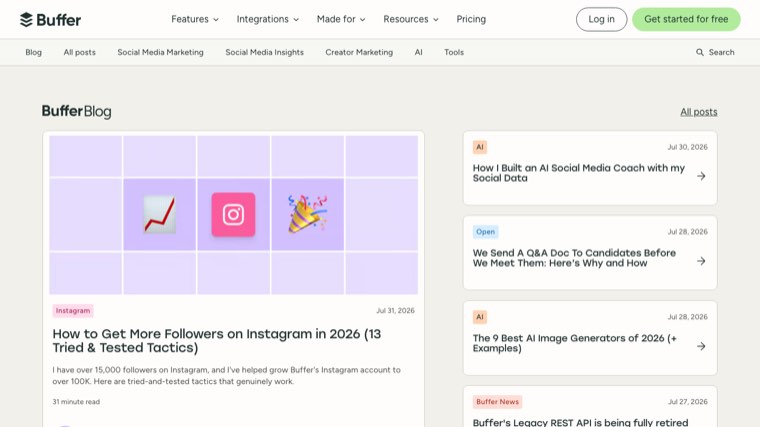
Buffer combines useful social media content with unusual openness about the company's own numbers and decisions, which built an audience long before the SEO did.
Copy this: the combination. Useful content earns the search traffic, transparency earns the returning readers, and most blogs only attempt the first.
What the good ones share
One clear job. Every blog here does one of the four things well and mostly ignores the others.
A real reason to exist. Proprietary data, genuine expertise, actual transparency, or a point of view. None of them are summarising what everyone else already published.
Findable structure. Best-of pages, topic hubs, clear categories. A reverse-chronological feed is a filing system, not a reading experience, which is why content hub examples is worth reading alongside this.
Consistency over intensity. Every blog here has published for years. That is the only thing on this list that cannot be shortcut, and it is the thing most blogs fail at.
One more thing they have in common is that AI assistants quote them, for the same reason they rank: they make specific claims a model can lift and attribute. The mechanics of that are worth reading on their own in our guide to getting AI to recommend your business.
What to do with this
Pick the job first. Write it down, because a blog without a stated job drifts into publishing whatever occurred to someone that week.
Then pick two examples doing that job and study their structure rather than their design: how they organise entry points, how often they publish, what proportion is product versus topic, how they link internally. If a whole blog is more than you want to take apart, the same exercise at the scale of one page is in our collection of blog post examples.
Then commit to a schedule you can actually hold. Publishing well once a fortnight for two years beats publishing daily for six weeks, and the second is what most blogs actually do. If you have not started yet and suspect the moment has passed, we took that question seriously in is it too late to start a blog.
If a whole blog is too big a thing to copy from, start with one post instead. We pulled a single article apart section by section in our worked blog post example.
The part that ends most blogs
Not strategy. Month four, when the person who was writing it gets busy and the schedule quietly stops.
Every blog on this list survived that, which is most of why they are on it. If holding a schedule is the constraint rather than knowing what to write, Distribb runs keyword research, writing, publishing and internal linking on a schedule, with a backlink exchange for the links. There is a 7-day free trial. If your problem is that you have something to say and no audience yet, none of that helps and Paul Graham's approach is the better model.