Best Link Building Services in the USA


Choosing a link building partner can feel like a gamble: costs vary, and a big link count doesn't tell you much about quality. The best link building service in the USA depends on your budget and how you want links earned. Here are four providers plus Distribb.io, with a clear look at who each suits.
We analyzed 42 comments and questions from Reddit, Quora and YouTube about link building services in the United States and found that 29% mentioned the relevance of linking sites and pages.
1. Distribb.io
Distribb.io is an AI-powered SEO platform that automates keyword research, content creation, publishing, backlink building, and AI-search visibility. It suits agencies, SaaS founders, e-commerce brands, and SEO teams that want link building connected to their wider content work.
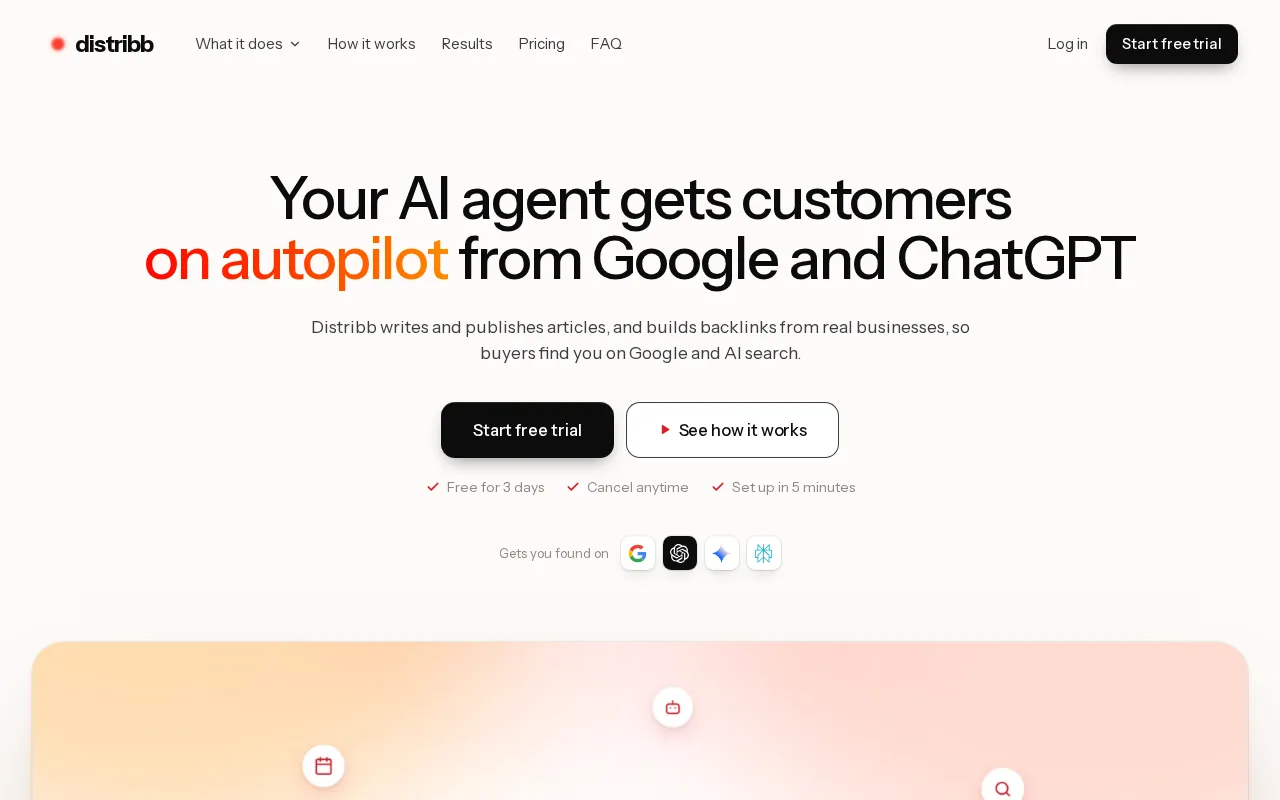
Its main difference from a link-only agency is the workflow: link building sits alongside content planning and publishing, rather than in a separate service lane. The platform also includes a backlink exchange. Teams evaluating link networks can compare that model with best backlink exchange platforms before choosing an approach.
The site advertises a $9 first month for Pro. Its listed Pro monthly price is $97, while Accelerator is $495 per month. The Accelerator plan includes done-for-you support. Check the current offer and plan terms before you start, since promotions can change.
There’s a trade-off to weigh. Distribb.io is a platform for automating SEO work, while the other picks below are service providers with distinct outreach models. If you want one vendor to build and place every link through a fully managed agency campaign, compare the scope carefully.
Start your Free Trial with Distribb.io's backlink exchange to see how the workflow fits your site and team.
2. Siege Media: content-led links and digital PR
Siege Media earns links through content and digital PR rather than buying placements. It suits brands with budget for original content and time to let that content attract links.
Its approach starts with topics that have a reason to be cited, such as data pages, tools, or statistics hubs. The team builds content around those topics, then works to help reporters and bloggers find it. A useful asset can also attract visitors and support brand recognition, so the work isn't measured by links alone.
Siege Media says some programs can produce an engine of more than 100 monthly links, but it also notes that this comes from long-term, high-volume content work. Its stated average Domain Rating is 40 or higher in most industries, and it says first links often arrive around month four. That pace makes the approach a poor fit for teams that need placements right away.
For its link-building work, Siege Media describes an effective cost per link under $250 in some cases. That is not the same as a low monthly bill: its starting price is reported at around $12,000 per month. The investment makes more sense when content itself is a goal, not only the backlink count.
A campaign also depends on the site being able to rank the content it publishes. Siege Media notes that sitewide SEO issues can affect the results of its passive link approach. Before committing, ask how the proposed content supports your audience and what progress you'll see before links begin to arrive.
3. uSERP: link building for funded SaaS companies
uSERP combines editorial outreach with contextual link insertions. It suits funded SaaS companies that want placements on established publications and have a substantial monthly budget.
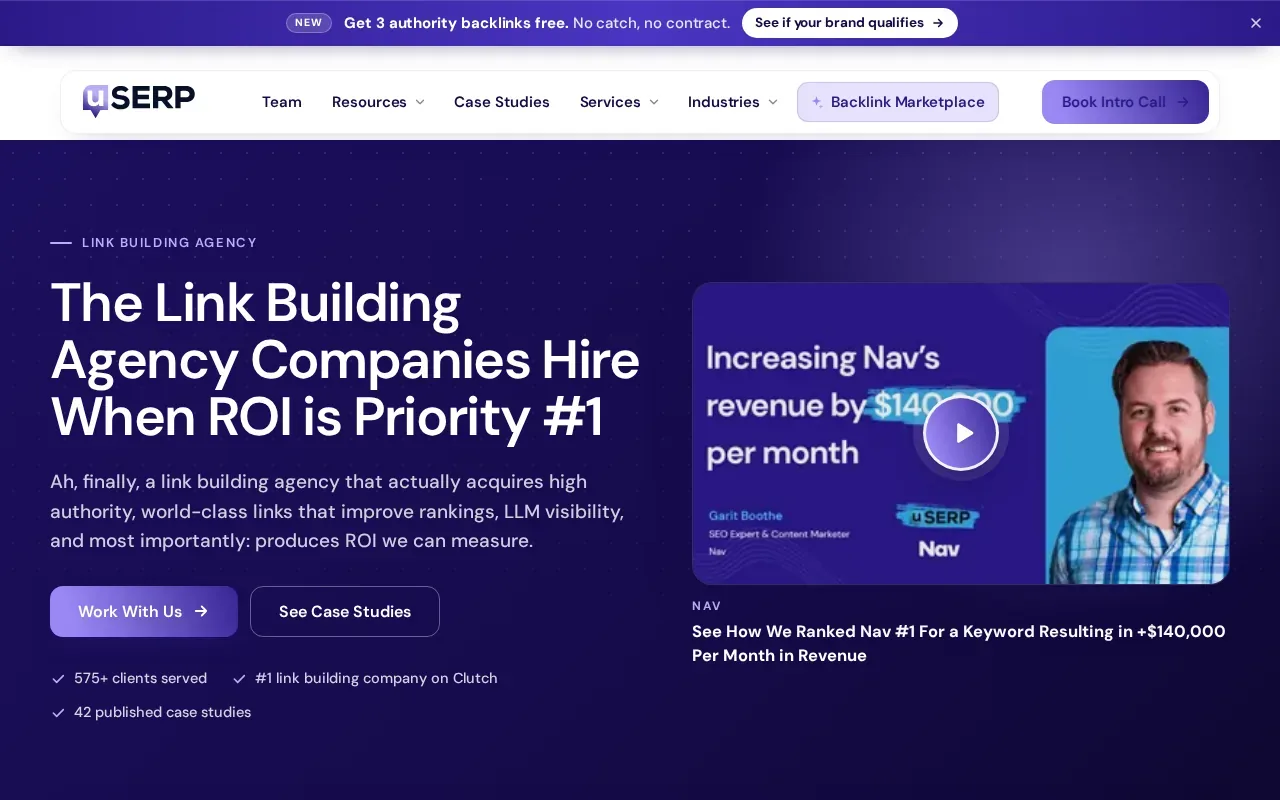
The service describes a mix that can include editorial outreach, unclaimed brand mentions, guest contributions, resource pages, digital PR, and contextual insertions. Its stated monthly capacity includes five DR60+ links and ten DR20 to 59 links. Capacity is a planning figure, not a promise that each link will bring the same value.
One useful feature of its stated process is the link-to-page connection. uSERP describes tying each link to a target page, a keyword, and a business outcome. For a SaaS team, that helps make a campaign easier to review: a link to an integration page has a different job from a link to a broad research asset.
Its approach also puts weight on whether the pages and sites it targets already rank and receive traffic. Ask to see sample placements and how each target was selected. For insertions in particular, ask how the publisher relationship works and how the placement fits the page for readers.
uSERP is a stronger fit when your team can spend time on strategy reviews and assess links in the context of wider SEO goals. It may not suit a small business seeking a low-cost trial of managed outreach.
4. Editorial.Link: pay-per-link placements for bootstrapped SaaS
Editorial.Link uses paid placements through a publisher network. It suits bootstrapped SaaS teams that want to order placements one at a time rather than sign up for a monthly agency program.
Its listed link types include editorial backlinks, listicle mentions, brand mentions, digital PR, and HARO-style outreach. Its capacity starts at one or more links per month. With a pay-per-link model, the team can focus spend on a smaller set of target pages, then review each placement as it goes live.
That control is useful when you already know which page needs support. For example, a team could select a product comparison page, set its target URL, and review whether the proposed publisher is relevant to its buyers. Still, a placement count by itself doesn't show whether a publisher's readers match your audience.
Paid placement models need careful review. Before approving a placement, ask how paid relationships are handled, what editorial control you have, and how the link will be presented.
Editorial.Link's model gives buyers a direct way to control order volume. It also means you should assess site relevance and the placement context, not just a publisher's authority score.
5. Outreach Monks: month-to-month link building on a tight budget
Outreach Monks uses manual outreach and has a month-to-month starting plan at $599. It suits brands that want a managed service with a defined monthly link count and no long-term contract.
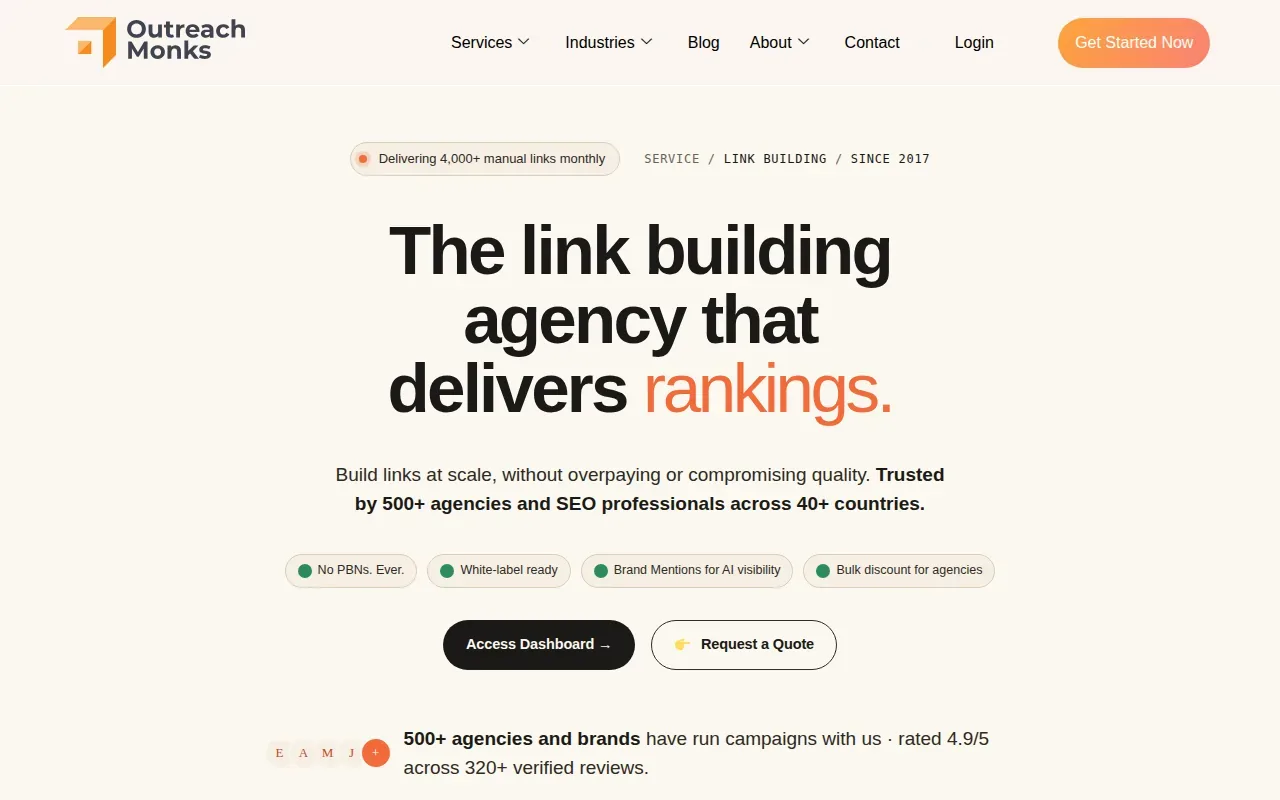
The starting plan includes five links per month. Its listed link types include guest posts, niche edits, and AI-First Brand Mentions. The entry package splits the five links across DR20 to 29, DR30 to 39, and DR40 to 49 ranges, so buyers can see the planned authority bands before the work starts.
Manual outreach can include finding a relevant site, contacting its editor, and arranging a placement. Ask how the provider checks the site's subject match and organic activity. A link from a page that your potential customers might read can be more useful than a higher metric on an unrelated site.
Outreach Monks also states that the entry plan has a six-month link guarantee and a dedicated account manager. Those terms give you specific questions for a proposal: what does the guarantee cover, how are lost links handled, and what details appear in the monthly report?
This pick can fit a team that wants to test managed link building without a large monthly retainer. Compare the monthly link count with the work included, then review live placements as they arrive.
Link Building Services Compared: Methods, Link Types, and Best Fit
The right comparison starts with the work behind each link. A digital PR campaign builds an asset editors may cite. Manual outreach seeks placements through direct contact. A paid placement model relies on a publisher network. Distribb.io takes a platform-led route that connects backlink building with other SEO tasks.
| Option | Core approach | Best fit | What to check |
|---|---|---|---|
| Distribb.io | AI-powered SEO platform with backlink building | Teams that want SEO tasks in one workflow | Plan scope and how the backlink exchange fits your goals |
| Siege Media | Content-led link earning and digital PR | Brands investing in content over time | Content workload, timeline, and campaign cost |
| uSERP | Editorial outreach plus contextual insertions | Funded SaaS companies | Placement sources, page fit, and monthly capacity |
| Editorial.Link | Paid publisher placements | Bootstrapped SaaS teams ordering links as needed | Publisher relevance, payment terms, and link qualification |
| Outreach Monks | Manual outreach | Teams seeking month-to-month managed work | Site vetting, guarantee terms, and report detail |
Pricing models aren't directly interchangeable. A monthly retainer may cover strategy and outreach, while a per-link model charges for individual placements. A lower entry price can make it easier to test a workflow, but it doesn't tell you how well the sites match your buyers.
Track more than delivered links. Check referring domains and the quality of the linking page. Then watch relevant page rankings, organic traffic, and referral visits or conversions. These measures help you see whether the campaign is supporting search visibility and business goals, rather than only producing a monthly count.
Ask each provider for sample placements, a written link-quality standard, reporting details, and terms for lost links. Also ask how guest posts, content marketing, blogger outreach, and digital PR fit the plan. Avoid offers built around hidden paid links or artificial link networks.
A backlink is a link from one website to another. The business value comes from relevance and context, not a link count on its own.
Frequently Asked Questions
How much do link building services cost?
Link building costs depend on the service model and scope. In this shortlist, Outreach Monks starts at $599 per month, while Siege Media's starting price is around $12,000 per month. Editorial.Link uses a pay-per-link model. Compare what's included before weighing rates.
Are paid backlinks safe for SEO?
Paid backlinks can create risk when they are bought to manipulate search rankings. Ask how placements are funded and qualified, and review the actual page context before approving a link. A vendor's link count alone can't show whether its process follows search guidance.
What should I track after a link building campaign?
Track referring domains, the relevance of each linking page, and the target pages receiving links. Then watch rankings and organic traffic for those pages. Referral visits and conversions can show whether people follow the links and take useful actions. Don't judge the campaign only by Domain Rating or the number of links delivered.
Should a SaaS company choose an agency or a platform?
A platform can suit a team that wants backlink building connected to broader SEO work. An agency may fit a team seeking a managed campaign with a specific outreach or content model. Compare what you need to manage yourself, the level of reporting, and whether the proposed links support pages your buyers use.
Conclusion
For a connected SEO workflow and a low-cost starting offer, consider Distribb.io first. If you need a specific agency model, match the provider to your budget and link goals, then review sample placements before you commit. Check Distribb.io pricing and start your free trial to see whether the platform fits your team.