
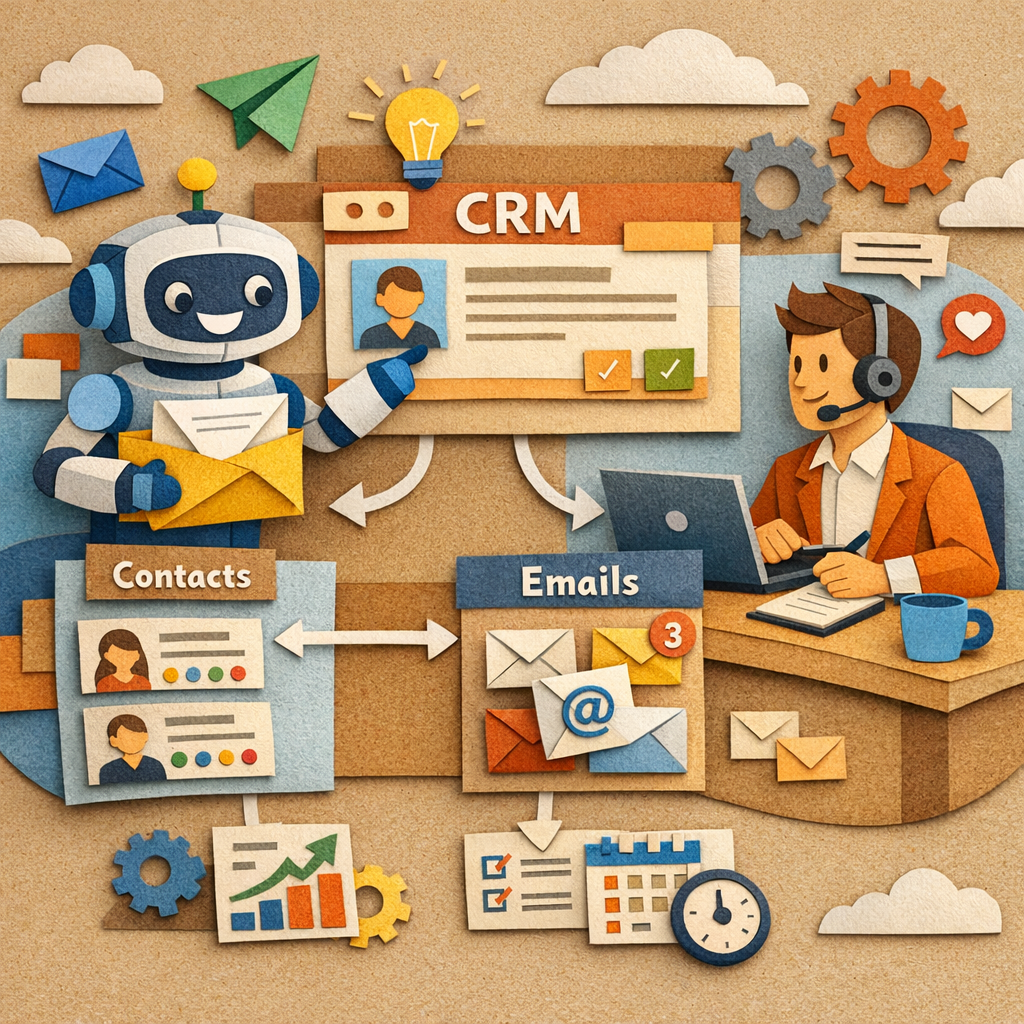
AI sales automation now covers four distinct jobs: finding prospects, enriching what you know about them, running outreach, and understanding what happened afterwards. Very few tools are strong at more than two.
Buying an all-in-one when your gap is enrichment, or an enrichment platform when your gap is a sales team that does not follow up, is the usual way money gets wasted here. Social is the adjacent channel none of these four jobs covers, and the products for it are compared in how to choose a social media automation platform.
A note on who wrote this
We build SEO software, not sales software, so we are not on this list and there is no version of this page where we belong on it. That is worth saying plainly, because the previous version of this article named our own product among AI sales automation tools, which it is not.
Everything below is a tool we opened and checked. None of them pays us anything.
How we checked this list
Every tool was loaded on its live site in August 2026 and captured there. Descriptions reflect how each product currently positions itself, which matters in this category because several have repositioned from point solutions to AI agent platforms within the last year. We have not run trials of all twelve and do not claim to have.
The four jobs
| Job | What automates | Tools |
|---|---|---|
| Prospecting | Finding and qualifying accounts and contacts | Apollo, Prospeo, Clay |
| Enrichment | Filling in what you do not know | Clay, Apollo |
| Outreach | Sequences, personalisation, multichannel sending | Instantly, lemlist, Saleshandy, Salesforge, 11x |
| Revenue intelligence | Calls, pipeline, forecasting | Gong, Clari, Salesloft, Outreach |
1. Apollo, prospecting and outreach in one

A large B2B contact database with sequencing, a dialer and AI assistants on top, so prospecting and sending live in one place.
For most teams starting out, this covers enough of the pipeline that a second tool is unnecessary for a while.
Honest limit: data accuracy varies by region and seniority, and the all-in-one breadth means each module is beaten by a specialist.
2. Clay, the enrichment layer everyone builds on

Waterfall enrichment across many data providers, signal-based triggers, and the ability to build genuinely bespoke research workflows without engineering.
If your outbound depends on knowing something specific about an account, this is the tool that finds it at scale.
Honest limit: powerful and genuinely complex. Teams without someone willing to learn it get very little out of it, and credits get expensive fast.
3. 11x, AI agents doing the sending

Digital workers positioned to run outbound and inbound motions end to end rather than assisting a human doing them.
The agent framing is the current frontier of this category, and it is the clearest expression of it.
Honest limit: autonomous outbound is only as good as the targeting behind it, and a bad list sent confidently at scale damages your domain and your brand.
4. Instantly, deliverability-first outreach

Cold email sending built around inbox rotation, warmup and deliverability, with lead intelligence attached.
Deliverability is the constraint nobody thinks about until their domain is burnt, and this treats it as the main problem.
Honest limit: it optimises sending volume, which is the right lever only if your message and list are already good.
5. lemlist, personalisation at scale

Multichannel outreach with heavy personalisation, including dynamic images and video, across email and LinkedIn.
The personalisation features are genuinely differentiated rather than cosmetic.
Honest limit: personalisation tokens are not personalisation. Used lazily it produces obviously templated mail with a first name in it.
6. Saleshandy, the all-in-one at a lower price

Prospecting, enrichment, multichannel sequences and a unified inbox in one product, positioned below the enterprise tools on price.
For a small team wanting one subscription rather than four, this covers the most ground per pound.
Honest limit: adequate rather than excellent in each module, and the database is smaller than Apollo's.
7. Salesforge, unlimited sending with AI

Email and LinkedIn outreach with AI SDR features and an emphasis on volume without per-seat constraints.
Attractive for agencies and teams running many campaigns simultaneously.
Honest limit: volume-oriented tools reward discipline you may not have. Sending more is rarely the actual fix.
8. Prospeo, contact data specifically

Finding and verifying email addresses and phone numbers, focused on data quality rather than on sending.
Verification matters more than discovery, because sending to dead addresses is what destroys domain reputation.
Honest limit: it is one layer. You need a sending tool alongside it.
9. Gong, understanding what was said

Conversation intelligence: recording, transcribing and analysing sales calls, then surfacing patterns across a team.
The value is coaching and forecasting rather than automation, and it is the category leader for a reason.
Honest limit: enterprise pricing, and it needs call volume to be useful. A two-person team learns nothing from it.
10. Salesloft, orchestration across the cycle

A revenue orchestration platform combining cadences, conversation intelligence and deal management with AI throughout.
For teams that want one system governing how selling happens rather than tools bolted together.
Honest limit: a platform commitment with the implementation cost that implies. Not a quick purchase.
11. Outreach, the enterprise incumbent

Sequences, deal management, forecasting and conversation intelligence at enterprise scale, with the governance larger organisations need.
Where sales process compliance genuinely matters, this is the safe answer.
Honest limit: heavy, expensive and slow to roll out. Overkill below about twenty reps.
12. Clari, forecasting and pipeline

Revenue orchestration focused on pipeline visibility and forecast accuracy rather than on outreach.
It answers a different question from everything above: not how do we contact more people, but will we hit the number.
Honest limit: it is not an outreach tool at all. Buy it when forecasting is the problem, not pipeline generation.
What automation will not fix
A weak list. Every tool here will contact the wrong people faster and more consistently. Targeting is upstream of all of it.
A weak message. Personalisation tokens do not make a generic pitch relevant, and prospects have been reading templated mail for a decade.
Deliverability you have already ruined. Once a domain is burnt, no sending tool recovers it quickly. Warmup and volume discipline are cheaper than recovery.
A missing inbound engine. Outbound is expensive per meeting and it stops the moment you stop paying. Most teams that scale efficiently run both, and the inbound half is content and search rather than sequences.
No follow-up discipline. Most replies come after the third touch. Tools automate the sending and not the deciding to keep going.
Where inbound fits, briefly
This is an outbound page and we should be straight about the boundary. If your pipeline problem is that nobody has heard of you when you email them, that is a demand problem rather than a sending problem.
That half gets solved with content and search visibility, which is what we build at Distribb and what our comparisons of automated SEO software and blog automation tools cover. It is a different category from everything on this page and it is not an alternative to any tool listed here. If you are choosing between them, you are answering the wrong question, because most teams that grow well end up running both. On that side of the problem the closest equivalent to an AI SDR is an AI agent pointed at SEO work, which takes the same describe-it-and-it-runs shape as the tools on this page but points it at search demand instead of an inbox.
FAQ
What is AI sales automation? Software that handles the repetitive parts of selling: finding prospects, enriching records, sending sequences, logging activity and forecasting. The newer wave adds agents that make some of those decisions autonomously.
What is the best all-in-one AI sales tool? Apollo for prospecting plus outreach, Saleshandy if price matters more than depth. Both cover enough that a small team can start with one subscription.
Do AI SDRs actually work? They send competently. Whether they book meetings depends entirely on the list and the offer behind them, and teams that see poor results almost always had a targeting problem before automating.
How much should a small sales team spend? Between $100 and $500 a month per rep across the stack is typical. Enterprise platforms like Gong, Outreach and Clari start well above that.
Will automated outreach hurt my domain? It can, quickly. Use a separate sending domain, warm it up, keep volumes sane and verify every address. Deliverability tooling exists because this is the most common failure.
Should I buy outbound tools or invest in inbound? Outbound produces meetings faster and stops when you stop paying. Inbound compounds and takes months. Most companies need both, weighted by how urgently they need pipeline.
What is the most common mistake? Buying a sending tool to fix a targeting problem. If reply rates are low, more volume makes it worse rather than better.
Where to start
Name the job first. If you cannot find prospects, buy Apollo or Clay. If you can find them and cannot reach them, buy Instantly or lemlist. If you can reach them and cannot tell what is working, buy Gong.
And if the honest answer is that nobody recognises your name when the email arrives, that is not a sales automation problem, and no tool on this page solves it.